

Taxpayer-funded vaccine promoters included Love Island winners
Etienne Note: This article also appears in “Government”, Media and Academia Criminality Exposed, A digest of HUNDREDS and HUNDREDS of articles exposing and suggesting inter-generational organized crime’s control of the “Government,” Media and Academia by the Art of Liberty Foundation. You can view the other articles or subscribe on Telegram: https://t.me/Government_Scams
Etienne Note: This is part of what we call the “Brute Force Manufactured Consensus,” where organized crime “government” is tricking people by “painting the tape” and making it look like everyone supported the “vaccine,” while further algorithmically amplifying these voices on organized crime’s monopoly social media platforms, while simultaneously shadow banning, deindexing, demonetizing, and algorithmically censoring truth tellers. Same dynamic on their monopoly media platforms as well. They can even trick the population into thinking that “government” is legitimate, desirable and necessary using the same tricks while simultaneously product-placing the American flag into 1000+ movies and 1000+ TV shows at moments of high positive emotion to give you a warm and fuzzy feeling for the system that is going to steal $1.40 million from the typical American in inflation, confiscatory taxation and Social Security underpayment.
By Natalie Winters, Natalie Winters
An $80 million CDC award supported a sprawling vaccine-messaging network involving social-media influencers, community “trusted messengers” and journalism-style content.
Organizations funded through the CDC’s vaccine-equity program vetted, trained and partnered with 2,000 social-media influencers to address vaccine hesitancy “using their own voices,” according to a little-noticed paper written by CDC officials.
The influencers were not described as government spokespeople. The stated strategy was to reach audiences through voices they already followed and trusted, on the creators’ “preferred platforms.”
The three organizations identified by the CDC were The Public Good Projects, the Ad Council and a little-known Atlanta marketing company called Slate Social.
The exact language appears in a CDC-hosted academic paper: “Slate Social, Ad Council, and The Public Good Projects vetted, trained, and partnered with 2000 macro- and micro-influencers to address vaccine hesitancy using their own voices, across influencers’ preferred platforms.”
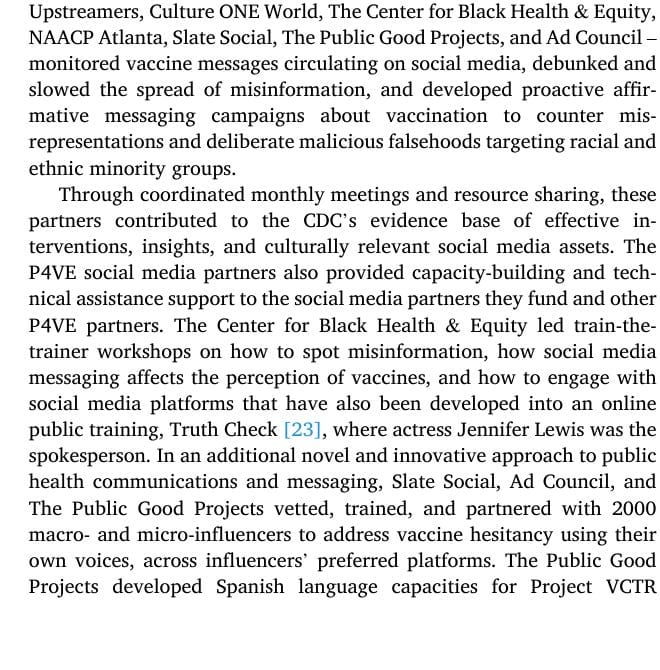
The disclosure was part of a much larger federal initiative. The same paper says the wider Partnering for Vaccine Equity network trained more than 295,000 community-level spokespersons as “trusted messengers.” Seven funded social-media partners monitored vaccine conversations, countered misinformation and developed affirmative vaccine campaigns tailored to racial and ethnic audiences.
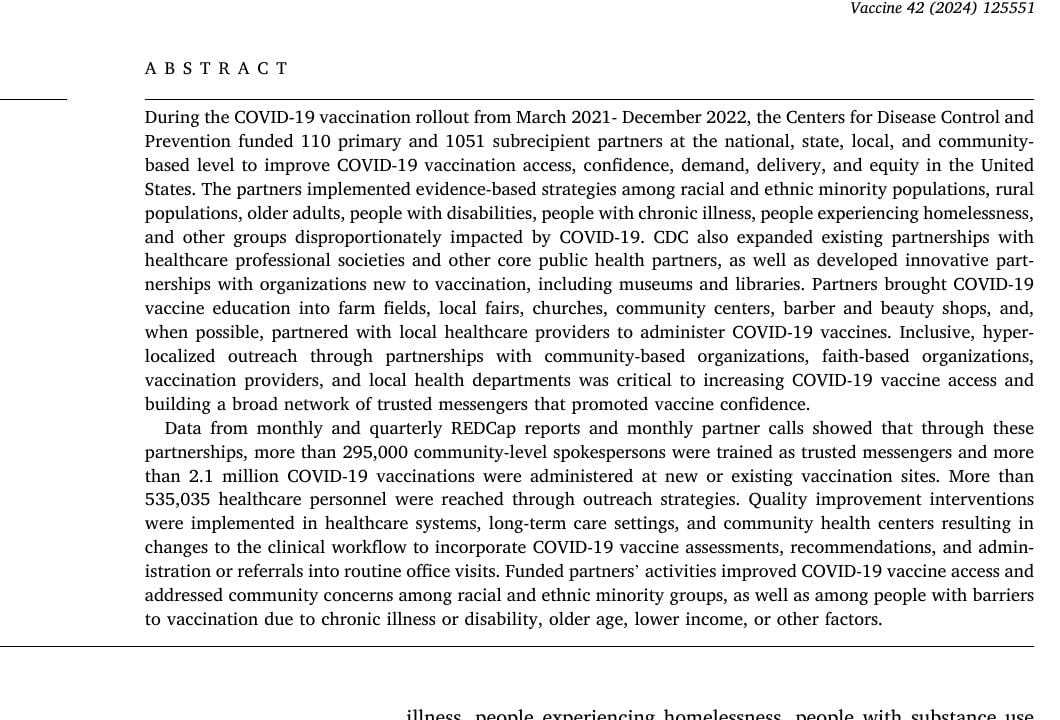
The 295,000 figure does not represent paid influencers. Nor does the paper publish the 2,000-person influencer roster, divide the total among the three contractors or reveal how much individual creators received.
But the available records expose the architecture: federal money passed through the congressionally created CDC Foundation, then into nonprofits, communications firms, community organizations and public-facing personalities whose value came from appearing more local and independent than a government agency.
The $80 million pipeline
The money began at the CDC’s National Center for Immunization and Respiratory Diseases.
Federal award NH23IP922652 sent the CDC Foundation $25.66 million in fiscal year 2021, $22.72 million in 2022, $26.01 million in 2023 and $5.7 million in 2024—a total of $80,092,486.
The award’s stated purpose was to support national organizations and community groups in increasing vaccination coverage among racial and ethnic populations experiencing disparities. This was the umbrella award for the wider Partnering for Vaccine Equity program, not a check written entirely to PGP or to influencers.
The CDC Foundation provided the layer between the federal agency and the organizations doing the public-facing work. The Foundation is an independent nonprofit created by Congress. Its own FAQ says its leaders work closely with CDC officials and that most Foundation programs involve disseminating key messages to extend the agency’s reach.
Tax filings reveal some—not all—of what flowed out the other side.
The Foundation’s fiscal-year 2024 Form 990 records a $414,309 cash grant to The Public Good Projects for “ENHANCING COMM ACCEPTANCE THROUGH MICRO-INFLUENCING.” The same filing lists the Ad Council among the Foundation’s five highest-paid contractors, receiving $1,235,050 that year. The filing does not identify which program accounted for the Ad Council payment.

The Foundation’s fiscal-year 2025 filing identifies PGP as one of its five highest-paid contractors, receiving another $1,090,737. That filing likewise does not identify the underlying program, so it would be wrong to label the entire amount vaccine spending.
The precise dollars paid to Slate Social—and to each of the 2,000 influencers—remain undisclosed.
A reality-TV winner’s marketing company
Slate Social is the most curious name in the CDC paper.
The company has almost no public footprint. A SAM-derived federal contractor record identifies Slate Social LLC as a for-profit Atlanta marketing consultancy and lists Caleb Corprew as co-owner. Corprew’s current business biography says he co-founded Slate Social and that its team has run multimillion-dollar campaigns for federal agencies.
Corprew is better known for winning Season 2 of Love Island USA. NBC’s own retrospective confirms the win; his Instagram account has roughly 233,000 followers.
The records do not establish that Corprew personally posted vaccine content, personally selected the influencers or personally received CDC money. What they establish is narrower—and still remarkable: a company co-owned by a reality-television winner was one of three organizations the CDC credits with operating a 2,000-person vaccine-influencer network.
Neither the CDC paper nor the contractor record identifies Slate Social’s influencer roster.
The names the documents do reveal
The 2,000-person roster remains hidden, but the wider CDC-funded social-media network left several names in public documents.
Jenifer Lewis
The CDC paper says the Center for Black Health & Equity created an online misinformation-training program called Truth Check, with Black-ish actress Jenifer Lewis serving as spokesperson.
Truth Check was not one of the three organizations assigned the combined 2,000-influencer total. It was another branch of the same CDC-funded social-media partnership. Contemporaneous campaign coverage explicitly disclosed that the CDC Foundation funded the project.
In a video titled “Truth Check PSA,” she rejected ivermectin as a COVID-19 treatment and disputed claims that the vaccine could alter a person’s DNA.
Gaulien “Gee” Smith and Kimberly Hall
Another partner, Culture ONE World, created a CDC-Foundation-supported video campaign around Black-owned businesses.
The campaign named Gaulien “Gee” Smith, owner of Milwaukee barbershop Gee’s Clippers, and Kimberly Hall, owner of Signature Sweets Bakery and a seven-time Food Network contestant. Smith discussed vaccinating customers through a clinic inside his barbershop. Hall explained why she chose vaccination.
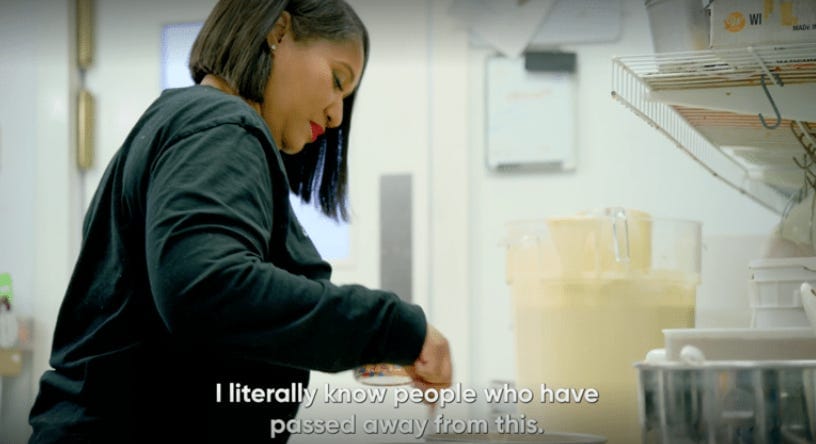
The campaign announcement carried an explicit federal disclaimer tying the work to the CDC Foundation’s $25.66 million first-year award.
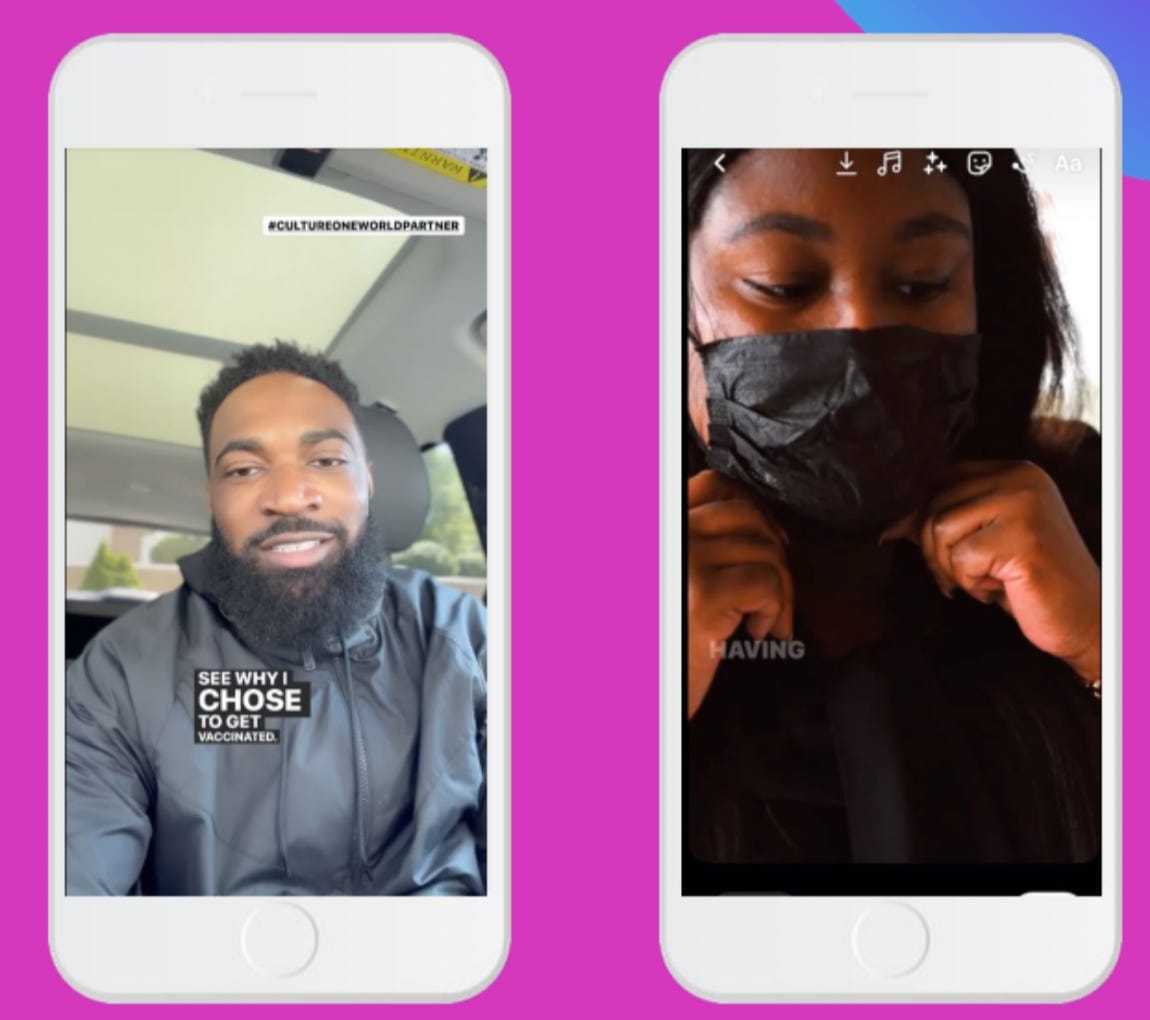
Culture ONE World also worked with B Code, part of My Code, on an influencer-produced campaign targeting Black adults. The agency’s award submission says it used trusted multicultural influencers to counter vaccine misinformation and reached three million people. The submission names production staff Elynor Collado, Mariah Picou and Aaron Paxton Arnold, but not the complete talent roster.
One documented branch: 496 paid influencers
One PGP campaign, called El Beacon, offers the clearest available look at how this system worked in practice. I previously broke the story of that campaign and unmasked dozens of its participants.
Its peer-reviewed report states: “We recruited 496 paid influencers, 2 Hispanic celebrities and 1,034 digital volunteers.” It also says the project monitored 247.7 million English- and Spanish-language messages and used those findings to shape talking points, influencer prompts and rebuttal materials.
By tracing campaign labels, advertising disclosures and archived posts, I identified 57 participating accounts. They include celebrity wedding planner David Tutera; Amazing Race winner Will Jardell; former E! News correspondent Kristina Guerrero; Emmy-winning bilingual journalist Stephanie Bradford; high-school Spanish teacher Mariza Dávila-Madwid; and journalist Ana Cruz.
Their campaign content included appeals involving children, pregnancy and breastfeeding; a claim that vaccination was “completely safe”; and gift-card contests for public vaccination testimonials.
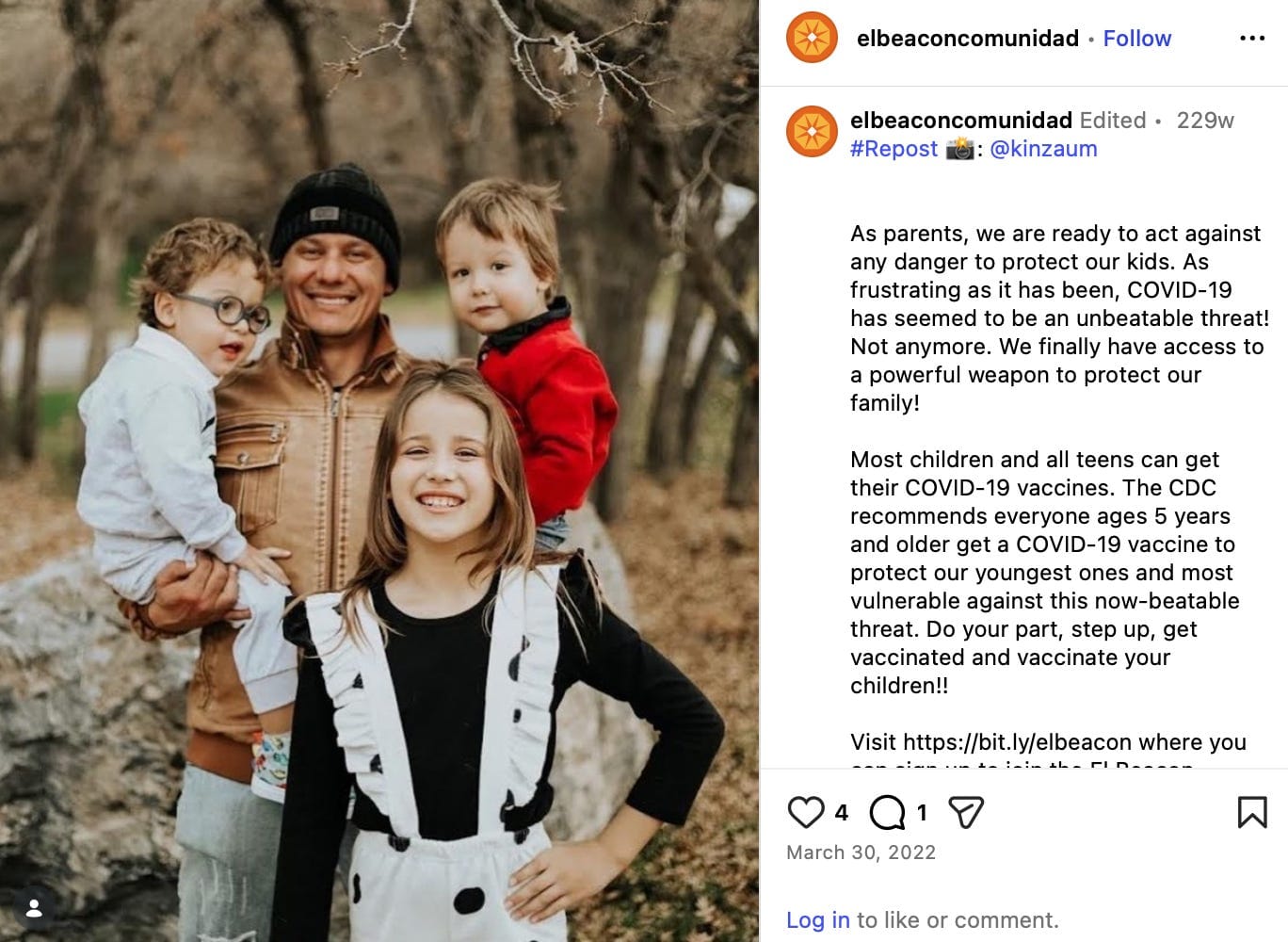
A later paper describes El Beacon as having recruited 3,001 digital volunteers since 2021. The complete influencer and celebrity roster has never been published.
The PGP personnel attached to the work
The papers do identify many of the people operating the machinery, even when they withhold the talent rosters.
The El Beacon report names PGP personnel Melissa Dunn Silesky, Darshana Panchal and Erika Bonnevie as authors, and thanks PGP staffers Megan Leibensperger and Grant Jape. A follow-up El Beacon paper also names Jennifer Sittig.
PGP’s own website identifies Dr. Joe Smyser as CEO. The company’s governing board includes Ruth Wooden, a former president of the Ad Council—the other major organization named alongside PGP and Slate Social in the CDC’s 2,000-influencer sentence.
These are program personnel and organizational officials, not evidence that each person selected or paid individual influencers. But they are the names that belong in records requests and interview requests.
The CDC-backed “newsroom”
PGP did not rely only on social-media personalities. Its staff also founded a publication called Public Good News.
PGN’s own About page describes it as a nonprofit newsroom that partners with trusted local voices. It says its stories respond to trending health conversations tracked online—and that, from 2022 through 2025, PGN partnered with the CDC Foundation to provide COVID-19 and flu information to community organizations.
The newsroom published articles including “No, COVID-19 vaccines don’t cause ‘turbo cancer’”, “Older adults need another COVID-19 vaccine” and “Why kids need routine vaccines.” The articles were made available for free republication.
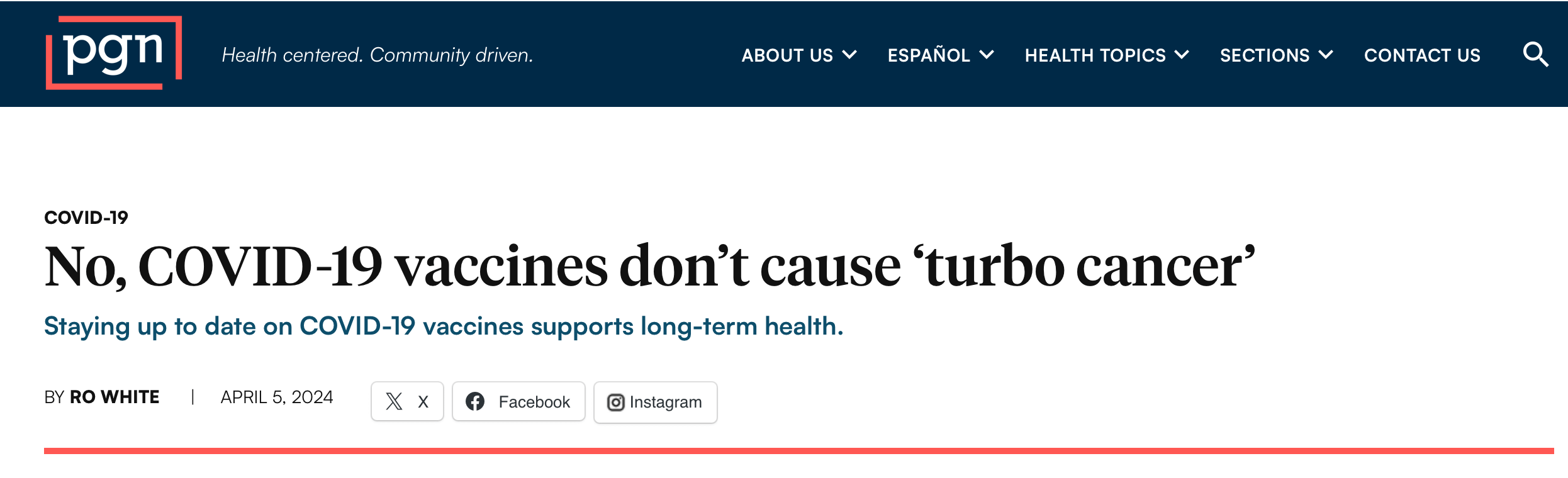
PGN does disclose the federal support, usually near the bottom of each article. A 2024 story said it was supported as part of a CDC financial-assistance award to the CDC Foundation then totaling $69.39 million. That number was the umbrella award total at the time, not the cost of PGN or of one article.
The newsroom names its staff. They include founder and editor-in-chief Megan Barber, formerly of Vox Media and New York Magazine; senior science writer Aisha Abdullah; health reporter Ro White; and program manager Darshana Panchal, who also co-authored the El Beacon report.
PGN says it maintained editorial independence and a firewall from funders. The issue is not that the newsroom concealed all support; it did not. The issue is that CDC-funded narrative tracking, influencer recruitment, community distribution and journalism-style content all sat inside the same communications ecosystem.
This was a repeatable model
PGP used a nearly identical structure for a separate, non-vaccine CDC campaign.
A CDC-hosted academic paper says PGP and the CDC Foundation created Appalachian Influence and Shared Influence to build support for harm-reduction and syringe-service programs. The project received $1.6 million, fully funded by CDC/HHS.
In its first six months, it recruited 236 paid influencers and 8,778 unpaid digital volunteers. Paid participants received prompts, education and technical assistance, then personalized the messages for their own audiences.
Search-indexed campaign posts identify a growing list of public participants. They include James Croom, whose Instagram profile contains an Appalachian Influence appeal labeled “#Ad”; Patrick Weaver, whose Facebook pagecarried an “AD” signup appeal; Aisha Armstrong, whose Life as Aisha page carried a “#AD #ApInfluence” post; and Caitlin McGill, whose CRMstyles account said she was “partnering” with Appalachian Influence.
Other indexed #Ad posts identify Meagan Kerr, Amber Lynch, Brandy Adams, Kate Boytek, Josh Johnson of The Kentucky Gent, Joelle Gates, Madison Page and Brenna Leasor. The campaign’s own site tells participants to create posts supporting naloxone, safe-syringe disposal, fentanyl/xylazine test strips and disease testing—and says PGP supplies “fact-based information” for them to share.
The public posts establish campaign participation and, in several cases, an advertising disclosure. The study establishes that the campaign had a paid-influencer tier. Neither source, standing alone, establishes the amount any named participant received.
Those people were not part of the vaccine network. They are evidence that PGP’s government-funded influencer architecture was a reusable product, deployed across controversial health-policy issues.


