

“So the Genius Act is quite genius in a way in that it’s forcing technologists to bite the bullet and buy the debt of the U.S. government at a very crucial time in which the U.S. government desperately needs more buyers of debt.” - Mark Goodwin
Usually, we reserve this Substack for our own writings and research, but occasionally we will syndicate an especially important piece of journalism from someone else. Mark Goodwin and James Corbett are some of the few voices to appear multiple times. In this episode from the Corbett Report they break down how the Trump administration is paving the way for Stablecoins to both soak up the inflation being generated by fractional reserve banking, “bailouts,” and “stimulus” while potentially paving the way for CBDC-style programmable digital money that, in many ways, could be worse than CBDCs.
We have a full transcript behind the paywall with some visualizations that better illustrate what Stablecoins are and how they work.
END FREE PREVIEW

Go paid at the $5 a month level, and we will send you both the PDF and e-Pub versions of Etienne's new book: To See the Cage Is to Leave It - 25 Techniques the Few Use to Control the Many and a coupon code for 10% off anything in the https://artofliberty.org/store/.
Go paid at the $50 a year level, and we will send you a free paperback edition of Etienne’s new book: To See the Cage Is to Leave It - 25 Techniques the Few Use to Control the Many OR “Government” - The Biggest Scam in History… Exposed! OR a 64GB Liberator flash drive if you live in the US. If you are international, we will give you a $10 credit towards shipping if you agree to pay the remainder.
Support us at the $250 Founding Member Level and get a signed high-resolution hardcover of “Government” - The Biggest Scam in History... Exposed! + Liberator flash drive + a signed high-resolution hardcover of Etienne's new book: To See the Cage Is to Leave It - 25 Techniques the Few Use to Control the Many + everything else in our "Everything Bundle" of the best in voluntaryist thought delivered domestically. International pays shipping. Our only option for signed copies besides catching Etienne @ an event.
Transcript:
Mark Goodwin: Well, stable coins are just as programmable as CBDCs in every single way. Instead of trusting the government to not restrict the spending conditions, you're trusting a private company some of which, many of which, aren't even domiciled in the United States, and don't even have constitutional protections of free speech or whatever have you. And it's every bit as dangerous as the government having programmability over your money; it's just a private company.
Narrator: You're listening to The Corbett Report.
James Corbet: Welcome back, friends. Welcome back to The Corbett Report. This is James Corbett of CorbettReport.com, and this conversation is coming to you in the midst of Crypto Week, which, for those who don't know, is the White House-designated super week in which a bunch of crypto-related legislation is due to be passed including the Clarity Act, the Anti-CBDC Surveillance State Act, and the Senate's Genius Act regulating stablecoins. Get it? Stable? Genius? Just like Trump. Oh, they're so witty. Well, what does any of this really mean? Oh good, they're fighting against the CBDC threat that I've talked about for many years, so that's a good thing, right? Right? Well, maybe and maybe not.
The devil, as always, is in the details. And to talk about those details, I'm going to bring on someone who has a lot to say about this subject. His name is Mark Goodwin, and I would imagine my audience perhaps best knows him as a co-author with Whitney Webb on a series of articles from Unlimited Hangout specifically some articles from last year, which I think are relevant to today's conversation and which I will link up in the show notes including "Trump Embraces the Bitcoin Dollar,Stable Coins to Entrench U.S. Financial Hegemony," and "The Chain of Consensus: The Cartel Behind the Blockchain." He's done some incredibly important reporting on these matters. So let's bring him on the program. Mark Goodwin, thank you so much for joining us today.
Mark Goodwin: James, thank you so much. Longtime fan. It's a great privilege to be here and talk with you about something that's going to affect everybody whether or not you know what's going on. So, important time, and really happy to be here with you today.
James Corbett: Yes, well, I think you are not wrong about that, unfortunately. This is going to affect everyone, whether they know about it or not. But before we get into the nuts and bolts of this since this is your first time, and since you have an interesting origin story in the alt-media space here why don't you tell us about how you got started in this space generally, and how you came over to the alt-media side of things?
Mark Goodwin: Yeah, sure. Well, I was living in the Bay Area for a long time you know, in San Francisco for, you know, better part of 10 years and was there through, you know, it's been in the news a lot. There's a lot that's been going on in San Francisco and California in particular. The political divide just got really insane. And I was doing blue collar things and working in service and bartending and what have you. And, you know, was there during the pandemic you know, we'll call it that. And, you know, most of my friends were lefties, maybe some walkaway lefties, but, you know, really from that side. And then I kind of just watched everybody turn, and, you know, everything get really nasty. It wasn't a great time for me personally, but I took that opportunity to sort of I had a lot of time on my hands. The bar industry had collapsed; I wasn't working. But I had been in Bitcoin for a few years because a guy that was who took over for Ross for Silk Road 2.0 was a regular at the bar that I was barbacking at in 2014, 2015. So he came in and explained Bitcoin to me pretty early on, and I thought it was kind of interesting, and then got really into it as it went on. By 2020, I saw, okay, the government's going to do what the government does, and it's going to print a shit ton of money, because that's how we solve viruses. And obviously, I understood a lot more of that later.
But I took that time to kind of start writing and educating about Bitcoin just for friends that were in the service industry, because I was like, "This is really going to hurt you. You don't have long-term savings and living paycheck to paycheck; your paycheck was just taken away from you by the government, and your right to earn and travel and all that." I'm sure your audience is very familiar with all that. And so, I started educating about Bitcoin, and that led to writing about it sort of professionall part-time at first with Bitcoin Magazine. Then it got kind of roped in, and by the end of it was actually running the editorial there as editor-in-chief. And then, as the Bitcoin space really turned towards the government as sort of a partner in crime, if you will, I got very disenchanted with the whole movement which is not to say that there are not benefits to it, of course, as I am enjoying to some degree but was sort of, "Hey, I don't want to do this Trump thing. I know where this is going. I know the group of people that he sort of runs with."
You know, I think a lot of those people are figuring that out now. So, long story short, I left the Bitcoin space about a year ago officially, and have been writing at Unlimited Hangout with my friend Whitney Webb, yeah, for some time now, really focusing on, you know, the dollarization of crypto and the dollarization of the world because of crypto, and how Bitcoin plays into that. And I wrote a book called The Bitcoin Dollar, based on an article I wrote in 2021 that sort of sets this all up. So yeah, I sort of was in the Bitcoin sphere pretty intensely, saw where it was going, noped out, and then have been kind of lovingly embraced by the alt media space, which I'm very thankful for. That's kind of the origin a little bit.
James Corbett: That's an interesting story. I'm interested in that trajectory because it sort of tracks with what I have seen taking place. And I've been talking about Bitcoin since what was it, 2012? I can't remember sure, a long time. Whenever my first podcast on it was, was a long time ago. And it was, of course, sold to at least the alt media space at the time as this libertarian, decentralized, disintermediate-the-banking-system, "we're going to stick it to the man." And then I've watched over the course of a decade as people basically flooded in with dollar signs in their eyes, thinking about, "We're going to comply with the man so that we get this all regulated." And that is, unfortunately, the trajectory of the crypto space, generally speaking, for a lot of people. I think a lot of people in my audience the Venn diagram overlap of my audience and crypto bros probably are in Monero or Xano or something at this point, but still, it's a vanishingly small minority of the space that still actually cares about freedom and privacy. Having said all of that, we're here today to talk about stablecoins, because, as I mentioned before, the Genius Act is in the process of being passed as we're recording this conversation question mark? At any rate, it is certainly on the table. And I think a lot of people still don't even know what a stablecoin is, let alone why it's going to affect their lives. So, why don't we just start at the brass tacks of that: What is a stablecoin?
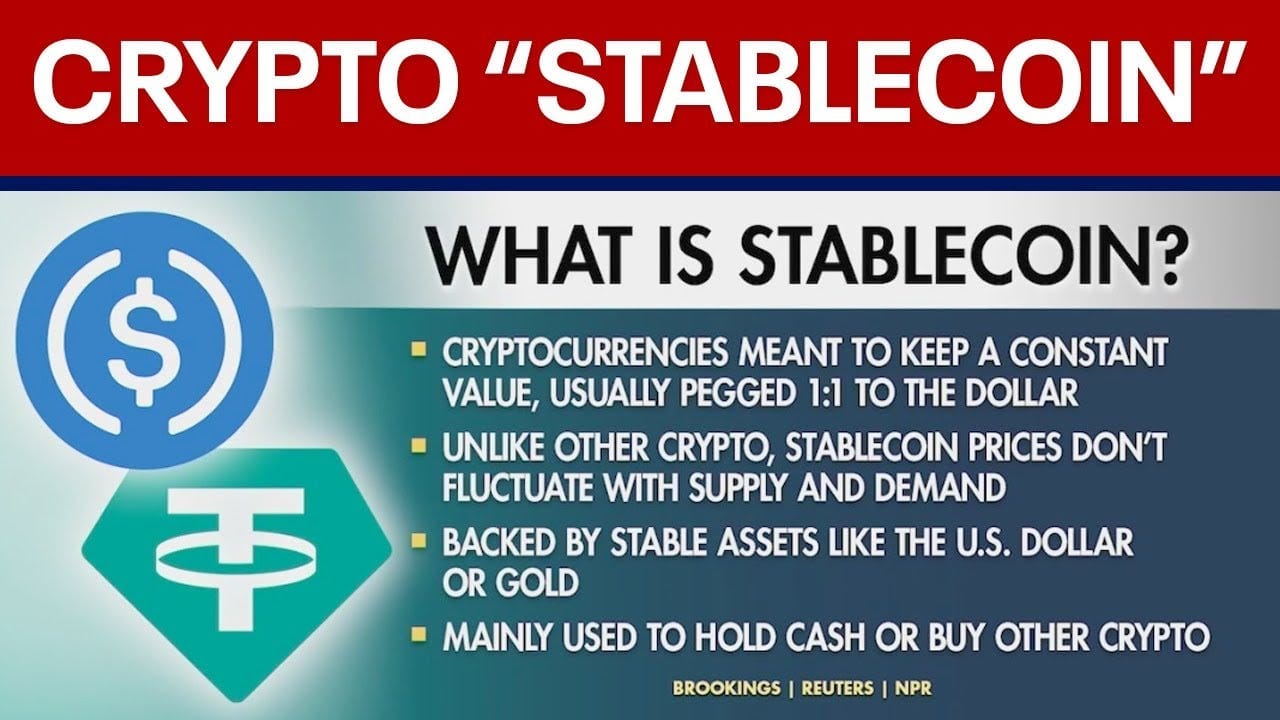
Mark Goodwin: Totally, yeah. So the idea, the name, it's very clever. These very important products that come into our lives usually have very clever names. And I think the Stablecoin name is a very clever trick because the idea of the Stablecoin, the stability, comes from the fact that it is a tokenized representation of, you know, a real-world asset or of something that exists in reality, and here's a representation of it that's pegged one-to-one. That's the stable with yes, it is a token on the blockchain and a bank dollar. And they are pegged together, so it's a one-to-one representation. And the idea of a stablecoin is that, unlike Bitcoin, there's not these rapid fluctuations in value as you're exchanging the token. It's stable, right? That's the idea of the name. But of course it's a very clever trick because we all know that the purchasing power of a dollar is anything but stable and has been routinely inflated away for a very long time now. And not only that the general idea of the Fed debasing the dollar alongside the Treasury of course, you know, we have the idea of, well, if it's a tokenized representation on a blockchain and there's supposed to be this dollar in a bank, what if the bank goes under? What if the holder of the stablecoin issuer gets subpoenaed? Or, you know, some other nasty, fun thing that tends to happen wherever dollars are? Of course, there's a lot of risks that come when you have sort of a trusted peg in these systems.
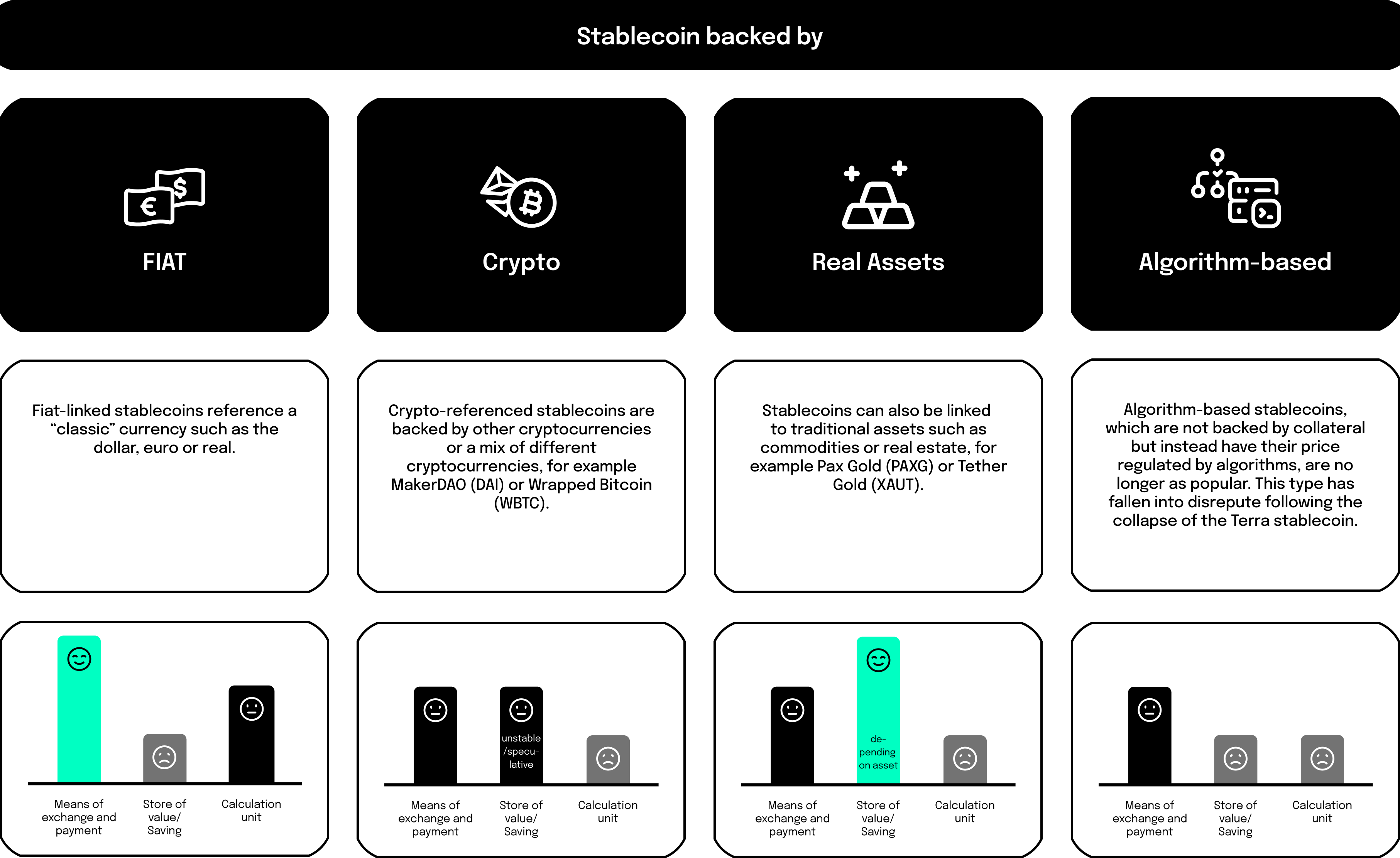
So stablecoins are basically the modern iteration of what we've seen for a really long time of private capital creation, which is to say that the majority of dollars are already digital. They've been digital for a long time. And the way that they're created is the Fed and the Treasury print these reserves, these securities, and they give them to private banks, like a JP Morgan, and then JP Morgan actually creates the dollars in your checking account. They're not actually made by the government directly; they're selling these reserves and the private banks make them. Stablecoins are the same thing. They obviously have some quirks and some things that we'll get into here, but the general idea is that it's just a digital asset that is pegged one-to-one with a real-world asset. The vast majority of these are dollars, but of course you can have stablecoins that are based on the price of gold; you could have stablecoins on the price of oil. And you can have clever stablecoins that aren't even a one-to-one, but there's some sort of algorithmic peg where they're trusting the market forces to represent the purchasing power of a dollar through some other basket of currencies.
Notably, we saw that with the Terra Luna explosion in 2022, where there was this algorithmic stablecoin that was backed by Bitcoin that was then popped and exploded as I postulate in this piece, on purpose in order to spurn regulation, which we are now seeing literally hit the president's desk today, the Genius Act, which of course, you know, sets up the stablecoin industry. And the main way that it does it is putting rules and regulations into what can actually back these stablecoins. So, you know, what is going to basically happen here is that the government is going to tell stablecoin issuers that they have to hold U.S. government debt in order to print these dollar tokens. So instead of doing cool, fun things that one might be able to do with this technology, which has some fun use cases instead of being able to create dollar instruments that don't touch government debt at all the U.S. government is coming out and saying, if you want to call your thing a stablecoin, you want to put that dollar sign there, you better buy our debt first, buy our bags.
So the Genius Act is quite genius in a way in that it's forcing technologists to bite the bullet and buy the debt of the U.S. government at a very crucial time in which the U.S. government desperately needs more buyers of debt. So I'll wrap it up there, but that basically catches you up very quickly on what stablecoins are. And you'll hear them a lot. For the most part, whenever you hear the word stablecoin, you can just think a digital dollar that's represented on a blockchain.
James Corbett: Excellent. Well, that is a good crash course for people who need to understand why this is important. They'll need to look into the history of, say, Bretton Woods the agreement at the end of World War II that was going to peg the entire world monetary system to the U.S. dollar, which itself was pegged to gold. Famously, of course, Nixon closed the gold window in 1971. What is really backing up the entire global monetary order? I don't know. How about oil? And so, of course, we saw the engineering of the petrodollar system, which functioned very well for half a century in propping up the U.S. dollar, because everyone who wants to industrialize or perform industrial activities is going to need oil. So they're going to buy it, then it's denominated in U.S. dollars, and the Saudis had a deal to basically launder all their money back through U.S. banks, keeping it in the U.S. system. This is how the U.S. dollar has been propped up and propagated for the past half-century.
But that system is coming to an end. And there was some fake news last year: "The petrodollar agreement expired!" Well, there was no particular agreement it was a system. But it is expiring, and it is certainly under pressure from a lot of different threats, like the Petroyuan and other such ideas. So the question then becomes, how do you not only continue not only service this $35 trillion debt or whatever it is at the moment, but how do you continue blowing that bubble so that the big, beautiful bill and everything else can continue to be financed? There's got to be a reason why people are buying dollars. Oh, I know: let's make stablecoins' regulatory mandate for them to be tethered to U.S. debt, U.S. treasuries, so that people will still be buying into the U.S. debt system, and they can continue inflating the bubble. That is sort of the underlying aspect of all of this. Correct me if I'm wrong on any part of that assessment.
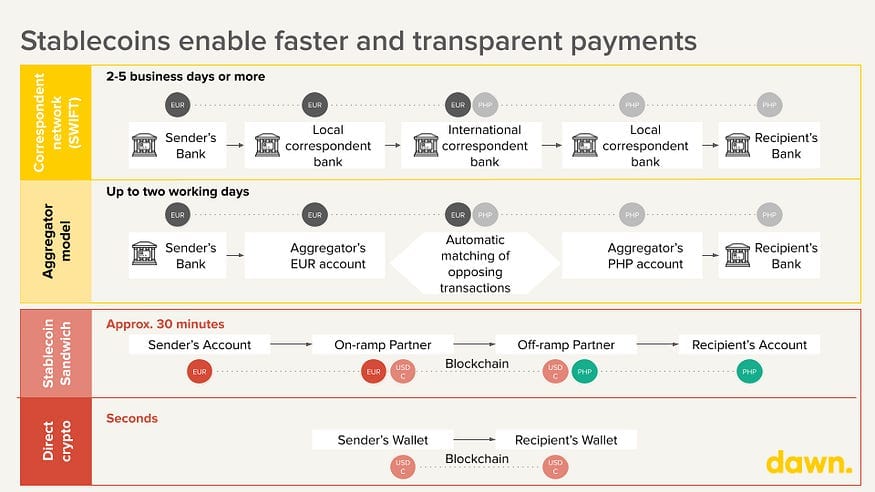
Mark Goodwin: No, I think that was perfect a very succinct explanation of the petrodollar. And the general idea is, well, okay, if you want to print more money, you got to have more users; you got to have more people interested in the system. There's a few ways you can do it, but the best way to do it is to get more people playing in the sandbox, right? Get more people using dollars as their medium of exchange. If you go from the total addressable market of dollar users from maybe a billion players, the 350-whatever million Americans, and then all the people using dollars as a store of value across the world with stablecoins, really all you need is a smartphone or internet access, and you have access to U.S. dollars, which is something that hasn't necessarily been available to the seven, eight billion people in the world. You know, there's been limitations to who can play in the regulatory regime of the dollar, kind of by design, right? Like you had to get pallets of cash sent to the Middle East or whatever to be able to play in that system. Now you simply download a wallet on a smartphone, and you have access to dollars.
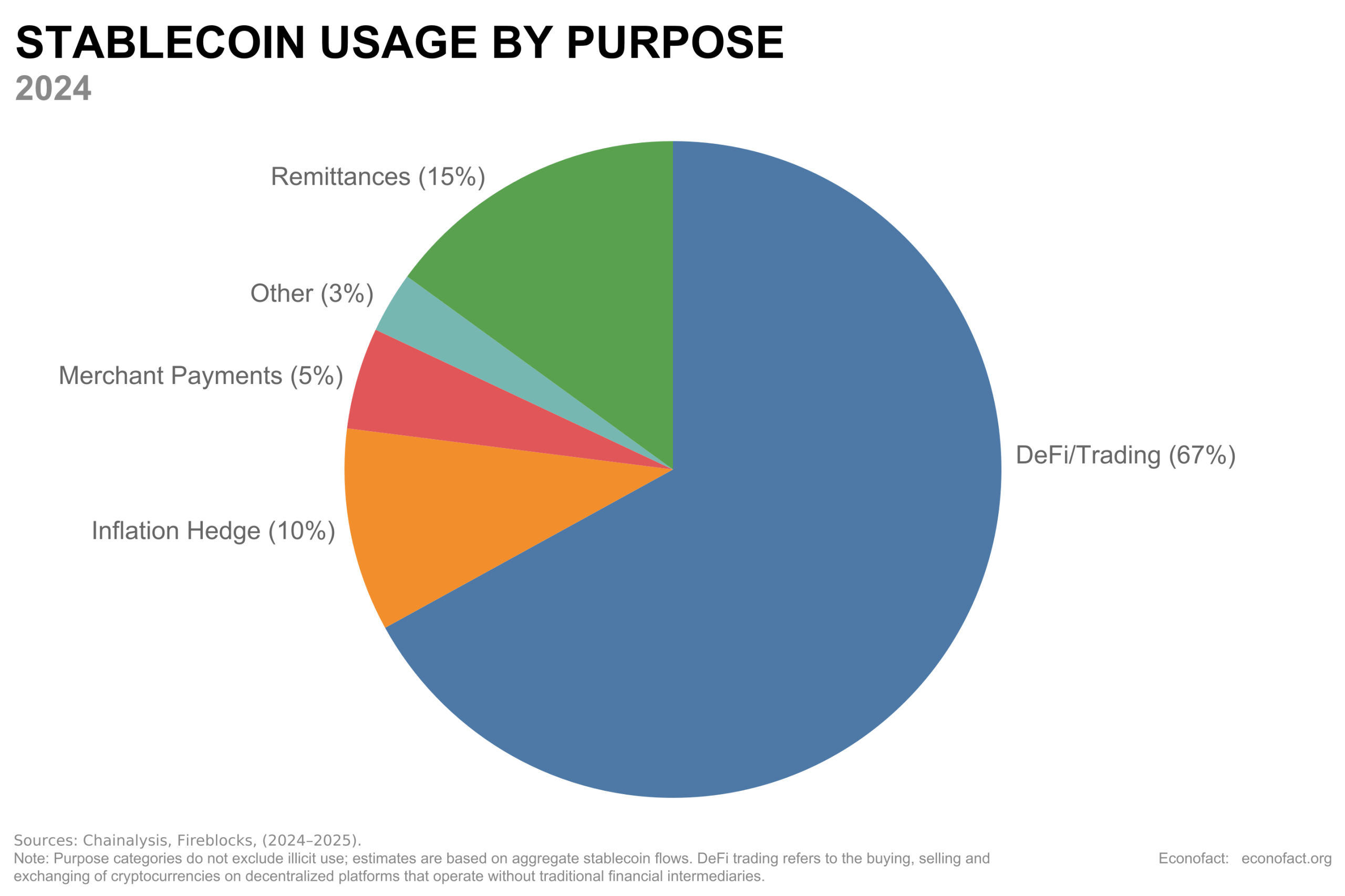
This, of course, is sold as this very altruistic thing: "We are banking the unbanked, James! It's amazing!" It's like no, you're charging someone basically a fee to use your bank account, and you're letting them buy little IOUs, basically, for the dollars that you hold in your account. So we're seeing this push of, you know, "How do we extend dollar hegemony?" You know, we find more users. And so now we're pushing stablecoins on the Global South, on South America, on Asia and Africa. And we're seeing serious headwinds of adoption. And we're seeing the dollarization of crypto and blockchains in general. I think there was a stat, you know, a year ago, that 80% of all value settled in the extended cryptocurrency space was using stablecoins. I mean, the killer app of blockchain is dollars. I mean, it's very strange. It seems very backwards of again, as you started at the beginning you know, what was the idea, the ethos of this movement? To now revert back to, "Oh, it's dollar tokens is the killer app," is sort of sad. But these systems are not designed willy-nilly. This is not an accident that as we are really seeing runaway debt service happening, you know, after '08, which was a controlled implosion, to 2020, which was a controlled implosion very specifically, a controlled implosion that crushed demand and velocity of dollars by shutting everybody in their house, and then you print trillions and trillions of dollars.
As that was happening, Trump is setting up the entirety of the Bitcoin-dollar stablecoin play that we're now seeing the fruits of. You know, on his last days in office, he's passing these bulletins and allowing banks to hold stablecoins. Those are things that happened in his final days in office. And now we're seeing the Genius Act sort of formalize that. So in 2020, there was like ten billion stablecoins; you know, it was a very, very small industry. Now we're, you know, 200 billion or something like that. And it's going to go to you know, Scott Bessen, who’s running Treasury, is estimating $3.7 trillion of stablecoin demand will be enabled basically overnight from the Genius Act passing. That's tonight! You know, depending where you are in the world, that's, you know, this afternoon. That's a serious amount of money. You look at the bailouts in '08 it was hundreds of billions, and it was enough to get us all in the streets, yelling at, you know, rebelling at the banks with these hundreds of billions of dollars. Now it's, "Oh, we can print $3.7 trillion to stablecoin issuers." And this is seen as this sort of technological advancement, this altruistic "banking the unbanked." In reality, it's a very clever trick by the government to create debt demand and create more dollar users at the most critical time possible, as this debt service is now outpacing our military budget, which upheld the petrodollar, and really becoming a national priority. Like, that is why these bills are all happening. That's why this crypto week is being presented. It's because the U.S. government needs the stablecoins to be able to kick the can down the road.
And there's a whole other element to this of this "debt sink" idea that is the other pair to this, which is using Bitcoin as this deflationary, scarce asset that they can inflate the dollars into. Rather than inflating into gold or into land or into other assets that are held by other countries, right? Like, we could pay off the debt tomorrow if we wanted to, and we said, "An ounce of gold is $30,000 come give us your gold." You know, they could pay off the debt tomorrow. What would that do? That would make everybody in the world that holds gold extremely, extremely rich. They don't want to do that. They want to keep this wealth transfer into the tightest circle possible. So very conveniently, this decentralized scarce asset comes out of nowhere at the onset of or rather at the offset of the 2007–08–09 crisis. Bitcoin comes out, released anonymously, and it's obviously sold as this decentralized idea and in many ways, it is but it's really more distributed than decentralized. It's an imperfect distribution of power. And when you look at where that power goes, really the only way you can really measure it is hash rate, which is the computers upholding the system, and then who holds the Bitcoin. And when you look at it across the board, it's the United States of America whether it's the private interests of the U.S., or even just the government itself, private companies, public companies.
And so, you know, the wealth bubble that was the debt bubble that was exploded over our lives is now about to be vacuumed into the next financial system. And we are quite literally on the onset of that. That on-off switch on the vacuum is being turned back on probably tonight.
James Corbett: People are watching this conversation it will probably already have passed. So on Twitch, it is going as we're speaking. But so, the people who are positioned on the bottom level of this elevator that's about to shoot up here: would there be any names that people would recognize that are involved in this stablecoin industry? Like I don't know like Trump, for example?
Mark Goodwin: Sure, yeah. I mean, Trump himself and his family you know, they did one of the largest it should be one of the biggest political scandals, frankly, ever. On Inauguration Night, you know, the Trump family releases their own private currency. If you remove the crypto aspect of a Solana meme coin and you just say it what it is without the technical jargon, he started his own private currency 24 hours before he's re-sworn back in to be the President of the United States. That's insane. Very crazy. Now, I'm not saying I enjoy the monopoly of the public sector on money printing, but it is a wild thing to have an incoming president create their own currency. And then you look at, well, what are the conflicts of interest here? It's like, well, hey, anybody in the international game you can directly pay into the coffers of the president, totally circumnavigating all of the rules and regulations that should be in place for restricting conflicts of interest. You want to lobby and donate to a president? You know, there are a lot of rules of what you can do. By printing your own currency and letting anybody in the world with internet access access it, suddenly you have billions of dollars sloshing around, going into the president's pockets right before he takes power, right before he signs bills like we are seeing today, right?
So, you know, what is the whole point of the public sector in general? It's a regulatory enabling environment for the private-sector interests, the donor class of the representatives that they buy. So Trump has started his own stablecoin. He has started his own currency. How successful they'll be we'll see, but there's an extreme conflict of interest immediately. Ironically, that is something being picked up by the Elizabeth Warren sort of anti-crypto group: "This is ridiculous, this crypto con." And in many ways, they're actually right. I don't very often find myself agreeing with her, but I think in this case she's sort of correct. Broken clock is right twice a day, I suppose.
But in my opinion I think more importantly I think Trump is a figurehead, personally. And I think the interests behind him have been in the crypto space for an extremely long time, very possibly even created the crypto space, depending on how deep you want to go. And in particular, I'm looking at Peter Thiel and the extended PayPal mafia, including Elon, including Reid Hoffman, and a lot of other players associated especially with Peter Thiel. And if you actually look at the original founding motto of PayPal the idea of it their original logo was "a new world currency." And they had come together with this idea. David Sacks is this former McKinsey consultant who comes in to join Thiel, who is a currency trader, and Max Levchin, who is a cryptographer who spent all this time working on distributed systems they are the two guys that formed PayPal. He comes in, and he sort of takes them from, "Hey, stop playing with your Palm Pilots. Let's go to the internet; let's use email." He's now, of course, the crypto-AI czar for Trump. He's one of the main advisors on these bills. But when they all got together, those three they were really the biggest ones at the beginning of PayPal and their idea was, "Let's create a new world currency."
And, you know, there's this book, The PayPal Wars, where Peter Thiel is described by this early marketing executive at PayPal as doing this early meeting at PayPal, where he describes there's a really, like, lack of dollars being accessed across the world. And central banks across the world are really taking advantage of their citizens. And if we can create dollars and put them natively on the internet, we can allow these you know, these slaves to their central banks, which is true but we can give freedom to the citizens that are stuck in their shitty fiat currency being printed by their local governments. And they can get beautiful, beautiful dollars, and we can onboard them and really, you know, save the world basically from central bank control.
And of course, now here we are twenty years later; that exact same pitch is being made by the stablecoin providers. Thiel really saw this very early on that, you know, there was a way to use technology to dollarize the world rather than military force or political force, and that actually technology is sort of a dissolving agent that can break down a lot of these controls that local governments have over their citizens, specifically as it relates to capital flight.
So, the PayPal guys were hip to this a very long time ago. Of course, they're incredibly connected to intelligence. Palantir you know, the great Palantir that everyone's now suddenly being awakened to tarted as the anti-fraud algorithm at PayPal. I mean, it really came out of this group. Obviously, there's the TIA aspect Poindexter and all that but the original algorithm that became Palantir was called IGOR. It was named after a Russian scammer that was scamming everybody with PayPal.
So the PayPal mafia understood that technology could do something that politics and military really couldn't. And this group of people really had the brains and the intelligence connections to be able to set up something like this. And of course, the PayPal mafia gets all of the credit these days, but it was really PayPal that dollarized the internet, that made the native currency of the internet the dollar, you know, with their eBay counterparts all of which have immense intelligence connections.
And now we're seeing the next iteration of that, where it's not just, you know, PayPal dollars now we're seeing these stablecoins proliferate and actually really neutering the ability of local governments to retain value within their country, within their closed system. Why would you hold Argentine pesos if you can get access to dollars with the internet? Maybe they wanted pesos twenty years ago, but they couldn't quite do it. There were closed-circuit regulatory things at play that were stopping people from being able to just sell dollar access to Argentina. Now we have a way to circumnavigate the enabling environment of the public sector via technology.
And so Thiel is super connected all over the stablecoin space, and the PayPal mafia in general. Elon Musk wants to turn X into half the financial system and all of these things that these AI companies are saying. And in reality, I think they might do it, which is very scary.
And what's the outcome of this? Why are stablecoins worse than dollars? We really have to just sort of look at the dialectic and sort of the warnings, you know, folks like you have been saying about CBDCs for almost a decade now, if not for some, for longer. And when you look at the dichotomy of CBDCs and stablecoins, you start to see some chilling similarities. And in many ways, you might even argue they're worse due to constitutional protections.
Maybe I'll stop ranting there for a second and let you pick up there.
James Corbett: You know, you're reading my mind, actually, because that's exactly what I wanted to get into. Because obviously, the great irony is that during this Crypto Week, we have the Anti-CBDC Surveillance Act being passed at the same time as the Genius Act to wire in the stablecoins into the global economy. And I think that is no coincidence, because thankfully, a lot of people have woken up to the very real threat that central bank digital currencies pose and the politicians love to get in front of the parade: "Yeah, don't worry, guys. We're going to protect you from that horrible threat, and here's this stablecoin thing that you guys can use." What is the difference? Why is it worse? Why would it be worse? Don't we want a private version of this instead of a central-bank-run version?
Mark Goodwin: Right. I mean, that's sort of the funny dialectic that we're dealing with right now. You know, this idea of, you know, the Javier Malays, the free-market champions, are going to come in and deliver the enslaved masses from the government failure that was, you know, the global lockdowns of COVID, right? I mean, we've seen a controlled demolition of the trusted institutions, whether it's media, whether it's whatever, whether it's banking. But where does that lead the people to go? Whenever there's a controlled demolition, there's a new path paved that looks very nice, but goes right into another pen. And we've seen that with journalism I mean, it's absolutely insane. The podcast community is now the new mainstream media. They are the state media. They have Trump on; they have Vance on. They're giving them softball questions, laughing and doing that. It's the same dialectic that we're seeing with capital creation.
So, you know, obviously, we all lost a lot of trust. Many of us didn't have that trust there, but I think on a mass scale, a lot of trust has been lost in the government and the public sector. And so, at the same time, you know, the fears of the CBDC of a government controlling a digital currency started bubbling up around the time that the government started printing a bunch of money and, you know, directly depositing money into people's bank accounts. And, you know, when people started pushing back against the government like, say, the trucker protest we saw the government and local law enforcement put pressure on the financial institutions that were, you know, spreading that money around. And, you know, GoFundMe seized the funds. And we saw some direct examples of this when there were dissident voices pushing against public-sector power. The public sector was able to sort of use lawfare and economic, you know, tomfoolery to prevent dissident action.
And so, the CBDC fear was very rightly sown in these years, because we, of course, don't want they already can push and leverage private companies we don't want them to have direct control over the tokens and the money themselves. I don't want the government to be able to go into my wallet and take my money because I don't want to get a shot, or because I think so-and-so about so-and-so in the government. So these fears were, like, very natural, and I think in many ways obviously completely correct. But this is kind of how the government works. They create a fear, they let the fear build, and then they create this dialectic solution to the problem. "You lost your trust in government? You're fearful of us printing a bunch of money? You're fearful of us doing all this crap to dissident voices? Well, hey, we're gonna ban CBDCs. Don't you worry, we got you covered. Come over here and check out this stablecoin thing. It's a private bank. It's free market."
You know, the free market is always right; nothing bad can ever happen in the free market. There's no cartels there; there's no plunder capitalism it's just all good stuff. So what you're afraid of with CBDCs, the stablecoin will come in and it will totally take care of all of those concerns. And we saw that Trump I mean, literally, one of the first executive orders he signed in office was, "I'm going to ban the development and research of CBDCs." And in the same EO, three paragraphs later, he's like, "But we're going to use beautiful stablecoins, and it's going to be so beautiful." I mean, they really telegraphed it, if you were paying attention you know, this dialectic shift.
So what are we afraid of with CBDCs, right? We're afraid of them being programmable. We're afraid of them being seizable and surveillable. Those are kind of the three main things I would say we're sort of afraid of. From a programmability standpoint, I don't want the government saying I can't buy a tank of gas because I bought a steak yesterday, and the steak has this much carbon output, or I can't buy a plane ticket because I like running big computers. Whatever the aspect is, the programmability of the spending conditions of your money you don't want the government to have control over that. You know, I don't want them to be able to program and say, "If I don't spend this money overnight, it's going to disappear from my wallet," or, "I can't send it and I can't donate to a cause that's anti-government." You know, whatever the thing is, I don't want the government to be able to programmably restrict where I can spend my money.
And that's part of the big transfer of the digitization of money that now the restrictions on your spending conditions aren't physical. It's not, "Oh, I need a boat to send a billion dollars of gold across the ocean." It's now just, what can the program actualize? And so, when you allow a central controller over the program to say, "You can't spend money here or this," or, "Here are the conditions," the programmability becomes a really big issue.
Well, stablecoins are just as programmable as CBDCs in every single way. Instead of trusting the government to not restrict the spending conditions, you're trusting a private company, some of which many of which aren't even domiciled in the United States, don't even have constitutional protections of free speech or whatever have you. It's every bit as dangerous as the government having programmability over your money. It's just a private company.
Maybe there are some good private companies out there. I'm sure they do exist, but it's not really an upgrade, and that concern still is there. And on the same level, if you can access the code as a centralized issuer to say, "I'm restricting where you can spend it," well, then you can also just seize it. And so the seizability is the same thing it's still programmability when the token is digital. So they can program it. They can seize it.
But I think the third pillar, the surveillability and we can get a little bit nitty-gritty here; I'll try to keep it brief and not bore anybody and put them to sleep talking about blockchains but the surveillability of a private stablecoin on a public blockchain (which I'll explain) versus a CBDC is a little bit more nuanced. But I think it's really important, and I would really like if you take one thing from this, viewer, I hope it's this.
With a CBDC, just like when you use a wire or some sort of traditional banking instrument to send money, you are very knowingly unveiling your transactional history to a party. When you use a bank if you're using Bank of America, and you have a bank app and you're sending money to someone you're revealing to your bank who you're spending money to, and then to your receiver's bank. And there's a group of people a closed group of people but there's a group of people you are 100% exposing your transactional history to. It's just a necessity for updating a ledger that expresses the volatility between these two parties.
Blockchain is very confusing. A lot of people don't really rock the nuances of it, which is very understandable. It's kind of confusing on purpose. But you can really think of a blockchain as just a public distributed ledger. So rather than that ledger expressing the volatility between the two transacting parties being a closed circuit in a black box in Bank of America's server room or Wells Fargo's server room, it's now native to the internet, downloadable by anybody. And anybody that has access to the blockchain which means anybody that has access to the internet can now download the blockchain, which is just a string of ledgers strung together very cleverly cryptographically. But it means that every transaction that you make on a blockchain is viewable by anybody that has access to the internet.
"But it's pseudonymous don't worry!" Well, you know, there is some truth to that. But there's also a whole bunch of horseshit to that, which is to say that heuristic analysis can take place when you're using a public blockchain. It's very hard to do anything private on the internet. It's very hard to do anything private at all these days. Specifically, trying to do some sort of communication where there's a handshake online is really hard because so many pieces of the infrastructure we think of the internet as being this distributed, beautiful, open thing, but it's really not. It's a whole bunch of closed people who have, "Oh, I'm your ISP here I can see everything, every bit going in and out of your system." Here's the ISP on the other side; they can see. We know damn well via the Snowden leaks and some other things that they are literally just taking data directly from fiber-optic cables and reading everything coming in and out. As now we're getting to the Starlink era and satellite internet, they're reading everything.
And so a blockchain is really this kind of clever way to create an opportunity for the world and really intelligence agencies to get warrantless surveillance on everybody using stablecoins on public blockchains, because every transaction you make is published openly. It doesn't say "Mark Goodwin sends James Corbett," but it's a string of numbers couple dollars and a string of numbers. But if you are an intelligence-level-sized entity which nowadays are increasingly more and more private anyway and have always been private (the intelligence community really was the information sector of the banking industry) you're combining these data caches of IP addresses, of social networks. "Oh, I posted that I bought Bitcoin today on Twitter." Well, Palantir now has a database that says you bought Bitcoin that day and at this price. And you can, at this very high level of computational analysis, break down a lot of stuff that happens on these blockchains just through pretty basic human behavior.
So, in reality, it's created an asymmetric advantage for intelligence-level communities and industries to analyze the blockchain without needing to get a warrant and go to that Wells Fargo server room or that Bank of America server room they would have needed to do 10 years ago. Now they can go right to the blockchain and find exactly the transaction, use heuristic analysis, and find your wallet.
It's really worse than CBDCs in this way because rather than it just being the government which is very bad; I'm not saying CBDCs are good but rather than publishing it in a closed box, where you are willingly and knowingly giving your information to, you know, 10 to 13 branches of government and law enforcement and respective people that would be in charge of a CBDC, instead, you're actually publishing all of your transactional data to everybody in the world.
So I would argue, in many ways, they are worse. They don't give you constitutional protections that might exist from a government-issued currency, and they are published in a way that can be analyzed by very powerful computational groups and there's no shortage of those these days. And let's be honest: these people who built this industry, like Peter Thiel, happen to run one of the biggest databases in the entire world, that's only growing and getting more powerful every day as it gets more and more data. Blockchains are really ripe for data because they are just literally an open ledger.
So that's sort of the dialectic of, yes, CBDCs are bad, but stablecoins are kind of the worst of both worlds. They're private in name only; they're backed by government debt, so they're still extending dollar hegemony, dollar empire, buying Uncle Sam's bags. They're still beholden to the public sector, because if you want to hold $150 billion of treasuries, you damn well better do whatever the government wants you to do. You can't just hold that and say, "I'm not giving you my customer information." No they'll seize your treasuries, and then there goes your $150 billion.
So, let's look at this good example: Tether is the biggest stablecoin provider in the world. They have over $160 billion of treasuries. They've been forced to onboard the FBI, the Secret Service, Chainalysis (which is an In-Q-Tel-funded private blockchain analysis company). All these law enforcement arms private or public are on their system. They've seized and blacklisted billions of dollars of Tethers at the behest of the public sector. And that is sort of the new iteration of the private-public relationship that has been capital creation.
In many ways, it's being sold to us as this convenient, wonderful thing cheap fees, dollar access for everybody. But we're creating an environment, a petri dish right now, for global mass surveillance for all of our financial transactions, and still the seizability and programmability at the behest of the public sector.
So what's really the benefit here? What is so genius about this for the people? Oh no it's actually a really good way to build the panopticon, buy Uncle Sam's bags, and enrich all of the donor class that we have seen support Donald Trump's current administration.
James Corbett: And to do it through a cutout, so it gives plausible deniability to the government itself in the exact same way Operation Chokepoint worked. Don't worry, it's not the government that's debanking people; it's the government leaning on the DOJ to lean on the FDIC to lean on the private banks to debank you, and the private banks are doing it. So, you know, it's them, it's not us in the exact same way. It's not the government that's going to be programming and controlling and surveilling your digital currency; it's going to be the government leaning on the Treasury to lean on these stablecoin issuers to do all of that. So, yes, as you say, the worst of all possible worlds, in a sense.
And as I say, this Genius Act is in the process of being passed as we're talking, so by the time people see this conversation, it may already be a fait accompli. So there is, no doubt, much more that we could, should, and hopefully will have to say on this topic in the future. I know you'll be keeping your eye on this topic, and I will too, and so hopefully we can update people as this continues to develop. But I'm glad we set the groundwork today and let people know what is happening as it's happening, because I don't see a lot of people talking about this, and I'm glad you're out there doing that.
On that note, of course, I'll be linking up your articles with Whitney Webb on Unlimited Hangout about this topic that I think are great explainers that get people on board and explain all of this to them in pretty simple English. So I'm glad that resource exists. Where else should people be going? How can they follow your work if they're interested in the subject?
Mark Goodwin: Yeah, thank you so much. I really appreciate it. Yeah, I do think it's very important just to add one little salt at the end of this I think this thing is coming. I think it's inevitable. And whether or not you choose you know, financial stuff is always very personal, so I'm not saying you should do anything at all but just learn about what's happening. Learn about the technology and the players here, and make a decision for yourself on how you want to best situate. But just know that no matter what, you can try to cover your ears and block your eyes, but this tsunami is coming: stablecoins and money printing and all the things that we know. So just inform yourself, and decide what you want to do with it.
That is hopefully the point of our work and my work is to just inform. Financial literacy is a really hard thing to find. It's very complicated, and it's very complicated on purpose. The financial system is designed that way intentionally. When you add blockchain jargon, it gets even crazier and that's kind of the whole point: to hide and mask behind these things, then create this new system, and all of a sudden there's a new class of people that can only access these digital dollars. So prevent yourself from going there by reading, you know, a whole bunch of there is now quite an awareness of what's going on, so there are some others really holding this torch.
But I tip my hat to Whitney Webb at Unlimited Hangout, where you can find my work, for kind of noticing that this was something important and working with me on this series called "The Chain," which we will be turning into a book by the end of the year. You can find it at UnlimitedHangout.com, but I also created just a little URL that's TheChain.wiki so you can just see all the articles there. It's almost a hundred thousand words. It's a book itself already online; we added a whole bunch of backstory to it, so just check it out there on Unlimited Hangout.
And then very excited to announce, too, that we're going to be moving in that direction, doing more long-form stuff and physical things. So we're going to be starting a print magazine. We're going to be publishing this book starting a publishing house, which is what I was doing at Bitcoin Magazine when I started running the print magazine. I'm super excited about that because that's where we need to go. They want us in this spin-cycle of confusion by just hyper-normally flashing us with stuff. We've got to slow down. We've got to breathe, because the decisions we make are going to reverberate for a really long time as we're going into this new financial system. So our idea was: "Let's make some slow content for fast times." And that's kind of the idea of the publishing house. More to be said there, for sure but follow us on Unlimited Hangout, and you'll get the skinny there.
James Corbett:I'm incredibly excited to see this. And it does again, it seems interesting to me that you've fallen so far through the Bitcoin rabbit hole that you're out on the other side, back into the real world, an actual physical print. Yeah, it's good. I think that is the best possible progression to make: to reconnect with the actual real world as we realize that the digital world was just supposed to be an adjunct just something that we use. But no, no, no, no, no it's starting to use us. We have to start reconnecting with the real world. Physical print magazines and books yes, I'm all on board. So I'm very excited to hear about that. I hope we get the chance to talk about that more in the future.
Mark, good to make this connection. Let's keep talking and keep ringing the alarm bell about these issues. Thank you for your time.
Mark Goodwin: You got it, James. Thanks so much for having me, a real honor.


