According to our conventional view of history, humans have only walked the Earth in our present form for some 200,000 years. Much of the mechanical ingenuity we know of in modern times began to develop only a couple hundred years ago, during the Industrial Revolution. However, evidence today alludes to advanced civilizations existing as long as several thousand years ago—or possibly even earlier.
“Oopart”—or “out-of-place artifact”—is the term given to numerous prehistoric objects found in various places across the world today that show a level of technological sophistication incongruous with our present paradigm.
Many scientists attempt to explain these ooparts away as natural phenomena. Yet others say that such dismissive explanations only whitewash over the mounting evidence: that prehistoric civilizations had advanced knowledge, and this knowledge was lost over the ages only to be developed anew in modern times.
We will look at a variety of ooparts here, ranging from millions to hundreds of years old in purported age, but all supposedly demonstrating advancement well beyond their time.
Whether these are fact or merely fiction we cannot say. We can only offer a glimpse at what’s known, supposed, or hypothesized regarding these phenomena, in the spirit of being open-minded and geared toward real scientific discovery.
17. 2,000-Year-Old Batteries?
Clay jars with asphalt stoppers and iron rods made some 2,000 years ago have been proven capable of generating more than a volt of electricity. These ancient “batteries” were found by German archaeologist Wilhelm Konig in 1938, just outside of Baghdad, Iraq.
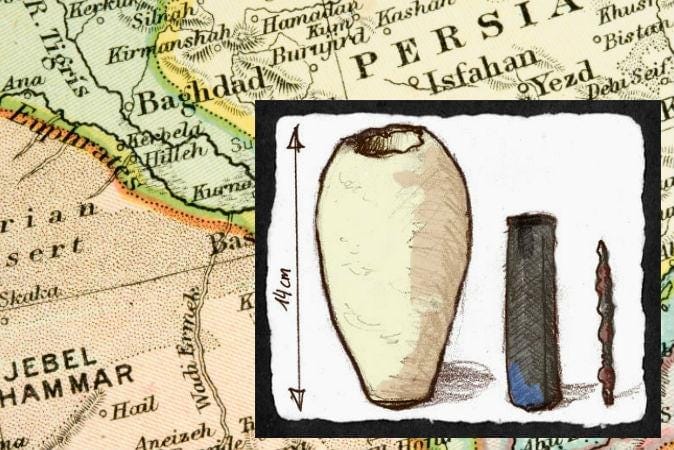
“The batteries have always attracted interest as curios,” Dr. Paul Craddock, a metallurgy expert at the British Museum, told the BBC in 2003. “They are a one-off. As far as we know, nobody else has found anything like these. They are odd things; they are one of life’s enigmas.”
16. Ancient Egyptian Light Bulb?
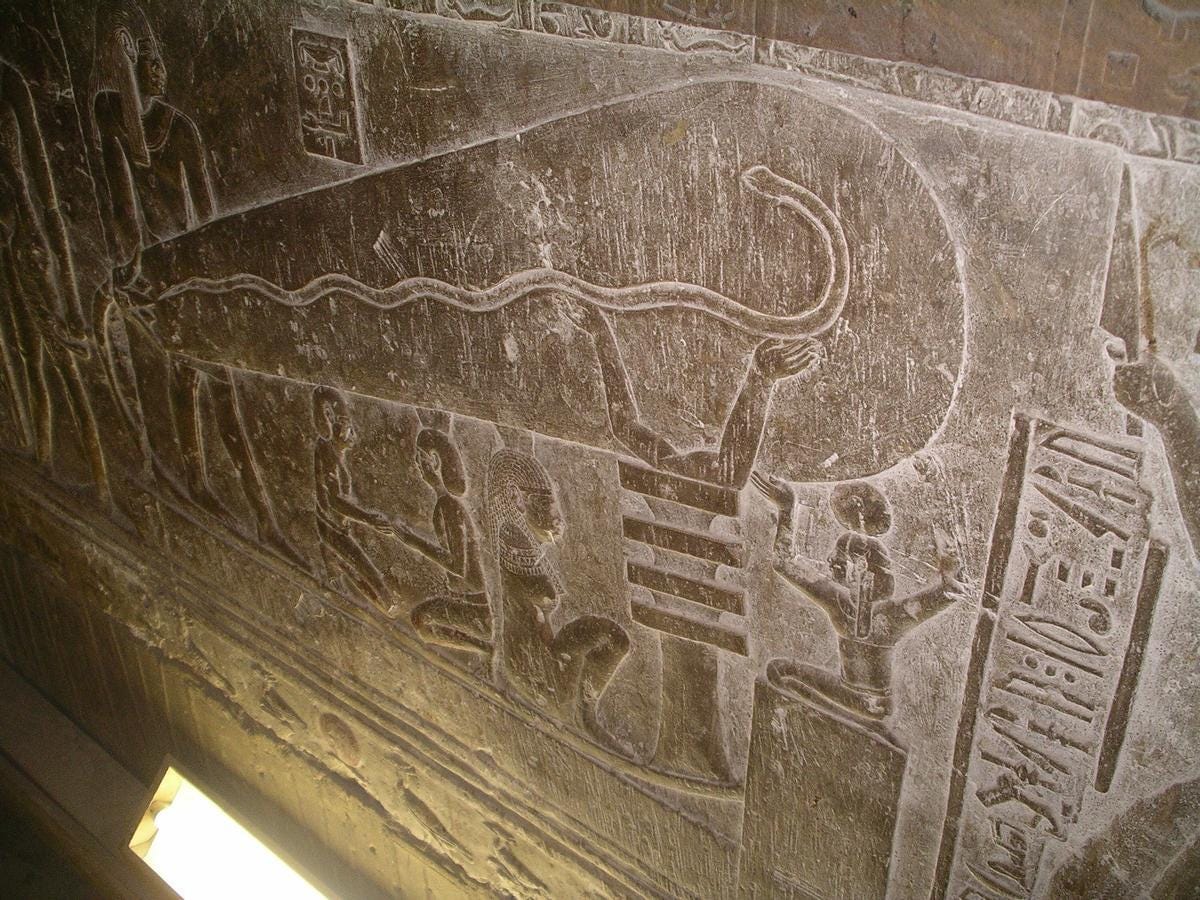
A relief beneath the Temple of Hathor at Dendera, Egypt, depicts figures standing around a large light-bulb-like object. Erich Von Däniken, who wrote “Chariot of the Gods,” created a model of the bulb which works when connected to a power source, emitting an eerie, purplish light.
15. Great Wall of Texas
In 1852, in what is now known as Rockwall County, Texas, farmers digging a well discovered what appeared to be an ancient rock wall. Estimated to be some 200,000 to 400,000 years old, some say it’s a natural formation while others say it’s clearly man-made.
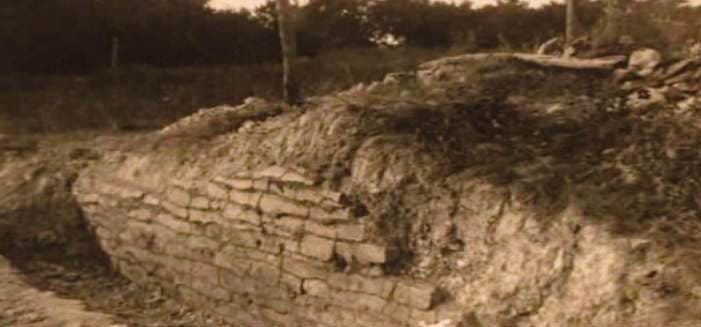
Dr. John Geissman at the University of Texas in Dallas tested the rocks as part of a History Channel documentary. He found they were all magnetized the same way, suggesting they formed where they are and were not moved to that site from elsewhere. But some remain unconvinced by this single TV-show test and call for further studies.
Geologist James Shelton and Harvard-trained architect John Lindsey have noted elements that seem to be of architectural design, including archways, linteled portals, and square openings that resemble windows.
14. 1.8-Billion-Year-Old Nuclear Reactor?
In 1972, a French factory imported uranium ore from Oklo, in Africa’s Gabon Republic. The uranium had already been extracted. They found the site of origin to have apparently functioned as a large-scale nuclear reactor that came into being 1.8 billion years ago and was in operation for some 500,000 years.
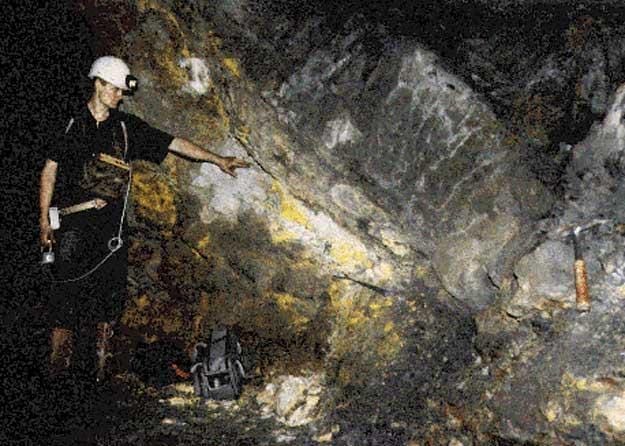
Dr. Glenn T. Seaborg, former head of the United States Atomic Energy Commission and Nobel Prize winner for his work in the synthesis of heavy elements, believed it wasn’t a natural phenomenon, and thus must be a man-made nuclear reactor.
For uranium to “burn” in a reaction, very precise conditions are needed. The water must be extremely pure, for one—much purer than exists naturally. The material U-235 is necessary for nuclear fission to occur. It is one of the isotopes found naturally in uranium. Several specialists in reactor engineering have said they believe the uranium in Oklo could not have been rich enough in U-235 for a reaction to take place naturally.
13. Sea-Faring Map Makers Before Antarctica Was Covered in Ice?
A map created by Turkish admiral and cartographer Piri Reis in 1513, but sourced from various earlier maps, is thought by some to depict Antarctica as it was in a very remote age before it was covered with ice.
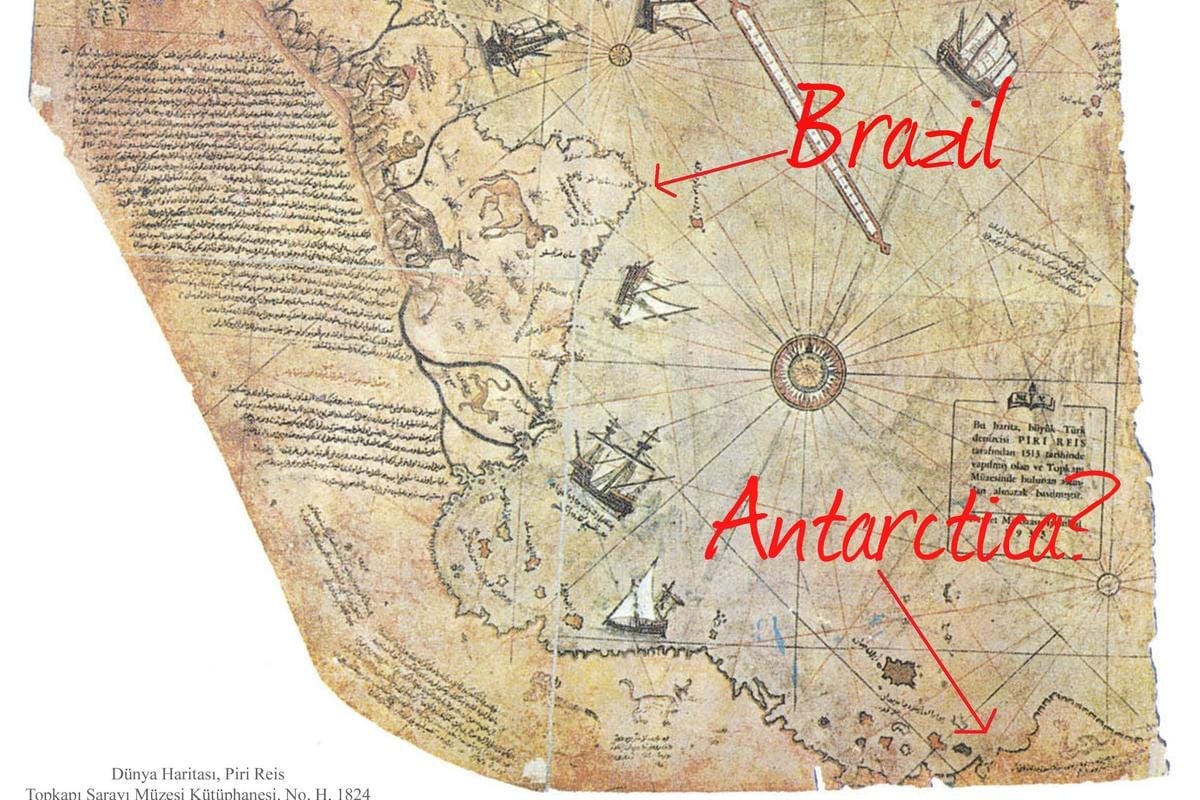
A landmass is shown to jut out from the southern coastline of South America. Captain Lorenzo W. Burroughs, a U.S. Air Force captain in the cartographic section, wrote a letter to Dr. Charles Hapgood in 1961 saying that this landmass seems to accurately show Antarctica’s coast as it is under the ice.

New book by Etienne de la Boetie2 exposes that the government and Hollywood have been running a multi-generational, trillion-dollar psychological operation on the population to indoctrinate them into accepting a ruling class, confiscatory taxation, and inflationary fractional reserve currency issued by private banks.
The book details 25 unethically manipulative techniques the “government” and monopoly media have been secretly using on the population, ranging from a hidden curriculum in their mandatory schools and scouting to the secret placement of propaganda in over 1,000+ movies and 1,000+ television shows. These techniques include subliminal messages and product placement of the American flag “anchored” to moments of high-positive emotion during the “programming”.
See the Press Release with more details HERE.
Buy the book at SeeTheCage.com
Substack readers can get the book for FREE by “Going Paid” to ANY of the Art of Liberty Foundation’s four Substacks AND get access to all four of those Substacks! Simply “Go Paid” and we will reply with details.