

Travel teams, high-end gear and specialized training are turning America’s pastime into a sport for rich kids
Etienne Note: One reason families can’t afford baseball for their kids is that banks and the “government” steal $1.40 MILLION from the average worker over a 40-year career and a 20-year retirement. Eliminate that theft, and everyone can afford baseball for their kids again.
By Harriet Ryan, The Wall Street Journal
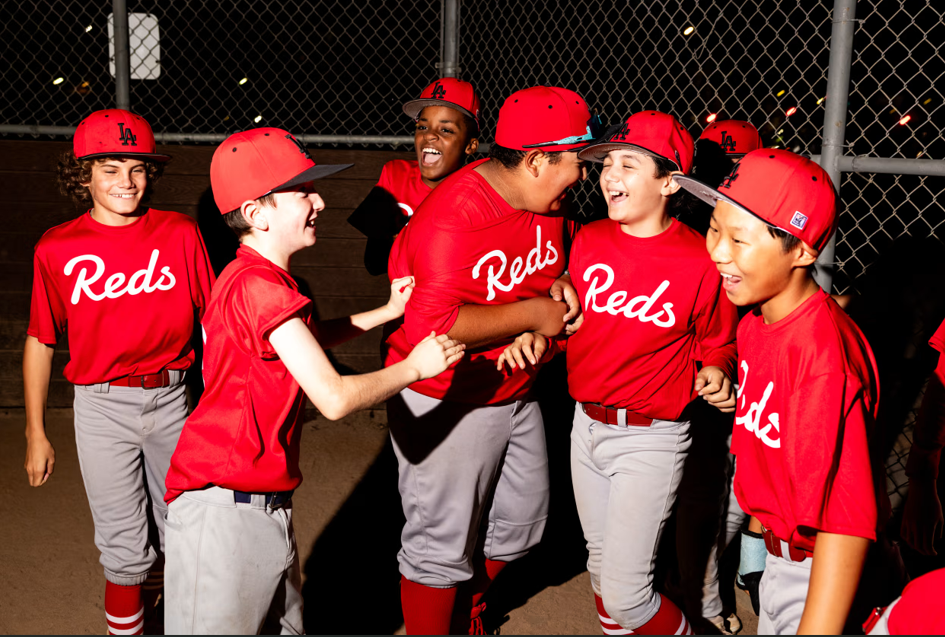
The second baseman stood 3-foot-6. The shortstop weighed 44 pounds.At a club baseball tournament east of Los Angeles this summer, the 6-year-olds on teams from as far away as Arizona were too young to pitch the ball themselves, but their parents were spending thousands on baseball.There were club dues, tournament fees, hotels, transportation, uniforms and equipment. An app offering “advanced statistics” and video of at-bats was $191 a year. Even watching from the stands has a price—this tournament had a $60-a-head pass for spectators. Spending $10,000 a year is common.“Nowadays…in order to get certain opportunities, you have to pay money,” said Carlos Avila, the national director of ZT Athletics, a private-equity backed company with three 6-and-under teams in the tournament. “People are trying to get ahead of the curve.”America’s national pastime, played by generations of children up and down the economic spectrum, is increasingly a sport for rich kids. Many adults remember Little League and rec programs, dad coaches and the snack shack. Youth baseball is now an intense and costly year-round endeavor dominated by for-profit enterprises.“It’s really a white collar sport now,” said Los Angeles club coach Michael Dyer, who uses a sliding fee scale to keep less-affluent 12-year-olds on his team. “There’s a ton of kids that should be playing at a high level that can’t play because they can’t afford it.”Frequent participation in baseball has fallen 28% since 2014 in families with annual incomes of less than $100,000, according to data from the Sports & Fitness Industry Association. In the same period, participation has increased 21% in families making more than $100,000.“Whenever it’s time to pay for something, it’s always like, oh my gosh, it’s so expensive,” said Paula Mendoza, a Los Angeles mother who said she limited her two sons’ play because of money.
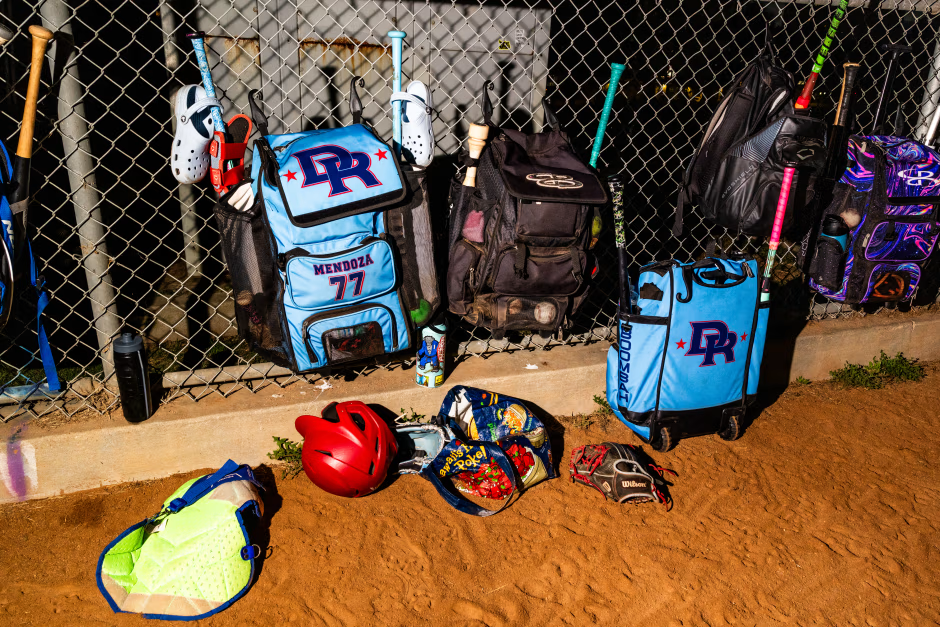
The price of playing baseball surpasses soccer and basketball, the other most popular youth sports. Between 2019 and 2024, average family spending on baseball jumped more than 68%, from $660 to $1,113 annually, according to the Aspen Institute’s Project Play.That average hides the costs that sports-focused families face. Annual club fees can reach $6,000, and the cost of traveling to tournaments can potentially double or even triple that. Youth bats go for $500 and gloves for $400. Private pitching and hitting coaches charging up to $200 an hour have become routine for children as young as 8. Sales of backyard batting cages, at costs around $25,000, are surging.Participation in Little League, meanwhile, where a four-month season averages between $110 and $170, has dropped more than 30% in the past 20 years.Avila’s ZT Athletics, which has about 150 teams nationally, charges monthly fees of $125 to $225, though he added that with other expenses, families who “do it the right way” are probably looking at $10,000 annually.Youth sports overall is now a $40 billion-a-year industry—with private-equity investors driving much of the growth. And Name, Image and Likeness compensation is turning the talent of younger and younger athletes into moneymaking opportunities. In baseball, the biggest corporate player is Perfect Game, which puts on nearly 10,000 tournaments, showcases and other events a year. The Florida-based private company has its hand in everything from uniforms and other apparel to family hotel bookings to team rankings down to age 9. Perfect Game doesn’t disclose its revenue, but its lawyers wrote in a court filing two years ago that a private-equity firm valued the company at “significantly” more than $100 million. “For-profit providers are part of the youth baseball economy and we should not pretend that they have no effect on what families spend,” said Greg Casterioto, a spokesman for Perfect Game.He said the costs supported fields and facilities, umpires, event personnel, insurance, technology, trained scorers, streaming crews, scouting coverage and the administration required to operate thousands of games. “Families are purchasing an organized competitive experience and, at certain events, scouting and recruiting exposure,” he said.He noted that the average annual costs for basketball and soccer are growing faster than baseball’s.“People see a way to make money, and they’re gonna make money,” said Perfect Game founder Jerry Ford, a former college coach who sold his majority stake in the company four years ago and now runs a charitable foundation that offers free baseball programs to low-income children. He acknowledged that for-profit baseball “grows bigger every year…I don’t know what anybody can do about it.”
5-and-under teams
Club teams—also called travel teams—rose to prominence in the 1990s as a showcase for the most elite high school players. They expanded steadily through the 2010s, and exploded in popularity during the pandemic, when rec and Little League programs temporarily shut down. Many families never returned to community baseball.James Colvin, a Florida software engineer whose 8-year-old plays baseball, used AI this summer to map club teams and organizations. An initial review of seven states—Alabama, California, Florida, Georgia, Louisiana, Mississippi and Texas—identified 10,260 organizations fielding at least one team, he said. Clubs now offer teams from ages 5U—or 5 and under, essentially preschool—to 18. Rosters are no longer reserved for top-tier players, instead offering different teams for various talent levels. Girls are allowed but are rare. Little League, for comparison, says nearly 9% of its baseball players are girls.“We are seeing demand from parents saying, ‘I want my child in a travel program even if they’re not necessarily on a competitive level to do that,’” said Jordan Baltimore, the chief executive of New York Empire Baseball, which has 1,100 young players in Manhattan and Long Island.“They want to keep up with the Joneses, and they see their friends’ kids always at these tournaments,” said Gader Ibrahim, a baseball mom influencer from Orange County, Calif. She has three boys that play, ages 14, 11 and 7. One family in her social circle told her they took out a second mortgage on their home rather than forgo baseball, she said, adding, “I really do truly believe it is parents having FOMO.”

Get the book — including deeply discounted “Friends Bundles” — at Greatest-Theft.com
Second: share this report. It is released under Creative Commons Attribution 4.0 — reproduce and distribute freely with attribution. You can download the full PDF with hyperlinks at ArtOfLiberty.org/Inflation. Order printed copies at Greatest-Theft.com, or get one free with an annual Voluntaryist.News membership.
Third: support the Art of Liberty Foundation! We are an independent organization with no government funding, no banking-sector advertising revenue, and no institutional dependencies. The work described in this report — and the investigative journalism that will follow — depends entirely on voluntary support. Become a sponsor at ArtOfLiberty.org/Sponsor.
“The magicians can only fool the audience until the audience understands the trick.
That moment is now.”
— Etienne de la Boetie², Art of Liberty Foundation
ArtOfLiberty.org · ArtOfLiberty.org/Inflation
Released under Creative Commons Attribution 4.0 — reproduce and distribute freely with attribution.


