Bank of New York Mellon said it now employs dozens of artificial intelligence-powered ‘digital employees’ that have company logins and work alongside its human staff.
Similar to human employees, these digital workers have direct managers they report to and work autonomously in areas like coding and payment instruction validation, said Chief Information Officer Leigh-Ann Russell. Soon they’ll have access to their own email accounts and may even be able to communicate with colleagues in other ways like through Microsoft Teams, she said.
“This is the next level,” Russell said. While it’s still early for the technology, Russell said, “I’m sure in six months’ time it will become very, very prevalent.”
What the bank, also known as BNY, calls “digital workers,” other banks may refer to as “AI agents.” And while the industry lacks a clear consensus on exact terminology, it’s clear that the technology has a growing presence in financial services.
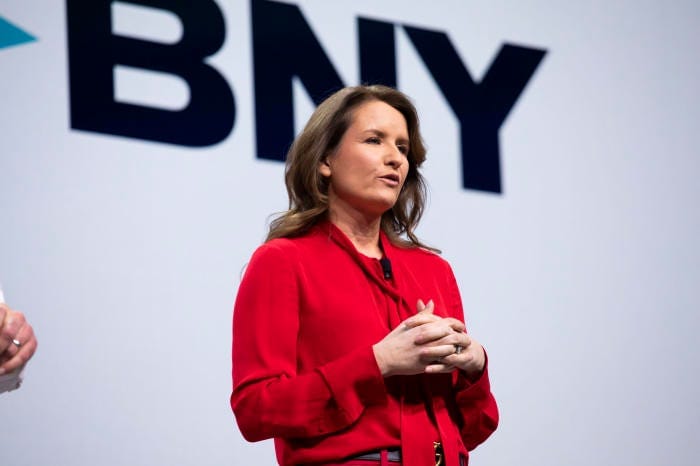
BNY Chief Information Officer Leigh-Ann Russell Photo: Bank of New York Mellon
Others aren’t necessarily taking the same approach of granting their AI full logins, but many say that they are shaping AI into applications that increasingly replicate the capabilities and workflows of human employees, taking on more and more tasks in areas like the software development life cycle and research. Several, like JPMorgan Chase, say they are still figuring out the exact right access and management controls and system integrations and how humanlike these tech systems will become.
BNY said it took three months for its AI Hub to spin up two digital employee personas: one designed to clean up vulnerabilities in code and one designed to validate payment instructions. Each persona can exist in a few dozen instances, and each instance is assigned to work narrowly within a particular team, Russell said. That way no digital employee has broad access to information across the company, she added.
Because they have their own logins, and can directly access the same apps as human employees, they can work autonomously, said Russell. For example, a digital engineer can log into company systems and see there’s a vulnerability that needs to be patched, write the new code to patch it, and then pass it on to a human manager for approval in the system.
BNY said it’s aiming to grant its digital workforce access to more enterprise communication systems, such as email and Microsoft Teams, allowing them to proactively contact their human managers for issues they can’t solve. It’s also working to build digital employees that go beyond coding and payment instruction validation into other areas. The bank said it will continue to hire top human talent while also building out more digital employees.
At JPMorgan Chase, Chief Analytics Officer Derek Waldron thinks of “digital employees” as more of a helpful model for business people to conceptualize AI tools. They are fundamentally different from human employees, of course, but also traditional software systems, and so they may need their own type of system connectivity and access management, he said. It’s an open question exactly how much or how little access to give an agent, and it’s going to have to be figured out on a case-by-case basis, he said.

Bank of New York Mellon’s digital workers have direct managers they report to and work autonomously in areas like coding and payment instruction validation. Photo: Jeenah Moon/Bloomberg News
And while it’s not clear yet exactly what it will look like, he does envision a future where every employee will have an AI assistant and every client experience will have an AI concierge. 230,000 employees already have access to a general AI chatbot through the company’s proprietary platform, and the goal is to build out more autonomous and more agentic versions of it that are further and further tailored to individual job groups.
Scott Mullins, Managing Director, AWS for Financial Services, said the question of how to integrate digital workers with a human workforce is top of mind across the finance industry.
“How do we coordinate that work together?” he said. When it comes to digital workers, he added, “How do we manage those folks? How do we actually instruct those folks? What’s the new
operating model? Those are the answers that we’re all working on right now.”
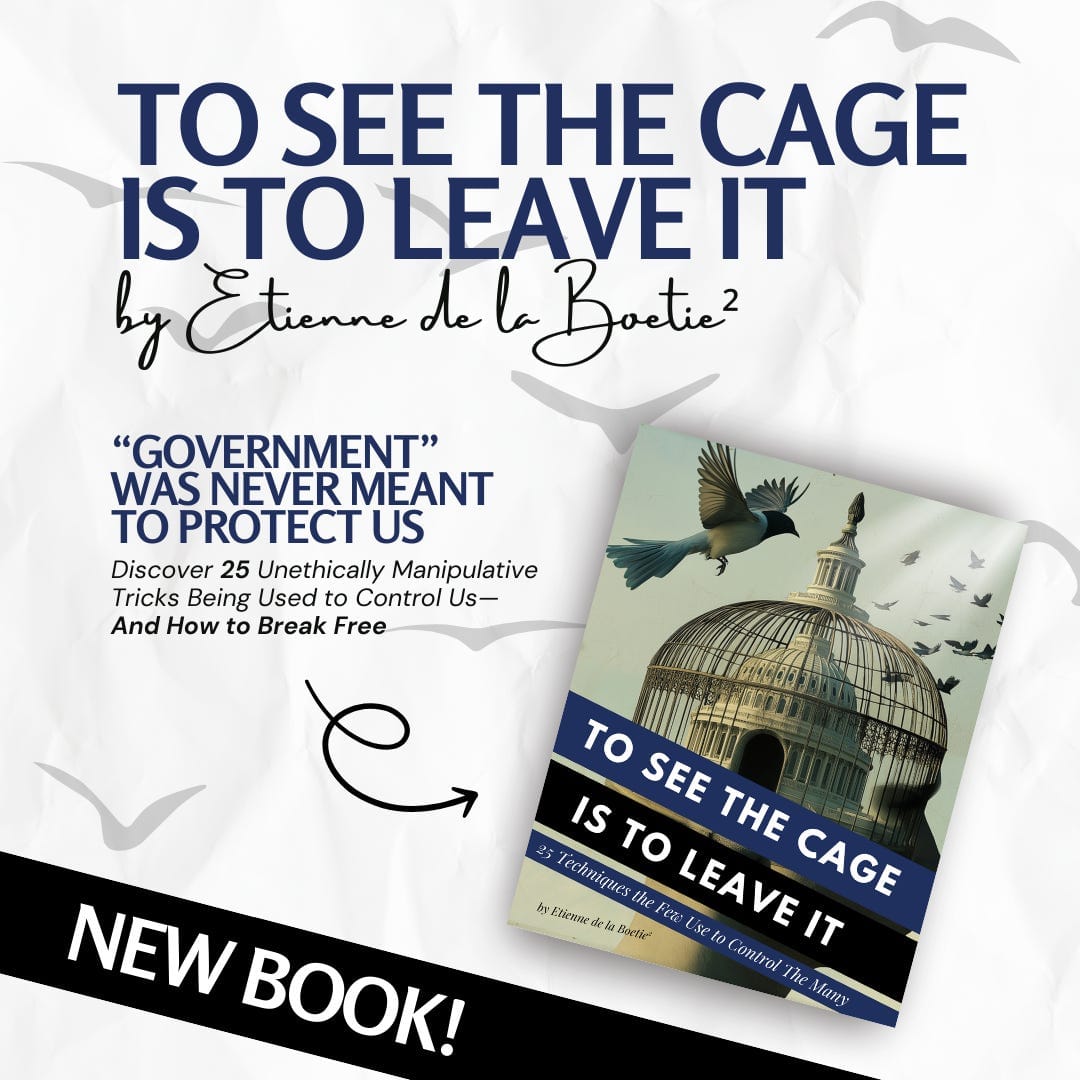
New book by Etienne de la Boetie2 exposes that the government and Hollywood have been running a multi-generational, trillion-dollar psychological operation on the population to indoctrinate them into accepting a ruling class, confiscatory taxation, and inflationary fractional reserve currency issued by private banks.
The book details 25 unethically manipulative techniques the “government” and monopoly media have been secretly using on the population, ranging from a hidden curriculum in their mandatory schools and scouting to the secret placement of propaganda in over 1,000+ movies and 1,000+ television shows. These techniques include subliminal messages and product placement of the American flag “anchored” to moments of high-positive emotion during the “programming”.
See the Press Release with more details HERE.
Buy the book at SeeTheCage.com
Substack readers can get the book for FREE by “Going Paid” to ANY of the Art of Liberty Foundation’s four Substacks AND get access to all four of those Substacks! Simply “Go Paid” and we will reply with details.