

(NewsNation) — Consuming popular sugar substitutes may be linked to a faster decline in memory and thinking skills, according to new research.
A study published by the American Academy of Neurology found an association between sweetener consumption and cognitive decline.
“Low- and no-calorie sweeteners are often seen as a healthy alternative to sugar; however, our findings suggest certain sweeteners may have negative effects on brain health over time,” said study author Dr. Claudia Kimie Suemoto of the University of São Paulo.
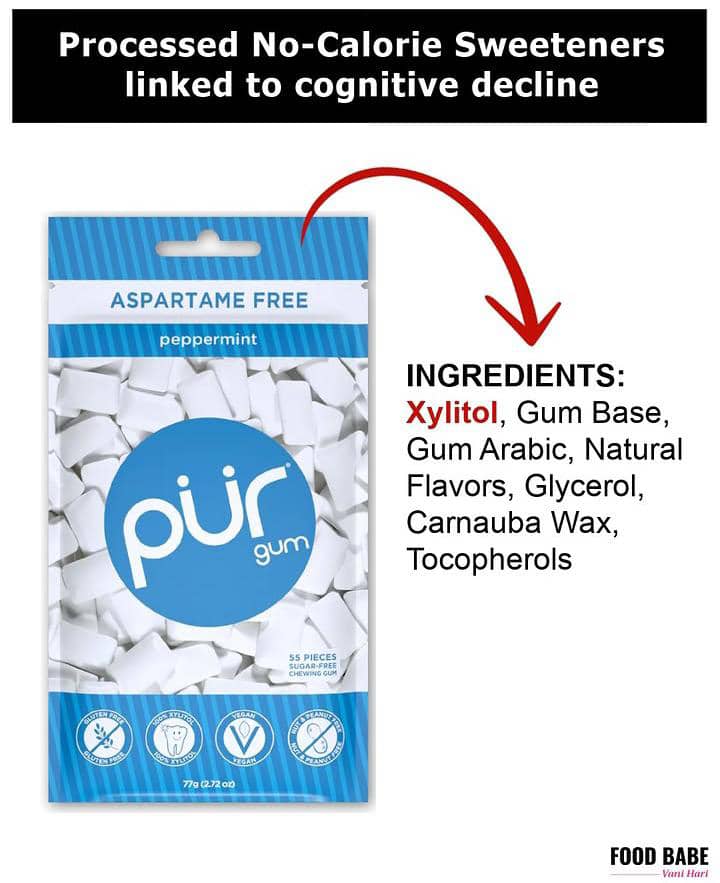
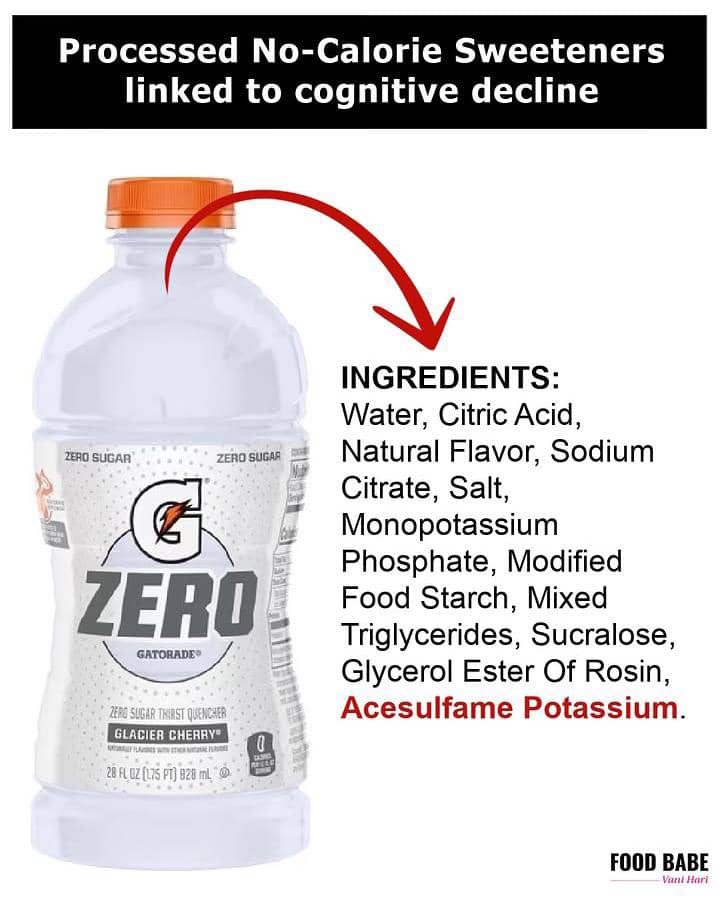
Researchers analyzed data from nearly 13,000 adults and examined seven sweeteners: aspartame, saccharin, acesulfame K, erythritol, xylitol, sorbitol and tagatose, all of which contain few or no calories.
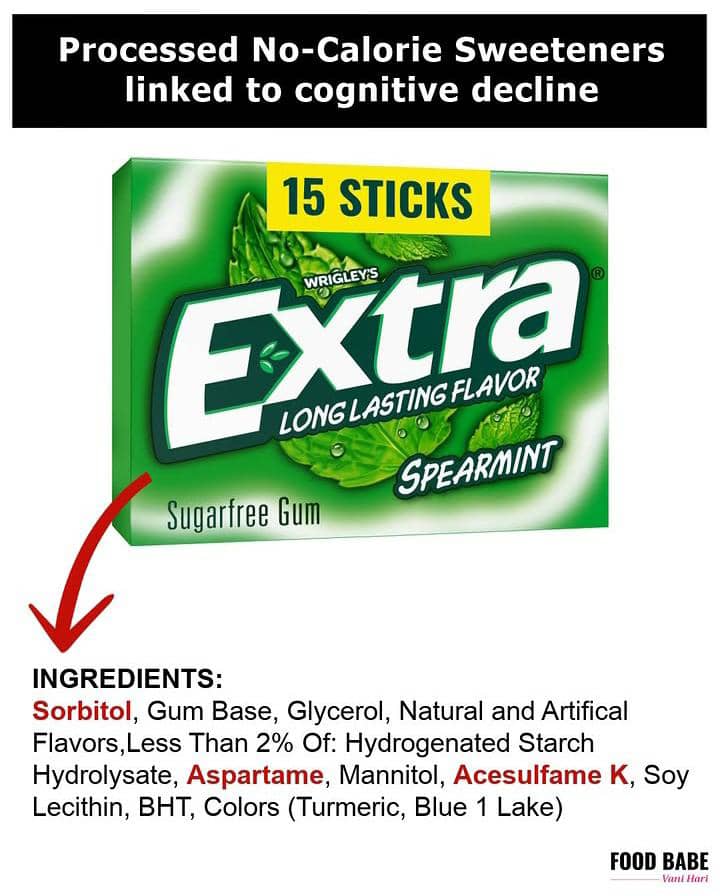
They found that adults who consumed higher amounts of sweeteners experienced a 62% faster rate of cognitive decline. The association with accelerated brain aging was particularly evident among participants with diabetes.
People in the middle-consumption group experienced cognitive decline that was 35% faster than that of participants in the lowest-consumption group. To measure changes over time, participants completed cognitive assessments at the beginning, midpoint and end of the study.
“While we found links to cognitive decline for middle-aged people both with and without diabetes, people with diabetes are more likely to use artificial sweeteners as sugar substitutes,” Suemoto said.
Sweeteners are commonly added to ultra-processed foods and beverages. Many are also sold separately for use in coffee, tea, cooking and baking.
Etienne note: The study ScienceDaily is referring to was conducted in Brazil, by researchers from the University of São Paulo (led by Natalia Gomes Gonçalves and Claudia Kimie Suemoto), published in the journal Neurology on October 7, 2025 (DOI: 10.1212/WNL.0000000000214023).
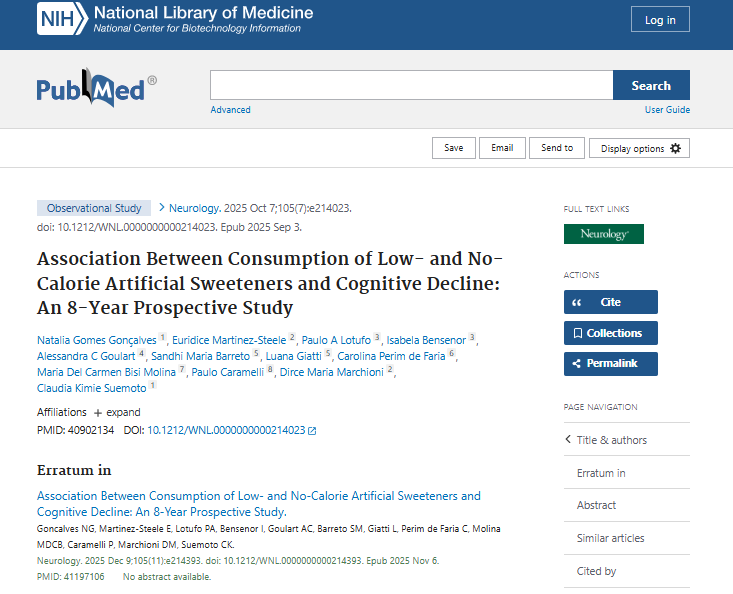
Abstract
Background and objectives: Consumption of low- and no-calorie sweeteners (LNCSs) has been associated with adverse health outcomes. However, little is known about the association between consumption of LNCSs and cognition. The aim of this study was to investigate the association between consumption of LNCSs and cognitive decline.
Methods: We conducted a longitudinal observational study using data from civil servants aged 35+ years at baseline who were enrolled in the Brazilian Longitudinal Study of Adult Health and evaluated across 3 study waves (2008-10, 2012-14, and 2017-19). Participants with incomplete dietary data, extreme caloric intake (<1st percentile or >99th percentile), and incomplete data for cognitive tests and covariates at baseline were excluded. A Food Frequency Questionnaire was used to calculate combined and individual consumption of 7 LNCSs (aspartame, saccharin, acesulfame k, erythritol, xylitol, sorbitol, and tagatose). We estimated z-scores across 6 cognitive tests. The association of LNCSs with cognitive decline was evaluated using linear mixed-effects models.
Results: Among 12,772 participants (mean age 51.9 ± 9.0 years, 54.8% women, 43.2% Black/mixed race), the mean consumption of LNCSs was 92.1 ± 90.1 mg/d. Among participants aged younger than 60 years, consumption of combined LNCSs in the highest tertiles was associated with a faster decline in verbal fluency (second tertile: β = -0.016, 95% CI -0.040 to -0.008; third tertile: β = -0.040, 95% CI -0.064 to -0.016) and global cognition (second tertile: β = -0.008, 95% CI -0.024 to 0.008; third tertile: β = -0.024, 95% CI -0.040 to -0.008). There was no association between tertiles of LNCSs and cognitive decline in participants aged 60+ years. Consumption of aspartame, saccharin, acesulfame k, erythritol, sorbitol, and xylitol was associated with a faster decline in global cognition, particularly in memory and verbal fluency domains. Consumption of combined LNCSs in the highest tertiles was associated with a faster decline in verbal fluency and global cognition in participants without diabetes and faster decline in memory and global cognition in participants with diabetes.
Discussion: Consumption of LNCSs was associated with an accelerated rate of cognitive decline during 8 years of follow-up. Our findings suggest the possibility of long-term harm from LNCS consumption, particularly artificial LNCSs and sugar alcohols, on cognitive function. Study limitations include self-reported dietary data, selection bias from attrition, and residual confounding from co-occurring health behaviors.
The Best “Go Paid” Deal on Substack! You Get REAL Stuff!!

Go paid at the $5 a month level, and we will send you both the PDF and e-Pub versions of Etienne’s new book: To See the Cage Is to Leave It - 25 Techniques the Few Use to Control the Many and a coupon code for 10% off anything in the https://artofliberty.org/store/.
Go paid at the $50 a year level, and we will send you a free paperback edition of Etienne’s new book: To See the Cage Is to Leave It - 25 Techniques the Few Use to Control the Many OR “Government” - The Biggest Scam in History… Exposed! OR a 64GB Liberator flash drive if you live in the US. If you are international, we will give you a $10 credit towards shipping if you agree to pay the remainder.
Support us at the $250 Founding Member Level and get a signed high-resolution hardcover of “Government” - The Biggest Scam in History... Exposed! + Liberator flash drive + a signed high-resolution hardcover of Etienne’s new book: To See the Cage Is to Leave It - 25 Techniques the Few Use to Control the Many + everything else in our “Everything Bundle” of the best in voluntaryist thought delivered domestically. International pays shipping. Our only option for signed copies besides catching Etienne @ an event.


