Hertz’s new artificial intelligence-powered scanners are flagging customers for minor dents, scratches and blemishes in the company’s rental cars — charging hundreds of dollars in fees. But there are steps you can take to avoid getting hit with surprise damage claims.
From choosing where to rent to documenting every inch of your vehicle, renters have options to protect themselves from what some customers say is an overly aggressive and opaque system.
The company, which insisted that the scanner “only detects billable damage,” has previously defended the technology, saying that “the vast majority of rentals are incident-free” and that “when damage does occur, our goal is to enhance the rental experience by bringing greater transparency, precision, and speed to the process.”
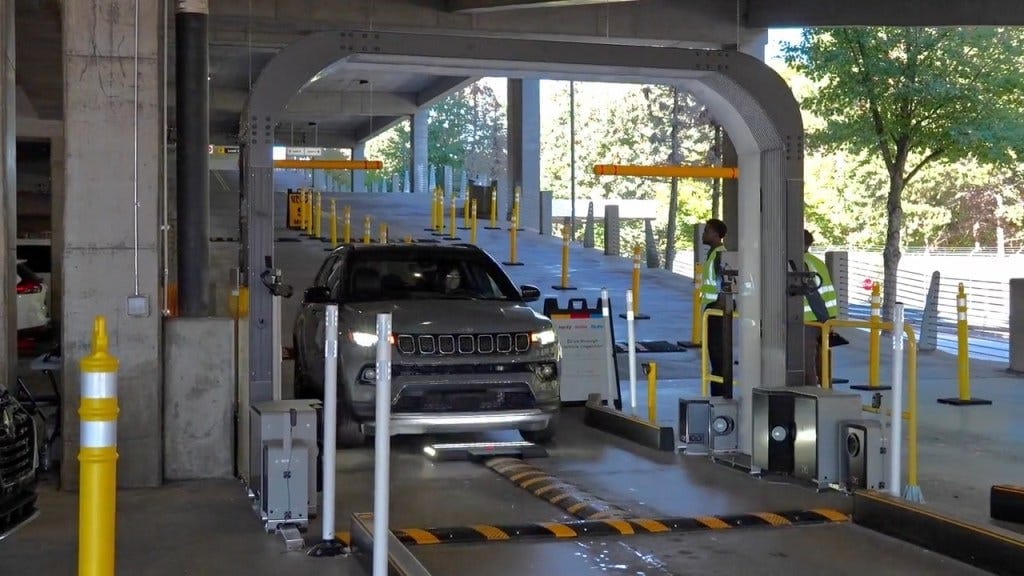
1. Avoid Locations That Use Hertz’s AI Scanners
The surest way to avoid being charged by Hertz’s automated system is to steer clear of locations that use it altogether.
As of now, Hertz has installed UVeye scanners at a limited number of its 1,600 airport stores in the United States, including Atlanta Hartsfield-Jackson, Charlotte Douglas, Houston George Bush, Newark Liberty, Phoenix Sky Harbor and Tampa International.
The company plans to expand the service to 100 locations by the end of 2025.
Confirming whether a specific Hertz location uses the system can be difficult. One reporter from The Drive who attempted to call five of the scanner-equipped locations found that most either didn’t answer, hung up immediately or had full voicemail boxes.
If there’s uncertainty about whether a location uses scanners, it may be wise to avoid Hertz and its sister brands, Dollar and Thrifty, at major airports altogether and consider alternative rental agencies.
Currently, the only other US rental company known to use AI scanning is Sixt, which employs a different approach by requiring human staff to review any damage flagged by the system before billing customers.
“If new damage is detected, it is carefully reviewed by our trained staff to ensure fair and customer-focused outcomes,” according to Sixt.
“Only if the damage is clearly identified by a staff member as new can a damage claim be initiated by SIXT.”
2. Use Your Own Insurance or Credit Card Coverage
Rental car insurance may be more helpful than you think—especially when it comes to small scrapes and scuffs.
A customer named Patrick, who was charged $440 for a one-inch wheel scuff at Hertz’s Atlanta airport location, could have avoided the out-of-pocket expense if he had used credit card coverage.
The charge included $250 for the damage, $125 for “processing,” and $65 for “administration.”
Credit card policies often cover minor incidents such as cracked glass or rim scratches, treating them as collisions with objects.
But to qualify, you typically need to decline the rental company’s insurance, pay with the card offering coverage and ensure you’re renting an eligible vehicle — not a van, motorcycle or antique.
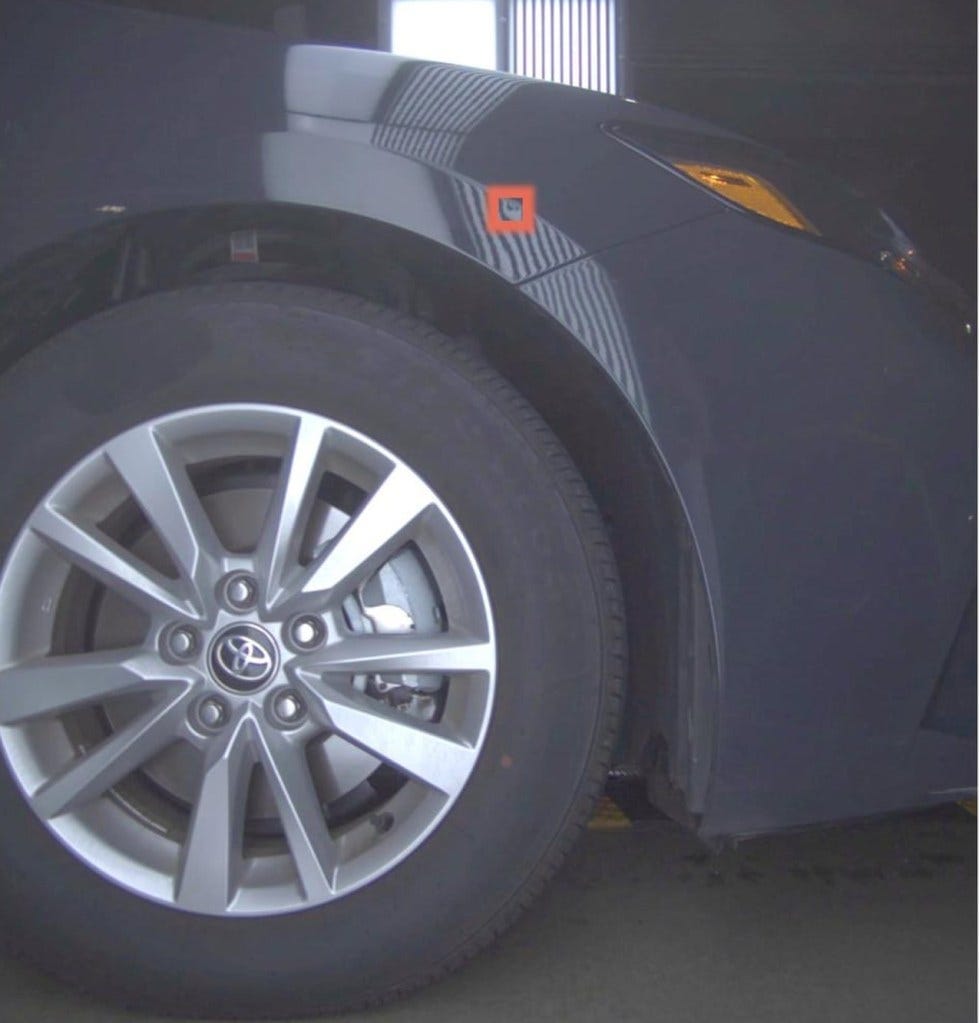
Be aware that credit card rental insurance is often secondary, meaning it only kicks in after your personal auto insurance. And not all plans include liability coverage. Check with your insurer or credit card provider ahead of time to understand the fine print.
While Hertz offers its own insurance, it can be pricier than other options on the market.
3. Take Your Own Photos or Use an App
Even if you’re not renting from a scanner-equipped location, always document the vehicle’s condition yourself before and after your rental. In many cases, Hertz has charged customers for legitimate — but extremely minor — damage that a human inspector might overlook.
One customer told the New York Times they were charged $195 for a tiny dent flagged by the scanner, even though a Hertz employee had already confirmed the car was damage-free.
To protect yourself, take detailed photos and videos.
Better yet, consider using an app like Proofr, which uses machine learning to track changes between “before” and “after” photos.
While it’s unclear whether Hertz will accept third-party documentation, it may help support your case in a dispute — or come in handy for other rental or leasing scenarios.
New book by Etienne de la Boetie2 exposes that the government and Hollywood have been running a multi-generational, trillion-dollar psychological operation on the population to indoctrinate them into accepting a ruling class, confiscatory taxation, and inflationary fractional reserve currency issued by private banks.
The book details 25 unethically manipulative techniques the “government” and monopoly media have been secretly using on the population, ranging from a hidden curriculum in their mandatory schools and scouting to the secret placement of propaganda in over 1,000+ movies and 1,000+ television shows. These techniques include subliminal messages and product placement of the American flag “anchored” to moments of high-positive emotion during the “programming”.
See the Press Release with more details HERE.
Buy the book at SeeTheCage.com
Substack readers can get the book for FREE by “Going Paid” to ANY of the Art of Liberty Foundation’s four Substacks AND get access to all four of those Substacks! Simply “Go Paid” and we will reply with details.