

By Akhtar Makoii, The Telegraph
Iran’s Hadid 110 drone has had an upgrade. Now, it flies lower, faster and is harder to see.
Jet-powered, with a top speed of more than 300mph, the new stealth drone has been built to slip through American air defences.
The Islamic Revolutionary Guard Corps (IRGC) said it had been deployed for the first time in the past fortnight, fired towards US bases and warships in the region.
The Telegraph understands that the drone is an advanced version of their standard Hadid 110, a weapon Iranian officials consider one of their most capable.
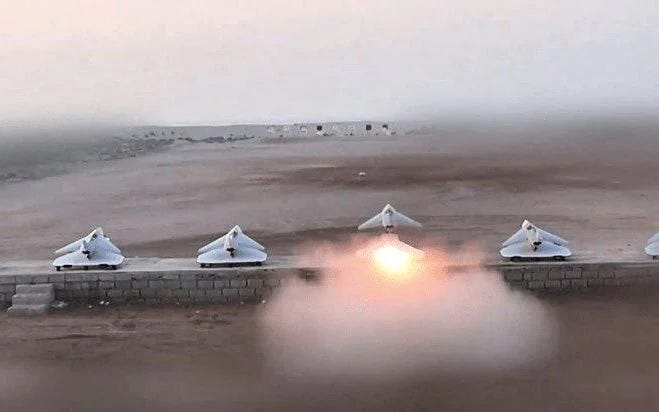
The suicide drone was first shown to Ali Khamenei last year, before the then ayatollah was killed in the war’s opening strikes.
What distinguishes the new Hadid 110 is speed and stealth.
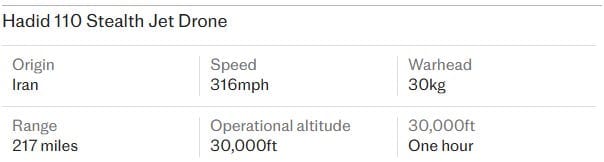
Where most of Iran’s attack drones are propeller-driven and slow, this one carries a turbojet engine that Iranian sources say pushes it to 316mph, making it the fastest-known Iranian drone.
It is launched by a solid-fuel booster that lifts it to speed and altitude before the jet ignites, allowing rapid deployment from the field.
The speed offers it a huge battlefield advantage.
Air defences work by detecting an incoming threat, tracking it and firing an interceptor in time to meet it. The faster the target, the less time the defender has to complete that chain.
The new Hadid 110 is designed to shrink that window and reach its target before the guns and missiles guarding it can react.
Its shape is designed to hide it from radar as Iranian experts describe it as having a seamless, boltless airframe.
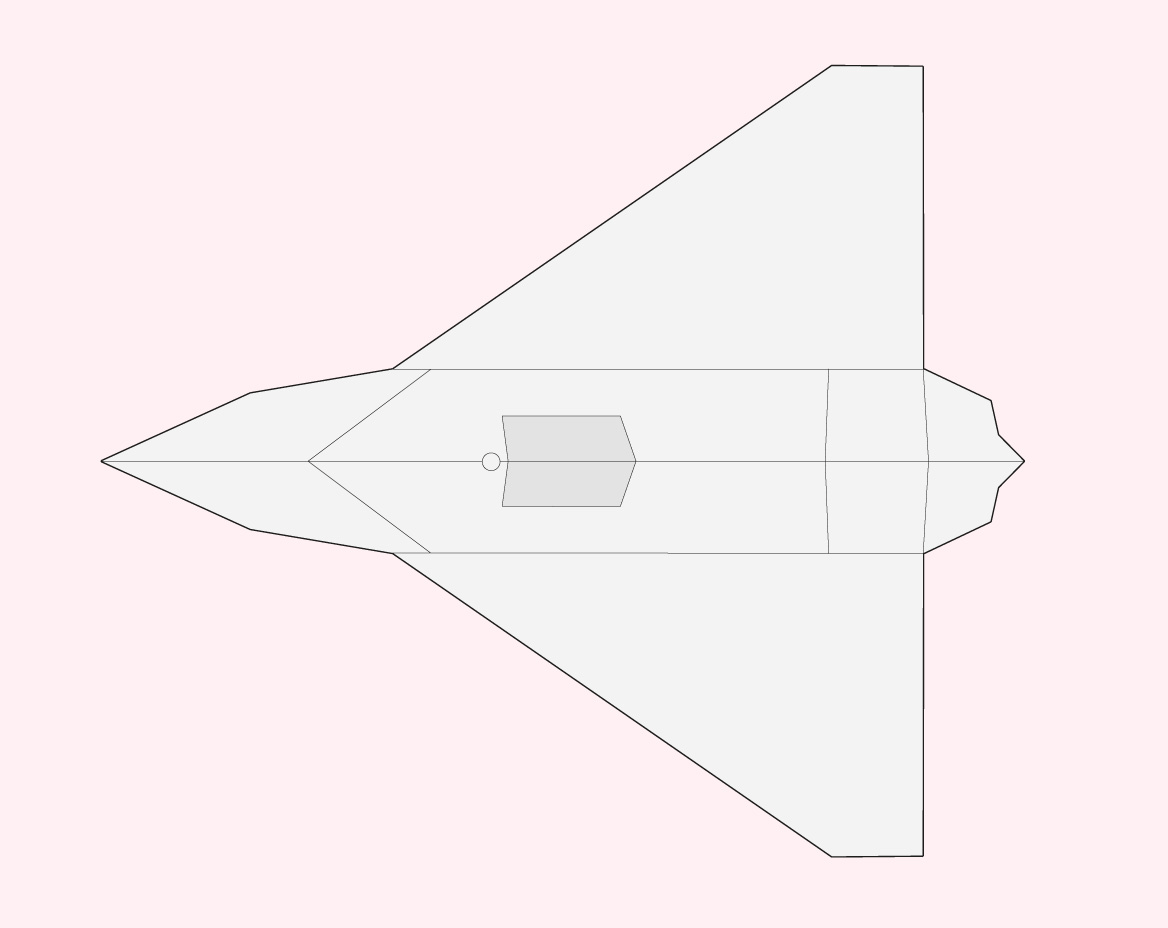
The S-shaped air intake mounted on top of the fuselage conceals the engine’s fan blades, while radar-absorbing material coats the outside.
The Hadid 110 carries a warhead weighing 30kg, or just under 5st, has a strike range of roughly 220 miles and can stay aloft for about an hour. That is enough to destroy important targets relatively close to Iran’s coast, but it is not a long-range strategic weapon.
Iran says it is built entirely domestically. That may or may not be true – Iran has been supported by both China and Russia in the conflict. But the claim is central to why the drone matters inside Iran beyond the battlefield.
Years of sanctions cut Tehran off from the advanced Western avionics, engines and materials that a modern air force needs, and its manned fleet is a museum of ageing American and Russian jets it can barely maintain.
Any new weapon is also key in reshaping the balance of power within Iran’s own military.
Today in Iran, ballistic missiles and drones are not controlled by the regular army, but by the IRGC and its air force.
Each advance in that arsenal deepens the IRGC’s dominance over the conventional armed forces and hands its commanders a larger say in decisions of war and peace. The war has accelerated that shift.
With the supreme leader killed and Mojtaba Khamenei, his reclusive successor, yet to appear in public, real authority has drifted towards the men who command the missiles and the drones.
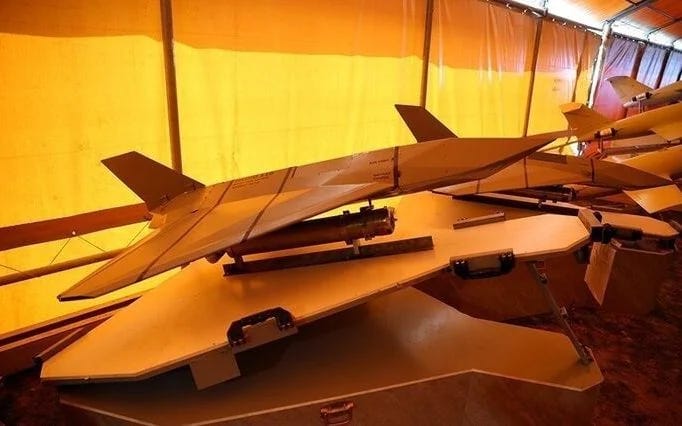
The new weapon, unveiled in the middle of the war, is more than just a display of firepower – it is a statement of the IRGC’s intent.
The drone’s appearance coincided with an unusual turn in the war.
After two weeks of escalating exchanges, both sides appear to have halted their strikes without any announced ceasefire, a quiet and unacknowledged pause rather than a negotiated truce.
It is a fragile lull. Iran has closed the Strait of Hormuz, vowed to widen the war, and insisted it will not let Washington dictate the terms.
“We will not allow America to determine the timing of war and peace,” Esmail Baghaei, a foreign ministry spokesman, said, adding that Iran would “defend ourselves for as long as necessary”.
He dismissed the US campaign as flailing, a war meant to force Iran’s surrender, he said, had instead left Washington “stuck in a quagmire” five months on.
He confirmed that Iran and Oman were in talks over managing shipping through the strait with no American involvement while the waterway remained closed because of “US-imposed insecurity”.
Donald Trump says the pause is to allow time for talks to resume. He has been told that the US is running low on interceptor missiles – precisely what are needed to stop the new Hadid 110. For now, the pause continues.
The Best “Go Paid” Deal on Substack! You Get REAL Stuff!!

Go paid at the $5 a month level, and we will send you both the PDF and e-Pub versions of Etienne’s new book: To See the Cage Is to Leave It - 25 Techniques the Few Use to Control the Many and a coupon code for 10% off anything in the https://artofliberty.org/store/.
Go paid at the $50 a year level, and we will send you a free paperback edition of Etienne’s new book: To See the Cage Is to Leave It - 25 Techniques the Few Use to Control the Many OR “Government” - The Biggest Scam in History… Exposed! OR a 64GB Liberator flash drive if you live in the US. If you are international, we will give you a $10 credit towards shipping if you agree to pay the remainder.
Support us at the $250 Founding Member Level and get a signed high-resolution hardcover of “Government” - The Biggest Scam in History... Exposed! + Liberator flash drive + a signed high-resolution hardcover of Etienne’s new book: To See the Cage Is to Leave It - 25 Techniques the Few Use to Control the Many + everything else in our “Everything Bundle” of the best in voluntaryist thought delivered domestically. International pays shipping. Our only option for signed copies besides catching Etienne @ an event.


