

Not all — and not yet. But what happened on August 20, 2026 is the biggest step any state has ever taken, and it was a decade in the making. Here what changed, what didn't, and how we got here.
The viral posts say Florida is “abolishing vaccine mandates.” Not quite — and the difference is worth getting right. Here is exactly what changed on August 20, 2026, and the ten‑year road that led to it.
View and share the X post dedicated to this thread here.
What actually happened this week
On August 20, Surgeon General Joseph Ladapo approved a Florida Department of Health rule that removes four immunizations — hepatitis B, varicella (chickenpox), Haemophilus influenzae type b (Hib), and pneumococcal conjugate — from the entry requirements for Florida’s public and private schools, pre‑K through 12th grade. The rule does two other things that have received less attention but matter just as much to families: it expands the religious exemption to include moral and ethical beliefs, and it allows parents and college students to opt out of having their records included in the state vaccine database. The rule now sits in a 21‑day public comment window — reported to run through September 14 — before final adoption.
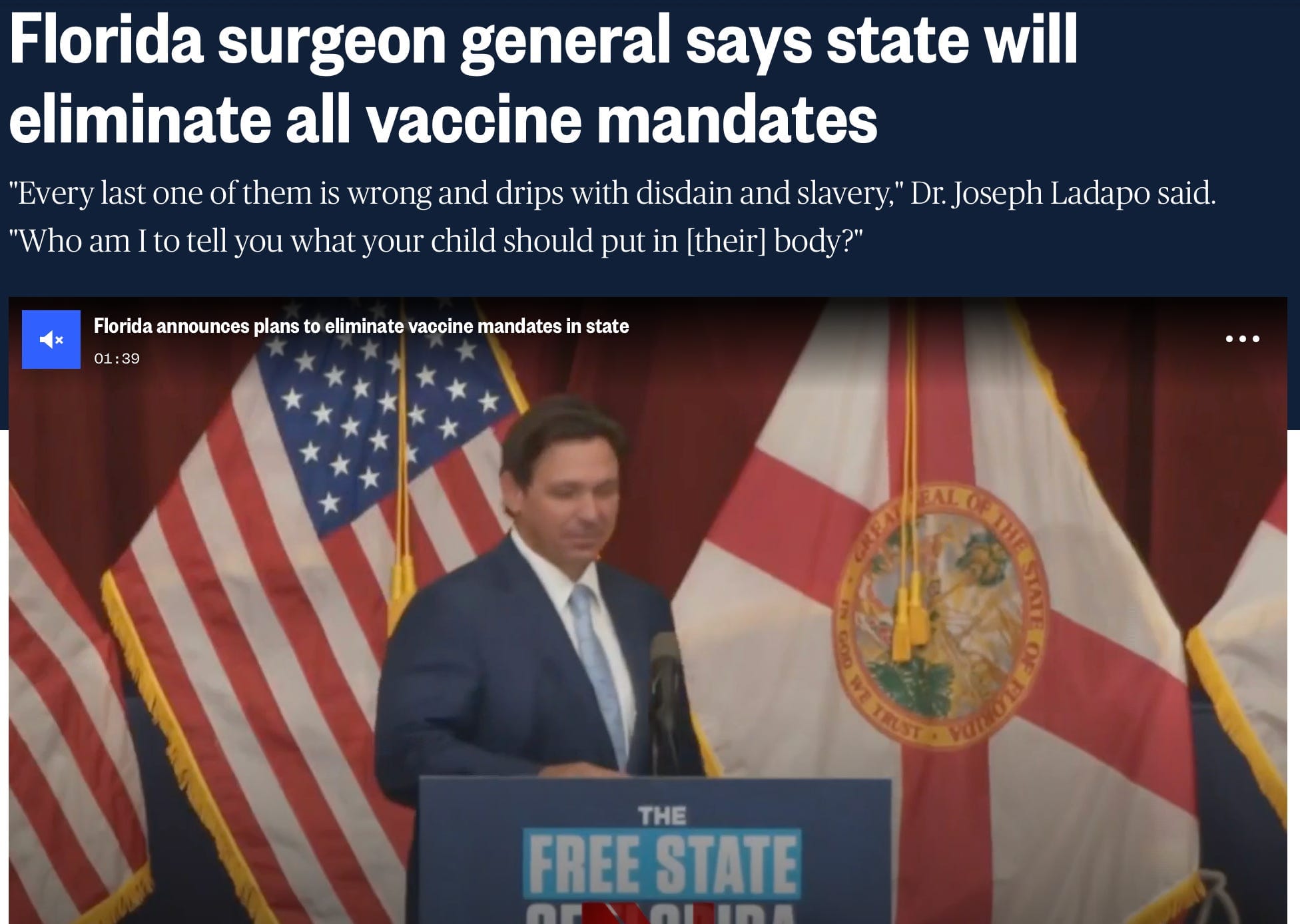
Getting the scope exactly right matters, because our credibility depends on it. This rule does not end every school vaccine requirement in Florida. Seven immunization requirements — including measles‑mumps‑rubella, polio, diphtheria, and tetanus — are written into state statute, not agency rule, and can only be changed by the Legislature. No bill to repeal them has passed. What changed this week is what the health department has lawful authority to change on its own. That is the true story: not a stroke‑of‑the‑pen abolition, but the furthest any state has ever gone toward voluntary childhood vaccination — reached the slow way, through rulemaking, public hearings, and a decade of organizing.
Sacramento, 2015: where this began
The modern chapter of this fight opens in California. Senate Bill 277, authored by Senators Richard Pan and Ben Allen and signed by Governor Jerry Brown on June 30, 2015, eliminated personal‑belief exemptions to school vaccination requirements — the first repeal of its kind in a generation. Families who objected were told their children could be educated at home or not at all. Four years later, after medical exemptions rose, Sacramento went further: SB 276 and SB 714, signed in September 2019, put the state — not a child’s own physician — in the position of reviewing and denying medical exemptions. Parents filled the capitol in protest; some were arrested; the Legislature was shut down for a day. That same afternoon — hours after the Senate passed SB 276, hours before Newsom signed it — Robert F. Kennedy Jr. stood outside the governor’s office and put one question to the legislators inside, the question this entire fight has always turned on:
“Where does the power of government end?”
If the state can compel what goes into a child’s body, he asked, then what is the limiting principle — what can’t it order a citizen to do? We published the full transcript on GreenMedInfo, which matters, because YouTube later scrubbed the footage in its COVID‑era purge of vaccine content. And then he did something rarer than outrage: he taught a movement that had just lost how to lose. He named the defeats one by one — committee after committee, the Assembly, the Senate — and noted what every loss had produced: bigger crowds, stronger resolve. His instruction: “Don’t whine, don’t cry — organize.” The fight, he said, was like turning a supertanker: tugboats pushing on the bow for hours with no perceptible movement, until the whole ship suddenly swings. The man who asked that question on a Sacramento sidewalk now runs the United States Department of Health and Human Services. And this week, Florida gave its answer.
For families across the country watching in 2019, though, the lesson was unmistakable: first the belief exemptions, then the medical ones.
2019: the year the wall moved

California was not alone. In 2019, amid a national measles resurgence, legislators in seven states introduced bills to remove religious or personal‑belief exemptions. It should be noted that this was directly on the heels of the Pharma-Google partnership to remove natural health publishers from the internet, which began in 2018, and was dubbed the Digital Book Burning event. New York repealed its religious exemption that June. Maine followed. The bills were strikingly similar from state to state, backed by the same institutional sponsors — in California, SB 276 was formally sponsored by the state chapters of the American Academy of Pediatrics and the California Medical Association. To the families organizing against them, this did not look like organic, bottom‑up lawmaking. It looked like a coordinated national campaign arriving in one statehouse after another. And Florida was next on the map.
Florida’s line in the sand: SB 64
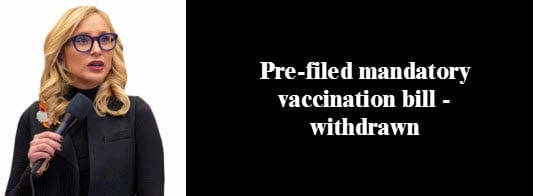
On August 2, 2019, Senator Lauren Book (D‑Plantation) pre‑filed SB 64 for the 2020 session. The bill would have eliminated Florida’s religious exemption for school‑entry immunizations and required the Boards of Medicine and Osteopathic Medicine to create a review panel to judge the validity of medical exemptions — the California model, transplanted. In fairness to the record, Senator Book had her reasons: the Tampa Bay Times had reported that non‑medical exemptions in Florida grew from roughly 6,500 in 2011 to nearly 25,000 in 2018. She saw a public‑health problem. We saw tens of thousands of Florida families exercising a right — and a bill that would take it from all of them.
The response was immediate and overwhelming. GreenMedInfo documented the bill’s provisions within days of filing. Health Freedom Florida and the National Vaccine Information Center walked families through exactly how to meet their legislators, share their stories, and make their opposition known. And Stand for Health Freedom issued its action alert, and thousands of constituent messages moved. The result: Senate Health Policy Chair Gayle Harrell announced the bill would not receive a committee hearing. SB 64 died without a vote. Florida’s exemptions survived.
Why Stand for Health Freedom exists
Stand for Health Freedom was born in that same season of 2019, founded by Leah and Nick Wilson, myself, and Dr. Joel Bohemier. Leah, an attorney whose career in foster‑care law had shown her what happens when the state substitutes its judgment for a family’s, put the founding diagnosis simply: “The health freedom movement lacked a voting bloc.” There were organizations that could rally and educate — but none that could show a legislator, in hard numbers, that thousands of voters in their own district cared about informed consent, parental rights, and health privacy. SHF was built to be that instrument: bill tracking, district‑level action alerts, and the civic infrastructure to turn conviction into constituent pressure. SB 64’s quiet death — no hearing, no vote — was the proof of concept.
From defense to direction
What began as defense became, over the following six years, a governing philosophy in Florida. Through the COVID years the state moved from resisting mandates to prohibiting them: the November 2021 special session penalized employer and government COVID‑vaccine requirements. Dr. Ladapo, appointed surgeon general that fall, made informed consent the department’s north star. Then, on September 3, 2025, standing with Governor DeSantis at a Christian school in Valrico, Ladapo announced the state would work to end every vaccine mandate in Florida law: “Every last one of them is wrong and drips with disdain and slavery.” And in those same remarks — the very clip now going viral — Ladapo himself drew the map this week’s news follows: the department’s own rules covered “maybe a half a dozen vaccines” that would be “gone for sure,” while the rest would require working with lawmakers. August 20 is that first commitment, delivered on the record, eleven and a half months after it was made.
A true story includes the setbacks, so here they are. At the department’s December 12 public forum in Panama City, those defending the mandates slightly outnumbered those opposing them. In the 2026 regular session, SB 1756 — which would have added a personal‑conscience exemption of the kind seventeen other states already allow — died when its House companion never reached committee. And at the April special session, House Speaker Daniel Perez declined to bring the issue to the floor at all. Twice the Legislature balked. The administration then did what it had authority to do all along: finish the rulemaking it began on September 3, 2025. That is the document Dr. Ladapo signed on August 20.
March 2026: A Victory in the Senate, a Roadblock in the House
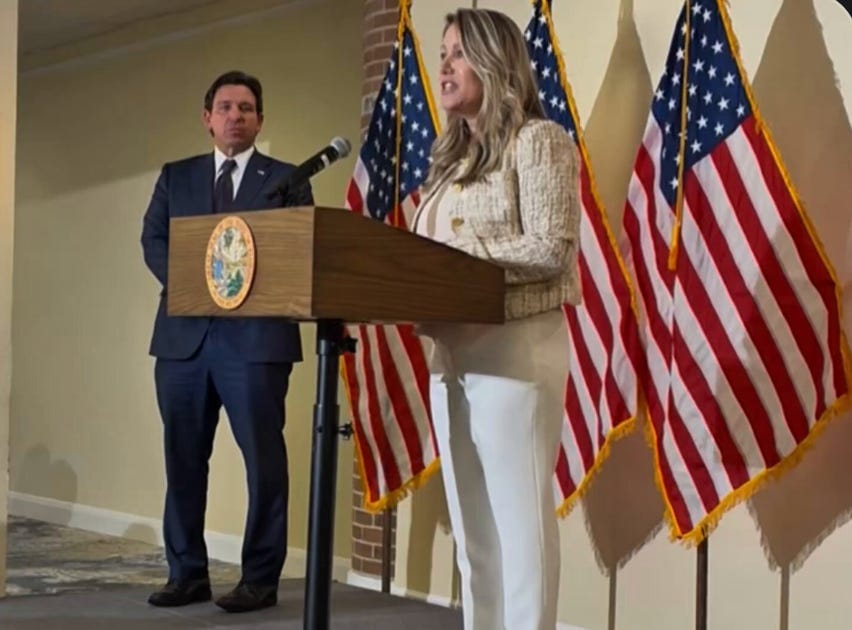
By March, Florida’s Medical Freedom Act had built real momentum. On March 9, SB 1756 passed the Florida Senate in a 23–15 vote, marking a significant victory for a growing movement demanding stronger protections for informed consent, parental rights, and medical freedom.
But across the Capitol, the story was very different. The House version, HB 917, never received a single committee hearing and ultimately died in committee. The Senate-passed bill was then sent to the House, where it sat untouched until the final gavel on March 13, officially “Died in Messages.”
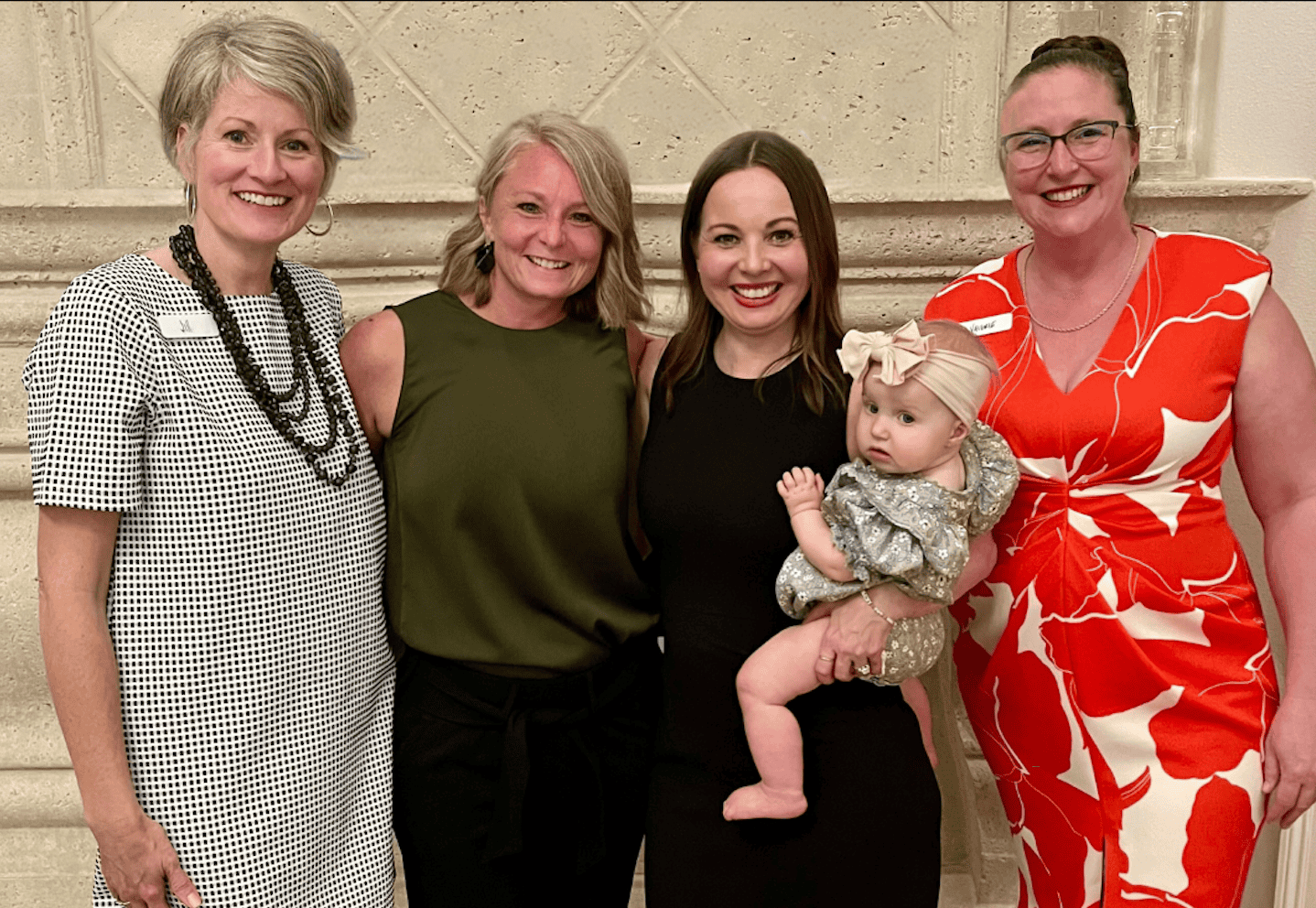
On that final day of Florida’s 2026 legislative session, Global Wellness Forum Executive Director Aimee Villella was invited to speak alongside Governor Ron DeSantis as he addressed two major priorities that had been blocked from advancing in the House: the Medical Freedom Act and the Artificial Intelligence Bill of Rights. Her presence that day reflected the growing role Global Wellness Forum, alongside Florida’s broader medical-freedom community, had taken in advancing the conversation around informed consent, parental rights, and health sovereignty.
The message that day was clear: the fight was not over.
Governor DeSantis pointed toward calling lawmakers back to Tallahassee for a special session, giving the Medical Freedom Act another opportunity to become law. But when that special session arrived weeks later, the measure again met resistance in the House under Speaker Daniel Perez, who made clear his chamber would not take it up.
For medical-freedom advocates who had spent months pushing the legislation forward, it meant watching a bill that had successfully cleared the Senate hit essentially the same House roadblock twice — first during the regular session and then again when the Governor brought the issue back for a special session.
But what looked like the end of the legislative fight would soon become the beginning of another chapter — one that would ultimately move beyond the Legislature and into the Florida Department of Health itself.
By March, Florida’s Medical Freedom Act had built real momentum. On March 9, SB 1756 passed the Florida Senate in a 23–15 vote, marking a significant victory for a growing movement demanding stronger protections for informed consent, parental rights, and medical freedom.
But across the Capitol, the story was very different. The House version, HB 917, never received a single committee hearing and ultimately died in committee. The Senate-passed bill was then sent to the House, where it sat untouched until the final gavel on March 13, officially “Died in Messages.”
On that final day of Florida’s 2026 legislative session, Global Wellness Forum Executive Director Aimee Villella was invited to speak alongside Governor Ron DeSantis as he addressed two major priorities that had been blocked from advancing in the House: the Medical Freedom Act and the Artificial Intelligence Bill of Rights. Her presence that day reflected the growing role Global Wellness Forum, alongside Florida’s broader medical-freedom community, had taken in advancing the conversation around informed consent, parental rights, and health sovereignty.
The message that day was clear: the fight was not over.
Governor DeSantis pointed toward calling lawmakers back to Tallahassee for a special session, giving the Medical Freedom Act another opportunity to become law. But when that special session arrived weeks later, the measure again met resistance in the House under Speaker Daniel Perez, who made clear his chamber would not take it up.
For medical-freedom advocates who had spent months pushing the legislation forward, it meant watching a bill that had successfully cleared the Senate hit essentially the same House roadblock twice — first during the regular session and then again when the Governor brought the issue back for a special session.
But what looked like the end of the legislative fight would soon become the beginning of another chapter — one that would ultimately move beyond the Legislature and into the Florida Department of Health itself.
The larger horizon: Washington
For nearly forty years, the national terms of this debate were fixed in 1986, when Congress largely shielded vaccine manufacturers from injury liability and routed claims into a federal compensation program instead. In the decades that followed, the recommended childhood schedule only grew in lock step with devastating increases in autism and chronic disease diagnoses in our must vulnerable infant and childhood populations — and, as our community experienced it, families who raised questions about harms and efficacy were told the conversation was closed - or worse, perhaps even crazy, or criminal for doing so.
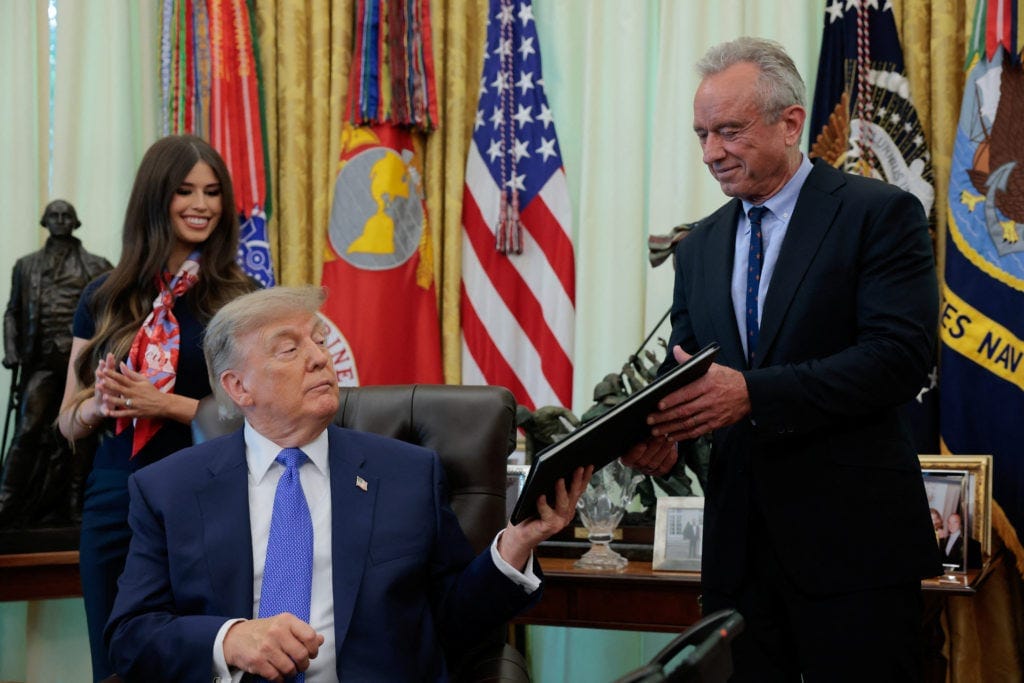
That is the world Robert F. Kennedy Jr., the MAHA coalition, and a generation of parents’ advocates set out to change — and the change arrived through a door only a president could open. Whatever else one concludes about Donald Trump, and our own community carries plenty of criticisms of this administration’s policies, one act cannot be taken from him: he handed the Department of Health and Human Services to the medical establishment’s most relentless critic, with what Kennedy describes as a delegation without precedent — the ability to personally choose the leadership of the FDA, the NIH, and the CDC.
No president had ever placed the public health agencies in the hands of the movement that spent decades petitioning them from the outside. It may prove the most consequential health appointment in the department’s history, and it is the hinge on which everything that follows turned. On December 5, 2025, the reconstituted CDC advisory committee ended the universal hepatitis B birth‑dose recommendation, and President Trump directed HHS that same night to realign the schedule with peer nations’ practices. On January 5, 2026, the CDC accepted a review narrowing the universal childhood recommendations.
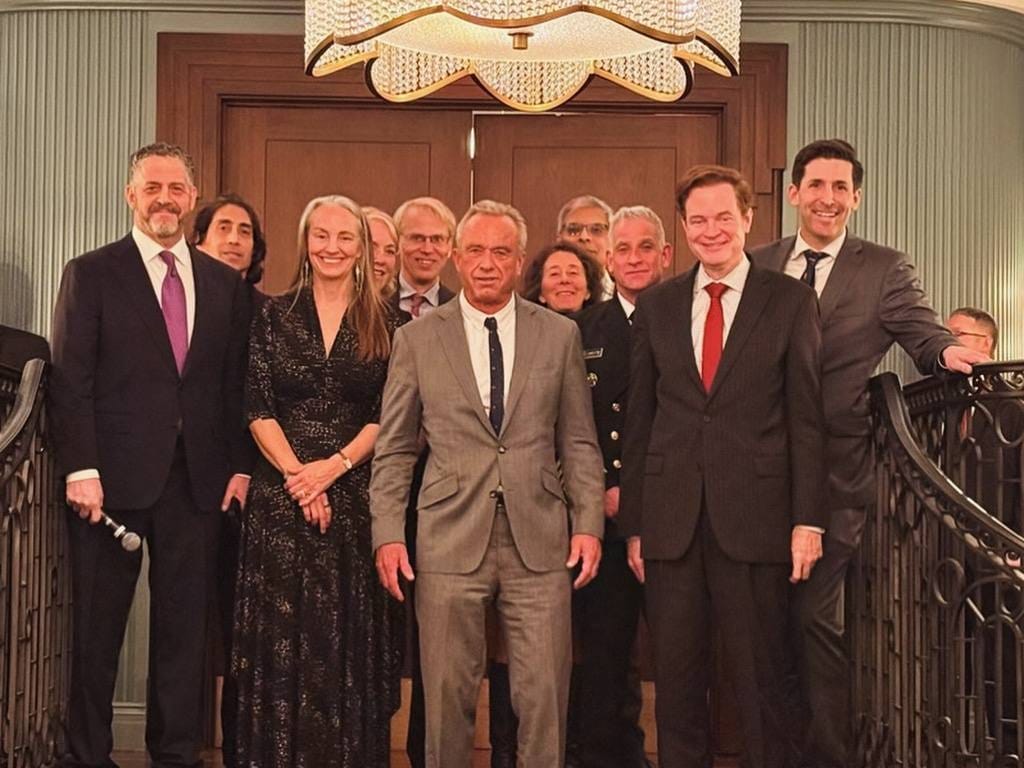
Three days later, at at a gathering in Washington which I had the honor attending, Kennedy traced the road from the mothers who came to his door carrying studies he says the agencies buried, to the mornings spent praying to be in a position to end the chronic disease epidemic — credited Trump as the only official of his stature who ever acknowledged the crisis and then acted on it — and gave the new moment its name: “the end of the era of government lying.” Litigation froze parts of that effort — and then, on August 10, 2026, the President signed the “Gold Standard Childhood Vaccine Recommendations” executive order: universally recommended childhood shots reduced from 17 to 11, MMR to be offered as three single‑disease shots once such products are domestically available, immunizations spread across separate visits, and the Department of Justice directed to sue states that fail to provide religious and medical exemptions. Ten days later, Florida finalized its rule. Read those two dates together: Florida is not an outlier. It is the leading edge of a national realignment that this movement — from the SB 64 parents of 2019 to the MAHA coalition of today — spent a decade building.
What the other side says — and what we believe
Pediatric organizations, including the American Academy of Pediatrics, warn that removing requirements will lower vaccination rates and raise the risk of disease — and they point to this year’s measles numbers as evidence of what is at stake. I have my own views on the topic, including many writings identifying the MMR live vaccine itself as a possible vector of transmission via the phenomenon of shedding, and the fact that measles outbreaks have historically occurred in highly vaccinated populations.


![The KILL SWITCHES Have Arrived [Flock Part 10]](/content/images/size/w960/format/webp/2026/10/Captura-de-pantalla-2026-10-22-153542.png)