
by Daniel Pereira— The Business Model Analyst
The snack giant just became the first major U.S. consumer-goods company to put autonomous trucks on public roads at scale, and there’s nobody in the driver’s seat.
PepsiCo is now running 41 driverless trucks across Arizona, Texas, and Arkansas, making it the first major U.S. consumer-goods company to disclose large-scale autonomous trucking on public roads. The push, built with autonomous-truck startup Gatik, is driven by a hunt for reliability and lower labor costs. On-time arrival hit 99% after weather and traffic are stripped out.
Picture a 26,000-pound box truck stacked with Doritos and Frito-Lay chips pulling out of a Phoenix distribution center, headed for a Walmart four miles away. It merges onto the highway, takes its turns, never breaks the speed limit. Totally normal, except there’s nobody behind the wheel. That’s not a demo. That’s Tuesday.
What Happened
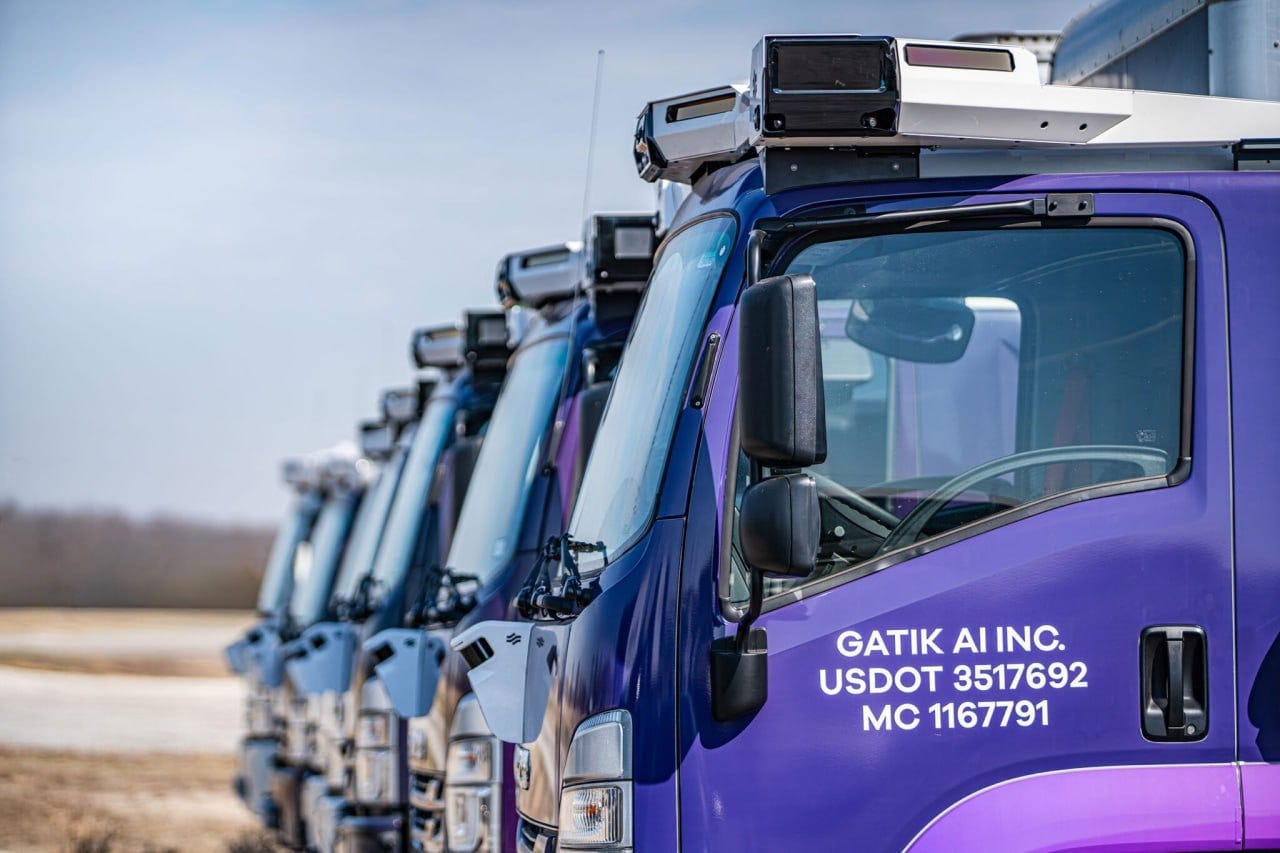
PepsiCo confirmed it has 41 autonomous trucks in live operation: 35 in Arizona, five in Texas, and one in Arkansas. The trucks move products between bottling plants, storage facilities, and retailers like Walmart and Dollar General. According to the WSJ exclusive, this makes PepsiCo the first major U.S. consumer-goods company to run driverless trucks at this scale on real roads. Business Model Analyst
The hardware comes from Gatik, with medium-duty and heavy-duty box trucks built by Isuzu Motors. Each truck carries front and back cameras plus radar and lidar to read the road. The big claim from PepsiCo’s Jim Farrell, SVP of supply chain for North American beverages: these are real operations in a live network, not a test environment.
The Backstory
PepsiCo didn’t flip a switch overnight. The company has worked directly with Gatik since 2022, running trucks with a human safety driver for a few years before going fully driverless in June 2025. So far, PepsiCo says the trucks have logged zero accidents on public roads.
There’s also a labor backdrop here. The pool of truck drivers has tightened, squeezed by new federal rules on English-language proficiency and a narrower set of immigrants eligible for non-domiciled commercial licenses. Humans also call in sick and hit legal limits on hours behind the wheel. Robots don’t.
The Plan
Gatik’s sweet spot is the boring route. The trucks perform best on repetitive short hauls, like a 14-mile loop between a Gatorade bottling plant and a storage facility, where there are fewer surprises. The more a truck repeats a route, the more it learns and the sharper it gets.
PepsiCo wants to expand into more short-haul trips and more locations. The economics are tidy: at stores, PepsiCo employees meet the trucks to unload, freeing up delivery drivers (who double as sales reps) to actually sell promotions to store owners. During busy holidays, autonomous trucks fill gaps when human drivers aren’t available. Gatik, for its part, says it has locked in $600 million in multiyear contract revenue and runs more than 20 trucks for Loblaw in the Toronto area.
The Business Model Angle
This is automation aimed at the predictable middle, not the glamorous edge. Gatik’s tagline is literally “we own the middle mile,” and that focus is the whole strategy. Waymo and Tesla chase the chaos of passenger taxis in open cities. Gatik picked the opposite: fixed, repeatable B2B routes where the variables are low and the value of predictability is high. Narrow scope, deep reliability.
The lesson for operators is that the best place to deploy automation is rarely the flashiest one. PepsiCo isn’t replacing its hardest jobs. It’s replacing its most repetitive ones, the back-and-forth hauls where 99% on-time performance compounds into real supply-chain leverage. PepsiCo’s broader logistics machine, which you can dig into in our PepsiCo value chain analysis, runs on exactly this kind of efficiency. Find your repeatable loop, automate that, and let humans do the parts that need a handshake.
The Risk
The honest counterpoint: this is a labor story dressed up as a tech story. Farrell said the quiet part out loud, noting the company can grow the business without adding as many employees. PepsiCo expects to hire fewer drivers over time. The Teamsters have strongly opposed the rollout and lobbied several states to require a trained human operator in any autonomous delivery vehicle.
Then there’s regulation. There are no federal laws governing autonomous vehicles right now, just voluntary safety submissions. PepsiCo’s fleet thrives partly because Arizona offers a welcoming, self-certification environment. A patchwork of state rules, a single high-profile accident, or a regulatory clampdown could stall the whole expansion fast.
Quick Questions
Are PepsiCo’s trucks really fully driverless?
Yes. PepsiCo runs 41 trucks with no one at the wheel across Arizona, Texas, and Arkansas, after years of testing with safety drivers before going driverless in June 2025.
Who makes PepsiCo’s self-driving trucks?
The autonomous tech comes from a startup called Gatik, while the actual box trucks are built by Isuzu Motors.
Are driverless trucks safe?
PepsiCo says its trucks have had no accidents on public roads so far and hit 99% on-time arrival once weather and traffic are factored out, though there are still no federal regulations governing them.
Will self-driving trucks replace truck drivers?
PepsiCo plans to retrain some drivers for new roles but expects to hire fewer overall, and the Teamsters union is actively fighting the rollout.
The Bottom Line
The future of automation won’t arrive with a bang. It’ll arrive on a 14-mile loop hauling chips between two warehouses. PepsiCo’s bet is that owning the predictable middle of your operation beats chasing the hardest problem. For founders, the takeaway is simple: automate the boring, repeatable parts first, because that’s where reliability turns into a real moat. Just don’t pretend the labor question isn’t sitting right there in the passenger seat.
The Best “Go Paid” Deal on Substack! You Get REAL Stuff!!

Go paid at the $5 a month level, and we will send you both the PDF and e-Pub versions of Etienne’s new book: To See the Cage Is to Leave It - 25 Techniques the Few Use to Control the Many and a coupon code for 10% off anything in the https://artofliberty.org/store/.
Go paid at the $50 a year level, and we will send you a free paperback edition of Etienne’s new book: To See the Cage Is to Leave It - 25 Techniques the Few Use to Control the Many OR “Government” - The Biggest Scam in History… Exposed! OR a 64GB Liberator flash drive if you live in the US. If you are international, we will give you a $10 credit towards shipping if you agree to pay the remainder.
Support us at the $250 Founding Member Level and get a signed high-resolution hardcover of “Government” - The Biggest Scam in History... Exposed! + Liberator flash drive + a signed high-resolution hardcover of Etienne’s new book: To See the Cage Is to Leave It - 25 Techniques the Few Use to Control the Many + everything else in our “Everything Bundle” of the best in voluntaryist thought delivered domestically. International pays shipping. Our only option for signed copies besides catching Etienne @ an event.


