

There’s new science out on creatine monohydrate that reveals it’s way more than just a performance enhancer for athletes. In fact, it’s pretty amazing for a wide variety of applications throughout all stages of life. If you already take creatine, you know it’s great for increasing muscle strength, size and performance. But did you know it even helps maintain lean tissue strength without exercise? It’s also powerful when it comes to cognition and memory - including early-stage Alzheimer’s and sleep-deprived college students.
The Short Version
The new studies (linked directly below) found Creatine to:
Support muscle and function even without exercise. In studies of older adults and immobilized limbs, creatine users maintained more lean tissue and strength than non-users. One trial found older adults taking creatine for 32 weeks preserved leg-press and chest-press strength despite periods of reduced activity.
Enhance bone strength and density. Research in aging populations shows creatine combined with resistance training can increase bone area and estimated strength, helping counter osteoporosis risk. These effects have been reported in older adults over 6–12 months of supplementation and training.
Improve cognition and memory. Studies in healthy older adults and early-stage Alzheimer’s patients show modest improvements in memory and mental fatigue resistance after creatine loading. Other trials report better cognitive performance during sleep deprivation in young adults, suggesting creatine helps stabilize brain energy when under stress.
Promote healthy aging. A 2025 review concluded creatine supplementation increases lean mass, regional muscle size, and functional ability in older adults - particularly when paired with exercise. It also improves glucose kinetics in some studies, suggesting a role in preventing age-related metabolic decline.
Support women’s health across life stages. New research highlights benefits for exercise performance and fatigue resistance across the menstrual cycle. Early human studies are now investigating pregnancy applications, while postmenopausal trials indicate gains in muscle and bone similar to those seen in men.
Aid recovery and tissue repair. In trials of patients recovering from injury or surgery, creatine supplementation reduced muscle loss and improved functional recovery. Animal and pediatric studies also suggest creatine may shorten recovery time and lessen brain damage after traumatic brain injury.
Increase muscle strength, size, and performance - You probably already knew this, but the new studies found that adults supplementing with 3–5 grams of creatine daily while resistance training gained significantly more strength and lean mass than placebo groups - improvements often ranging from 5–15% greater increases in performance metrics after 8–12 weeks of training.
In short, creatine is very good for you and has an outstanding safety record. (you can find the studies here, here and here)
And here it is: if you read us regularly, you know we sell creatine, which makes this report an ad - however two things: one - the findings here are legit, so please absorb the information regardless of whether you buy some, and two - the reason we sell creatine is because one of the Tylers has been taking it for decades (guess which one?) and got the rest of us hooked.
Long story short, it works well, we use it, and the stuff we sell is high-grade, Walter White-tier pure creatine at a reasonable price. The jar it comes in is pretty big and it lasts a while. Support yourself & support the site - buy some here. And if you don’t buy ours, just check it out.
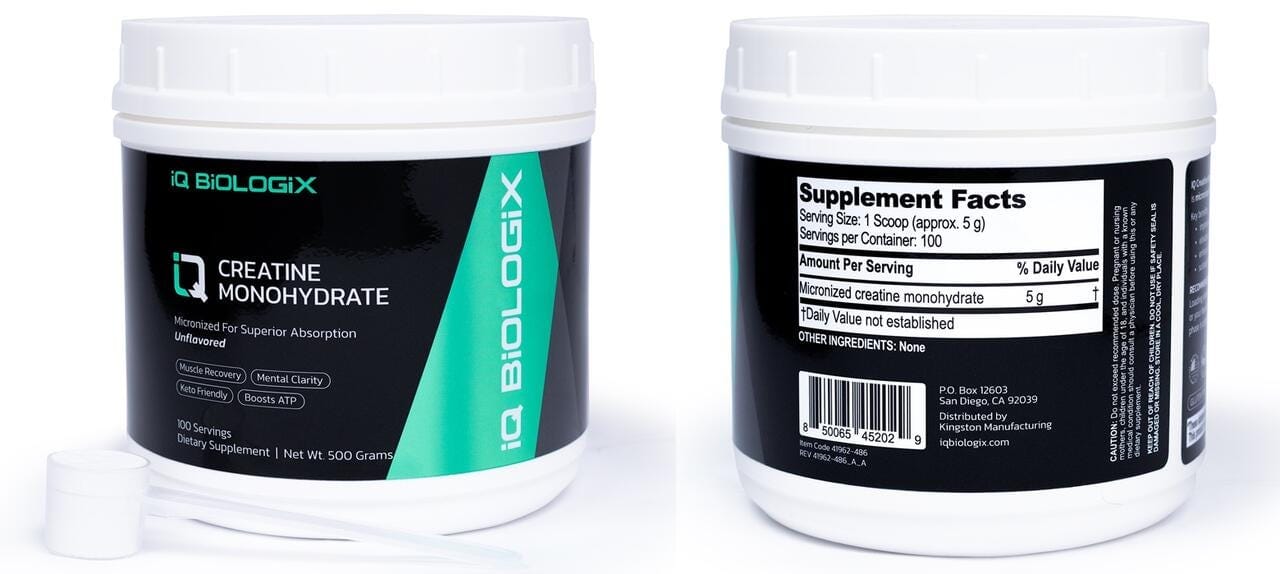
Actual product (no CGI):
The Long Version
For decades, creatine monohydrate was considered the domain of weightlifters and athletes chasing power gains - with research confirming what most gym-goers have long observed firsthand: creatine increases strength, muscle mass, and training capacity by rapidly regenerating the body’s cellular fuel, ATP.
But a trio of new studies published in the last year (two in 2025, one in 2024) are transforming how scientists view this simple compound. Once relegated to sports nutrition, creatine is now emerging as a potential ally in healthy aging, women’s health, cognition, and disease resilience. The latest research suggests that this molecule may be less a niche performance enhancer and more a universal energy buffer for human life.
What We’ve Long Known
Creatine serves as a backup power source. Stored in muscle as phosphocreatine, it helps recycle ATP - the molecule that fuels every muscular contraction and countless cellular reactions. Supplementing with about 3–5 grams daily increases these stores, allowing for greater energy output during intense or repeated activity.
Hundreds of clinical trials confirm that creatine monohydrate boosts muscle size, strength, and recovery, particularly when combined with resistance training. It’s also among the safest supplements ever studied, earning “Generally Recognized As Safe” status from the FDA. Long-term data show no evidence of kidney or liver harm when taken at standard doses.
Timing, often debated, turns out to matter very little. Whether taken before or after exercise, creatine produces the same benefits over time. What counts most is consistency.
Myth-Busting the Basics
A 2025 review titled Common Questions and Misconceptions about Creatine Supplementation reexamined a wide range of public claims—and dispelled nearly all of them. Among its findings:
Creatine works even without exercise, though results are stronger when training is included.
Timing is unimportant—a steady daily dose is what maintains muscle saturation.
Taking creatine with carbs or protein can slightly speed up uptake, but long-term outcomes are the same.
Caffeine doesn’t cancel creatine’s effects.
It doesn’t raise blood pressure, cause dehydration, or harm fertility.
It may even aid recovery after surgery, injury, or concussion.
The same paper notes emerging evidence that creatine supports mental sharpness under sleep deprivation, hinting at a role for brain as well as muscle energy.
Creatine and Women’s Health: Filling the Research Gap
Until recently, most creatine research involved men, despite women being equally - if not more - frequent supplement users. A landmark review titled Creatine in Women’s Health set out to correct that imbalance.
It found that women, on average, have about 20 percent lower creatine synthesis and 30–40 percent lower dietary intake than men. Hormonal changes across the menstrual cycle, pregnancy, and menopause also affect how creatine is stored and used in tissues.
Studies now show that women experience the same strength and endurance improvements as men, but new data point to wider effects:
Mood and cognition: Because brain cells also depend on phosphocreatine, supplementation may buffer the mood swings and fatigue associated with hormonal fluctuations.
Pregnancy: Early research suggests creatine could help protect both mother and fetus from low-oxygen stress, though human trials remain preliminary.
Menopause and perimenopause: As estrogen declines, women face loss of muscle, bone density, and energy. These are precisely the systems that creatine supports, making midlife women a promising- yet under-studied - group.
The review urges more work on perimenopausal women, calling it one of the most neglected areas in exercise and nutritional science.
Creatine and Healthy Aging
The third new paper, Creatine Supplementation for Older Adults and Clinical Populations, focuses on the intersection of muscle, bone, and cognitive health. Its conclusion is striking: creatine may be one of the simplest, safest, and most effective interventions for age-related decline.
Older adults who combined creatine with resistance training consistently gained more lean mass, strength, and functional mobility than those who exercised without it. Some studies even showed modest improvements in bone structure and density.
Creatine’s potential extends beyond the musculoskeletal system. Evidence suggests possible benefits for glucose regulation and memory, and a neuroprotective effect is being explored in degenerative diseases such as Alzheimer’s. One challenge is that standard oral doses don’t always raise brain creatine levels in older adults, implying that higher or longer-term regimens - or new delivery methods - may be necessary.
Importantly, the supplement’s safety record holds up even in complex medical populations. Researchers advise cautious monitoring when multiple medications are involved, as creatine can influence how the body handles certain drugs, but serious adverse events remain rare.
A Universal Energy Buffer
Across all three studies, a single theme emerges: energy. Creatine’s ability to rapidly restore ATP makes it critical for tissues with high energy demands—muscle, brain, bone, and even the heart. It’s increasingly viewed as a molecular “reserve tank” that keeps these systems running smoothly under stress, aging, or disease.
Researchers are now exploring creatine as a tool for improving recovery from trauma, supporting mitochondrial health, and enhancing cellular resilience across the lifespan.
Practical Takeaways
Dose: 3–5 grams of creatine monohydrate daily. A short loading phase (about 20 grams per day for a week) can speed saturation but isn’t required.
Timing: Take it any time of day; consistency is what matters.
Synergy: Combine with resistance training for the greatest effect on muscle and bone.
Who benefits most: Vegetarians, older adults, and women at any life stage - especially during pregnancy or menopause - are often the lowest in baseline creatine.
What’s clear is that creatine monohydrate - cheap, safe, and widely available - has evolved from an athlete’s secret weapon into a candidate for whole-body vitality.
After thirty years of study, the story of creatine is no longer just about lifting weights. It’s about lifting the limits of human energy itself.
Pick up some creatine here... and thank you for your support. You can get close to 20% off if you buy 3 at once and subscribe.
The Best “Go Paid” Deal on Substack! You Get REAL Stuff!!

Go paid at the $5 a month level, and we will send you both the PDF and e-Pub versions of Etienne’s new book: To See the Cage Is to Leave It - 25 Techniques the Few Use to Control the Many and a coupon code for 10% off anything in the https://artofliberty.org/store/.
Go paid at the $50 a year level, and we will send you a free paperback edition of Etienne’s new book: To See the Cage Is to Leave It - 25 Techniques the Few Use to Control the Many OR “Government” - The Biggest Scam in History… Exposed! OR a 64GB Liberator flash drive if you live in the US. If you are international, we will give you a $10 credit towards shipping if you agree to pay the remainder.
Support us at the $250 Founding Member Level and get a signed high-resolution hardcover of “Government” - The Biggest Scam in History... Exposed! + Liberator flash drive + a signed high-resolution hardcover of Etienne’s new book: To See the Cage Is to Leave It - 25 Techniques the Few Use to Control the Many + everything else in our “Everything Bundle” of the best in voluntaryist thought delivered domestically. International pays shipping. Our only option for signed copies besides catching Etienne @ an event.


