
Reviewed by John Anderer
Researcher Suggests People Are Probably Not Getting Enough Exercise Or Protein, With Guidelines To Blame
In A Nutshell
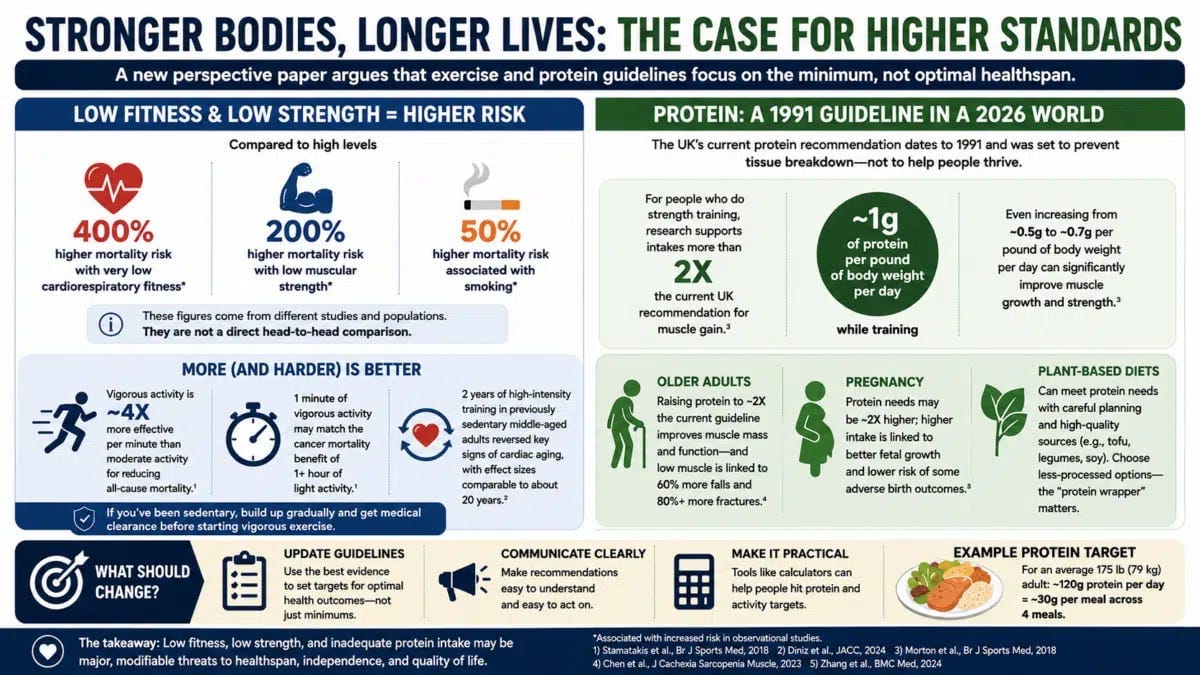
Very low cardiovascular fitness is associated with a roughly 400% higher risk of death than high fitness levels, dwarfing the mortality risk linked to smoking.
Current US and UK physical activity guidelines are built around minimum thresholds, not optimal health outcomes, and a Cambridge researcher argues they need a full overhaul.
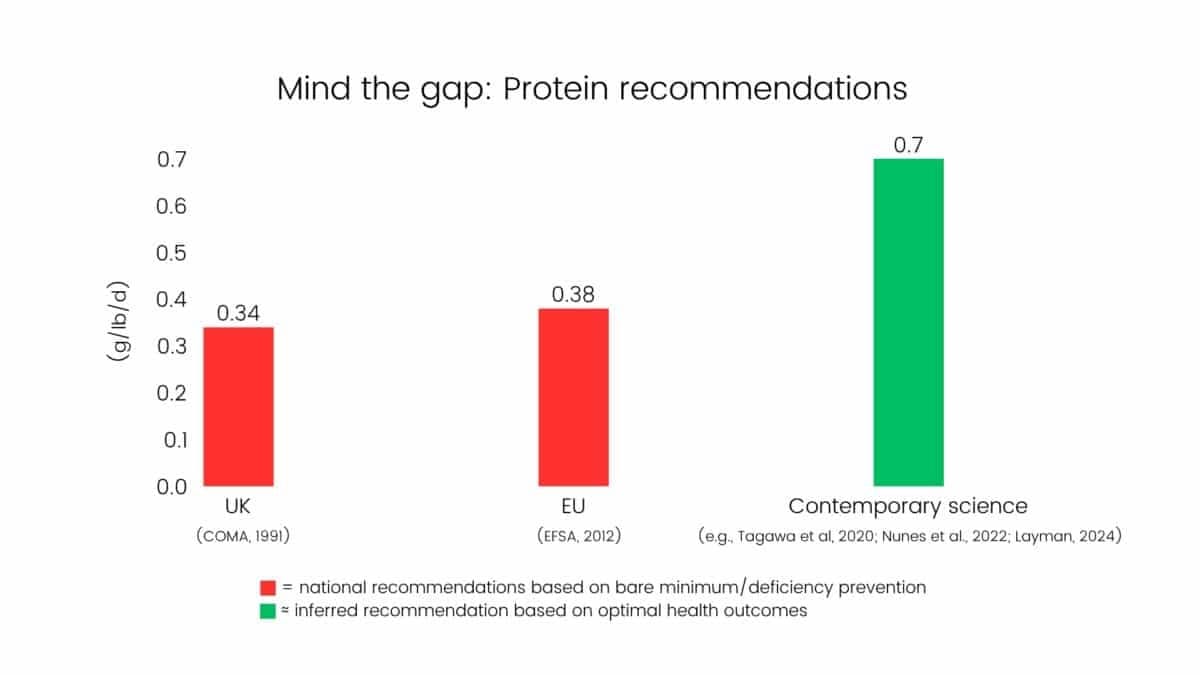
Protein recommendations in the UK haven’t been updated since 1991 and were never designed to help people thrive, only to prevent deficiency.
Higher protein intake is linked to better muscle mass, healthier aging, improved fat loss, and potentially better pregnancy outcomes, but current guidelines fall well short of what the science supports.
Most people know smoking kills. It’s plastered on cigarette packs and treated as one of the great public health battles of the last century. But a perspective paper in Frontiers in Nutrition argues that low fitness levels and inadequate protein intake may be doing comparable or greater damage, and that governments are setting the bar too low when it comes to telling people how to fix it.
According to the paper, authored by Chris Macdonald of the University of Cambridge, very low cardiovascular fitness is associated with a roughly 400% higher risk of death compared to high fitness levels, and low muscular strength with around a 200% increase. Smoking carries roughly a 50% increase by comparison. These figures come from different studies with different methods and are not a direct head-to-head comparison, but together they suggest low fitness may be among the most overlooked health risks in modern life.
Both physical activity and protein guidelines in the UK are stuck in a “bare minimum” mindset, the paper argues, built to prevent deficiency rather than optimize health. American guidelines from the CDC follow the same logic. Macdonald calls on governments to overhaul those targets.

Current Fitness Guidelines Miss the Mark on Intensity
Current UK physical activity guidelines from the National Health Service are framed around minimums, telling adults to aim for “at least” a certain amount of moderate exercise per day. Macdonald argues this undersells the evidence and leaves people without a clear sense of what healthy living actually requires.
One of the more revealing points involves intensity. An analysis of more than 70,000 adults from a large UK health database found vigorous physical activity was associated with roughly four times greater reduction in all-cause mortality risk than moderate activity, and about eight times greater for cardiovascular death. For cancer mortality, more than an hour of light activity may be needed to match what just one minute of vigorous exercise provides.
High-intensity exercise isn’t only for the young. In previously sedentary middle-aged adults, two years of high-intensity training reversed key structural signs of cardiac aging by an amount equivalent to roughly two decades of age-related change. Anyone long sedentary should build up gradually and consult a clinician first, but the paper argues it is not too late to start.
Protein Guidelines Haven’t Been Updated Since 1991
Current UK guidance on daily protein intake was established in 1991, based on sedentary lifestyles and aimed at nothing more ambitious than preventing the body from breaking down its own tissue. Macdonald argues that standard has aged poorly.
For people who do strength training, research cited in the paper supports protein intakes more than double current recommendations. Even a modest increase above the recommended amount has been shown to significantly improve muscle growth and strength. As noted by Bosse and Dixon, the lay recommendation of 1 gram per pound of body weight per day while resistance training “aligns well with research that assesses optimal health outcomes,” though Macdonald acknowledges the evidence would benefit from larger studies.
Age-related muscle loss is associated with a 60% increased risk of falls and more than an 80% increased risk of fractures. Recent studies show improved muscle mass and function in older adults when protein intake was roughly doubled from current guidance.
For pregnant women, the paper cites evidence that protein needs may exceed current guidance, with some studies linking higher intake to better fetal growth outcomes, though the evidence is largely associative and protein is not the only factor.
Protein also aids fat loss. It increases fullness by triggering satiety hormones and burns more calories during digestion than carbohydrates or fat. In several studies cited, higher-protein groups lost more fat than lower-protein groups at the same calorie intake, while preserving more muscle.
Plant-Based Diets Can Still Deliver on Protein, With Planning
People following vegan diets are less likely to meet even current protein recommendations, according to research cited in the paper, and a large Oxford study linked vegan diets to higher fracture risks, with authors suggesting lower protein intake might partially explain the gap. A separate analysis found that women following vegan diets during pregnancy had offspring with lower average birth weights and higher rates of preeclampsia compared to omnivorous mothers, though protein is cited as one plausible factor, not a confirmed cause. Macdonald is not arguing against plant-based eating. Well-planned vegan meals including complete sources such as tofu can meet protein needs, and choosing less processed sources matters as much as hitting a protein target.
Governments Should Aim Higher for Public Health
Macdonald calls on governments to update both exercise and protein guidelines with optimal outcomes as the goal, and to communicate those targets in clear, actionable ways. As a practical example, the paper suggests that for an adult weighing 175 pounds, a daily protein target of 120 grams translates to roughly 30 grams per meal across four meals.
A frail older person struggling with basic movement is often treated as an inevitable consequence of aging. Macdonald argues it more often reflects sedentary habits and inadequate nutrition, patterns normalized while guidelines stayed unambitious. Setting the bar at the bare minimum, the paper contends, isn’t cautious. It’s costly.
The Best “Go Paid” Deal on Substack! You Get REAL Stuff!!

Go paid at the $5 a month level, and we will send you both the PDF and e-Pub versions of Etienne’s new book: To See the Cage Is to Leave It - 25 Techniques the Few Use to Control the Many and a coupon code for 10% off anything in the https://artofliberty.org/store/.
Go paid at the $50 a year level, and we will send you a free paperback edition of Etienne’s new book: To See the Cage Is to Leave It - 25 Techniques the Few Use to Control the Many OR “Government” - The Biggest Scam in History… Exposed! OR a 64GB Liberator flash drive if you live in the US. If you are international, we will give you a $10 credit towards shipping if you agree to pay the remainder.
Support us at the $250 Founding Member Level and get a signed high-resolution hardcover of “Government” - The Biggest Scam in History... Exposed! + Liberator flash drive + a signed high-resolution hardcover of Etienne’s new book: To See the Cage Is to Leave It - 25 Techniques the Few Use to Control the Many + everything else in our “Everything Bundle” of the best in voluntaryist thought delivered domestically. International pays shipping. Our only option for signed copies besides catching Etienne @ an event.


