

Last night Iran launched another massive attack against US assets in the region, its largest such attack since early in the year. The target was Muwaffaq Salti Airbase in Jordan, as well as US naval assets around the region. As seen in the video below, the US expended a huge amount of Patriot missiles, some believe upwards of 100+, which would constitute a major slice of the remaining stock:
Direct hits on the base bypass Patriot defenses:
As can be seen, many Iranian ballistic missiles got through the missile shield and hit their targets. Various reports of dozens of US soldier injuries made the rounds, which CENTCOM vehemently denied.
But videos did show damaged US helicopters being towed away from the Jordan base on trailers after the attack.
Iran claimed to have hit a US carrier, but such claims in the past turned out to be false.
One interesting development from the last two attacks is that Iran has reportedly used an anti-ship ballistic missile against US warships for the first time. This was reported by the Iranian Secretary of the Supreme National Security Council Major General Mohsen Rezai:
Some reports have indicated the “mystery” missile he mentions is the Qassem Bassir, which was unveiled in 2025. It reportedly has a 1,200km range, which is far greater than the 300km or so that Iran’s typical missiles have had, as we analyzed in depth before here:
Does Iran Pose a Real Threat to US Carriers? Debate Finally Answered For Good
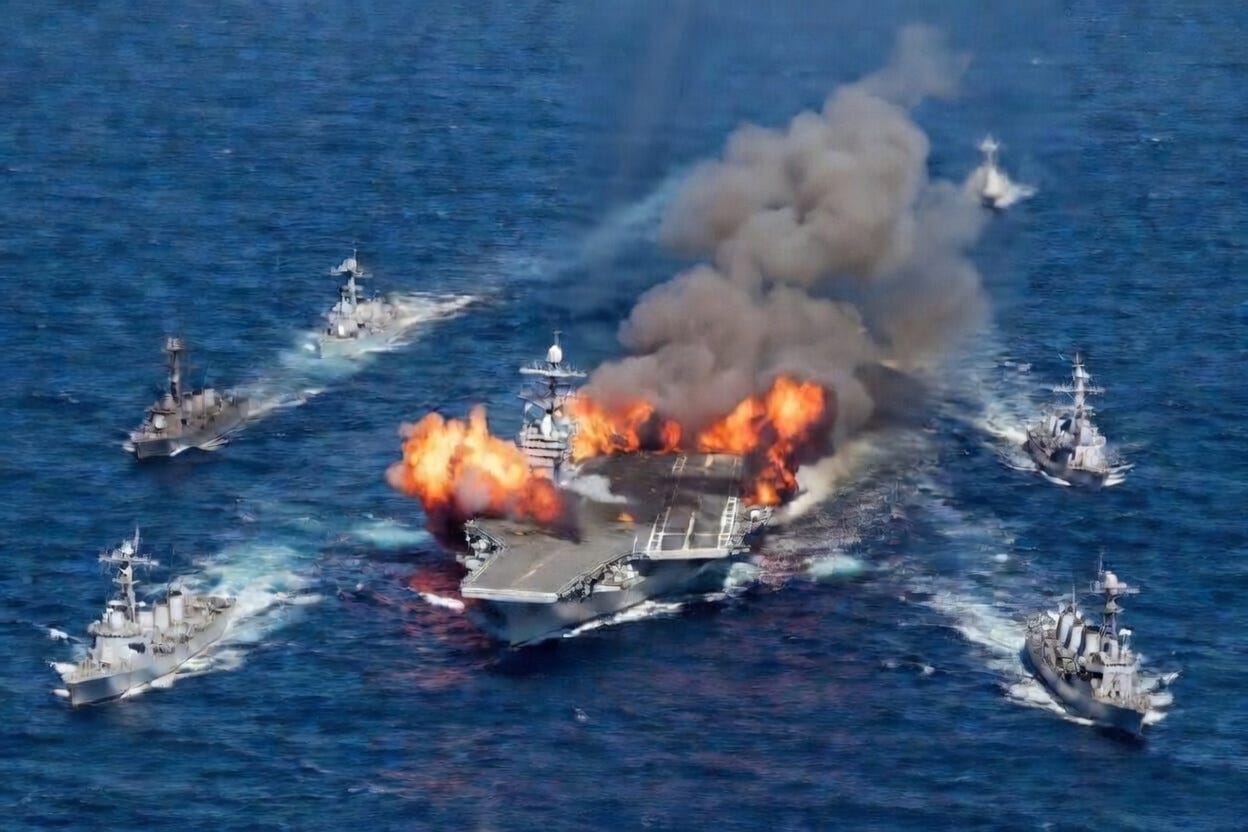
In the previous installment we had mentioned one of the most talked-about topics being that of Iran’s final escalatory option of hitting an American aircraft carrier, and whether Iran is capable of doing it or not. To build on that, I’ve decided to dedicate a detailed piece to the more intricate issues involved in such an operation and why Iran may not actually be as capable of it as most people assume to be the case.
Now, Iranian news reports that US carriers and warships immediately fled to a 500km safety range after the latest attack:
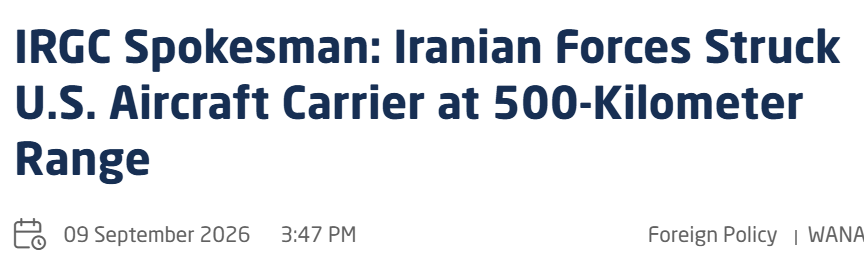
WANA (Sep 09) – In statements made to reporters on the sidelines of a meeting, spokesman for the Islamic Revolutionary Guard Corps (IRGC) Armed Forces, declared that all U.S. vessels had retreated at least 400 kilometers from Iran’s coastal waters following advanced Iranian strikes.
He noted that prior to Operation “Ramadan,” approximately 30 to 40 U.S. warships had been present in the Persian Gulf, but he claimed that not a single warship remained in the region today. He added that all U.S. vessels had pulled back at least 400 kilometers from Iran’s coastline.
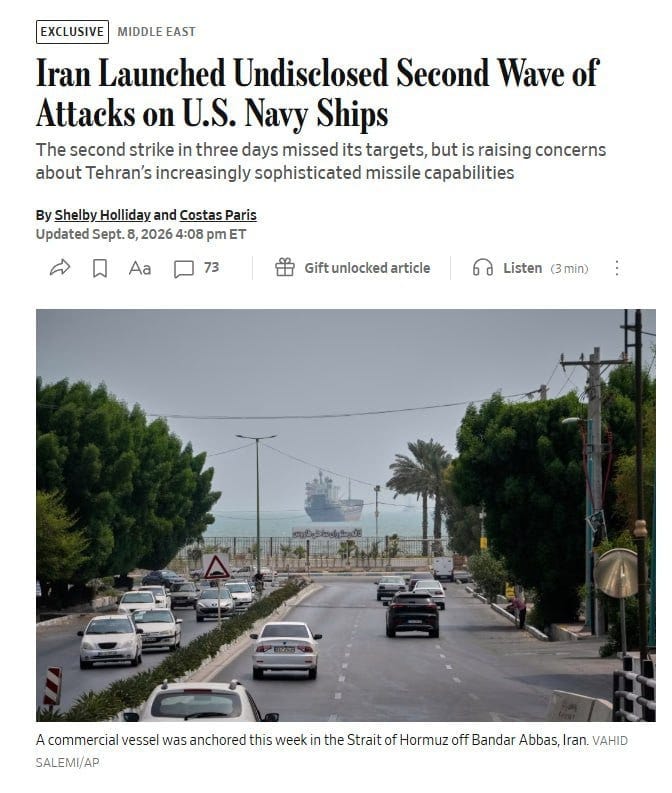
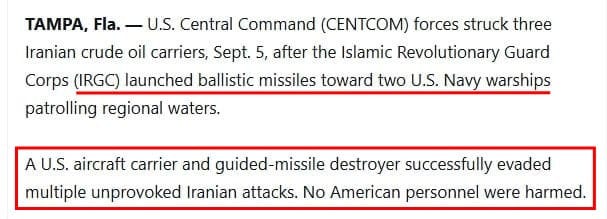
The last such attack on September 5th was confirmed by CENTCOM as having forced a US aircraft carrier into evasive maneuvers, which lends credence to Iran’s claims that US ships at least had reason to flee:
Read the last portion from the Iranian news article:
The spokesman attributed this retreat to Iran’s deployment of new weaponry and advanced missiles, asserting that Iranian forces retained the capacity to strike targets at distances exceeding 400 kilometers. He further stated that Iranian forces had recently targeted a U.S. aircraft carrier located 500 kilometers away, maintaining that the Strait of Hormuz remained a center of Iranian military strength to deter foreign aggression.
These actions were part of a new initiative launched by Iran to control a wider zone outside of strictly the narrow Strait of Hormuz itself as before.
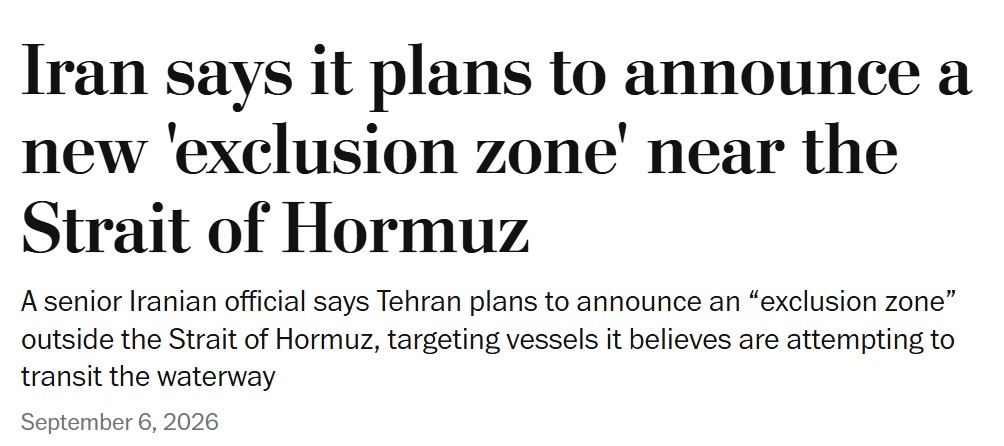
Secretary of the Supreme National Security Council (SNSC) Major General Mohsen Rezaei announced that a new restricted zone will be declared outside the Strait of Hormuz in the coming days, warning that any vessel entering the area without coordination with Tehran will be placed on an Iranian sanctions list.
Note the below—the new blockade will begin not just near the Strait itself, but from the US Navy’s blockade line which sits all the way outside the Gulf of Oman:
In a televised interview on Sunday night, Rezaei said the zone “will begin from the US Navy’s blockade line and extend into parts of the Persian Gulf”, covering the stretch toward loading ports. Ships that move toward the strait from either side and enter the designated area, he added, will face sanctions with consequences for insurance and future passage.
Iran has restricted transit through the Strait of Hormuz since the early days of the US-Israeli war that began in late February and came to a halt under a ceasefire in early April amid the Islamic Republic’s successful retaliatory military operations.
Recall the red line below demarcates the US blockade line, while the blue showed primarily where Iran’s blockade was concentrated:
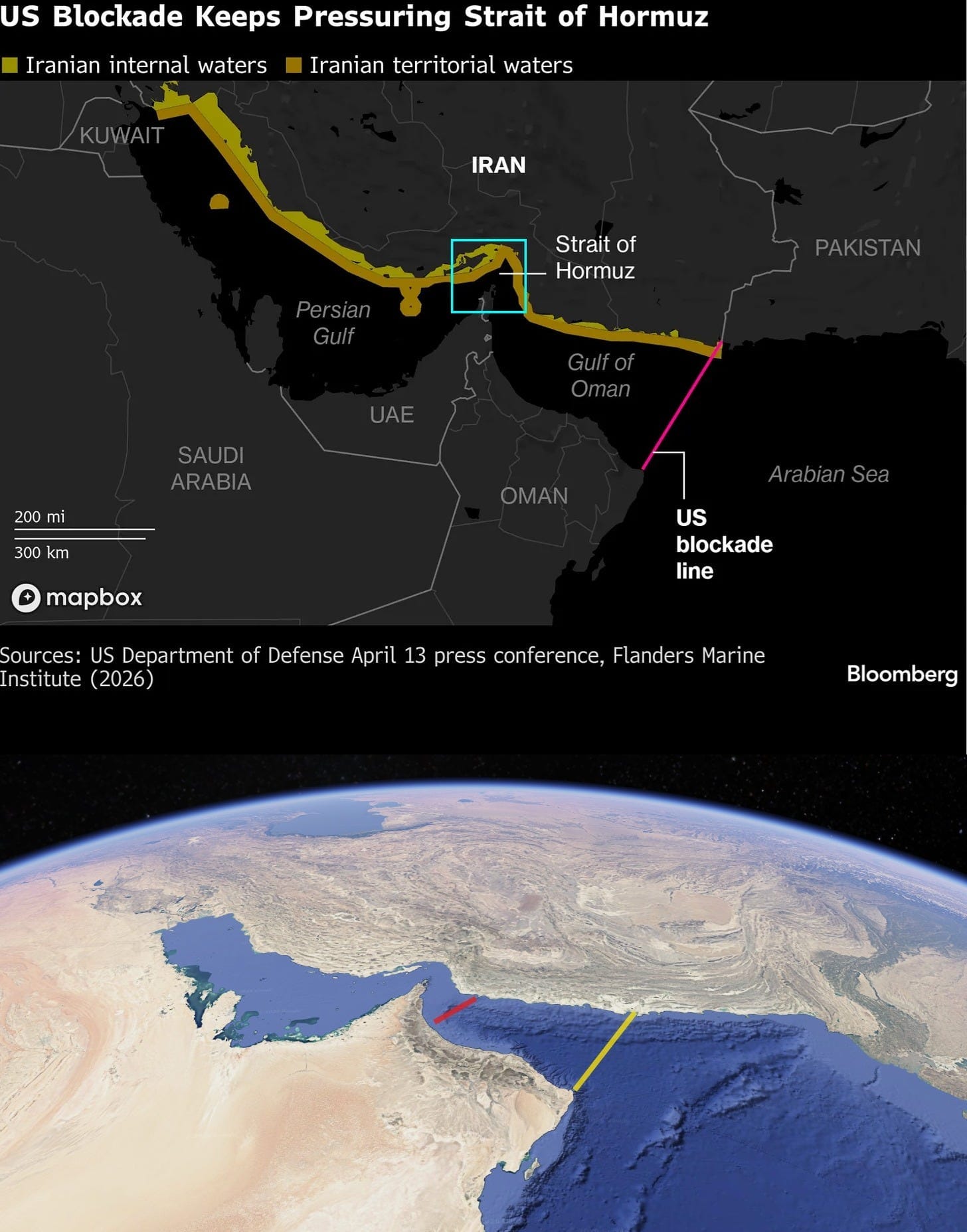
Now Iran intends to increase the administration of its own blockade up to and past the US blockade line.
The most interesting aspect revolves around why that is—and this ties into the question we posed in the last paid piece.
As discussed in that piece, one prevailing theory is that the US blockade is beginning to impose measurably real economic costs on Iran, which has faced severe inflation and other issues, which could be forcing Iran’s hand into acting with more urgency in booting the US out of the region and ending its blockade.
This could very well be true, but it still does not imply that Iran is “losing the war”, but rather that Iran has calculated the cost-risk analysis of continuing the status quo versus strategically escalating and has likely deduced that it now holds enough cards for escalation to be less risky than maintaining the economically painful status quo.
On the other hand, a strong counterargument is that Iran has infact emerged far more confident after its domination of the US in the war, and the IRGC has simply increasingly liked its chances in exchanges with the US, particularly given the known interceptor stock woes, amongst many other bearish signals for the US’s regional forces:
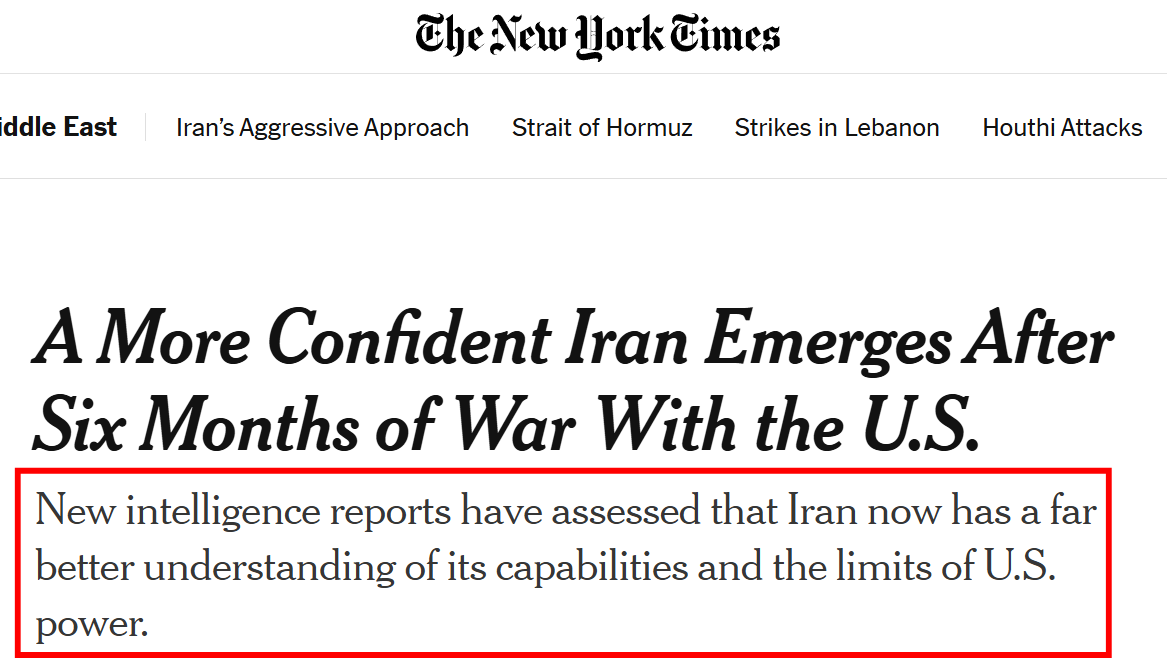
The above NYT piece notes:
Iran has grown more confident in its ability to attack targets in the Middle East and appears determined to continue the conflict for months to frustrate the United States, according to U.S. intelligence reports in recent weeks.
Iran has emerged from months of the on-again, off-again war with a far better understanding of its military strengths and is more sure of its capabilities, according to officials briefed on the intelligence.
They go on to write that Iran is now less likely than ever to make a deal given that the Iranians’ confidence has been boosted by a string of victories to the point where the US now looks weaker than ever, and any deal with it would essentially be an unnecessary compromise on Iran’s behalf.
“Iranians are feeling pretty bullish about their position,” said Representative Jason Crow, Democrat of Colorado and a member of the Intelligence Committee. “They have taken substantial damage, but that has always been built into their system. They understand they can take damage, and they are playing a much longer game here.”
And why are they feeling so “bullish”?
Mr. Crow declined to comment on classified assessments, but he said the Iranians believe that they are in a stronger position for several reasons. First, he said, Iran’s formerly splintered leadership is now more united, and the internal opposition has been silenced. Iran also continues to have a stockpile of missiles and drones.
Iran’s leadership also appears to have a more precise understanding of how to exert control over the Strait of Hormuz, which carried one-fifth of the world’s oil before the war.
In the closing line of the article “Iranian government” could essentially be swapped for “US government”:

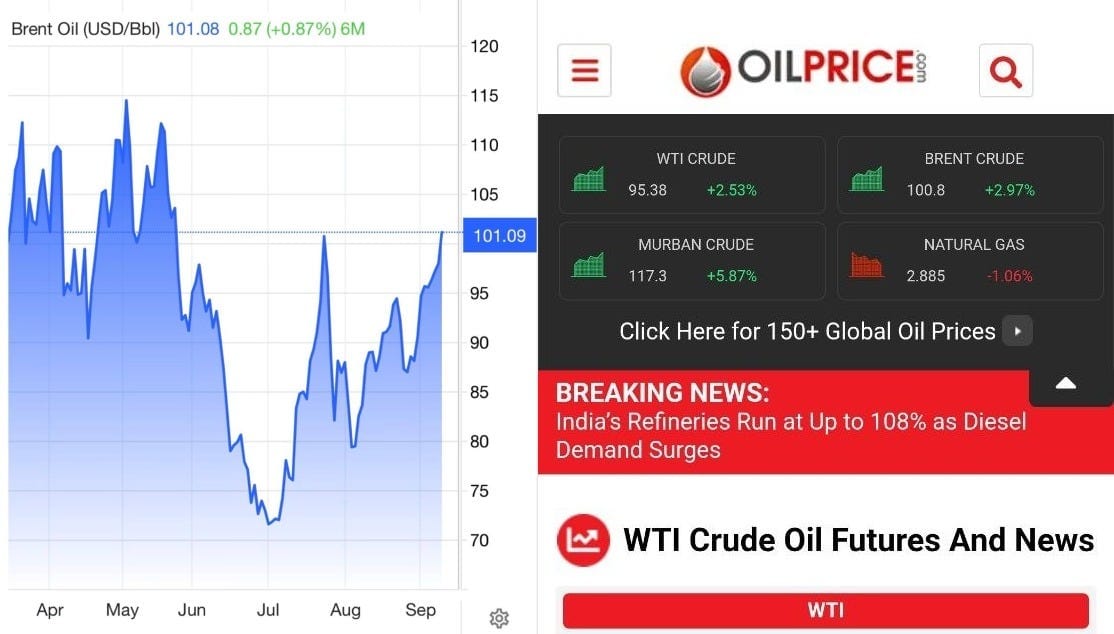
The argument over who is experiencing greater overall and long-term economic damage has been bolstered by today’s news that Brent crude has again jumped to over $100 per barrel for the first time since July:
And many experts are now predicting a coming diesel catastrophe as well, now that diesel prices have reportedly hit $5.94 on Wednesday:
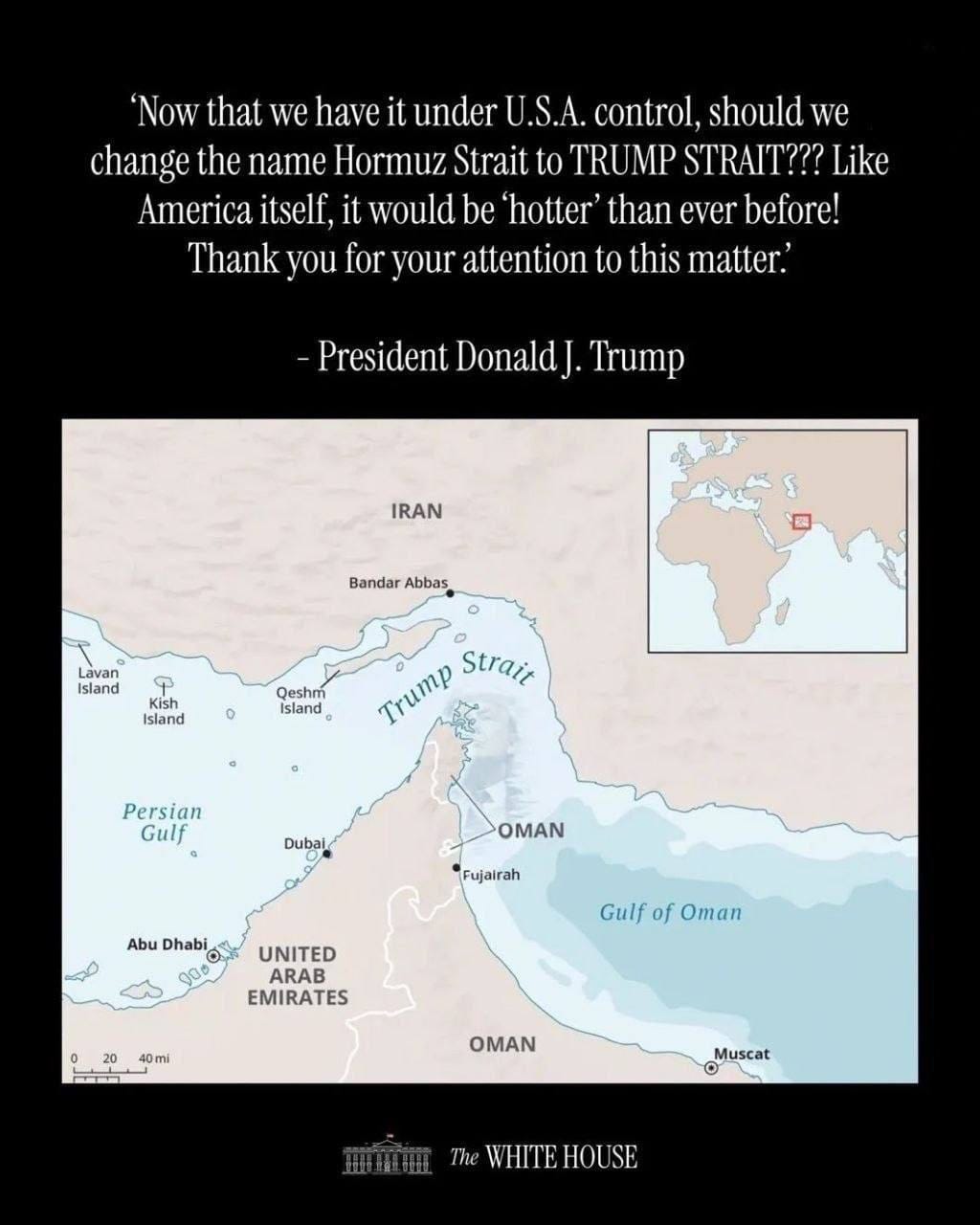
How did Trump react to all the latest happenings, including the vicious Iranian attacks on US bases and assets? See below:
Ex-Commander of US CENTCOM and ex-Director of CIA David Petraeus casually admitted that US bases in the eastern Gulf are “no longer viable”:
Meanwhile, FT reports that the “world’s largest maritime nations” have warned that all global shipping is starting to break down due to the lawlessness resulting from the collapse of the so-called rules based order (Ruse Based Ordure):
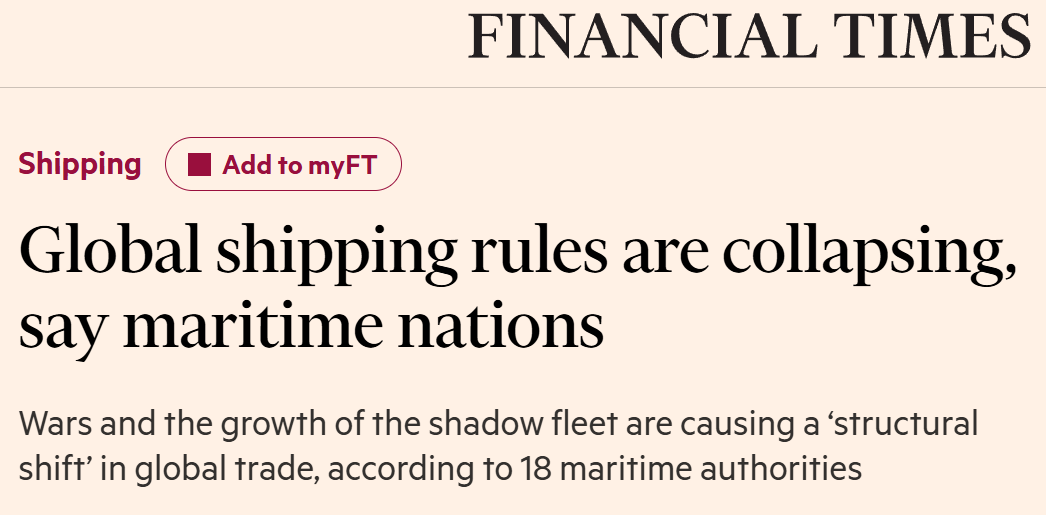
The rules governing global shipping are breaking down, the world’s largest maritime nations have warned, disrupted by wars and a growing shadow fleet that operates beyond western oversight.
The shipping industry has for decades been protected by laws that ensure free navigation and the neutrality of commercial vessels, but the collapse of those principles is posing a severe risk to global trade, according to a group of 18 shipping superpowers.
Interesting how they try to spin it above, when in reality the large consortium appears to be indirectly pinning the blame on the US and its cronies:
The statement is the first public intervention from the CSG since it was established more than 60 years ago. The group’s members include Greece, Singapore, Denmark, Japan, Canada, the UK, the Netherlands and South Korea.
“Shipping routes are increasingly instruments of leverage and risk,” the CSG warned, adding that recent events show how “fragile” the system of maritime trade can be.
Who is it that’s turning the seas into instruments of leverage? The aggressors of the West which have weaponized Lloyd’s insurance to ostracize any nation acting noncompliant with imposed imperialism? Which side is it that aggressively and illegally boards and detains ships, as witnessed against Russian ships on a weekly basis in recent times?
Whenever the rules are abused and violated by the West to its advantage, it is simply treated as ‘part of the game’—a kind of ‘grandfathered-in’ geopolitical entitlement. But when other nations begin to level the playing field, by following the same set of “unspoken rules” accorded only to privileged Western nations, suddenly the world’s largest, oldest, and most esteemed consortiums must cry foul: “But the laws of the garden and the jungle are not interchangeable!”
The article concludes by saying the revolt spawned of the West’s criminal hypocrisy has resulted in the world’s “shadow fleet”—mostly belonging to Russia and Iran—growing to one-fifth the size of the entire global tanker fleet:
At the same time, US, EU and UK sanctions on Russia and Iran have caused the rapid growth of a shadow fleet of oil tankers that now amounts to more than 1,500 vessels, according to TankerTrackers.com, almost a fifth of the global tanker fleet. Nearly all these lack traditional insurance policies.
The West should be careful of further provoking the entire world. At this rate, the ‘shadow’ could soon grow larger than the thing casting it—at which point it may be the West itself reduced to a kind of withered shadow kingdom, flailing futilely against the rising Eastern dawn.


