

Putin hosted the annual Valdai International Discussion Club, during which he made many interesting statements during the plenary session with international journalists.
The most notable was his clarification of Russia’s attacks on Ukraine’s Black Sea cargo vessels and the inherent hypocrisy of the West’s demands for Russia to stop:
Better transcription:
Putin on the proposal to halt strikes on oil refineries:
Or they tell us: "Let them stop striking your refineries, and you stop striking their ships. Let them export civilian cargoes—agricultural produce." But what about our other civilian cargoes? Things like oil and petroleum products. So, they stop the strikes, and we end up with a surplus of diesel—the kind that is in such high demand in, say, the United States. We would have more of it. We have enough diesel as it is. But it wouldn't reach global markets because of the bans and sanctions currently in place against our oil and petroleum products.
How, then, would our diesel reach the global market while sanctions remain in effect? It wouldn't. Yet, in return, we would be expected to stop striking targets that are economically sensitive for them. You have to admit, that just looks absurd.
Putin rightly notes the hypocrisies inherent to the West’s demands to stop strikes on Ukraine’s most sensitive economic targets, while Russia’s own economy continues to either be struck or sanctioned from the world markets. He incisively deconstructs the illusion behind the offer: a mutual ceasefire allows Ukraine to export its economic potential abroad, while Russian refineries, though they would be safe from strikes, are barred from exporting their diesel, which Russia itself has no need of because it has plenty for itself. As such, Ukraine gains an asymmetrical advantage.
Putin goes on to state the obvious: that Ukraine is a buffer state that cannot exist under its own aegis, particularly because it has already lost its statehood and sovereignty and is controlled by outside interests, and thus represents a threat to Russia.
When asked if Russia should break apart the EU, Putin says there is no need as the corrupt alliance will collapse on its own from self-destructive policies:
Now let’s take a look at some of the day’s most interesting updates on the Ukrainian front. Two notable things stand out:
Firstly, Russia appears to have begun its annual winter campaign of de-energization against Ukraine, with Kiev being the foremost target. First power plants in Kiev were again hit by drones and missiles, which caused an immediate blackouts and a power outage for 30% of the entire city, according to some reports:
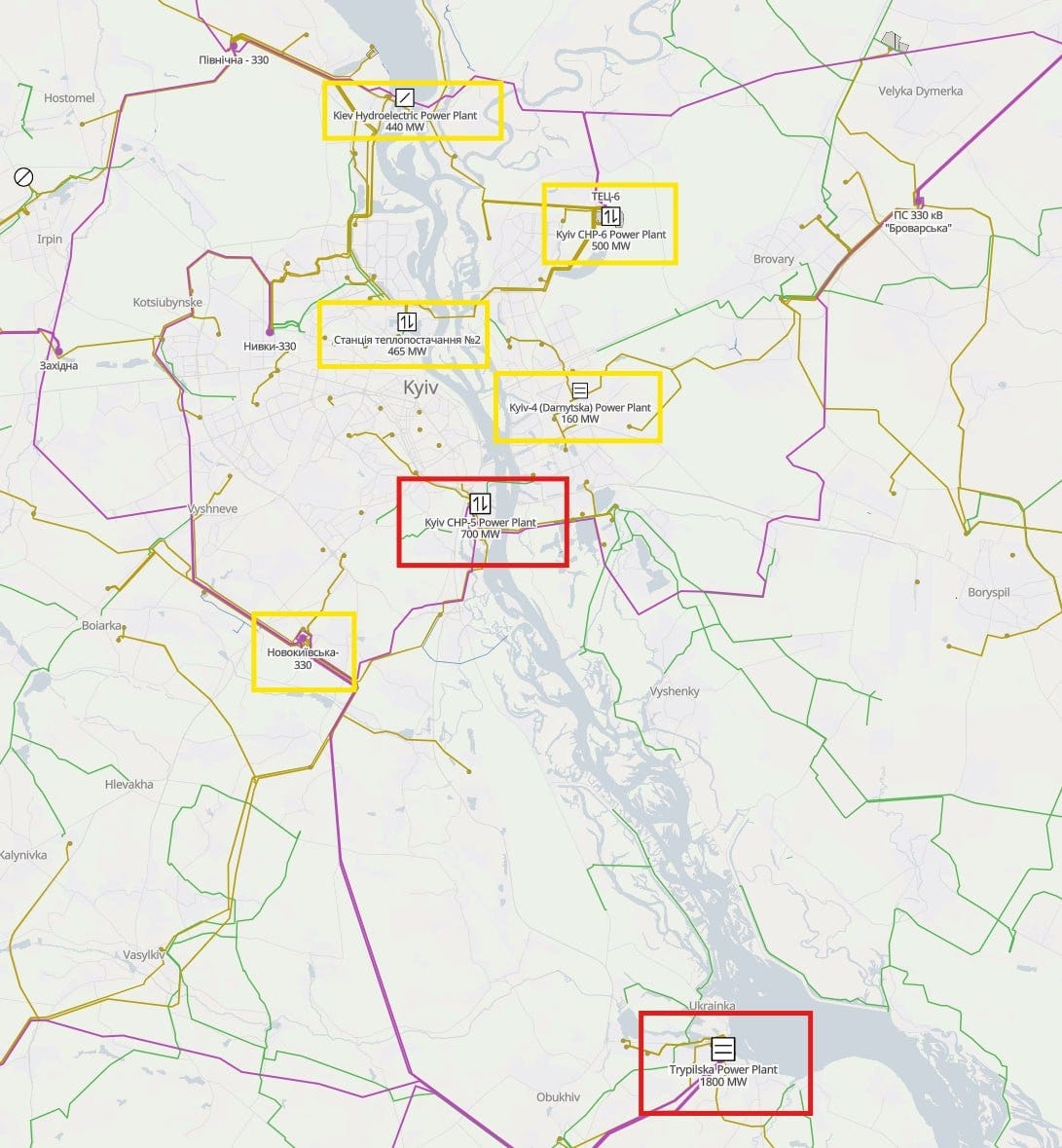
The Trypilska plant in southern Kiev was confirmed hit, while Russian military sources claimed the following were also hit:
Kyiv Hydroelectric Power Plant in Vyshhorod (north of the city)Kyivska electrical substation near NalyvaikivkaA battery energy-storage facility in Horenychi
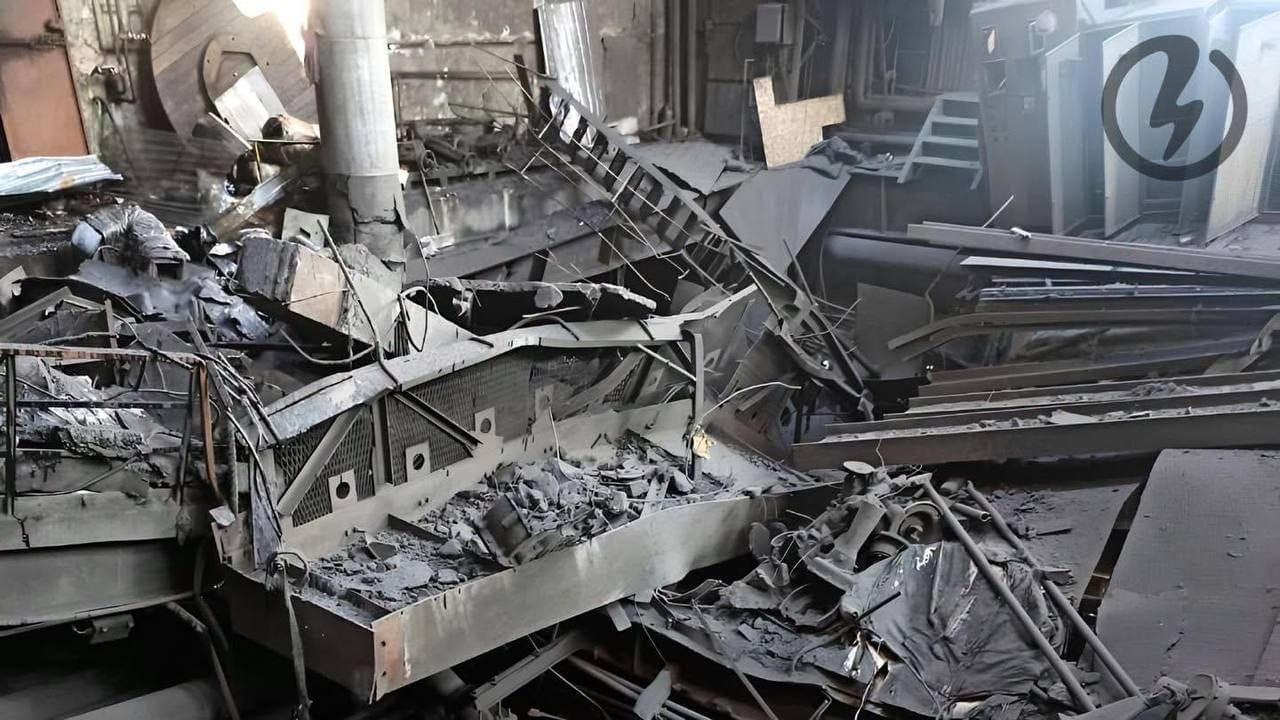
Partial aftermath of the overnight strike on the Tripolye thermal power plant in Kiev region.
The footage seems to have been shot from an angle that doesn't show the full extent of the damage.
Most interesting, however, was that soon after a new kind of Russian drone armed with “whiskers” began to attack high voltage transmission pylons in the region as well, which has not happened before. As can be seen below, multiple such drones finished off the pylon:
A close-up of one of these “whiskered” drones:
The Ukrainian side reports that Russia has begun using a new version of the “Geran-4” drone, featuring “whiskers” in the front of the fuselage. One such drone allegedly arrived during the recent attacks on Kyiv. According to the receiving party, this could be a contact-initiated detonator. It is not specified whether this is related to the fact that the receiving party now has the opportunity to study some of the downed drones, and they are therefore required to explode upon contact with the surface, or if there is another reason.
Ukraine’s top radioelectronics expert Serhiy Flash writes:
Bad news. Today, for the first time, the enemy used a special cumulative-cutting warhead (CCWH) on a reactive unmanned aerial vehicle.
This type of warhead was specifically designed to destroy high-voltage pylons and iron bridge structures.
The CCWH consists of a main warhead weighing 40 kg and four modules.
I believe the enemy's plan is to attack important high-voltage power lines.
An analysis from the Ukrainian Legitimny channel writes that these attacks have initiated a new Russian strategy of escalation against Bankova:
Our source reports that the strikes on power lines, pylons, and the southern bridge in Kyiv are a demonstration and testing of a new strategy.
With these strikes, the Kremlin is sending a public message to Bankova (referring to the Ukrainian government), stating that if they do not pursue peace, the situation will escalate further, following a new, more catastrophic scenario for Ukraine.
The Kremlin could disable the power lines, causing all energy facilities to shut down, plunging the country into a total blackout.
Next, they will begin destroying major communication towers, and then bridges that rely on metal structures.
According to experts, the southern bridge could be disabled for a long time if 25% of its cable stays are destroyed. If the Russian Armed Forces destroy more than 50%, the risk of the bridge collapsing will reach 70%. In that case, the impact of a few Iskander missiles would completely destroy the bridge.
This would be a logistical disaster for Kyiv and the northern part of the left-bank Ukraine.
Legitmny
They mention the attack on the Kiev bridge, which we are getting to next. Along with the unprecedented transmission tower attacks, Russian drones for the first time began to hit one of the significant bridges connecting the eastern and western banks of Ukraine’s capital city.
First let us mention that about a month ago we relayed “rumors” that Russia had been planning to disable Kiev’s bridges as part of a new level of “gloves-off” escalation:
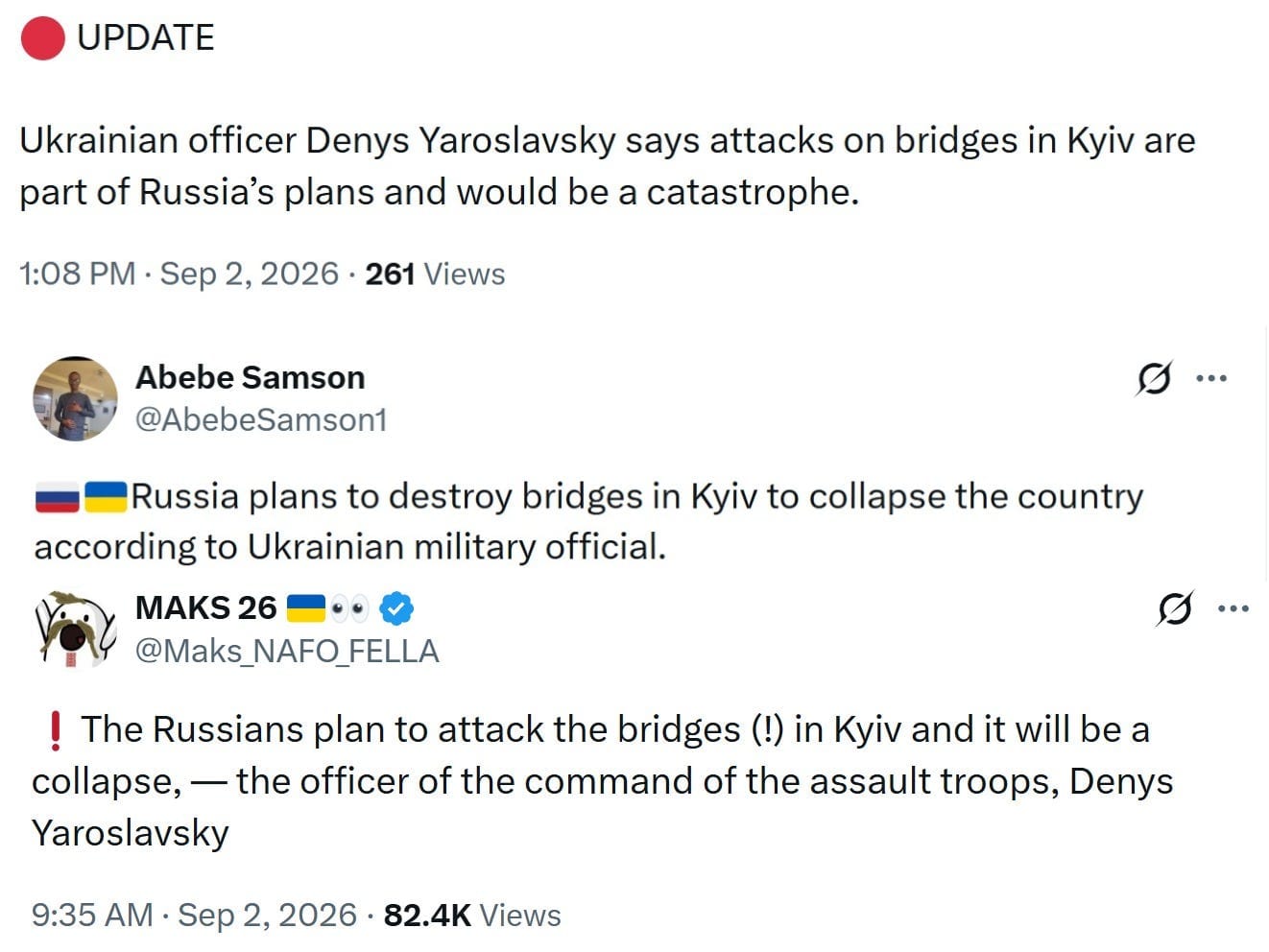
At the time, we had speculated this could be done in conjunction with the rumored future northern front offensives from Chernigov toward Kiev. Russia could plan to assault eastern Kiev after cutting it off from the west bank.
Now for the first time Russia appears to have begun hitting one of these bridges as the Southern Bridge was struck no less than three times so far as of this writing via what’s claimed to be a Geran-4 drone:
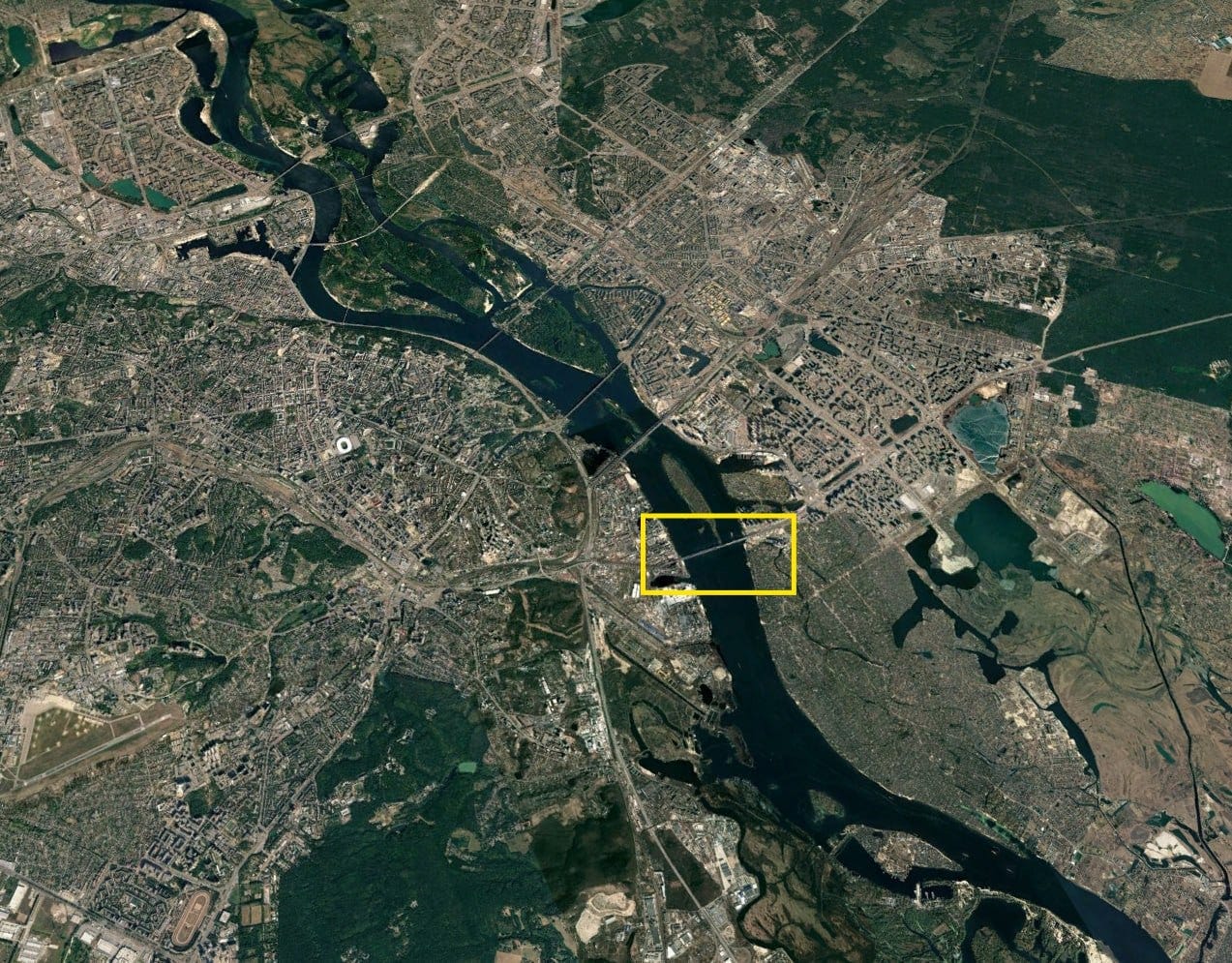
Note that once again a Russian recon drone was filming in real time:
A strike by a "Geran-4" kamikaze drone hit the cable support of the Southern Bridge in Kyiv this morning.
Following the attack, a bridge support in Kyiv was damaged, and traffic and metro services have been suspended.
▪️ Metro and ground public transport services across the Southern Bridge have been suspended," Klitschko stated.
▪️ The bridge support, barrier, road surface, and the protective concrete structure of the metro line have been damaged.
That was the first daytime hit, two more came later at night, with even some later reports of a fourth.
A third Russian drone strike on Kyiv’s Pivdennyi (Southern) Bridge today.
— Anton Gerashchenko (@Gerashchenko_en) October 1, 2026
This bridge is used by hundreds of thousands of Ukrainian civilians every day. People use it to get home and to work.
Russia is doing all it can to make life in Kyiv unbearable, violating all norms. https://t.co/JDpTNFjR81 pic.twitter.com/RwkOH26MPO
Russia is attempting to cut bridges over Dnipro river in Kyiv
— Liveuamap (@Liveuamap) October 1, 2026
Another drone strike at the Pivdennyi bridge in Kyiv https://t.co/KEel401xvS pic.twitter.com/IM0NQI3HhE
While the hits did not seem to do much damage beyond suspending traffic and causing alarm, they could have been merely precursors or test strikes to calibrate guidance systems, tactics, or some new type of approach, like that seen with the new “whiskered” drones that appear to use some kind of new cumulative warheads.
As of this very writing, reports claim Russia is preparing another large ballistic attack on Kiev tonight, and that the missiles could this time join the drones in hitting the bridges:
❗️Russia plans to destroy the Southern Bridge: During the next massive attack on Kiev, the Russians may target it with ballistic missiles, specifically "Iskander-M" and North Korean KN-24 missiles, according to monitoring reports.
👆Ukrainian post
I still find it improbable for now, as it seems the drones were some kind of test attack, but it does seem to forebode a new escalatory expansion of targets from Putin or the Russian command.
The thread below has some interesting theories:
1/ Russia's double attack on a major Kyiv bridge today marks a significant change in Russian tactics, reportedly aided by a new cumulative warhead for the Geran drone which has been designed to damage bridge supports. ⬇️https://t.co/kYxYrRtBaI
— ChrisO_wiki (@ChrisO_wiki) October 1, 2026
For instance, it notes that the new whisker drones have a special cumulative “cutting charges” meant to sever cables and that these test strikes may have been targeting the bridge’s large suspension cables to weaken the structure, perhaps in preparation for a larger ballistic strike later on:
Russian warblogger Yuri Kotenok describes today's strikes as a test of new "enhanced munitions on jet-powered drones with four additional cutting charges , detonated by additional contact sensors called 'whiskers'".
Ukrainian sources describe the new warhead as a "cumulative-cutting special payload" (KRSN), comprising a main charge weighing approximately 40 kg and additional cumulative charges.
Yevgeny Poddubny comments: "One strike hit a support, but the cables supporting the structure were likely the target. Kyiv's Pivdennyi Bridge is a cable-stayed (suspension) bridge, meaning our UAVs will prioritise the steel stays that provide stability."
Rybar suggest that cheap Geran drones with a specialised warhead could change the equation. Vadym Denysenko, head of the Delovoy Stolitsa think tank, says the new warhead could be a game-changer and characterises the attack as experimental.
"Now, it seems that the decision has been made to check whether these Shahed drones can damage the bridge to the point where it ceases to function."
In 2020, the then-adviser to the mayor of Kyiv, Maksym Bakhmatov, stated that approximately 90% of transit vehicle traffic between left-bank and right-bank Ukraine goes over the Pivdennyi Bridge. This also includes a significant portion of military traffic. /end
Recall that last month Russia also for the first time struck one of the bridges on the Dnieper allegedly with a glide bomb, this time near Zaporozhye:
💥 Russian FAB airstrike hit a major railway bridge west of Zaporizhzhia across the Dnieper.
— Military Summary (@MilitarySummary) August 16, 2026
📍 47.82103247743768, 35.07600055119818 pic.twitter.com/pyf9a9tVhD
These scattered strikes appear to be some kind of tests or one-offs, but we’ll see if the current campaign in Kiev leads to anything systematic.
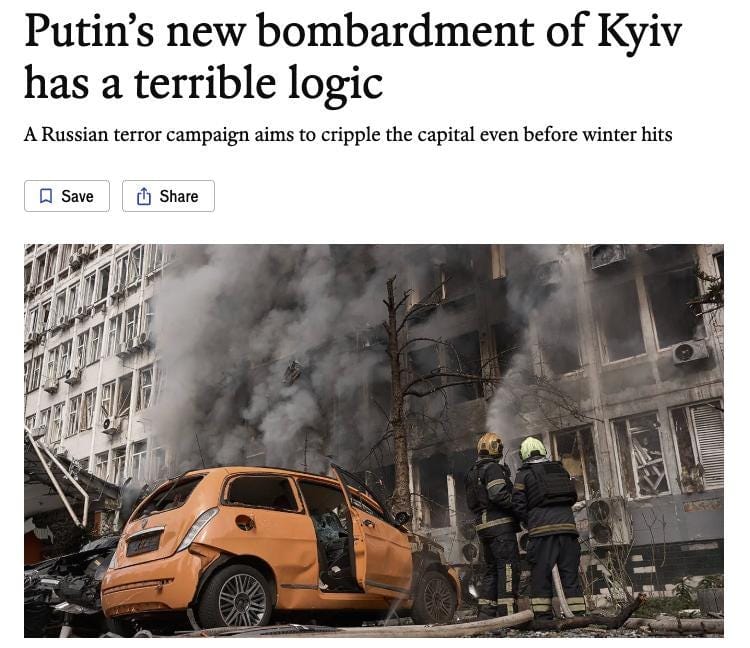
Now, as ever, Western outlets are growing concerned about the coming winter, particularly amidst the increasingly “gloves-off” Russian approach to hitting Kiev:

As a final update, one major Polish pro-Ukrainian analyst has found that Russia has continued to gain territory in September despite localized Ukrainian counter-attacks which won back territory, the most notable being in the Lyman sector:
Here is a short summary of territorial changes in Ukraine for September 2026.
— Konrad Muzyka - Rochan Consulting (@konrad_muzyka) October 1, 2026
Our dataset shows an overall Russian territorial gain in September, but a sharply uneven pattern: gains around Dobropillia, Velykyi Burluk, Kramatorsk and Komyshuvakha coincided with substantial losses… pic.twitter.com/jrq0zXiqri
In fact, September appears to have the greatest gains on the front since April of this year, though they still remain small compared to those of previous years. But as we mentioned in the recent paid piece, Russia is asymmetrically making up for slower battlefield successes with the expansion of the war across other domains, where it has racked up record damage against Ukraine in what is likely a period of strategic relative dormancy for the purposes of waiting out the current drone-dominant ‘meta’ before future advancements (Rassvet, etc.) allow bolder battlefield maneuvers to resume.

Our new book, The Greatest Theft in Human History – How the Banks and “Government” Will Steal At Least $1.4 MILLION From the Typical American Worker “Legally,” is now shipping!
You can read a summary of the book on ArtOfLiberty.Foundation (Replaces Important News from Art of Liberty Foundation on Substack) that breaks down the basics HERE.
Our first order was for 200 copies; 39 went to sheriff's departments in North Carolina, and two went to Supreme Court justices in North Carolina with whom our supporter had relationships. The books were so well received that she ordered 200 more copies!
You can get a free copy by becoming a Liberty Member on our new publishing platform. Substack was censoring us, so we built our own censorship-resistant publishing platform.
Check it out at Voluntaryist.News, ArtOfLiberty.Foundation, and FiveMemeFri.org and become a Liberty Member at ArtOfLiberty.org/become-liberty-member/
Finally, if you think this is important, can you please forward our press release to your favorite media outlet, podcasters, blogger, vlogger or financial advisor?


