

By Sadie Whitelocks, US Senior Reporter - Daily Mail
Forget sitting in bumper-to-bumper traffic or watching your commute crawl along the freeway.
One of the world’s biggest car manufacturers is betting that the future of transport isn’t on the road at all – it’s in the sky.
Toyota is doubling down on its vision of flying taxis after announcing a major new manufacturing partnership with California-based Joby Aviation, with a goal of mass-producing electric aircraft capable of whisking passengers over congested cities at speeds of almost 200mph.
The Japanese auto giant is taking a controlling 51 percent stake in the new venture, called Joby Toyota Aero Manufacturing Preparation Company, while Joby will own the remaining 49 percent.
The announcement sent Joby’s shares soaring as investors cheered what could become one of the biggest milestones yet in the race to bring commercial air taxis to everyday commuters.
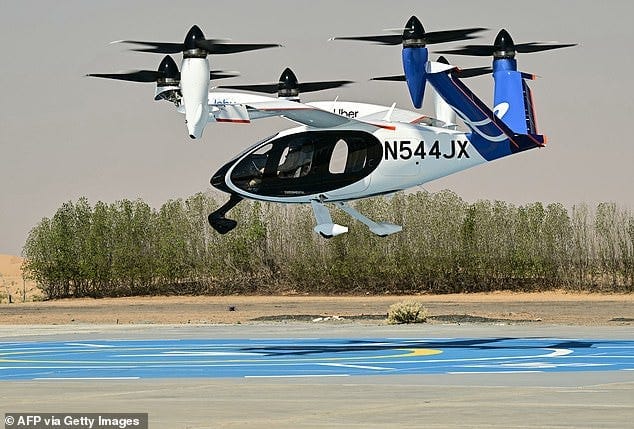
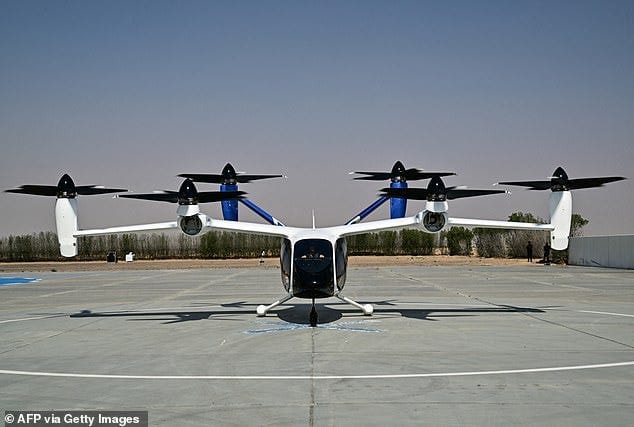
Rather than looking like a conventional airplane, Joby’s futuristic craft is a cross between a helicopter and a sleek private jet.
The all-electric vehicle uses six tilting propellers to take off and land vertically before transitioning into forward flight like an airplane.
It can carry a pilot and four passengers, and it’s designed to reach speeds of nearly 200mph while producing far less noise than a traditional helicopter.
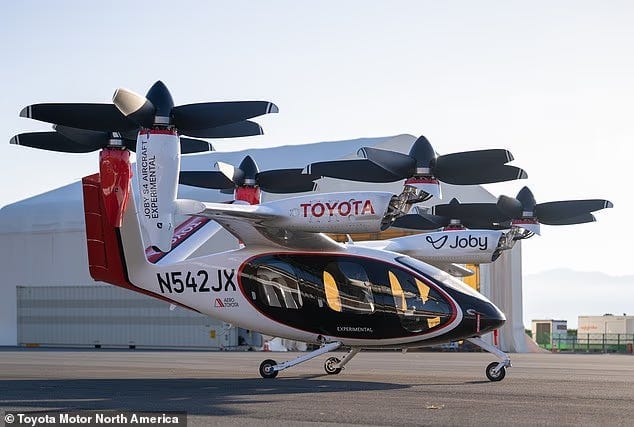
Toyota says the partnership will focus on improving manufacturing quality, reducing production costs and eventually mass-producing the aircraft.
‘It’s really meaningful for us to take on this challenge together with Joby, a partner that shares the same vision,’ Toyota chairman Akio Toyoda said.
‘We believe this strengthened relationship is an important step forward in realizing the future mobility society.’
Joby founder and CEO JoeBen Bevirt said Toyota has played a key role behind the scenes for years.
‘Toyota has been by Joby’s side for nearly a decade, providing invaluable guidance and support as we built the foundation for manufacturing our aircraft,’ he said.
‘Together, we share a vision of making aerial mobility an everyday reality, and we look forward to delivering on that promise together.’
The companies have worked together since Toyota first invested nearly $400 million in Joby in 2020.
Since then, the Japanese automaker has increased its total commitment to around $900 million, making it one of Joby’s biggest backers.

According to regulatory filings, the new joint venture will give Toyota majority control, with three board members compared with Joby’s two.
Joby will also grant the venture exclusive rights to manufacture its flagship S4 aircraft while Toyota contributes decades of manufacturing expertise developed through its automotive business.
The partnership comes as the race to launch commercial flying taxi services heats up.
Joby is competing with rivals including Archer Aviation to become one of the first companies to receive full approval from the Federal Aviation Administration (FAA) to carry paying passengers in electric vertical take-off and landing aircraft, known as eVTOLs.
Earlier this year, Joby completed a week of demonstration flights in New York City and plans to launch commercial services in the United Arab Emirates before expanding into the United States once FAA certification is complete.
The company is also expected to participate in the White House-backed eVTOL Integration Pilot Program later this year, with demonstration flights planned in states including Texas, Florida, Utah, North Carolina, Arizona and New York.
Toyota’s manufacturing muscle could prove crucial. Joby has ambitious plans to eventually build up to 500 aircraft a year, with production initially ramping up to around four aircraft per month once certification is secured.
The partnership also opens the door for Toyota to eventually operate its own fleet of air taxis.
Previous agreements between the companies allow the automaker to purchase aircraft directly from Joby for corporate transport or future commercial operations.
They are also exploring pilot training, maintenance operations and the development of dedicated ‘vertiports’ where the aircraft would take off and land.
Despite the excitement, several hurdles remain before commuters can swap highways for airways.
The aircraft still requires full FAA certification before it can begin carrying paying customers, while the new manufacturing venture will also need regulatory approval.
Even so, industry analysts believe the partnership gives Joby a significant advantage.
Unlike many start-ups, Joby now has the backing of one of the world’s largest manufacturers, giving it access to Toyota’s expertise in mass production, quality control and supply chain management - areas that have historically proved difficult for aviation start-ups.
Help Venezuela get back on its feet
HOW TO HELP NOW?
Donate to the House Project in Venezuela

Etienne Note: We have team and friends in Venezuela and understand there are over 50,000+ missing. Many buried under the rubble. They need heavy equipment to move rubble ASAP. We have evaluated multiple charities that are providing support on the ground and have chosen to support: The House Project which already has multiple projects on-going in Venezuela. We will be featuring them as our Voluntaryist Charity Option in Five Meme Friday. You can donate here: https://thehouse-project.org/es/collections/donate


