

The American penny is history. The nickel might be next.
The last pennies were pressed at the US Mint in Philadelphia on Wednesday, a victim of production costs higher than their worth coupled with limited usefulness. While the penny remains legal tender, banks and merchants are already reporting shortages.
But the factors that prompted the government to stop making pennies are even truer for the nickel. Pennies cost nearly 5 cents to make – 4 cents more than they’re worth. The nickel’s net loss is nearly 9 cents per coin.
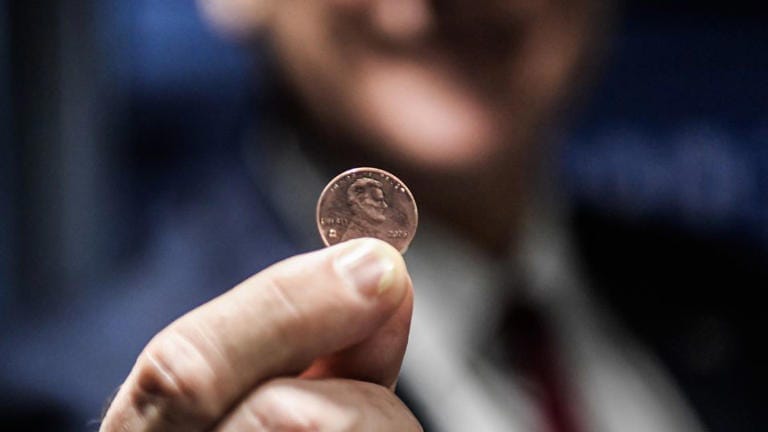
Treasurer of the United States Brandon Beach holds the last penny stamped at the US Mint on November 12 in Philadelphia. - Matthew Hatcher/Getty Images
Nickels are 75% copper and 25% nickel, while pennies — despite their reputation as a copper coin — are copper-plated zinc, meaning they are 97.5% zinc and only 2.5% copper.
While metal prices can be volatile, zinc costs about the same as it did in late 2016; copper and nickel prices cost roughly double since then.The US Mint and one of its suppliers, Artazn, have been studying ways to get the cost of making a nickel down to less than 5 cents, said Mark Weller, executive director of Americans for Common Cents. The pro-penny group is funded primarily by Artazn, which describes itself as one of the world’s oldest and largest producers of solid zinc strip and zinc products. Artazn makes the blanks used by the US Mint to press coins.
“It just so happens that copper and nickel are two of the more expensive metals you could be using,” Weller said. Getting nickel production costs to close to 5 cents per coin could be completed within a year, he said, with a “new” nickel that looks identical to the current nickel.
But the nickel’s problems don’t end with the production costs. Like the penny, the nickel is limited in its usefulness. Americans are using coins less and less often, even when they use cash.
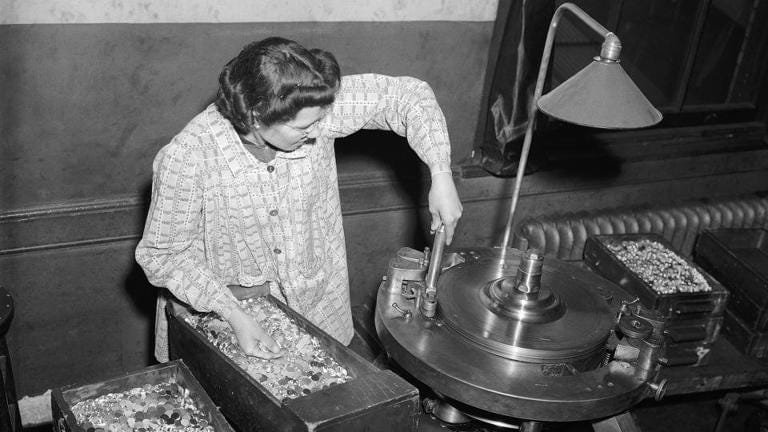
A worker at the Mint making nickels with different metals during World War II, when nickel was needed for the war effort. The Mint is experimenting with once again changing the composition of the nickel, this time to save money. - AP
Other countries were quicker to retire their small-change coins. New Zealand and Australia both eliminated the production of their nickels in the early years of this century and within 20 years of when they stopped making their pennies.
Using cash less often reduces the pressure to drop the nickel, as would reducing the cost of production, said David Smith, a professor of economics at the Graziadio School of Business and Management at Pepperdine University. Smith, an avid coin collector, also thinks there is enough nostalgia for the coins to slow any move toward eliminating them. But he believes it will eventually happen, even if it takes 15 or 20 years.
Weller said getting rid of coins and moving toward a cashless economy causes problems, especially for lower income consumers.
“The move away from cash really benefits big banks and credit card companies,” he said. “They’re charging businesses every time someone swipes their cards, and those costs end up being passed onto consumers.”
Merchants dealing with a penny shortage are trying to figure out whether they’re allowed to round purchases to the nearest 5 cents and have called on Congress to pass legislation to confirm the move.
Rounding cash purchases to the nearest 10 cents rather than the nearest 5 cents could cause additional problems. A study earlier this year by the Federal Reserve Bank of Richmond found that while rounding purchases to the nearest nickel would cost American consumers a total of $6 million a year, the similar “rounding tax” from eliminating nickels and going to the nearest dime would be $56 million.
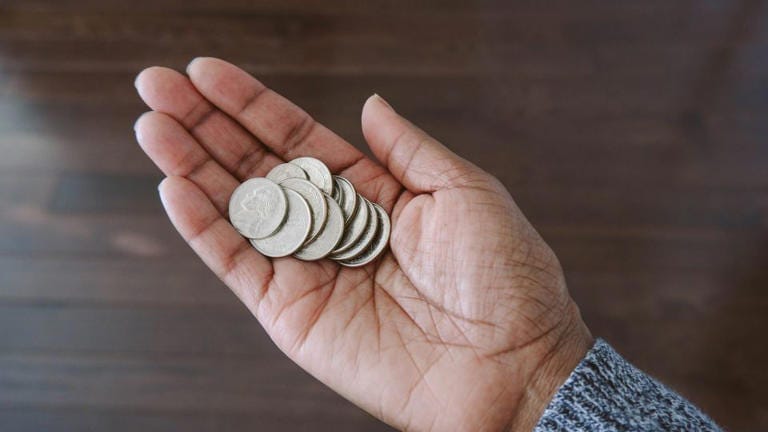
Experts say the nickel’s days might be numbered -- but they don’t expect a change to happen quickly. - Grace Cary/Moment RF/Getty Images
But even that would come to only an average 42 cents for each of the nation’s 133 million households.
And changing the nickel’s composition wouldn’t eliminate all production cost concerns. Even if a “new” nickel cost less than 5 cents, it’ll be tough to stay below that level, especially since 2.8 cents of the cost of each nickel comes from administrative and distribution costs, not materials and production.
Both Weller and Smith don’t expect the nickel to go away anytime soon. The Mint lost money on every penny and every nickel it had made since 2006, Weller said, and it only stopped making pennies this year.
“I’ve had reporters calling me about the future of the penny for the last 30 or 35 years,” Weller said. “So I don’t see there being an immediate change.”
For more CNN news and newsletters create an account at CNN.com

Go paid at the $5 a month level, and we will send you both the PDF and e-Pub versions of Etienne’s new book: To See the Cage Is to Leave It - 25 Techniques the Few Use to Control the Many and a coupon code for 10% off anything in the https://artofliberty.org/store/.
Go paid at the $50 a year level, and we will send you a free paperback edition of Etienne’s new book: To See the Cage Is to Leave It - 25 Techniques the Few Use to Control the Many OR “Government” - The Biggest Scam in History… Exposed! OR a 64GB Liberator flash drive if you live in the US. If you are international, we will give you a $10 credit towards shipping if you agree to pay the remainder.
Support us at the $250 Founding Member Level and get a signed high-resolution hardcover of “Government” - The Biggest Scam in History... Exposed! + Liberator flash drive + a signed high-resolution hardcover of Etienne’s new book: To See the Cage Is to Leave It - 25 Techniques the Few Use to Control the Many + everything else in our “Everything Bundle” of the best in voluntaryist thought delivered domestically. International pays shipping. Our only option for signed copies besides catching Etienne @ an event.


