

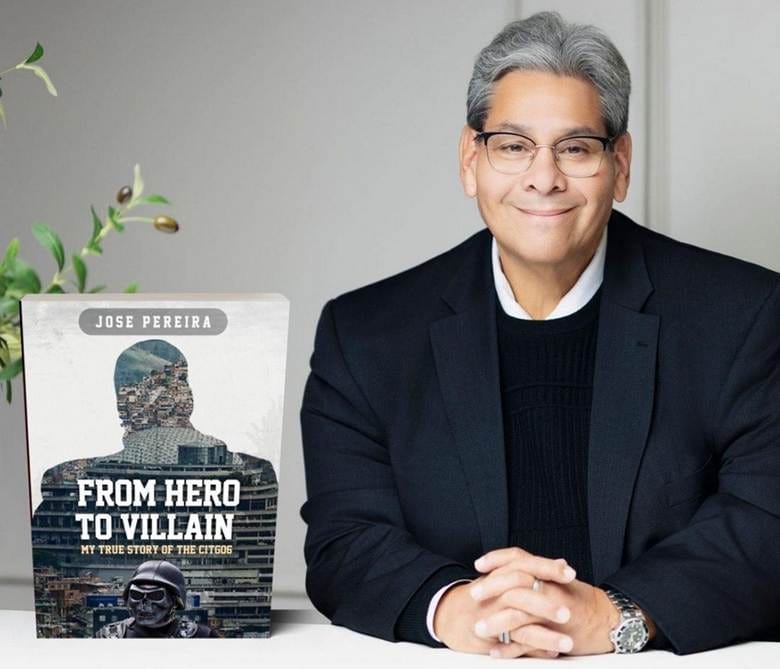
Jose Pereira was the US-based CEO of Venezuelan oil company Citgo Petroleum and after a Thanksgiving Day meeting in Caracas in 2017, he and five other Citgo executives were arrested and charged with bribery, corruption and other false charges related to a business deal that someone in the the Venezuelan government felt was disadvantageous.
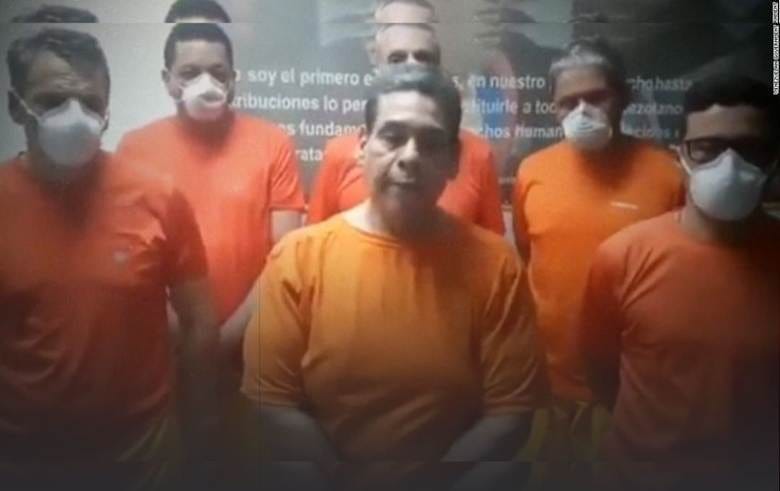
They became known as the Citgo 6. Jose was held in solitary confinement for 10 months and ultimately held for 5 years before he was released in a prisoner exchange on October 1st 2022 where the five remaining Citgo Six hostages were flown hooded to the island of St. Vincent and the Grenadines.
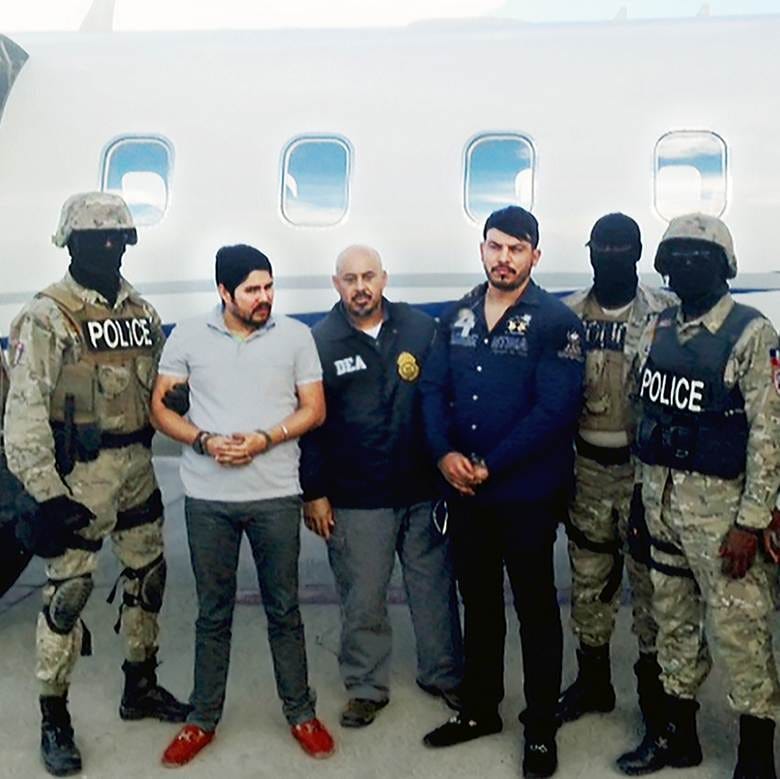
Jose was ultimately swapped for two nephews of Nicolas Maduro convicted of drug dealing by the DEA in a prisoner swap on a remote island in the Caribbean
They were met by another plane with Delcy Rodriguez, Vice President of Venezuela and now acting President and another plane flown by the US Drug Enforcement Administration where they were swapped for two nephews of Nicolas Maduro, Efraín Antonio Campo Flores and Francisco Flores de Freitas, who had been arrested by the US DEA for drug smuggling in an operation that came to be called the Narcosobrinos affair.
In an amazingly fortuitous twist of fate, I had been scheduled for over a month to be interviewed by Jose on his podcast Building Resilience about my new book: To See the Cage is to Leave It - 25 Techniques the Few Use to Control the Many.
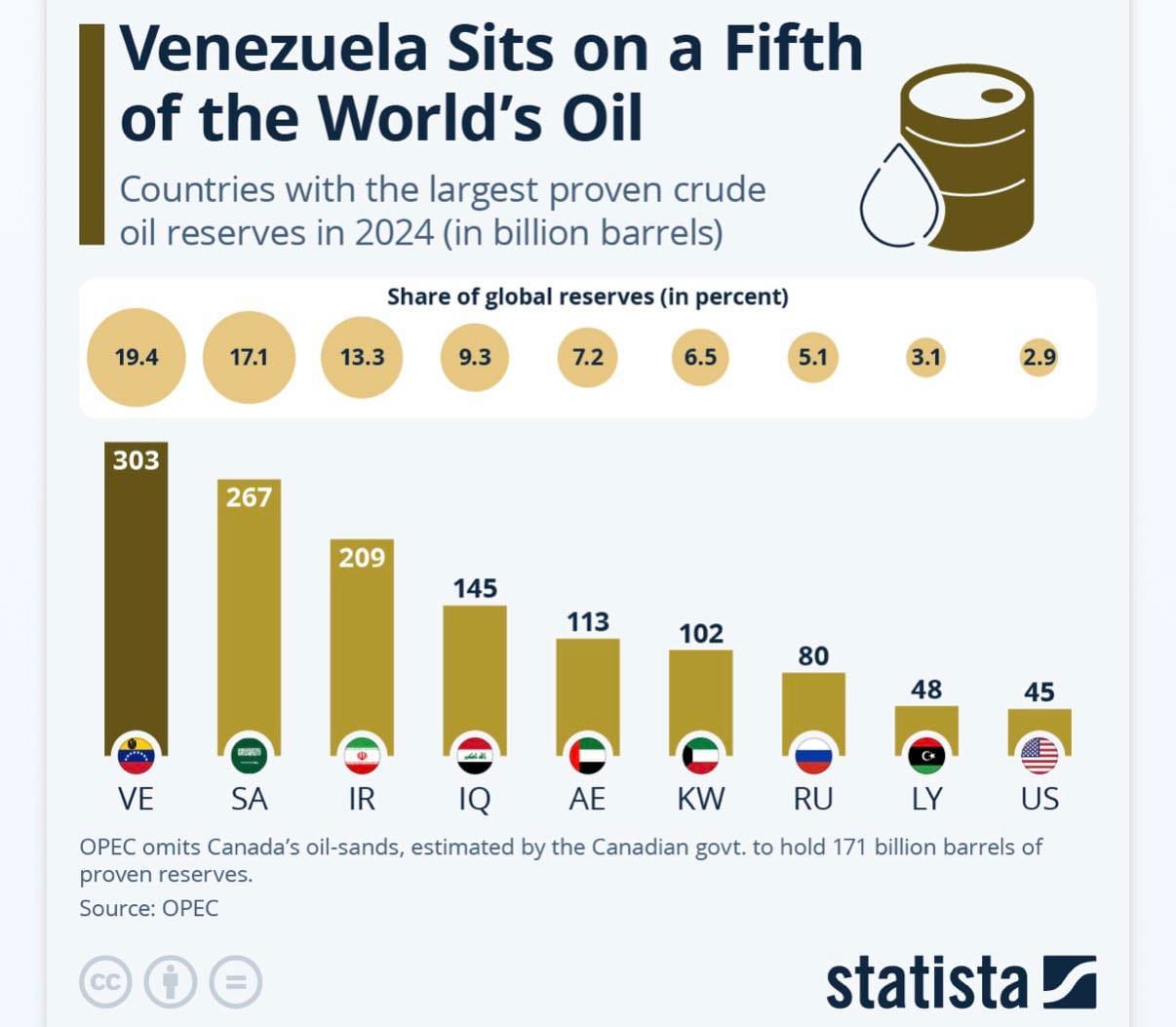
With the US having seized Maduro and Trump promising to reimburse American oil companies for the astronomical costs of rebuilding the Venezuelan oil sector, I flipped the script on Jose and took the opportunity to interview the ultimate Venezuelan oil industry insider with a deep understanding of the connections of Maduro to the drug trade, on what is REALLY going on with the US Invasion of Venezuela. We discuss:
How the Invasion of Venezuela props up the US petro-dollar system that forces oil importing countries to buy and hold US dollars to purchase oil allowing money center banks and the US Fed to continue creating dollars out of thin air in an inflationary process that steals the purchasing power from those who earn and save dollars.
How Maduro joins the ranks of other oil rich leaders that defied the US dollar regime and sold oil in currencies other than the dollar
Saddam Hussein - Iraq, 3rd Largest Proven Reserves - Swaps $26 Billion in USD for Euros in his US “Oil-for-Food” program account and begins selling oil in Euros in October of 2000 - Invaded by the US in early 2003 and where the USD is mandated for oil purchases.
Muammar Gaddafi - Libya, 8th Largest Proven Reserves - 2009 Gaddafi elected Chairman of the African Union, proposes a gold-backed pan-regional currency called the Gold Dinar backed by Libya’s gold 144 tons of gold reserves to replace the USD and French CFA Franc system. Killed by NATO-backed rebels after a NATO airstrike on his convoy on October 20th, 2011. Libya’s gold reserves disappeared shortly thereafter.
How Chavez “Nationalized” (Stole) the assets of hundreds of foreign exploration, refining, and oil service companies operating in Venezuela and destroyed the assets through mismanagement.
How many Venezuelans today have to drive to Columbia to get quality gasoline for their automobiles because the domestic gas is of such poor quality.
Which US Oil Companies are set to profit from the US control and reassignment of oil resources? Who is set to lose?
Was Maduro really connected to the drug trade?
For Paid Subscribers, get the complete transcript of the interview value added with visualizations, HTML links to references and evidence, and help support our authentic journalism from a principled voluntaryist perspective that “government” is illegitimate and the US “government” is being run as a criminal enterprise.
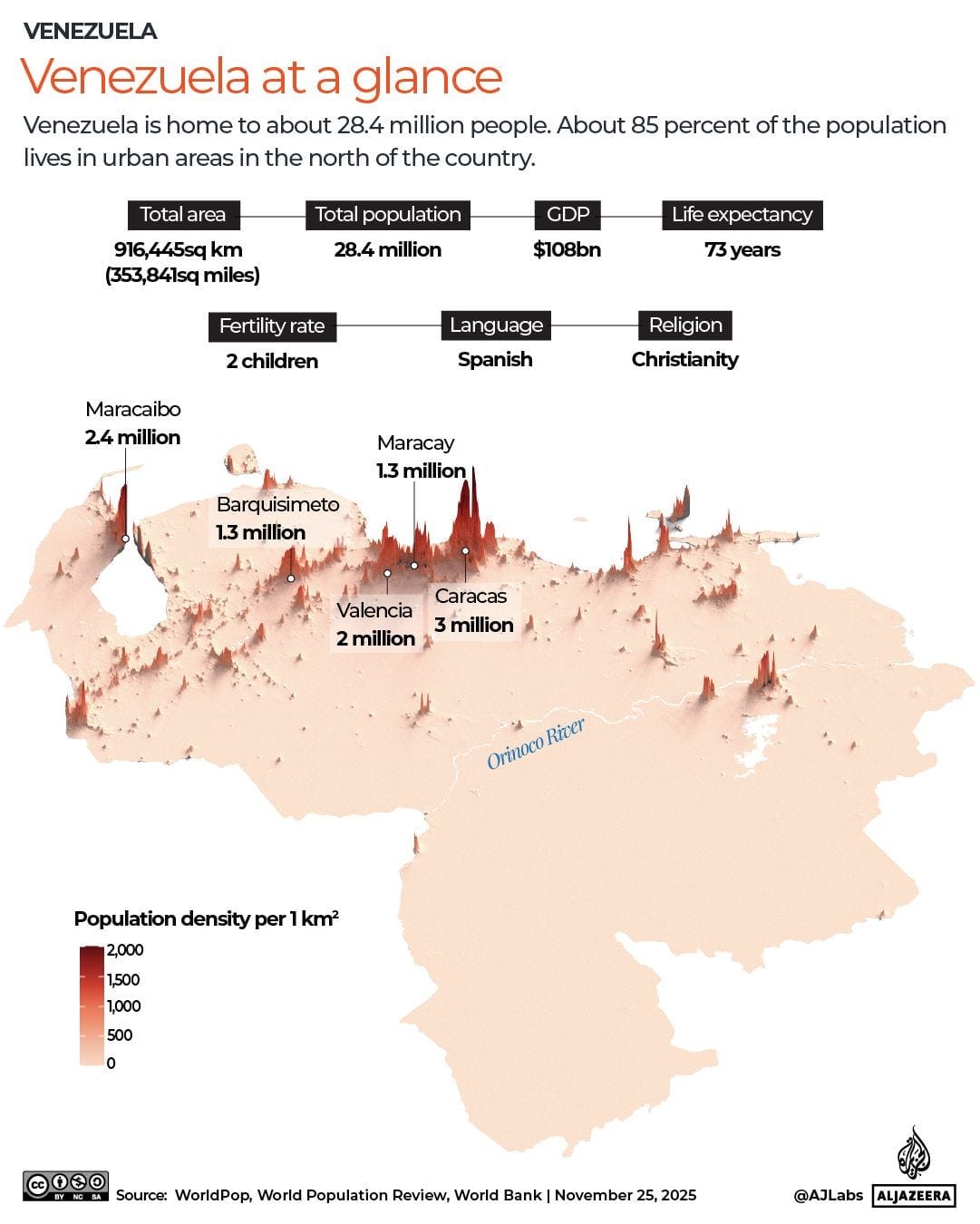
You can also get a ePub copy of my new book for becoming a $5 monthly subscriber, a paperback copy of the new book for becoming a $50 yearly subscriber, and signed high-resolution hard copies of both books for becoming a $250 Founding Member,
The Best “Go Paid” Deal on Substack! You Get REAL Stuff!!
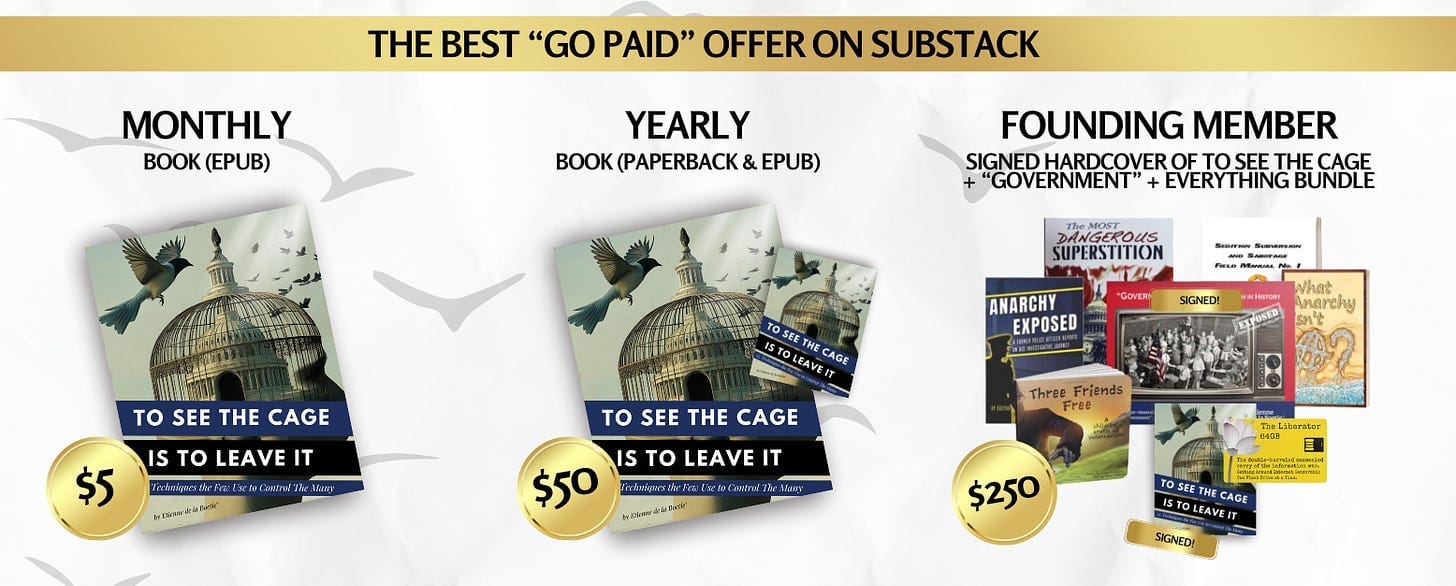
Go paid at the $5 a month level, and we will send you both the PDF and e-Pub versions of Etienne’s new book: To See the Cage Is to Leave It - 25 Techniques the Few Use to Control the Many and a coupon code for 10% off anything in the https://artofliberty.org/store/.
Go paid at the $50 a year level, and we will send you a free paperback edition of Etienne’s new book: To See the Cage Is to Leave It - 25 Techniques the Few Use to Control the Many OR “Government” - The Biggest Scam in History… Exposed! OR a 64GB Liberator flash drive if you live in the US. If you are international, we will give you a $10 credit towards shipping if you agree to pay the remainder.
Support us at the $250 Founding Member Level and get a signed high-resolution hardcover of “Government” - The Biggest Scam in History... Exposed! + Liberator flash drive + a signed high-resolution hardcover of Etienne’s new book: To See the Cage Is to Leave It - 25 Techniques the Few Use to Control the Many + everything else in our “Everything Bundle” of the best in voluntaryist thought delivered domestically. International pays shipping. Our only option for signed copies besides catching Etienne @ an event.
Jose Pereira:
Okay, welcome everybody to the Building Resilience show. In this show, we are always showcasing people that have incredible stories. I have a guest today here that is funny, because the original intention was me interviewing him; but with all the things that are happening right now in Venezuela, the people that know me—that I’m Venezuelan born, and that I was a hostage of Maduro, and all things that’s happening with Maduro right now—that conversation is gonna be flipping around what is going in Venezuela.
So, I’m gonna bring a guest here that is... his name... he has a real name, but he used his name like Etienne de la Boetie2. Is that the way you pronounce it?
Etienne de la Boetie2:
Etienne de la Boetie2, squared.
Jose Pereira:
Very difficult. Etienne de la Boetie2. So, I’m going to, without no further ado, give the mic to him to introduce himself and why he used this name.
Etienne de la Boetie2:
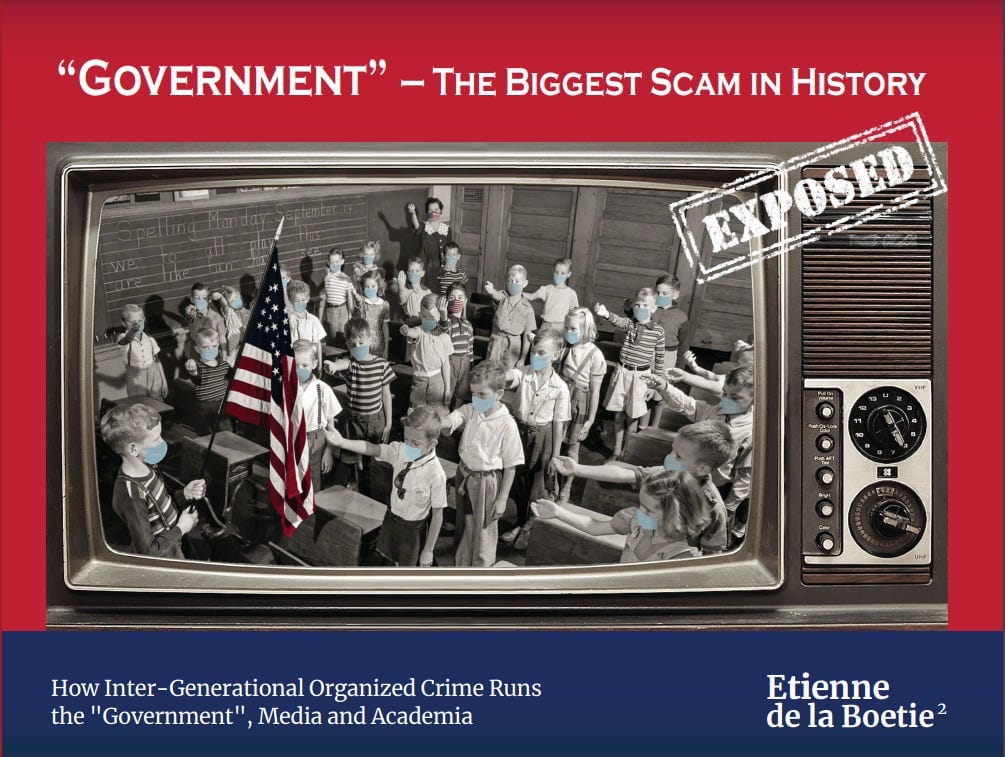
So I’m best known as the author of a book called “Government” – The Biggest Scam in History… Exposed! And I’m the founder of the Art of Liberty Foundation. And at Art of Liberty Foundation, we are principled voluntarists. We don’t believe in the legitimacy, the necessity, and the desirability of having a government.
And the original Etienne de la Boetie was a famous French political philosopher, he was a magistrate, he was a poet. He wrote in the 1500s, and he was really the first one to expose the illegitimacy of government and the tricks and the techniques that rulers use not just to get obedience, but to get fealty and adoration. And so I’m doing his work in the modern age, and with my book, “Government” – The Biggest Scam in History… Exposed! and my new book, To See the Cage Is to Leave It – 25 Techniques the Few Use to Control the Many.
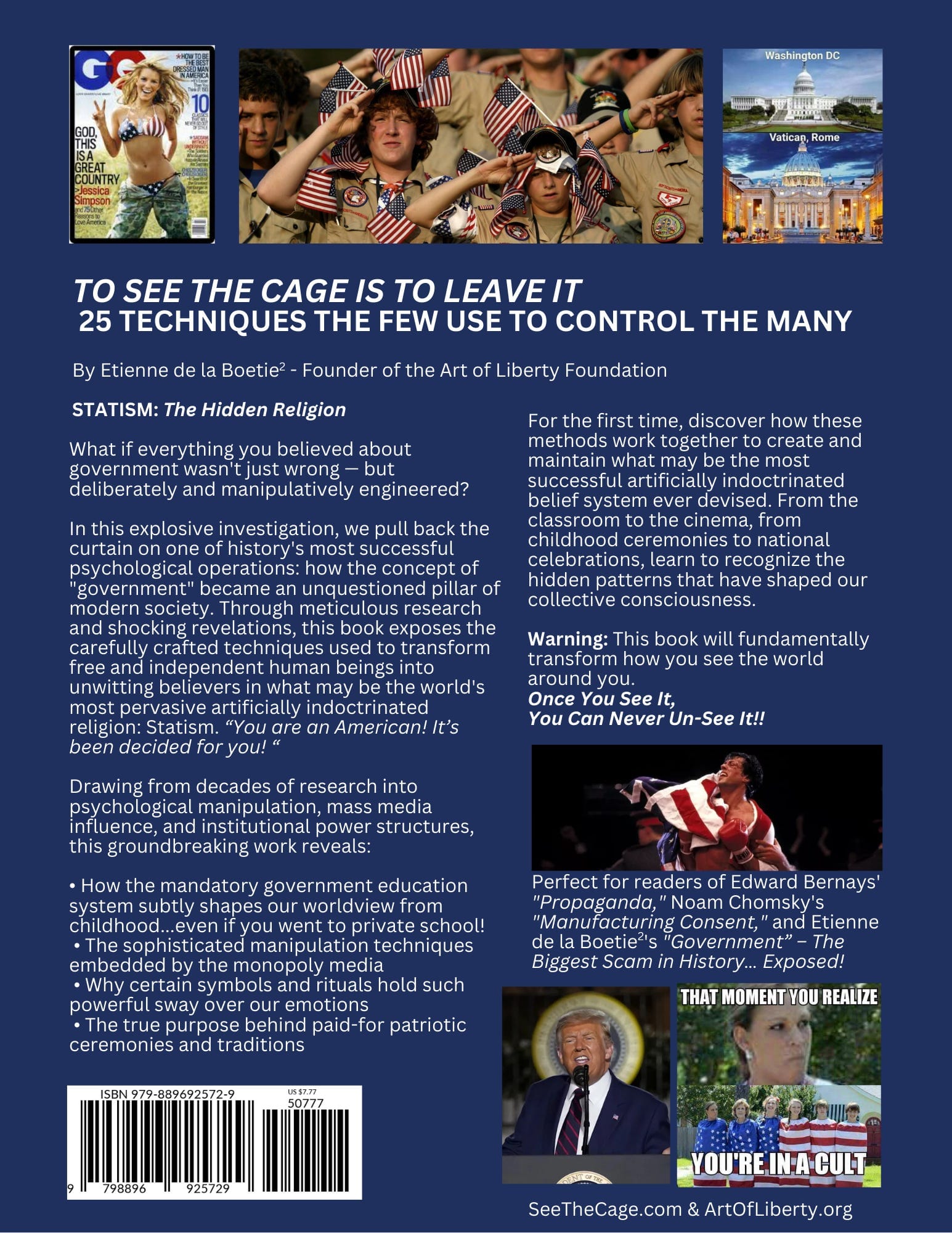
I’m exposing a number of unethically manipulative techniques that the US government and other governments—including the government in Venezuela—are using on their population to get them to go along with having a ruling class, to get them to go along with having a corrupt banking system, to get them to go along with having resources stolen from them in the name of the government (supposedly to be socialized for the people, but all pigs are equal and some pigs are more equal than others), and so it frequently doesn’t make it to the people.
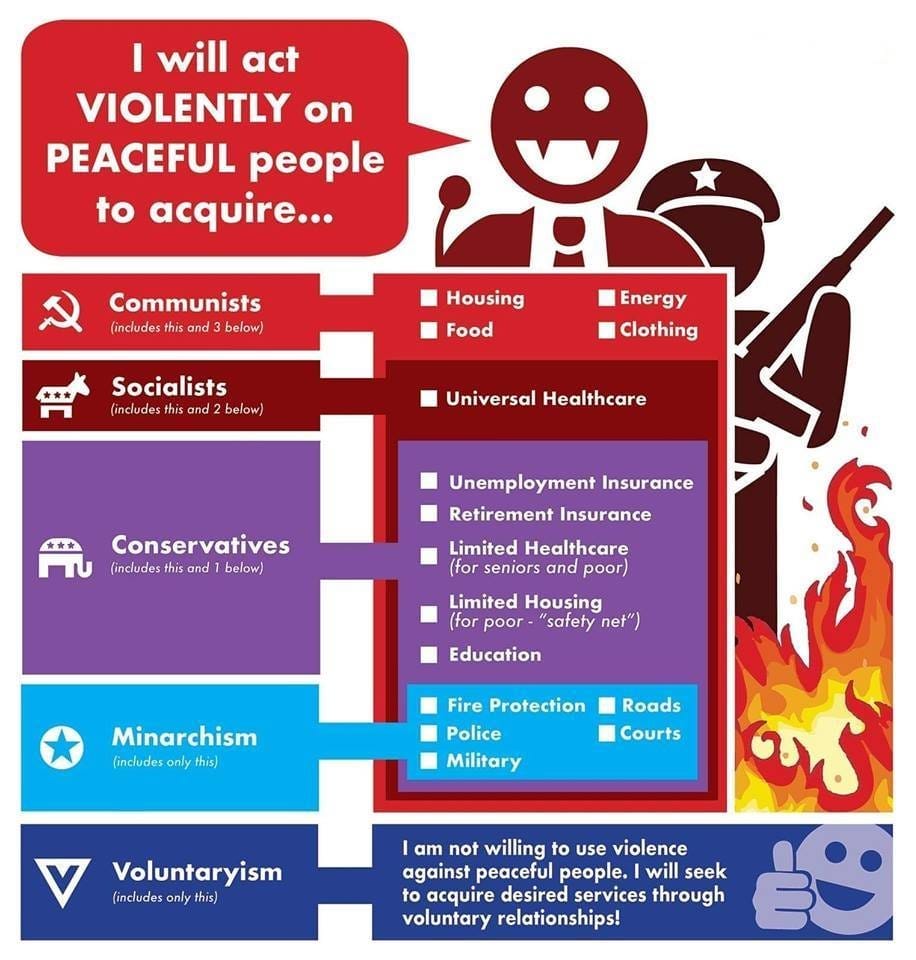
But that’s really the basic of my work. My thesis is that government is a technique that is being used to rob and control us, and we would all be dramatically wealthier and there would be much more harmony and prosperity in a world without government. That doesn’t mean there wouldn’t be cooperation; that doesn’t mean that there wouldn’t be roads; that doesn’t mean that there wouldn’t be everything that you would expect in a modern society. But in a voluntarist world, all of that is provided by the free market, by mutual aid societies, co-ops, by non-profits, by legitimate genuine charities; and essentially the government’s provider services, and everything the government does, would be done better, faster, and cheaper by the free market and free people. And so, that is kind of the thesis of my work. And because I’m going to be broadcasting this for my audience and we’re going to be talking today about the situation in Venezuela, I would like for you to introduce yourself to my audience and tell everybody your background and a little bit about you.
Jose Pereira:
Well, this is really funny. We’re having this conversation today. Let me tell you, to your audience, the people are hearing me: I’m Venezuelan born. I’m Venezuelan born, and I came here to the U.S. because I used to work in the oil and gas during all my life. We’re going to be talking about all this situation with the oil in Venezuela.
Etienne de la Boetie2: :
You’re being very humble. Would you mind explaining what position you held?
Jose Pereira:
Well, I was the CEO of Citgo Petroleum here in the U.S. I did a long career in the oil and gas, so I know a little bit about what the oil plays in Venezuela.
Etienne de la Boetie2:
And just for my audience, could you explain Citgo’s relationship to the Venezuelan government?
Jose Pereira:
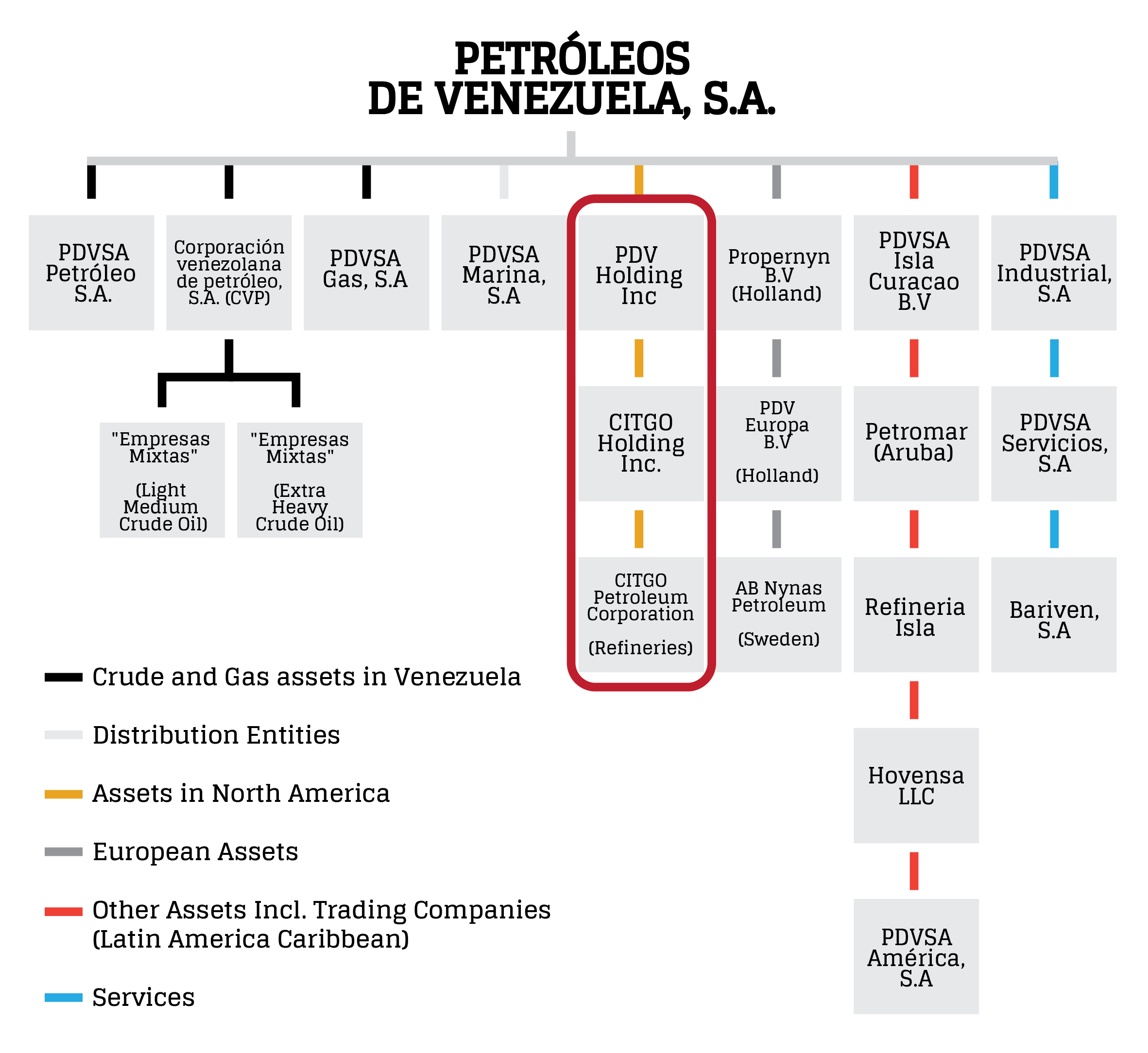
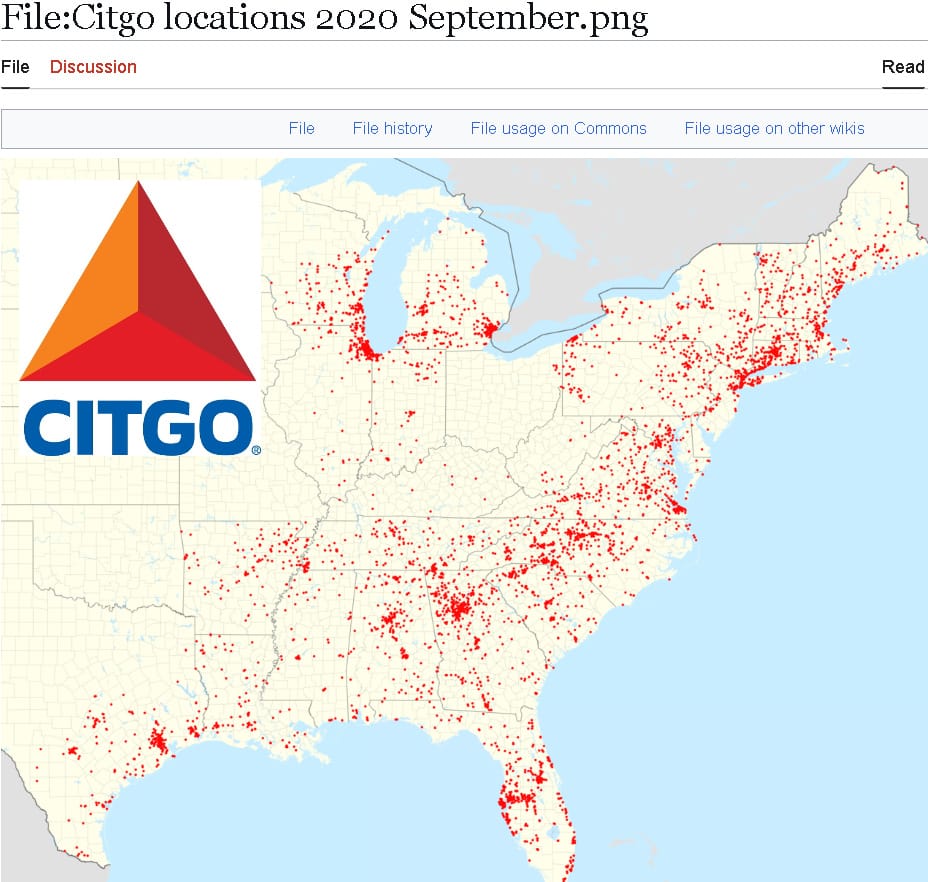
Yeah, Citgo Petroleum to the American audience. Everybody knows it because it has more than 6,000 gas stations here in the U.S.; all the East Coast and all the borders in the North. It’s all over the U.S. It’s very big. By the way, Citgo in the 80s had almost 14,000 gas stations; had more franchises than McDonald’s. Citgo is the sixth largest refinery complex here in the U.S. And the ties to Venezuela is because it belongs to Venezuela. This is something that people doesn’t know about: 100% of the ownership of Citgo is from PDVSA, that is the state-owned company of Venezuela. Many people here in the U.S. doesn’t know that. So, I being the CEO during the first Trump administration—he was having issues with Maduro that look how it finalized—but during those tension days in 2017, I did a business trip to Venezuela and we were captured by Maduro. And we were held hostage because they use us as political pawns, and we stayed five years in Venezuela as a hostage of Maduro.
Etienne de la Boetie2: :
It was called the Citgo Six, correct?
Jose Pereira:
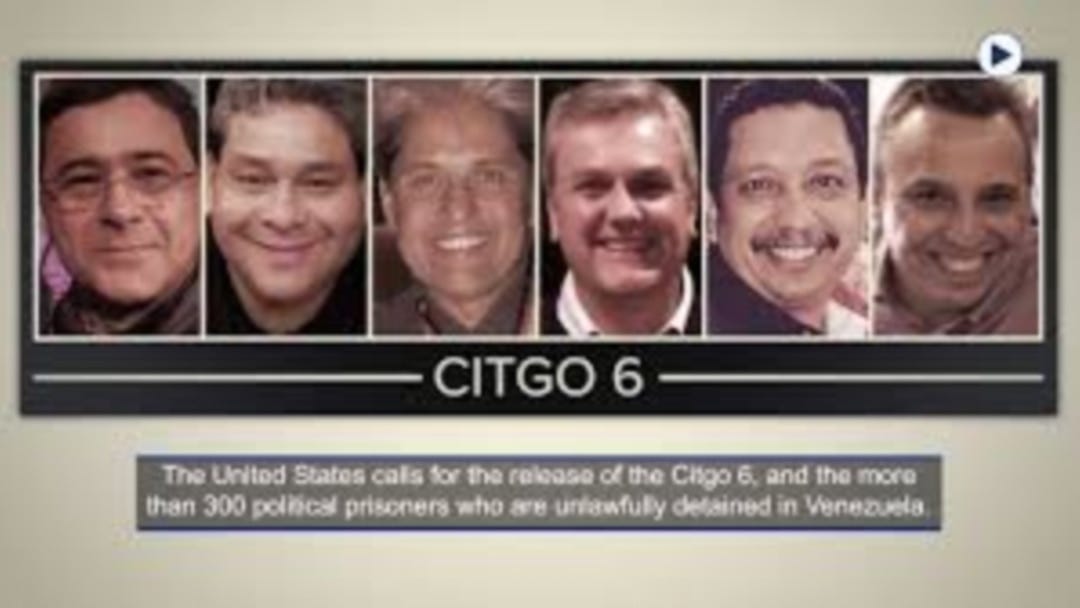
Yeah, because we were six executives. Because we were six executives, it was the president and my five vice presidents. And when we flew, we were accused to be American spies. Of course, it was a false accusation; they only wanted to use us as pawns. And the press put us that name, “Citgo 6”, because we were six, yes.
Etienne de la Boetie2:
So, absolutely the absolute right person to have a fascinating conversation about what is going on in Venezuela, and about what is the situation on the ground and the future of the oil business in Venezuela. Now, to kind of set the stage, what I wanted to do is... I wanted to point out: there’s a popular maxim here in the United States that “All wars are banker’s wars.” I think it came from Michael Rivero at WhatReallyHappened.com, who did a documentary on the same name.
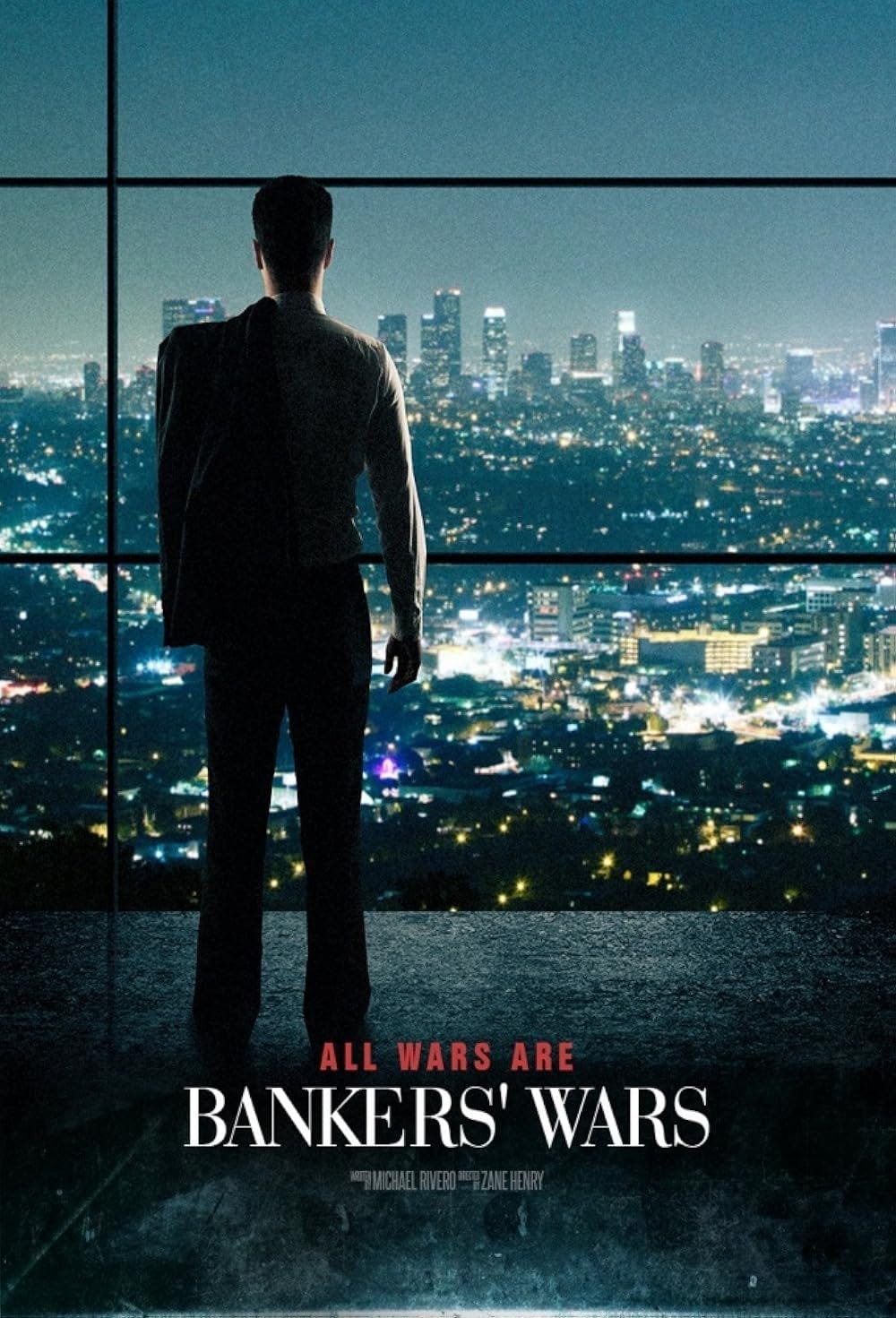
But a lot of these... what I think most people don’t realize is that oil is both a commodity and, in many ways, it is a currency. And so, in the United States, we’re on something called the petrodollar system.
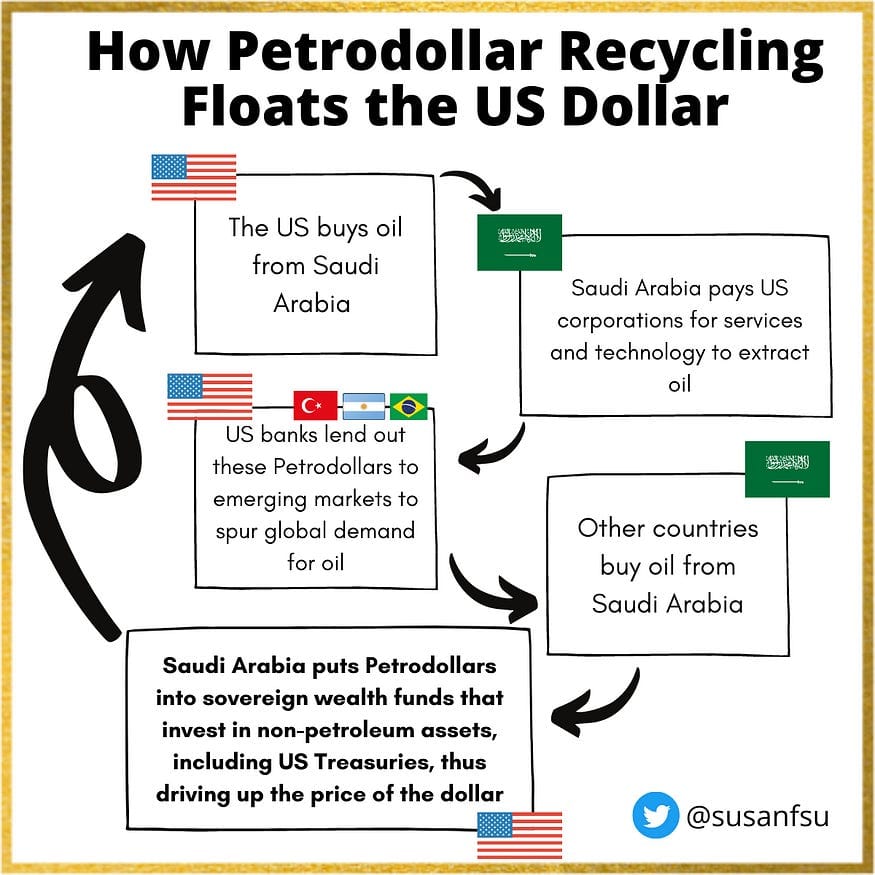
And the short version, the short explanation of that for people that are unfamiliar, is that in the 1970s—the last time the U.S. had a major bout of inflation—the way that they dealt with it (or one of the ways that they dealt with it) is they made a deal with OPEC that oil transactions would only be denominated and done in U.S. dollars. And so, countries that were oil-importing countries had to buy and hold U.S. dollars to pay for their foreign oil purchases. I think OPEC got some guarantees of security.
I think they got the ability... the CIA and the intelligence agencies showed these feudal monarchies in the Middle East how to, you know, create a state police apparatus to crack down on their internal dissent. They were taught how to propagandize their people so that they would, you know, be able to stay in power using a lot of the tricks that we expose. And in exchange, all of these dollars that were sloshing around the world now got absorbed; and now, in essence, oil has become a proxy in many ways for the U.S. dollar. So, the bankers get to keep printing U.S. dollars ad infinitum, and those dollars are absorbed and used into oil transactions when otherwise they wouldn’t.
Because many countries don’t want to be holding U.S. dollars, and many countries continue to abandon the U.S. dollar because it is losing so much value. Because the banks, through fractional reserve banking, and the government, through quantitative easing and market manipulations, have been producing so many dollars that the dollar is losing value. And so, who would want to hold on to it unless they didn’t? And the gun that the banks have at the world is: you don’t get any oil if you’re not going to take this U.S. dollar. Now, famously, before Maduro was kidnapped in Venezuela (in what looks like a deal with the vice president and the head of the Venezuelan military), two other leaders of oil-rich nations abandoned the dollar and were selling oil in other things than dollars. And I should have set the stage with that: that Maduro was selling oil in everything except the U.S. dollar.
Jose Pereira:
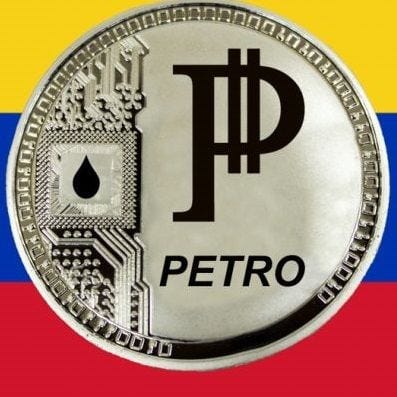
He was using a cryptocurrency called Petro. He created something called Petro. Now the Petro didn’t work and finally they were using Bitcoin and a lot of cryptocurrency.
Etienne de la Boetie2:
And they were giving it away in exchange for... my understanding is that they were essentially trading it for foreign exchange from with Russia and with Turkey, Russia, Turkey, China.
Jose Pereira:
There was doing a lot of... the only thing with that is because there was a lot of lack of transparency the way they were handling this. So, sometimes you didn’t know where the money was going. That’s one of the points. The money was not coming to the country because the country was lacking of currency, lacking of everything. So, they were using the cryptocurrency that was going somewhere else.
Etienne de la Boetie2:
Now, but just to set the table, so the two previous oil-rich countries that abandoned the dollar was Saddam Hussein. Very famously, in October of 2000, he converted his U.S. dollar... so, he was under economic embargo and restrictions led by the U.N. He was allowed to sell some oil, and that oil went into a program called the “Oil for Food Program.” And the Oil for Food Program at the time had $26 billion in U.S. dollars that he, very famously, converted to euros. And the euro appreciated. He made money on the deal. It was a black eye for the U.S. and the U.S. dollar.
And then in 2003, we invaded, deposed Saddam Hussein, and we restored Iraq... to the Iraqi oil exports to being sold in U.S. dollars. The second one was Muammar Gaddafi. In 2009, he was elected the chairman of the African Union. He was proposing a gold dinar, which would have been a regional currency backed by gold—backed by physical gold, including some tremendous reserves that he had built up using his oil exports. So he was buying gold; he was getting set up to have a regional gold-backed currency that would have been, really, probably the world’s largest commodity-based currency. It would have been a revolution in monetary policy on the planet, and I think it would have soaked up a lot of investment and it would have been a boon. And in 2011, we invade, we depose him, he’s killed, and all of those gold reserves have disappeared after the invasion.
And Libya is now back on a French plan called the CFA franc system, where 50% of their reserves are forced to be held in French francs. And so, kind of similar to the chicanery of the U.S. petrodollar, France’s crooked bankers and France’s crooked government are forcing their ex-nation states and captured states to participate in the franc system the same way that the U.S. forces people to participate in the dollar system. And so, "all wars are bankers’ wars." And so, now we have Maduro comes to power. And actually, I wanted to kind of turn it over to you, but let’s go and give people a background. And let’s start with the nationalization. Let’s start with what the oil industry looked like pre-Chavez. Let’s start with... like, I’d like for you to just kind of explain, you know, what was going on at the time. Were the people profiting from that? Was... you know... did... you know... like, what happened? Like, bring us in, take us through Chavez, and then take us into Maduro, and then let’s... let’s bring it up to modern time.
Jose Pereira:
Let me go back even further, because Venezuela has always been... at least 150 years... has been really tied to the oil, okay? So, in the early 1900s, 1910, 1920, is when it really started: the real Venezuelan oil production. It came, by the way, by that time—was the time of the Royal Dutch Shell. That was the first company that came to Venezuela more than 100 years ago. Today is Shell, okay? By that time, it was an Anglo-Dutch company. If you see my second last name, Renwick, it’s because my granddad was one of the guys that came with Shell. So, I’m a fourth generation of oil worker. So, I know a little bit about oil. So, 1920, it started: the production of Venezuela. And in 1950, when—after the war finishes—all this recomposition of all these companies that begin to come to produce to Venezuela, it had happened that Mexican revolution.
So, many of the American companies that were expelled from Mexico landed in Venezuela. And by that time, there was a dictator in Venezuela—Venezuela has had a lot of dictators. Was a dictator called Juan Vicente Gomez that he embraced the American companies: “come to me.” And that was the era of the concessions. So, during that concession period, Venezuela became really very wealthy. In fact, at some point, it became to be the second oil producer of the world. And the former company that—before PDVSA—was called Corporación Venezolana del Petróleo. And it began the thinking of that: nationalize the oil production.
So, it came out in the 1970s; a president of Venezuela called Carlos Andres Perez, that he took the decision to nationalize the oil production in 1977. So, that was the first time that was nationalized: in 1977. At that time, they finished all the concessions and was created what they call the operators, that were Venezuelan companies. There were four Venezuelan companies: was Corpoven, Lagoven, Maraven, and Pequeven. I started working in Corpoven. So, I began my career in Corpoven. And those four companies, then, finally merged and became PDVSA, the national oil company. So, now we have that era of PDVSA as a national company. In 1990, happened that there was an oil crisis and Venezuela was having a very severe crisis because Venezuela always has been like this: depending on the fluctuation of oil and gas.
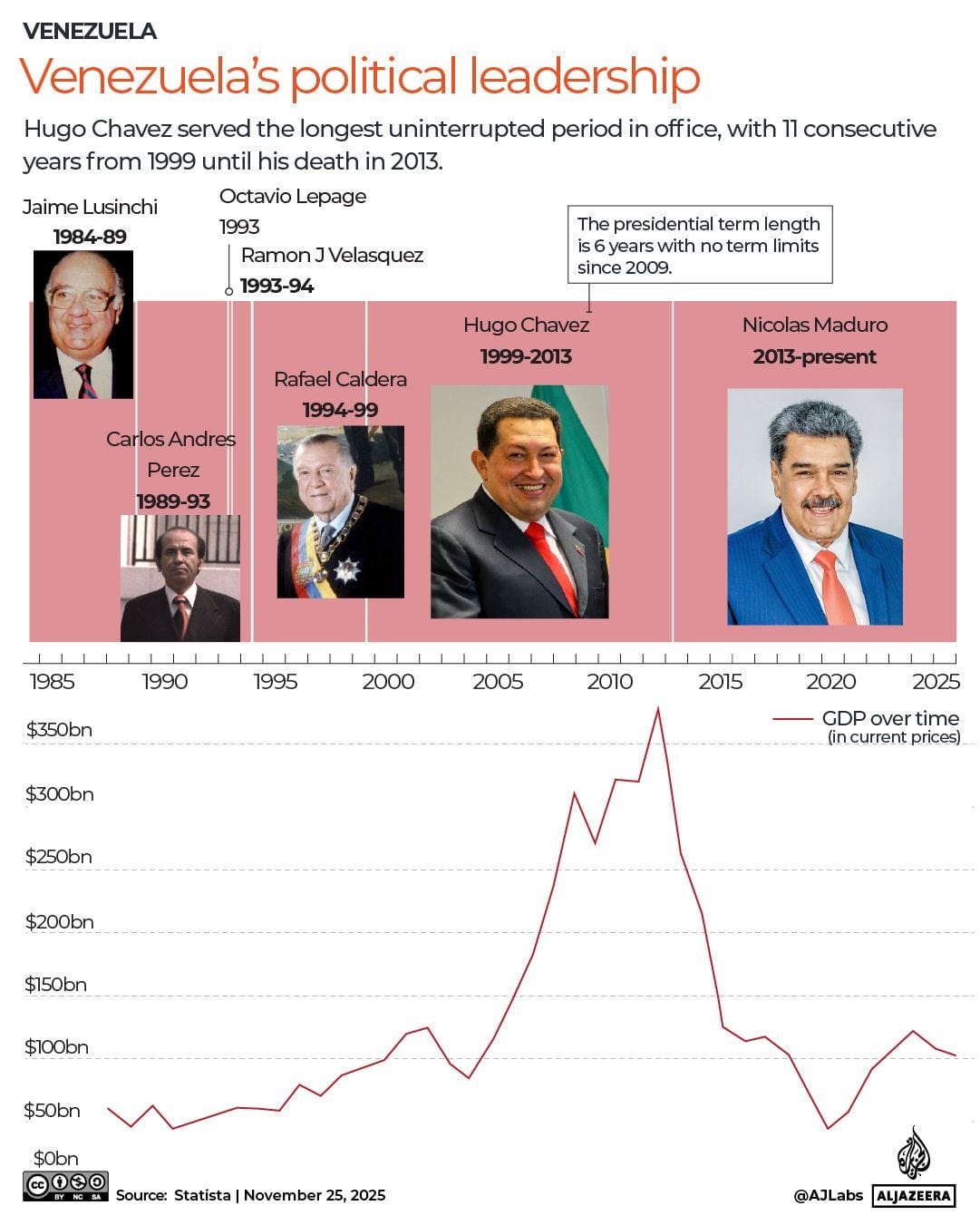
So, in 1990, the president that was in that moment—he was a democrat president—but he decided to revert the nationalization and do a privatization. They call it “la apertura petrolera“, the oil opening. That moment was where all the American companies came back. That is the era of Exxon Mobil, Conoco, Chevron... the company that today Trump is talking about. So, this company came and did huge investment. That is true. I was there. I was there. I have been always there. For some reason, I always have been in those moments.
Etienne de la Boetie2:
Jose, was this... was this a U.S. State Department-generated, oil industry-backed change that was forced on Venezuela?
Jose Pereira:
At that moment? Are you talking [about] today or about that time?
Etienne de la Boetie2:
At the Time.
Jose Pereira:
It was really true. That moment was really free. There were some tweaks—let me tell you, there were some tweaks—because the way the contracts were handled was always in the favor of the companies. But it was a lot of favor for the company. But let’s say there was free bidding processes. But the truth of the matter is that the companies came, and the truth is they invested a huge amount of money. That is totally true. They invested a huge amount of money, and that’s where they revealed all the oil production of Venezuela.
They created all the infrastructure: the new assets, the upgraders, the refineries, the oil [fields], the pipelines. So it began to be... Venezuela began to be, like Trump said, was coming back again. That time was from 1990 to 2007; it was 17 years. During 17 years, all these companies worked in Venezuela. It became [massive]; companies came from all over the world. Not only the U.S., came companies from Europe, from the Middle East, from China, from Asia, from India—a lot of companies. And then Chávez came in 1998, and he respected that.
He respected that for nine years. So, during the first nine years of Chávez, he accepted that [the] companies work as they were—working normally. He didn’t [interfere with] that. But it came something that, in Venezuela, was called the Paro Petrolero, the national strike. When the national strike [happened], that [is when] Chávez realized that he needed to have the control back [of] PDVSA because he needed to... he knew that by not having the control of the oil production, he could lose his power. So, he took the decision to go back and revert that privatization. And then is where they took all these companies, and that’s where [the part] what Trump is talking [about] today—that they stole the oil, they stole the assets.
Etienne de la Boetie2:
My friend, that’s true. That’s true, that’s true. There’s really no other way to describe it, but they nationalized the assets—and nationalization is just a word for “we’re stealing [through] the government.” They stole it.
Jose Pereira:
They named it nationalization, but it was an expropriation. That was an expropriation without no payment. So, the company was kicked out, and: “Now this is mine.” And that’s why they did this big lawsuit—international arbitration—Conoco, ExxonMobil, and all these companies, because they were asking, “At least give me my money back.” And they had decades fighting for that. We’re talking from 2007 until today; almost 20 years. Almost 20 years. So, when I hear Trump talking that, “Okay, we’re going to go back,” maybe I don’t know how legally it’s going to be done. But from that... from that point of view of what, if I was Conoco, [if] I was Chevron—not Chevron because Chevron is still there—maybe Exxon Mobil and Conoco.
They were kicked off. They were kicked off. They were stolen [of] their assets. Literally, they took [it]: “This is mine. Go away. This is mine now.” And: “I took the control and I didn’t pay you nothing. Go away.” So now, these companies are thinking to come back. And I believe that they’re going to give them back their assets, and they’re going to restart the production. And they’re going to be repaid the debt that they have, because their debt is still there. So, I think here... my friend, I’m going to be honest with this.
Etienne de la Boetie2:
By the way, I want just before we move on to that... So, I have friends in Venezuela and I have a little bit of a back channel. And one of the things that my friend tells me is that after the assets were nationalized and after the foreign corporations were kicked [out], once the Venezuelan organized crime government tried to run these refineries and tried to run these production facilities, they couldn’t. In some cases, they literally blew them up accidentally.
And now they’re all sitting there rusting, and my friend in Venezuela has to drive to Colombia to buy gas for her car because the quality of the Venezuelan gas sold in Venezuela to the Venezuelan people is so poor that it would ruin her automobile. So, once a week or every two weeks, she has to drive to neighboring Colombia to get gas because Venezuela cannot even produce gas for its own citizens. This is so ridiculous on the planet.
Jose Pereira:
Let me tell you, this is so ridiculous because I remember Rockefeller one day said that the best business in the world is an oil business, and the second best business of the world is an oil business run wrongly. So, even if you do it wrong, it’s going to be good. But these guys were so bad, they ruined it. It’s unbelievable. Why happened that? Because Chávez did that nationalization. In the first years, the foreign companies, they stayed as a partner—a minority partner. They were still there. There were technicians, there were Venezuelans, a lot of Venezuelans with a lot of capabilities.
But then came all this corrupt system and all these political communist things around. They began to appoint people [who] didn’t have no clue what was around. I’m going to tell you something: when I was here in CITGO, they appointed a general in charge of that. He became to be my liaison with PDVSA. So, one day I flew to Venezuela to make a presentation to this new guy to talk about what CITGO was. And the guy told me, “I don’t have a clue what you’re talking about.” He was a military; he didn’t have no f***ing clue [what] I was talking about. I was so frustrated that my boss was a guy that didn’t have no clue. So, he was appointed because he was a supporter of Maduro.
That’s it, period. So, that’s why they destroyed the company: because they put people that didn’t have no clue about a business that is so complex, like the oil and gas business. Because the oil and gas business is not only running the wells; it’s all the strategy behind it—the producing, the strategy to selling it. The quality of the oil... when you’re talking about the gas, they don’t have people. What I heard is that the Chinese and the Iranians were running the refineries because they didn’t have nobody to run [them]. Why? Because all the Venezuelans [who] knew, [who] had the expertise—well, [they were] kicked off, or they ran [away from] the country because they had to run outside the country, because they began to put people in jail.
So, this guy did a total disaster... a total disaster. So, if you ask me how I think it’s going to play [out] from now: these companies are going to come back. I don’t know... there are going to be signed some new contracts. They’re going to revert and give their assets back—the assets that were stolen. [The companies] are going to bring their management in. The Venezuelans—they are already all over the world—[they] are going to come back to play the roles that they had in the past.
Etienne de la Boetie2:
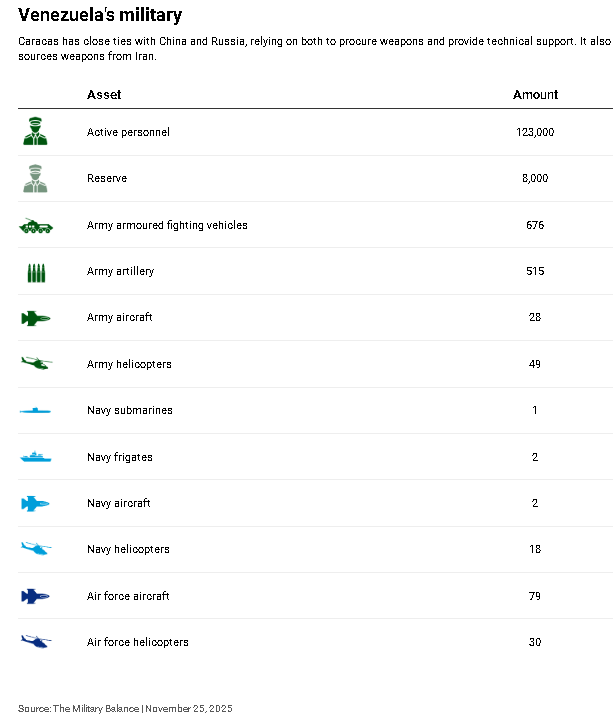
Let’s set the stage for a second, because for people that might not have been paying attention, what appears to happen is [that] a deal was struck with the vice president of Venezuela and the military, where they allowed... they stood down the military defenses that would have been able to engage a helicopter armada coming into the country, and they allowed Maduro to be taken. Now, I’m going to give some speculation right now.
I have a feeling that the military generals and the vice president of Venezuela were probably offered a deal, and the deal was something like this: “You’re either going to be fabulously wealthy, or we’re going to kill you.”
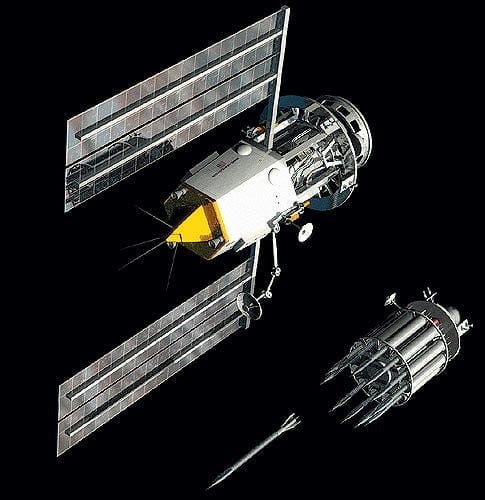
Artist Depiction of the Thor Project/ “Rod from God”
I don’t know if you’ve ever heard of the “Rod of God.” But years ago, the former head—the guy that named the Star Wars program [ Etienne: Lt Col Robert M Bowman]—he spoke openly because it had been reported in another publication, so he could talk about it for the first time. And he disclosed that there’s a U.S. military satellite program called the “Rod of God” that drops a depleted uranium bolt [Etienne: Actually Tungsten]. But once it hits the gravity well, it starts moving so fast that they can put one kind of anywhere on the planet, and it produces something like a little mini nuclear explosion. It’s not actually... it’s a depleted uranium [Tungsten] bolt, but it’s not a nuclear [weapon]... it hits with such impact from the ability of dropping it from the gravity well of the upper atmosphere that it could just take out anybody at any time. And so, I think that most foreign leaders that are in the position of the vice president of Venezuela and the military leadership of Venezuela... I think they all know about this. And I think they all understand what happens if you don’t “play ball” with the U.S.
Jose Pereira:
But let me tell you something. They extract it so easy, Maduro, that these guys don’t have all those Cuban He had like 200 Cubans with him. They took him in 15 minutes.
Etienne de la Boetie2:
Yeah, there was obviously a stand down. They obviously let him go or sold him. They sold him.
Jose Pereira:
They sold him.
Etienne de la Boetie2:
Yeah, like something happened. And like I said, I think that this is the harsh reality of the organized crime U.S. government: “We are going to steal this oil, you’re going to participate with us, or we are going to kill you.” And so, there’s really not a lot that other countries can do to resist that level of, kind of, murderous threats. So, that’s the kind of position that we’re in.
And so, now Trump has said publicly that U.S. oil companies are going back to Venezuela and that the U.S. taxpayer may be on the hook—that we would pay to rebuild the Venezuelan oil infrastructure. And so, it’s quite brazen in that whatever deal... the owners of these foreign companies, the banks that own [them]—you know, if you go and take a look at who are the majority owners, you know, it is BlackRock and Vanguard and State Street and others.





And so, the banks that I think are driving this policy are even so brazen as to stick the taxpayer with the bill for what usually and customarily would have been investment from the multi-billion dollar, very wealthy oil companies; but now they’re actually going to stick the American taxpayer with the bill.
And so, maybe you could tell us what you think that’s going to look like: who is going to benefit? Which companies are poised to come in? What’s your take on...? —The companies that are going to come for sure, the companies that are returning, are going to be the same that were expelled.
Jose Pereira:
ConocoPhillips, Exxon, and Chevron are the three in [a] row. Baker Hughes, Halliburton, BJ Services, Flint... all these companies. Venezuela used to have a lot of American companies, my friend. There’s an area in the southern area where it’s the biggest oil reserve, called El Tigre. El Tigre and Anaco. My wife was born in El Tigre, and I lived there a lot of years. There were a lot of American companies—a lot, a lot, a lot. There were hundreds of American companies. All these companies were gone; all these companies want to return. Because if they give them now the ability to rescue their assets and restart their business, they’re going to do it. They’re going to do it. How—from the legal standpoint of view—how it’s going to be done, I don’t know. I don’t know what they’re thinking, but they’re going to be there. They’re gonna put their offices there.
Etienne de la Boetie2:
Now, Jose, who’s the loser in all this? Explain to our audiences, where was the Venezuelan oil going before and who was really seeing the lion’s share of the profits? We’re talking about who’s about to start winning. Who’s about to start losing?
Jose Pereira:
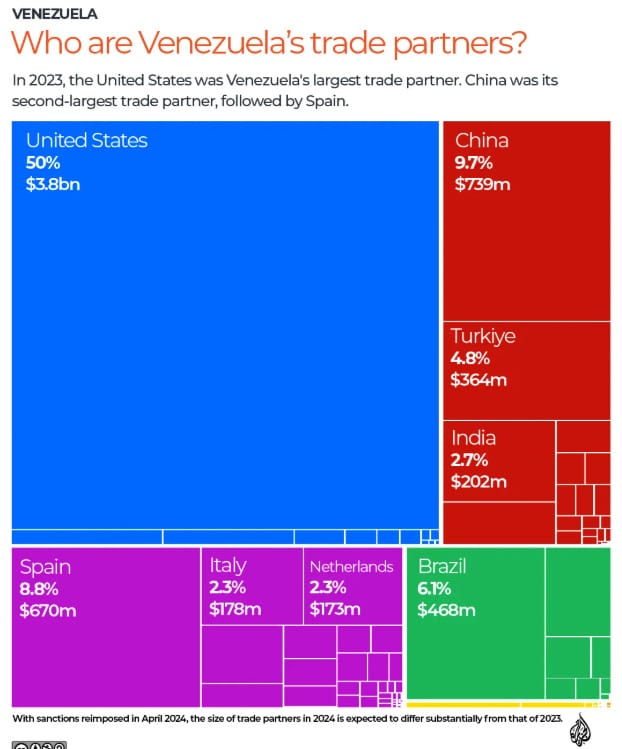
Well, let me tell you, four countries are gonna lose because there are four countries that were literally having a party with the Venezuelan oil: China, Russia, Iran, and Cuba. Let’s begin with Cuba—this is the worst case. Cuba was having the oil for free. They were not paying. Free, free, F-R-E-E, free. So, the Cubans were literally stealing the oil because they received the oil and then they used some part and the other [part] they sold it. So, they got the money for them. So, we were literally giving them the oil free to the Cubans. They’re gonna lose.
The Iranians, they were selling weapons, radars and satellites, whatever. Also the Russians. I don’t know how... how it worked because they didn’t use nothing to extract Maduro; none of the, you know, anti-missile barriers, whatever—nothing worked. So, I don’t know what those weapons are: Iran and Russia.
In China, during Chávez, it gave a massive multi-billion loan that was called the “Fundo Chino“, the Chinese Fund. That fund was supposedly to develop Venezuela. They stole the money. But the Chinese were getting their money back with oil. They’re going to lose that too. And Trump said: “We’re going to send them oil, but in market prices, in market normal conditions.” So, these four countries are going to lose: Cuba, Iran, China, and Russia. Because if they want to continue receiving the oil, they’re going to revisit the contracts [and] the way they’ve been doing business.
Etienne de la Boetie2:
Now, I suppose we probably should have started with this question, but I want to get your take on it. Now, the official story is that we did this because Maduro was involved in the drug trade and was shooting fentanyl in the United States.
Jose Pereira:
Do you remember the chemical weapons of Massachusetts?
Etienne de la Boetie2::
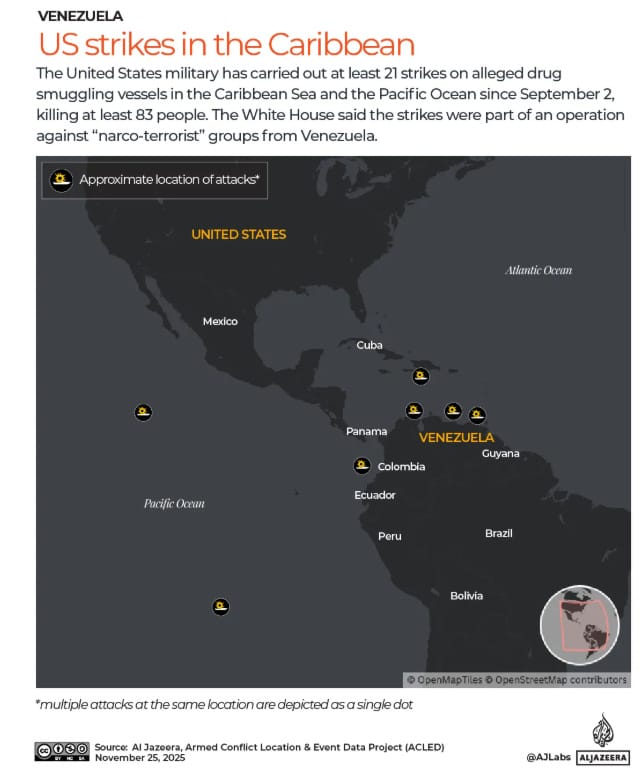
Now, what’s interesting today—you know, Tuesday, January 6th—is that the federal indictment against Maduro has come out and all of that has disappeared. And so, there is no more talk of him being the head of a made-up cartel called the "Cartel of the Suns" or whatever they were alleging in this kind of, really, public relations campaign. And even to the point of—I mean, I hate to say it, but—I think that they were blowing up these drug boats, which may or may not have been drug boats, which may or may not have been CIA drug boats, which may or may not have been, you know, they could have been fishing ships. Nobody really knows because they weren’t seized; there was no public investigation, there was no trial. There was just extrajudicial murder that kept this [narrative] and really set the stage in the people’s mind—the average person that’s not really paying attention, doesn’t really understand what’s going on. You know, now there’s: "Oh, we’re... there’s so much drugs that are flowing out of Venezuela that we have to be blowing up the boats. Maduro is shipping so many drugs in."
Jose Pereira:
But the truth of the matter—let me tell you—even [if] I don’t have [the] elements to say if there were, but the truth of the matter, my friend, is that the drug business, it’s real. It’s real. You know, my eldest son, his wife... his family lives in the area where they have those oil embarkations. For years, I have been hearing this for years. And the thing of the Cartel de los Soles, I have been hearing that for years. Everybody in Venezuela has been hearing that for years. It popped up now, as you said, as a PR campaign—that is true. But it’s real, that existed.
I don’t know if that was only the masquerade reason that Trump used, but the thing that they were running drugs and that the cartels were producing—that is clear. That is clear. Maybe it’s not the main reason. Maybe it’s not the main reason; I don’t know. Maybe it could be the secondary reason, [and] the real reason was the oil, but the truth of the matter is that this is real. And in all the investigations that have been done, everything was pointed not only to Maduro, but mostly more to the other guy—[not] Dilma Rousseff. He’s the real, real leader. Who’s that?
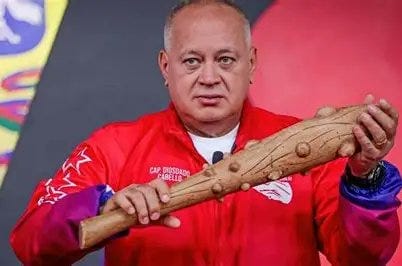
Diosdado Cabello. He’s like the third on board, but he’s the real mastermind: Diosdado Cabello. Because it was Maduro and Delcy; Delcy was the formal vice president. But the real power is this guy, Diosdado Cabello. And he’s the leader of that. He’s the real leader of that.
Etienne de la Boetie2:
So you believe that the government was exporting drugs? And there were high-level government officials involved in it? —Yes. —Did it go to Maduro? Did it go all the way up to Maduro
Jose Pereira:
I don’t know how; I’m not sure. I cannot say it because, of course, I don’t... I don’t get the evidence, but for sure in the apparatus of the government, there were... they were dealing with this. They were using PDVSA installations; they were using military installations. So, the dream of Pablo Escobar—this guy made it true. Because Pablo Escobar wanted to create a narco-state; this guy did it. They did it.
And you can talk with any Venezuelan—[they] will know this. This is something that I was surprised [at] how it took so long to pop up. Because this is something that we have been hearing [about] since years in Venezuela. You talk to any Venezuelan about the Cartel de los Soles, he will tell you, “I [knew] that 20 years ago, 20 years ago.” So this is not new, is what I’m going to say. It’s not new. Well, it is disappearing [from the headlines]. I don’t know if it’s the main reason; I don’t know if it’s the PR reason. But this is a phenomenon that is true.
Etienne de la Boetie2:
So the indictment, like as I mentioned, so the US has now formally indicted Maduro. And all of that has disappeared.
Jose Pereira:
What are the reasons for the indictment? What are the new reasons of the indictment?
Etienne de la Boetie2:
I don’t remember the specific charges as much as the kind of the, you know, I’m spoiling the headline, I’m leading with the punchline. The punchline is that all mentions of the Cartel de Soles has now disappeared. And now it’s for other reasons than what the US has stated the entire time.
Jose Pereira:
I don’t know because I... well, let me research on that. But the reason... the Cartel de los Soles is real. It’s real. I don’t know how much involvement this guy had, but it’s real. And Diosdado Cabello is the leader of that thing. He was the guy—and the son of Nicolás Maduro. You know, his son that is called "Nicolasito." He’s very involved in that, and his nephews. My friend, I [recall] a prisoner swap for the two nephews of Maduro that were indicted here for drugs. They were captured in a covert operation of the DEA.
Etienne de la Boetie2:
Can you bring some, yeah, please tell people a little bit about that.
Jose Pereira:
Well, you know, I could come back on October 1st because, when we were doing those five years, there was an ambassador that was appointed by Trump and got ratified by Biden. His name is Ambassador Roger Carstens. He was taking care of the negotiation to release us. And they were [going] back and forth, negotiating things.
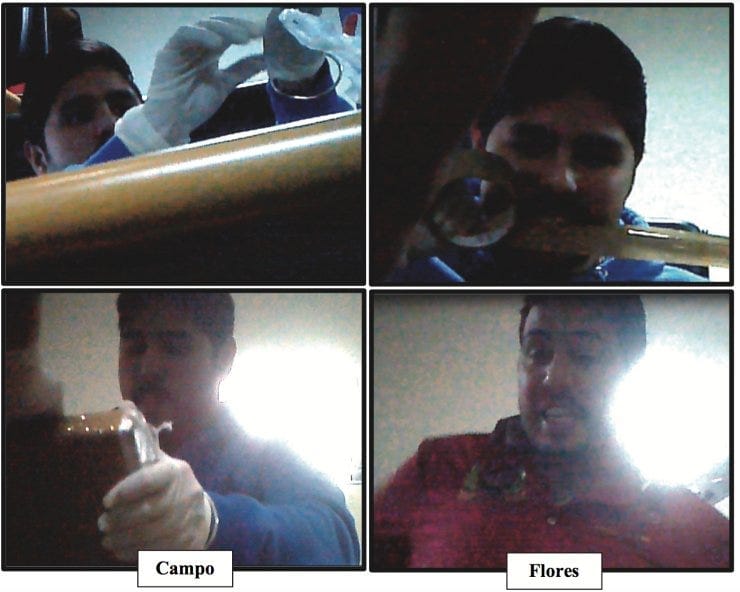
In the final negotiation, we were swapped for the two nephews of Maduro. They were indicted here [and held] in a federal prison in Florida. They were captured in a covert operation of the DEA; so, they were captured with drugs. And they were in prison here, and [Biden] signed a presidential pardon to release them, and they swapped us. That’s how you are talking today with me.
Etienne de la Boetie2:
That is absolutely fascinating. Now, because I know we’re almost at the end of the hour, what else should people understand about the political situation, about the future of the oil industry in Venezuela? What did I forget to ask you and what do you want people to know?
Jose Pereira:
Even the people can think, “Oh, the Americans are going to steal the oil.” I’m going to tell you something: these other guys were stealing the oil [for] more than 20 years. So, if the American companies come and bring money—and reinvest, and rebuild the oil industry, and [the] Venezuelans that lost their jobs come back—Venezuelans will not care. They want their country back. They want their country back and wealthy. The people will not care; the people want to be [at] peace. [To] have food on their table—they’re starving today—they need their families reunited. So, it’s going to be a transition process. But if this is done right, no matter the reasons, if it’s done right, the Venezuelans will approve it, because they have 25 years [of] suffering.
Etienne de la Boetie2:
Now, the final thing I think is interesting from my friend—the conversation that I had with my friend—is that the existing government, essentially the existing government of Venezuela, has not gone away, and they’re very, very corrupt. And my friend is very, very scared. And I understand that people are being arrested for [having] WhatsApp on their phone; I understand that the military is stopping people and searching their phones actively to find people that have negative sentiments about the government. And the government has passed a law as of yesterday... and why don’t you bring us up to speed on what that is?
Jose Pereira:
They approved yesterday a law that if they find you a WhatsApp or a text message with something against the government, you will go directly to jail without no trial. It’s crazy. These guys This is a transition government. I believe that this guy finally has to go. I don’t know what is exactly the idea that Trump is having, but he said that he’s running the country and he has a plan. And the plan has to be that this guy has to finally go, that he has to strike all these guys. And a new people, a fresh people, a free election and a new government has to be in place. This is the only way Venezuela will come back again.
Etienne de la Boetie2:
And easily rig the election... this has been absolutely a fascinating conversation and I think a timely one. And I think that you have helped people understand the situation on the ground more than anything that I’ve seen on any television station or boiled down so far. Tell people... tell people how they can find you, tell my audience how they can find you and tell them what you’re up to.
Jose Pereira:
You can go to my webpage, JoseConnect.com And if you want to know more, book a call with me. We can have a conversation. Yeah. And you want me to come to any stage to talk about this? If anybody is hearing this, oh, I want to bring this guy to do a conference, call me and I will go. Because I want to give clarity of what’s going on. There is a lot of fake news around. They think they are not true. We, the Venezuelan, know what’s going on in our country. There are things that the people are confused. The people that live in Venezuela, the problem that they have, that they don’t have access to the news. So they don’t know what’s going on. They’re totally confused.
Etienne de la Boetie2:
And- My friend says they get all of their news from social media.
Jose Pereira:
No, and friends have it, but now they have problem because if they find something in WhatsApp, they can go to jail, you know?
Etienne de la Boetie2:
Well, thank you for your audience. My name is Etienne de la Boetie. I am the founder of the Art of Liberty Foundation. As I mentioned, we’re a principled, voluntarist public policy organization. We expose the illegitimacy and the criminality of government, the fact that it is being used as a technique to rob and control populations, and the fact that you don’t really need government, and also the kind of overt criminality In what is being run out of D.C. whether you believe in having a government or not, what we have right now is a government openly being run as a criminal enterprise where trillions of dollars are going out the back door to identifiable groups in a kind of organized crime system.
You can find out information about us at ArtOfLiberty.org, and you can get my book, “Government” – The Biggest Scam in History… Exposed! and you can get my brand new book, To See the Cage Is to Leave It – 25 Techniques the Few Use to Control the Many. This article with a full transcript will be appearing on our substack at ArtOfLiberty.Substack.com.
Jose Pereira:
JoseConnect.com, contact me. Thank you. Bye, my friend.
About the Author
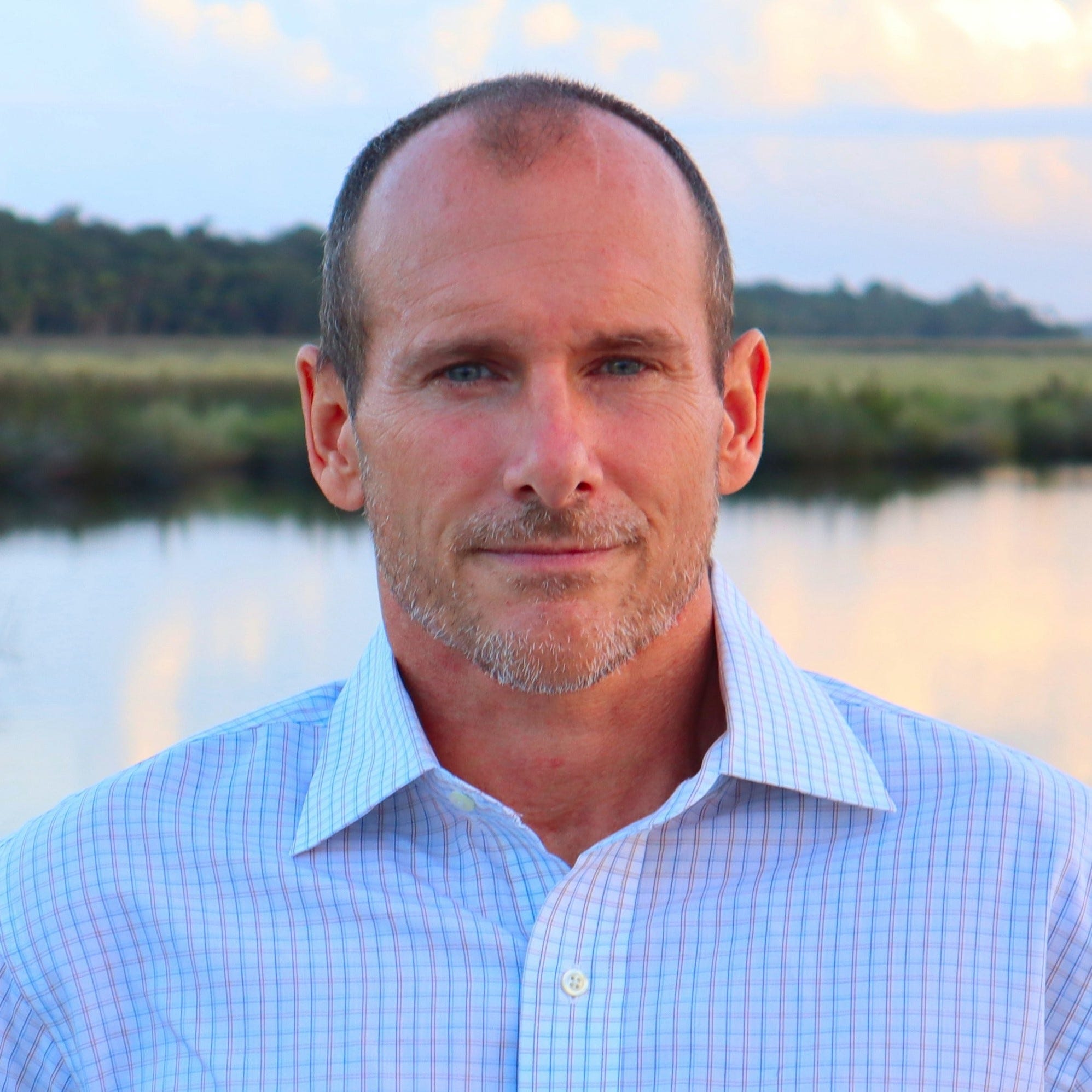
Etienne de la Boetie2 is the founder of the Art of Liberty Foundation, and the editor of the Art of Liberty Daily News on Substack and Five Meme Friday, which delivers hard-hitting voluntaryist memes and the best of the alternative media. He is an internationally recognized expert and speaker on voluntaryism and government illegitimacy, criminality and corruption. His original writings and research can be found at ArtOfLiberty.org and ArtOfLiberty.Substack.com
He is the author of To See the Cage Is to Leave It – 25 Techniques the Few Use to Control the Many which exposes an inter-generational psychological operation by the “government,” Hollywood, and the monopoly media to indoctrinate the population with the pseudo-religion of Statism using dozens of unethically manipulative techniques ranging from subliminal content in television programming to a hidden curriculum in the mandatory “government” schools, scouting, and police/military training.
He has also authored: “Government” – The Biggest Scam in History… Exposed! which breaks down how inter-generational organized crime centered around banking and central banking is robbing and controlling the population using the technique of “government” with puppet politicians and monopoly media/academia. His upcoming book: Voluntaryism – How the Only “ISM” Fair for Everyone Leads to Harmony, Prosperity and Good Karma for All! explains how REAL freedom (voluntaryism) can provide all the legitimate non-redistributive services provided by “government” without the waste, fraud, abuse, indoctrination and extortion. He was also the author and principal investigator for the monographs: The Covid-19 Suspects and Their Ties to Eugenics and Population Control/Reduction and Solving Covid – The Covid 19, Eugenics, and Vaccine/Drug Scam Timeline
About the Art of Liberty Foundation
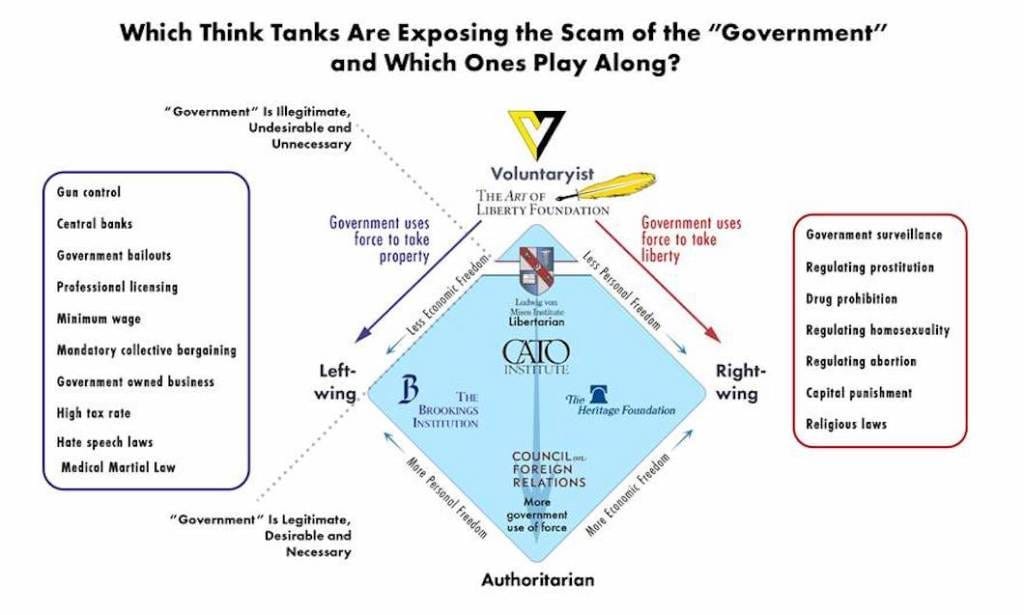
A start-up public policy organization: Voluntaryist crime fighters exposing inter-generational organized crime’s control of the “government,” media and academia. The foundation is the publisher of “Government” - The Biggest Scam in History… Exposed!- How Inter-Generational Organized Crime Runs the “Government,” Media and Academia.
We publish The Daily News, a free survey of the best of the alternative media, censored videos, and documentaries, and the Daily News Digest, a once-per-day-summary of the Daily News as a premium service for paid subscribers of any Art of Liberty Foundation Substack and Five Meme Friday - a free weekly e-mail or Telegram summary of the best of the alternative media, censored truth videos, and at least five hot, fresh, dank liberty memes every week, and “Government,” Media, and Academia Exposed! - A Telegram summary of the best mainstream and alternative news stories proving our thesis that all three are being hierarchically controlled by inter-generational organized crime interests. You can read our 2023 Annual Report here.


