

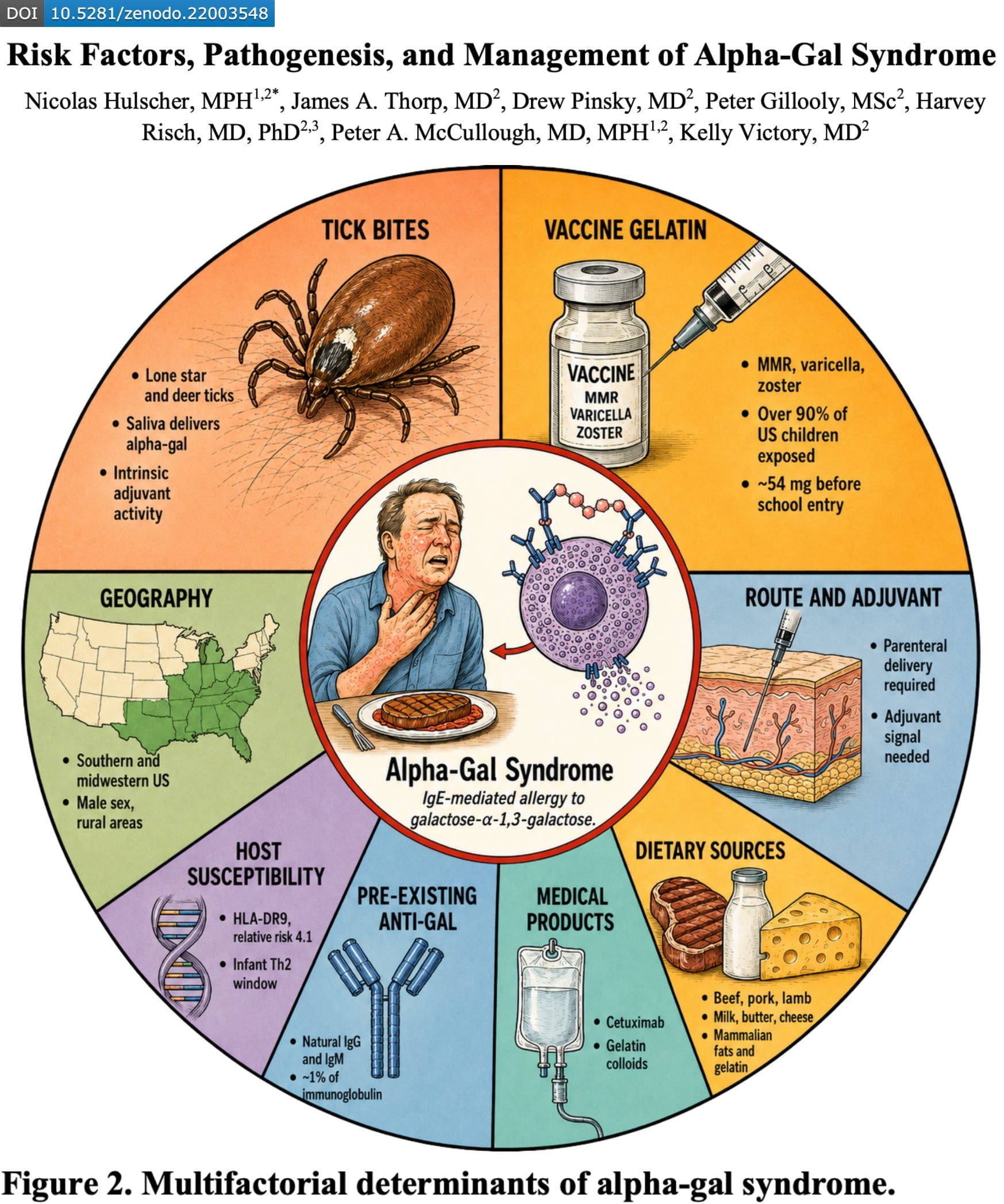
More than 90% of U.S. children are injected with alpha-gal-bearing mammalian gelatin before school entry, raising the possibility of direct sensitization or immune priming before a later tick bite.
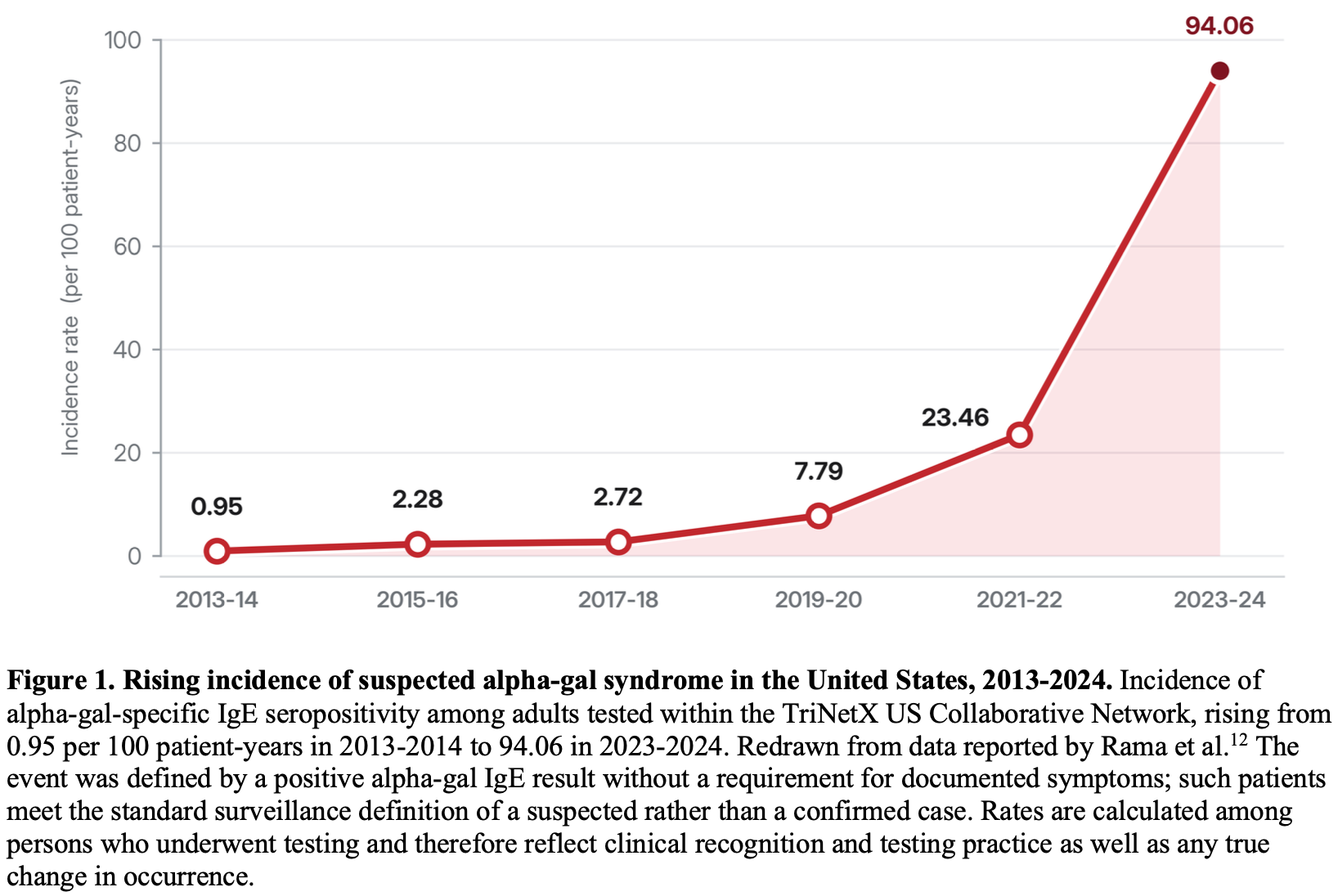
Alpha-Gal Syndrome (AGS) is a potentially dangerous meat allergy that can suddenly make people react to beef, pork, lamb, dairy, gelatin, and other products made from mammals. Reactions can range from hives and severe stomach symptoms to life-threatening anaphylaxis, often appearing several hours after eating. And the condition is rising at an extraordinary rate: among adults being tested for alpha-gal antibodies, positive results increased roughly 100-fold between 2013 and 2024. A separate 2026 CDC study found alpha-gal antibodies in 24% of adults across five high-burden states.
To investigate what may be driving this surge, we conducted one of the most comprehensive reviews of Alpha-Gal Syndrome to date. Our new 104-reference paper, “Risk Factors, Pathogenesis, and Management of Alpha-Gal Syndrome,” is a major collaboration between researchers from the McCullough Foundation and The Wellness Company. It examines the causes, mechanisms, prevention, and treatment of AGS and raises a major overlooked question: could vaccine-derived alpha-gal be contributing to this explosion?
The Vaccine Connection
For years, tick bites have largely been assumed to explain Alpha-Gal Syndrome. But that explanation leaves several major questions unanswered. Tens of millions of Americans are bitten by ticks, yet only a minority become sensitized and only a fraction of those individuals develop clinical disease. Even the amount of alpha-gal actually delivered by a feeding tick has never been measured.
At the same time, more than 90% of U.S. children are exposed to alpha-gal-bearing mammalian gelatin through routine vaccination. A child completing the two-dose MMR and varicella schedules receives approximately 54 mg of mammalian gelatin by injection before school entry.
Eating mammalian products normally trains the gut to tolerate alpha-gal. Injection bypasses that pathway and introduces the material directly into immune compartments capable of promoting sensitization.
Two Possible Pathways
Our paper proposes two non-exclusive mechanisms.
DIRECT: In susceptible individuals, repeated injection of alpha-gal-bearing mammalian material could directly promote alpha-gal-specific IgE sensitization.
PRIME-BOOST: Vaccination could instead PRIME the immune system, expanding or redirecting the existing alpha-gal-specific immune-memory pool. A later tick bite could then BOOST that response to clinically significant IgE levels.
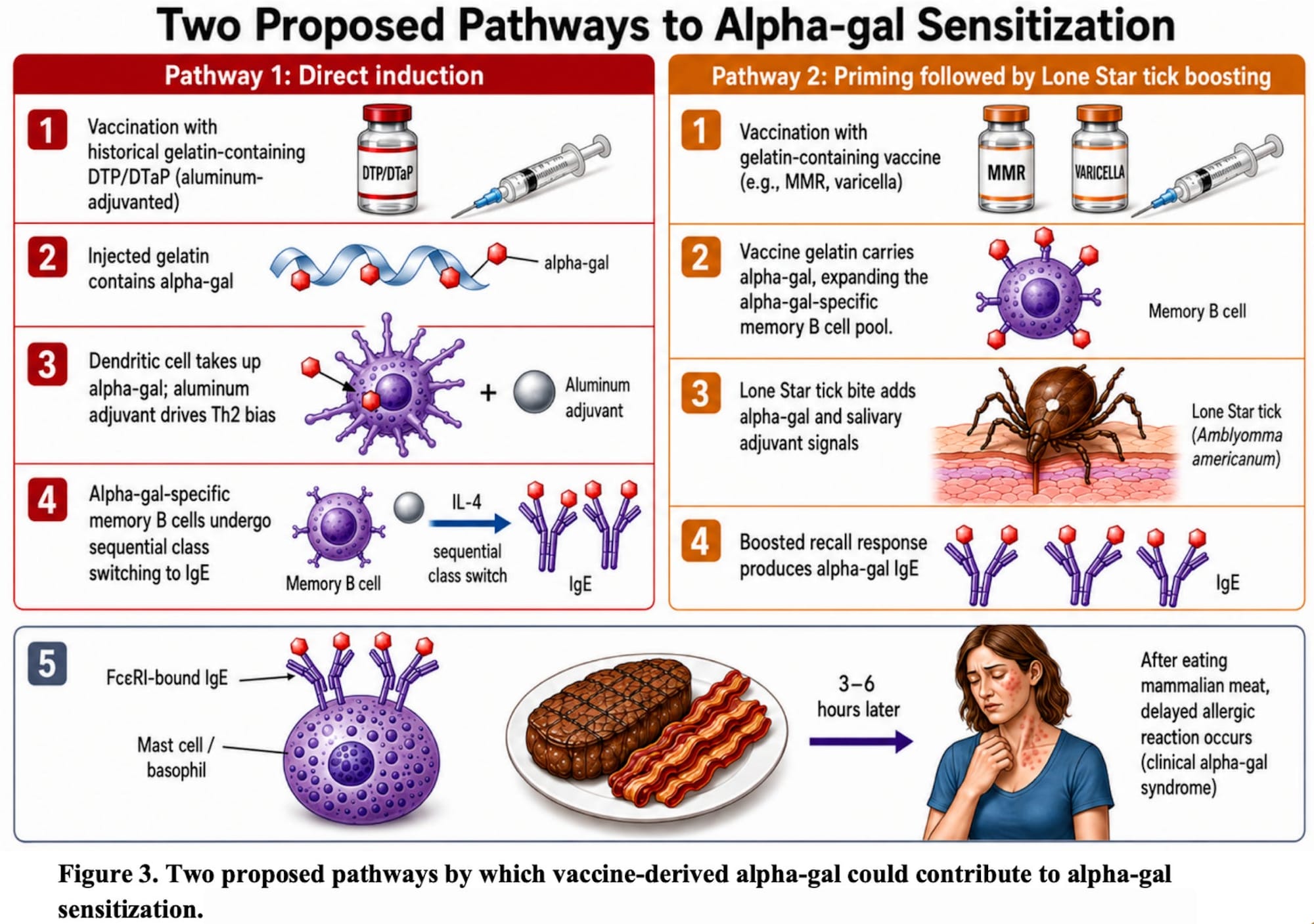
This second model could help explain one of the central mysteries of AGS: why so many people are bitten by ticks, yet only some develop the allergy. Vaccination would not need to replace the tick as a trigger. It could potentially determine who is already immunologically primed when the tick bite occurs.
The Japanese Evidence
Some of the most striking human evidence comes from Japan. Children historically received gelatin-containing, aluminum-adjuvanted DTaP vaccines and were subsequently found to develop anti-gelatin IgE and severe allergic reactions to later gelatin-containing vaccines.
Among 44 children with life-threatening vaccine anaphylaxis, 41 carried anti-gelatin IgE. None of 54 affected children had received gelatin-free DTaP, compared with 29% of 101 unaffected controls. After gelatin was removed from the implicated formulations, reports of anaphylaxis declined markedly.
There is another important clue. The induced IgE reacted with gelatin from cows, mice, and kangaroos but largely not fish, a pattern that closely follows the species distribution of alpha-gal. Alpha-gal has also been directly detected in bovine gelatin but not fish gelatin. Our paper therefore considers it probable, although not formally proven, that a substantial portion of this vaccine-induced anti-gelatin IgE was directed against alpha-gal.
Animal Experiments Show the Mechanism Is Possible
The experimental evidence is equally important. In alpha-gal-deficient mice, researchers injected an alpha-gal-bearing protein together with a vaccine-grade aluminum adjuvant. The animals developed alpha-gal-specific IgE and anaphylaxis.
The experiment identified three key ingredients: the route of exposure, a protein carrier, and an adjuvant. Whether clinically used vaccine formulations can produce alpha-gal sensitization in humans at real-world exposure levels remains unknown because that experiment has never been performed.
The Obvious Human Experiment Has Never Been Done
Despite decades of research into Alpha-Gal Syndrome, no study has prospectively measured alpha-gal-specific antibodies before and after gelatin-containing vaccination.
The experiment is remarkably straightforward: measure alpha-gal antibodies before vaccination, repeat the measurements afterward, and determine whether vaccination causes seroconversion or a meaningful rise in antibody levels. Human studies already show that vaccine gelatin can induce IgE sensitization, animal studies show that injected alpha-gal can induce alpha-gal-specific IgE, and gelatin-containing vaccines can trigger immune activation in patients who already have AGS. The missing step is directly connecting these findings in humans.
Much More Than a Vaccine Paper
Across 104 references, our paper examines the rapidly changing epidemiology of AGS, tick biology, dietary and medical exposures, oral tolerance, genetic susceptibility, immune mechanisms, prevention, pharmaceutical treatments, botanical mast-cell stabilization, and potential approaches to desensitization.
We also lay out 25 specific, falsifiable experiments designed to resolve the field’s major unanswered questions. These include testing archived Japanese sera for alpha-gal-specific IgE, measuring antibodies before and after vaccination, comparing vaccinated and genuinely vaccine-naive individuals with equivalent tick exposure, directly quantifying alpha-gal in vaccine materials and tick saliva, and conducting controlled trials of promising therapies.
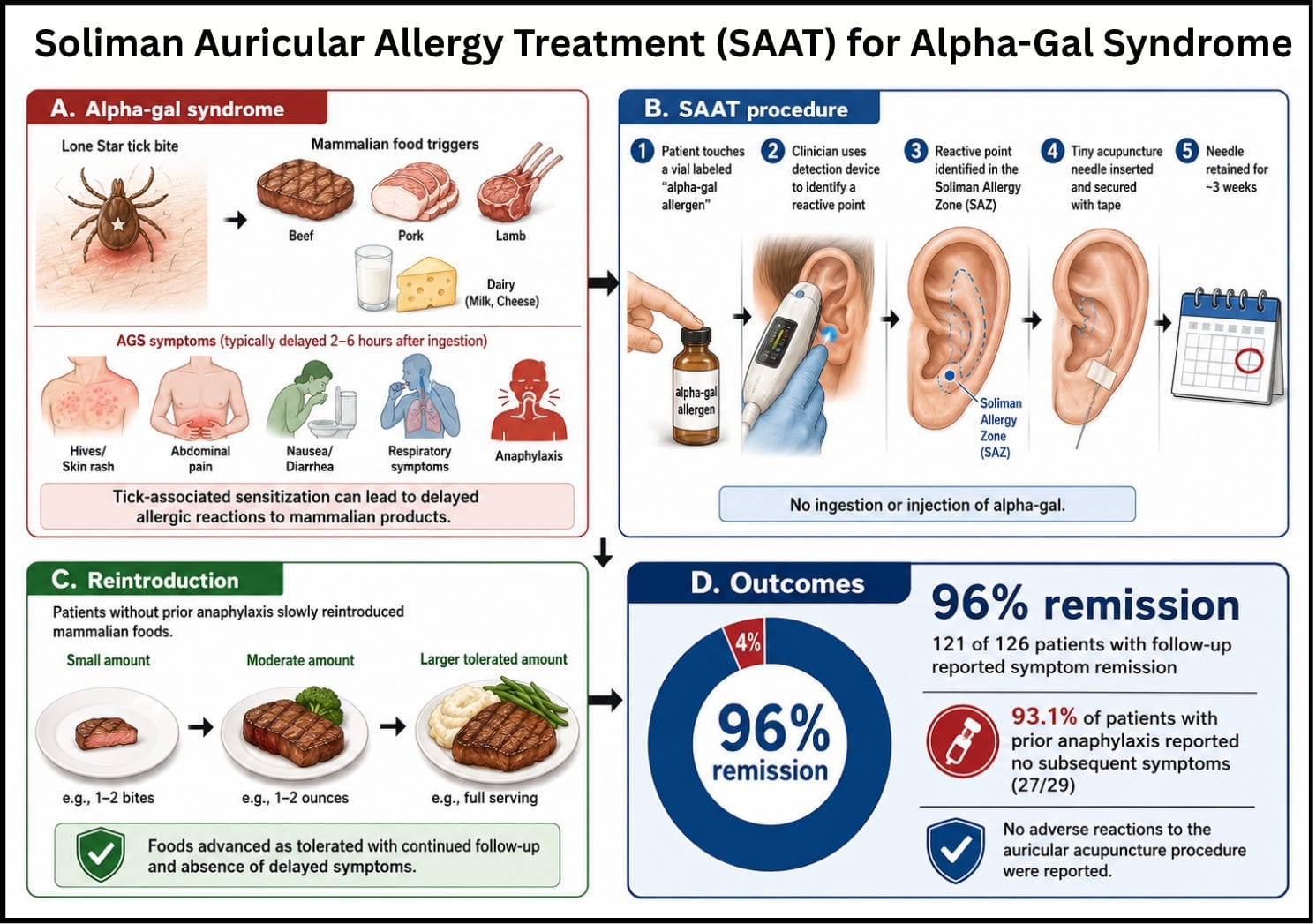
One particularly striking treatment signal comes from auricular acupuncture. In the largest reported series, 121 of 126 patients (96%) reported remission of AGS symptoms. Among patients with a prior history of diagnosed anaphylaxis and available follow-up, 27 of 29 reported no subsequent symptoms. There were no adverse events.
Where This Leaves Us
Taken together, the evidence identifies vaccine-derived alpha-gal as a serious and urgently testable risk factor for Alpha-Gal Syndrome that has been largely overlooked.
More than 90% of children receive alpha-gal-bearing mammalian material by injection. Injected alpha-gal can produce IgE sensitization experimentally. Vaccine gelatin has induced de novo IgE sensitization in humans. Gelatin-containing vaccines can trigger reactions in people with established AGS. And the Japanese experience provides a striking historical example of vaccine-associated gelatin sensitization followed by severe allergic reactions.
With suspected AGS rising roughly 100-fold in a decade, this potential risk factor now demands direct investigation.
Alpha-gal antibodies should be measured before and after vaccination, alpha-gal should be quantified directly in vaccine lots and tick saliva, and vaccinated individuals should be compared with genuinely vaccine-naive individuals under equivalent tick exposure.
Alpha-Gal Syndrome has been known for 18 YEARS, yet no scientific paper bothered to investigate whether alpha-gal containing vaccines could be contributing until now.


![The KILL SWITCHES Have Arrived [Flock Part 10]](/content/images/size/w960/format/webp/2026/10/Captura-de-pantalla-2026-10-22-153542.png)