By esc, The price of freedom is eternal vigilance.
The mainstream media does lie. Some alternative media figures are grifters, opportunists, or worse. Unofficial narratives can be misleading. Anyone who’s spent time in the ‘truth’ space has seen someone trusted turn out to sell something — supplements, subscriptions, fear… you down the river.
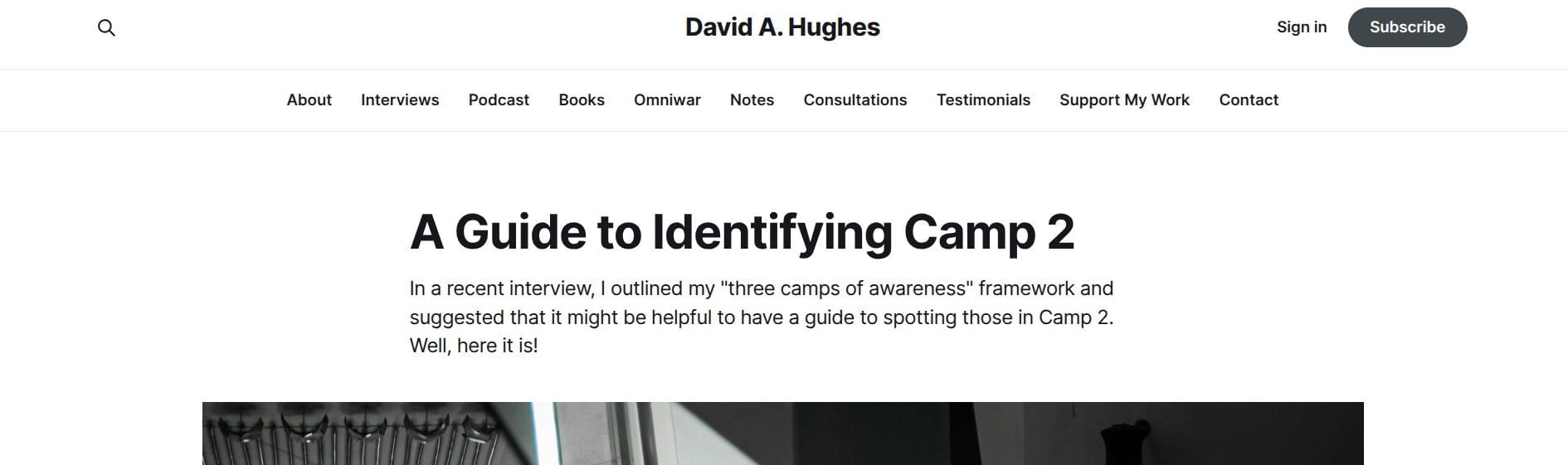
Hence, a framework promising to help people identify what’s fake does at first glance appear useful, and that’s where David Hughes’s three camps enter the frame: a guide for lost travellers, a tool for clear thinking — a map of the alt-media landscape.
But the trouble with this map is that it’s prescriptive.
The first…
… thing to notice is what gets you into Camp 31.
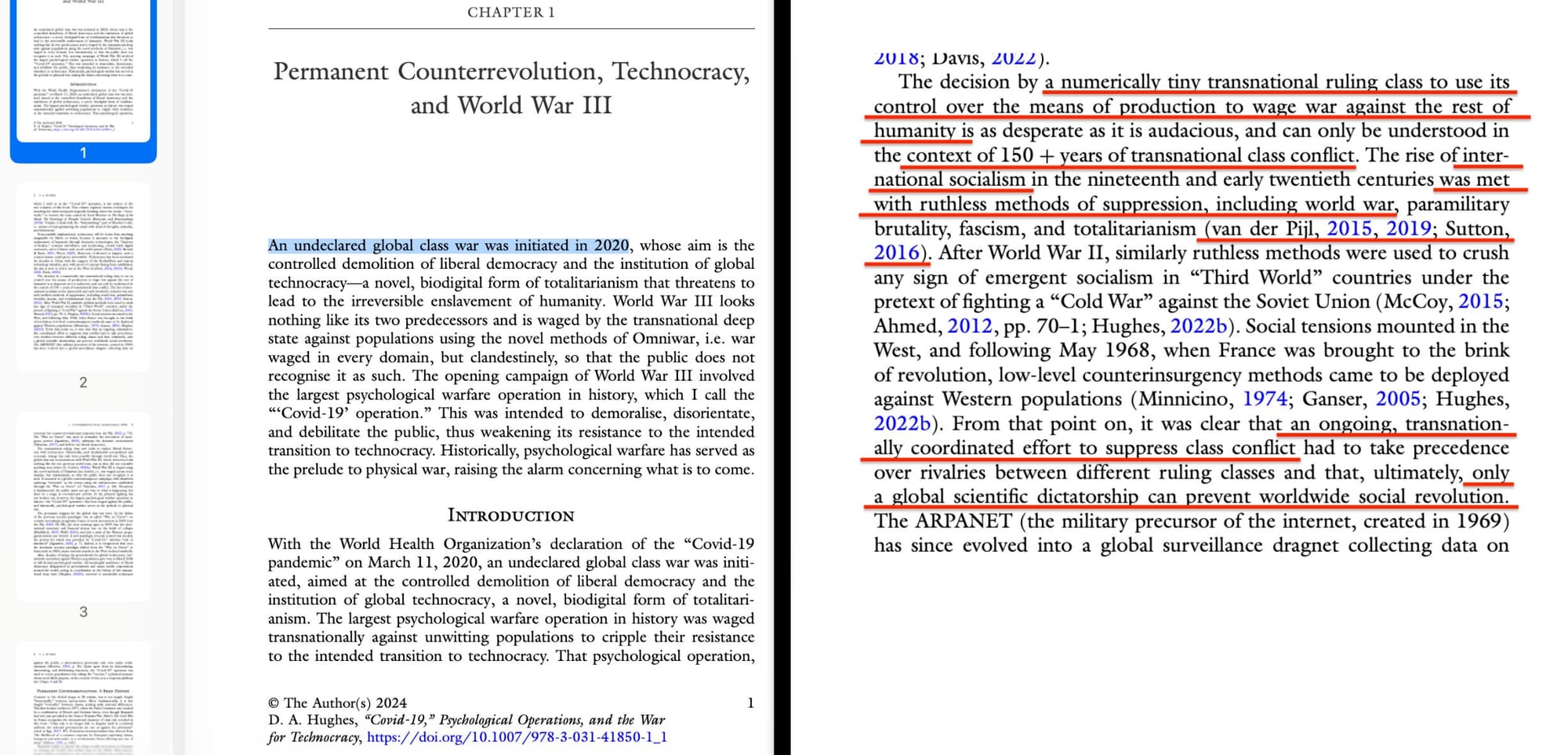
It isn’t the strength of your evidence, the quality of your analysis, or your track record. The entry requirement is accepting that a global class war is being waged against humanity by a transnational ruling class.
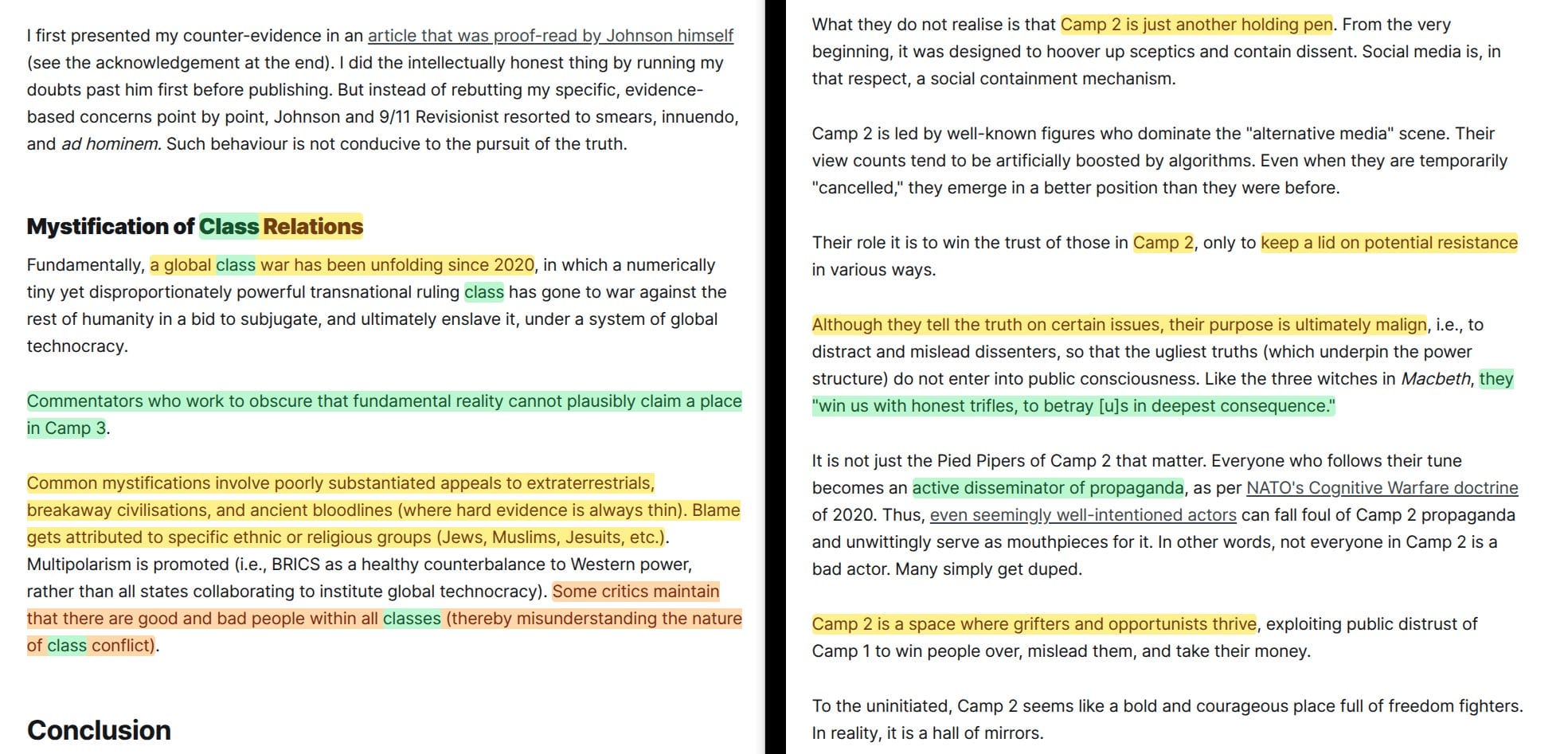
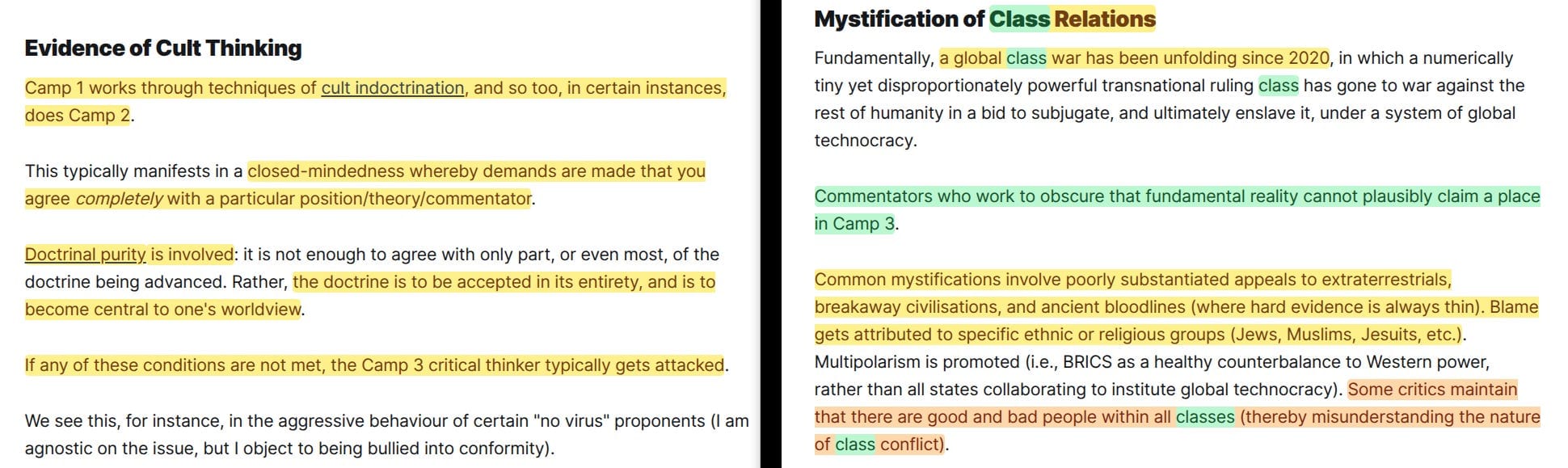
There is an element of truth to that, of course. There has to be, otherwise no-one would buy into the premise. Powerful interests do coordinate against the public, and this substack has narrowed it down to a few dynasties, large foundations, and a few, select think tanks. But it’s a gross simplification. Not every person of wealth is by definition an enemy of humanity, and not every person of influence is necessarily rich. Hughes is aware of this objection and dismisses it: ‘Some critics maintain that there are good and bad people within all classes (thereby misunderstanding the nature of class conflict)’. The difference breaks the sorting machine, hence it must be dismissed through input constraint.

Forging a New Agenda
In ‘Mystification of Class Relations’, he states this explicitly, writing that commentators who ‘work to obscure that fundamental reality cannot plausibly claim a place in Camp 3’.
If you don’t accept the class war thesis — or dare to call it into question in public — you can’t be in Camp 3 because you haven’t accepted the ideological premise or — worse — you’ve challenged it. You could have solid evidence and it wouldn’t matter. The only acceptable direction is global class warfare.
And Camp 2 isn’t a neutral holding area. In Hughes’s framework, it’s the enemy. A ‘holding pen’. Its leaders ‘win us with honest trifles, to betray us in deepest consequence’. They’re ‘ultimately malign’. Their purpose is ‘to distract and mislead dissenters’. People who follow them become ‘active disseminators of propaganda’.
The framework sorts people who have awakened into two categories: those who accept the class war thesis (genuine), and those who don’t (controlled, malign, or duped).
That isn’t analysis — it’s a loyalty test.

The second…
… thing to notice is who operates the framework.
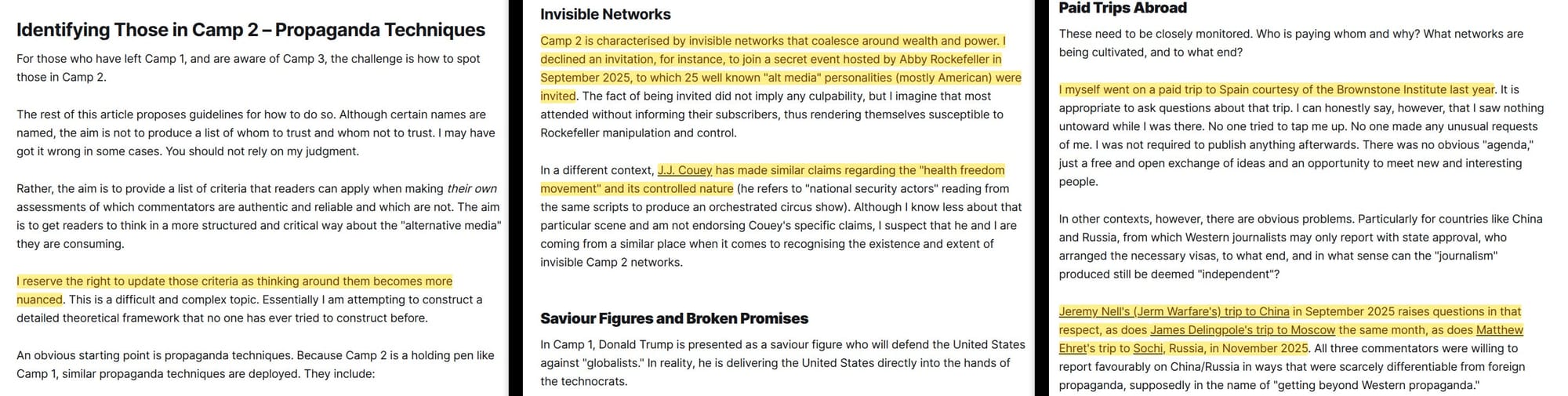
Hughes writes: ‘I reserve the right to update those criteria as thinking around them becomes more nuanced’.
No analytical framework needs its author to reserve the right to change it. You don’t see that sentence in a biology textbook or a statistical method. The reservation only makes sense if the criteria aren’t describing something but doing something — sorting people. The point of the framework is that it’s dynamic. And the person who controls the criteria controls the sorting — there’s no semblance of a democratic process, an appeals process, or even dissenting opinions heard on the matter at all.
Throughout his guide, Hughes applies the framework’s criteria to dozens of named individuals. He examines their funding, their connections, their travel, their sponsors, even their Wikipedia pages. Almost everyone he examines fails the test.
Then he examines himself. He discloses his Brownstone fellowship, his paid trip to Spain, his invitation to Abby Rockefeller’s private gathering. And he clears himself on every count.
The framework audits everyone except its author. Hughes isn’t subject to the criteria — he’s the one applying them. He decides who passes and who fails, and he reserves the right to change the loyalty test whenever he sees fit, with no check on power
Clearing EpsteinRead full story...
The third…
… thing to notice is the burden of proof.
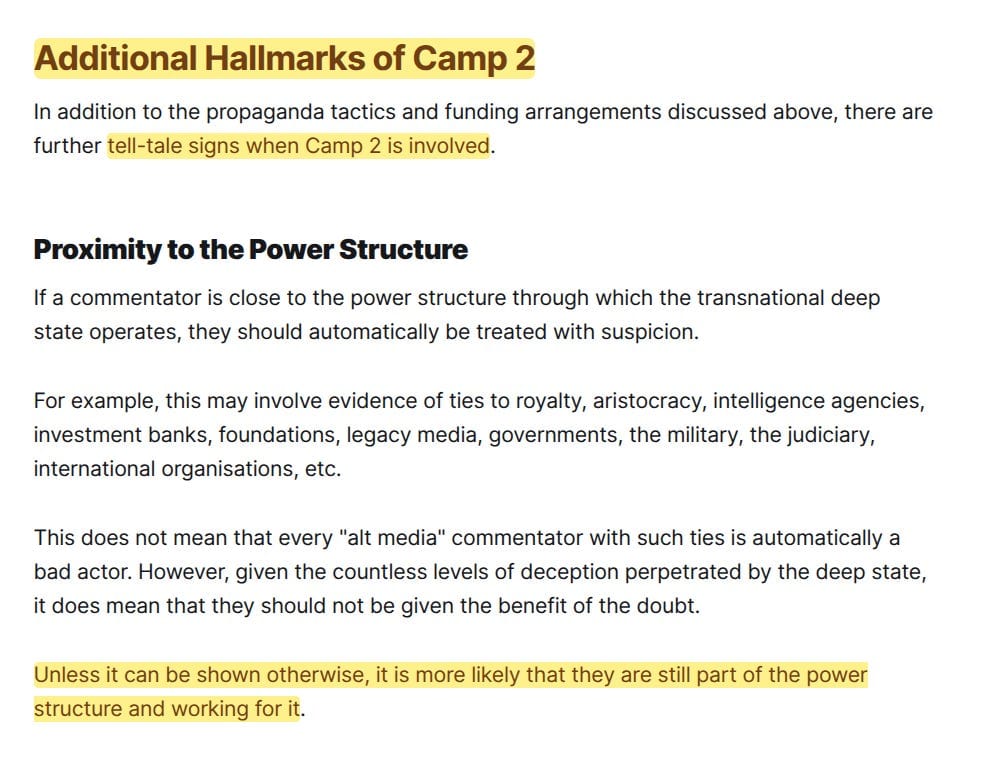
Hughes speaks of those with connections: ‘Unless it can be shown otherwise, it is more likely that they are still part of the power structure and working for it’.
In any fair system, you’re innocent until proven guilty. In Hughes’s framework, you’re guilty until you prove yourself innocent, and the person deciding whether you’ve proved it is Hughes — who, as it happens, gets to clear himself.
This isn’t minor. The framework doesn’t need evidence to sort someone into Camp 2 — the absence of evidence is enough. If you have any connection, however distant or historical, to any institution Hughes considers part of the power structure, you’re presumed to be working for it. The framework doesn’t have to prove you’re controlled — you have to prove you’re not. It thus becomes a purity test on his terms — and never mind the general difficulty of proving a negative.
The fourth…
… thing to notice is what Hughes accuses others of doing.
He has an entire section on ‘Evidence of Cult Thinking’, which he describes as a ‘closed-mindedness whereby demands are made that you agree completely with a particular position’. He warns against ‘doctrinal purity’ — the insistence that ‘the doctrine is to be accepted in its entirety, and is to become central to one’s worldview’.
Now look at what Camp 3 requires.
The class war thesis isn’t presented as one perspective among many. Hughes calls it ‘that fundamental reality’. If you don’t accept it — all of it, as the central organising principle of your worldview — you’re in Camp 2. You’re controlled opposition, or you’re duped, or you’re ‘mystifying class relations’.
The behaviour Hughes identifies as cult thinking in others is the entry requirement for his own framework. He’s describing his own mechanism and attributing it to the enemy — classical projection, and a reliable tell.
The fifth…
… thing to notice is what the framework does to everyone who uses it.
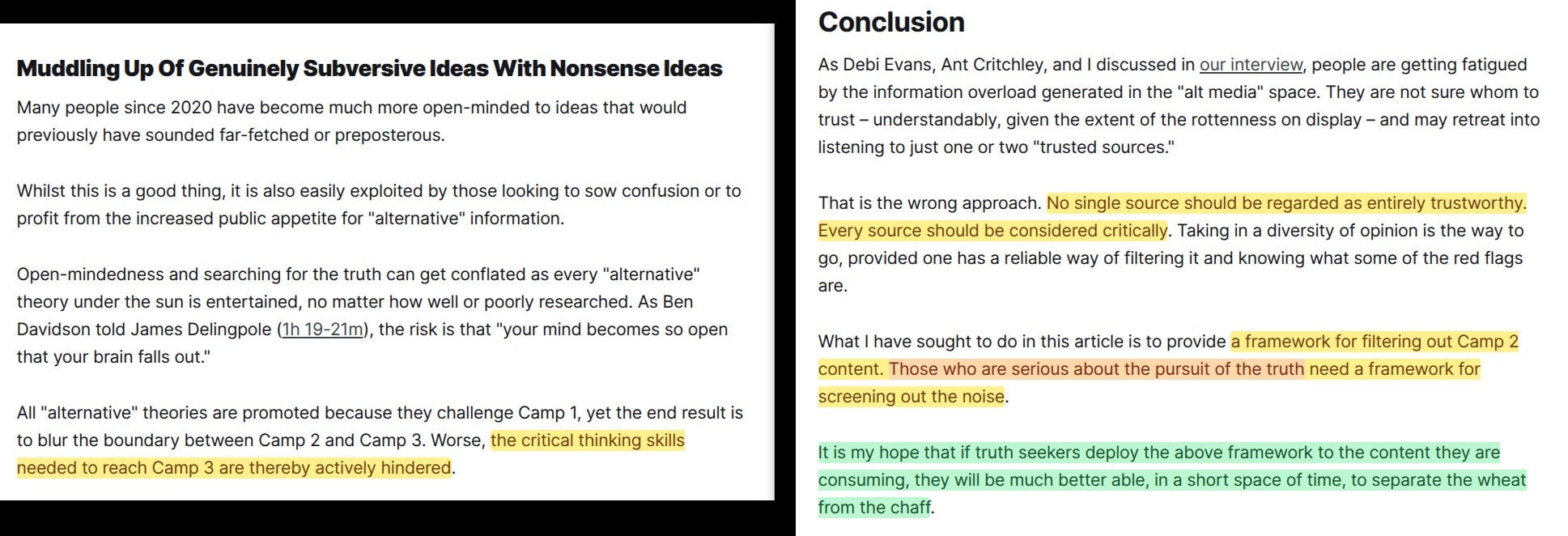
Hughes presents his guide as a tool for critical thinking. ‘What I have sought to do is to provide a framework for filtering out Camp 2 content’. Elsewhere, he warns that ‘the critical thinking skills needed to reach Camp 3 are thereby actively hindered’. Critical thinking, for Hughes, isn’t thinking that follows the evidence wherever it leads. It’s thinking that arrives at Camp 3. If it arrives anywhere else, it’s insufficiently ‘critical’.
Now consider what happens when you apply that filter to everything you read.
You check every source against Hughes’s criteria. Most fail — they might have sponsors, institutional connections, a neutral Wikipedia page; perhaps they don’t accept the class war thesis, or they might even have been on a paid trip abroad. One by one, your trusted sources are disqualified — often for offences Hughes himself has committed, and from which he alone gets to clear himself.
So who’s left? The sources who pass Hughes’s loyalty test — the ones who accept the class war thesis, who have no disqualifying connections, who aren’t funded by anyone suspicious. The ones Hughes has cleared.
The ‘framework for critical thinking’ narrows your information diet until the only sources you trust are the ones Hughes has approved. It doesn’t teach you to think critically. It teaches you to apply Hughes’s criteria to everyone else’s thinking.
The output is neither his claimed ‘critical thinking’ nor independent judgement — it’s dependence on his.
The Pattern
None of this is new.
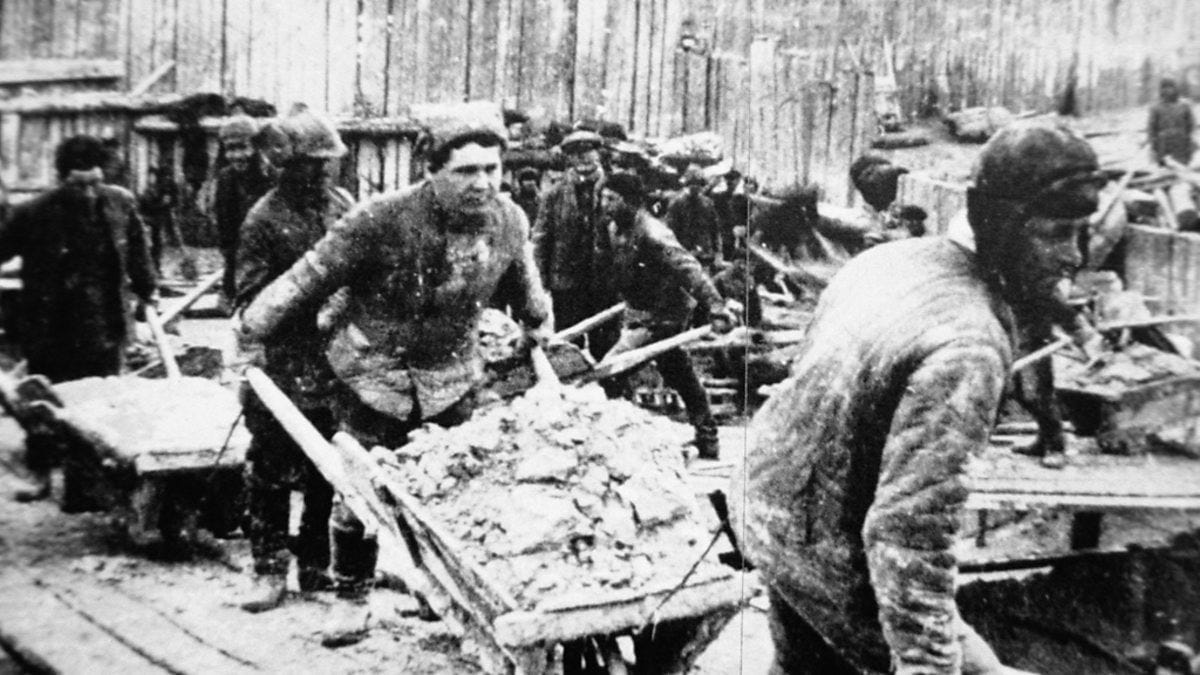
In 1902, Vladimir Lenin published ‘What Is to Be Done?’, arguing that workers left to themselves would develop only ‘trade union consciousness’ — limited understanding. This wasn’t good enough. Workers needed to be brought to ‘revolutionary consciousness’ by professional revolutionaries who understood the real situation.
But workers who’d reached their own conclusions independently weren’t merely uninformed — they were the obstacle. Their reason was more dangerous than ignorance, because it offered an alternative to the revolutionary programme. Lenin wanted a following — he didn’t want people who thought for themselves.
The parallel is almost impossible to miss. Lenin’s unconscious workers are Camp 1: they don’t know they’re being exploited and believe the official story. Lenin’s trade union consciousness is Camp 2: they’ve noticed something’s wrong and are organising, but they’re reaching wrong conclusions which lead elsewhere. Lenin’s revolutionary consciousness is Camp 3: they’ve accepted the correct analysis, class warfare, and see the world through the lens the vanguard provided.
Hughes has reframed Lenin’s framework in twenty-first-century terminology and applied it to the alternative media. The structure is identical — and so is the operational sequence.
Lenin’s programme in ‘What Is to Be Done?’ runs five steps. First, establish the theory for the vanguard to enforce. Second, publicly discredit the independent thinkers — the ‘economists’ whose conclusions threaten the revolutionary programme. Third, build the vanguard organisation — a disciplined core that accepts the correct line and can lead others toward it. Fourth, create the organ of communication — a scaffold for organising. Fifth, let the network replicate itself — each new recruit applies the programme and recruits the next.
Hughes has carried out all five. The class war thesis is the theoretical line, codified as the entry requirement for Camp 3. The Camp 2 guide is the discrediting operation — dozens named, their reputations marked within the only audience that might have listened to them. His presentation on academia runs the same script on an entire profession, while granting himself clearance as the one who left to ‘speak truth to power’. Camp 3 is the vanguard — entry conditional on accepting the thesis, the Study Group on Technology and Power as its inner circle. His books, the symposium, and the guide serve as the organ — every reader who applies the filter becomes a distributor. And every Camp 3 member who steers newcomers toward approved sources is an unpaid operative of a programme they believe they arrived at independently.
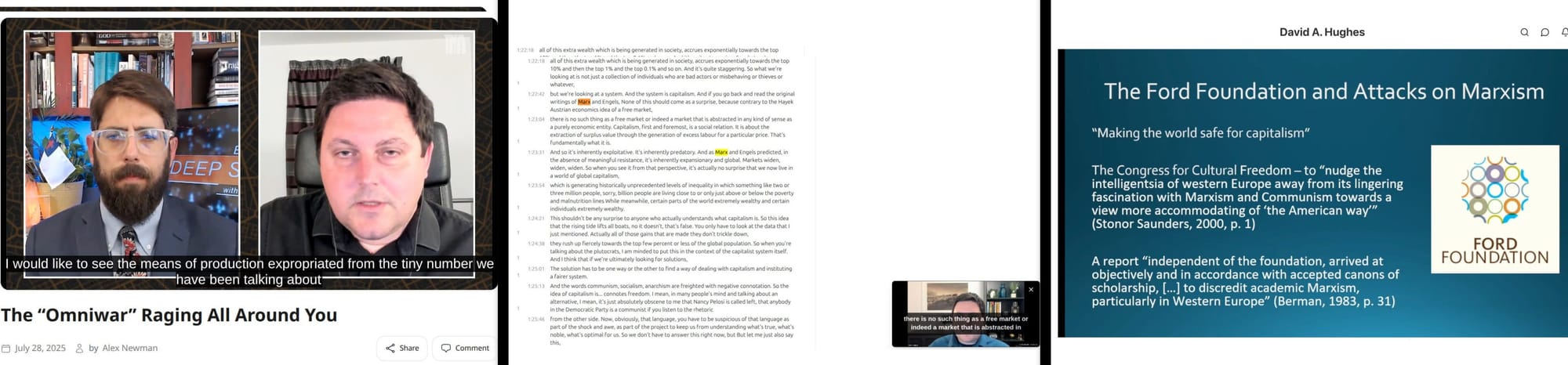
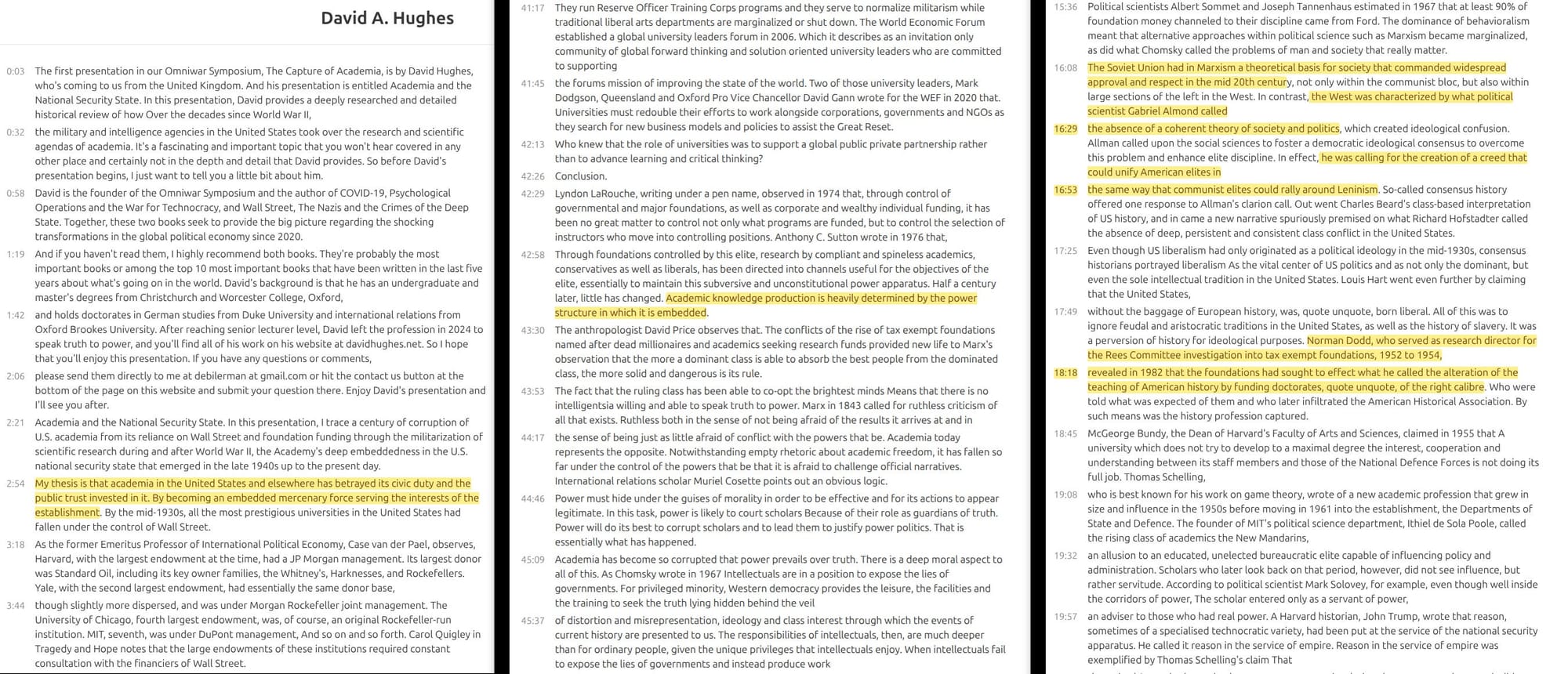
Hughes even quotes Norman Dodd’s 1982 testimony on the foundations’ capture of American history2 — but tellingly only some aspects of it. He leaves out Dodd’s most significant finding: that Ford Foundation president Rowan Gaither told him directly that the foundations operated under directives to ‘so alter life in the United States that we can be comfortably merged with the Soviet Union’. In the same presentation, Hughes even calls the Ford Foundation ‘stridently anti-Marxist’. He didn’t only selectively edit — he manipulatively made Dodd’s testimony appear to say the opposite of what it found, echoing his selective editing of Anthony Sutton’s material.
The only safe analysis is the one that arrives at the approved conclusion, and the person who decides which conclusion is approved is the person who wrote the framework. And he, as it happens, reserves the right to change it.
What Is to Be Done?Read full story...
The Name
So what is Camp 4?
Hughes himself suggests Camp 4 might be ‘rooted in a spiritual/religious dimension — an even higher level of awareness’. That’s convenient, because it means the hierarchy can always extend upward (hence, it’s a holarchy3), with Hughes as the gatekeeper of the above level.
But Camp 4 isn’t merely above Camp 3. It determines how it operates.
The three camps are a sorting machine. Every sorting machine checks against a standard — a criterion that determines which side of the gate you end up on. Accept it and you’re cleared. Reject it — or question it in public — and you’re out.
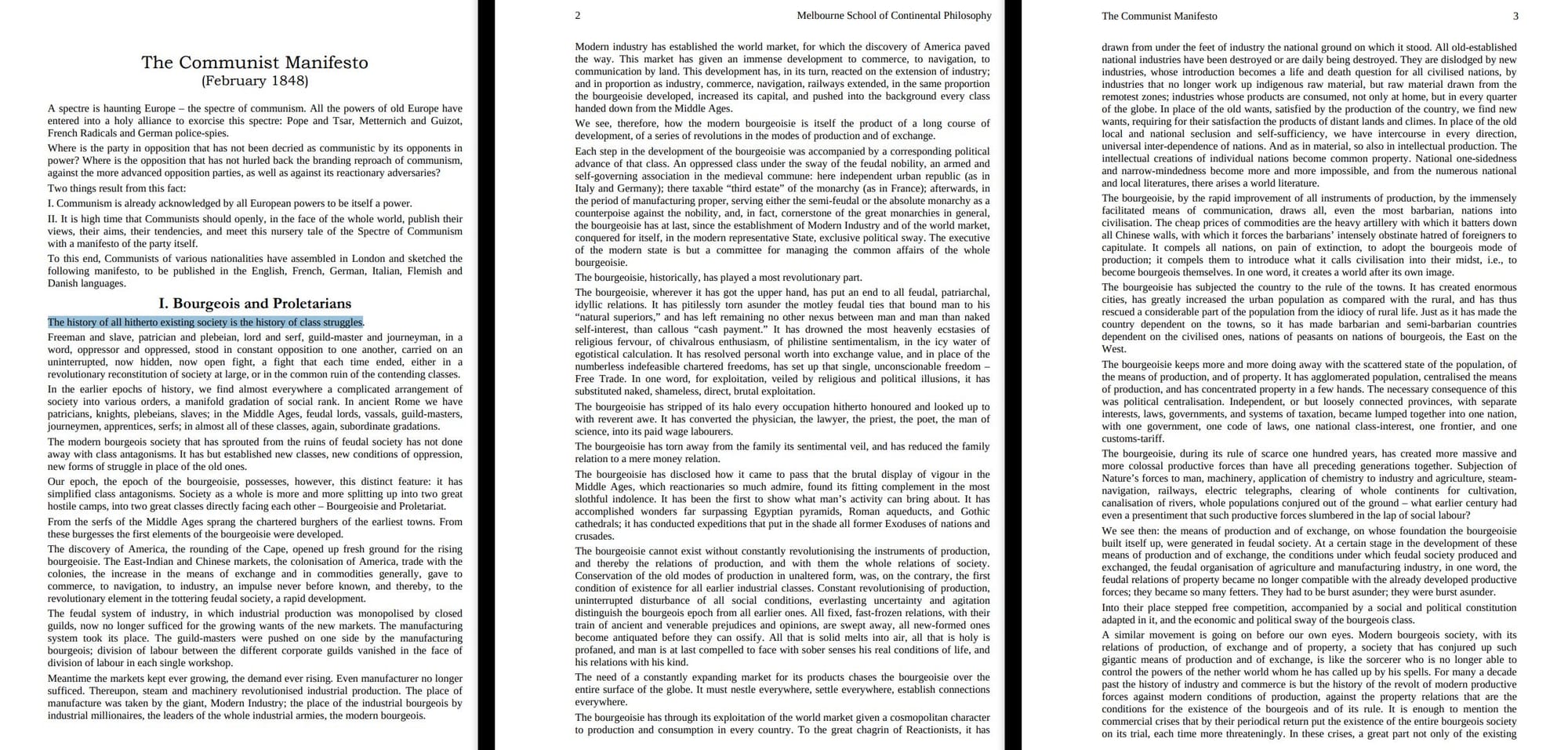
Camp 4 is whoever sets the standard the sorting machine clears against. In Hughes’s framework, that standard is the global class war thesis, sourced directly from Marx, whose entire framework rests on class struggle as the engine of history4.
There’s a difference between believing ‘there is a global class war’ because the evidence compels you, and the class war thesis being the condition you must accept in order to be cleared. The former is an analytical conclusion, the latter a clearing condition. Hughes presents it as the first, but the machine uses it as the second.
Once you see the class war thesis as a standard rather than a truth, the next question is obvious: where does the standard come from? Standards don’t generate themselves. They’re derived upstream — a political vision, perhaps someone’s ‘ethic’. And once you have a standard (subject to change), you have to ensure your vanguard is flexible in this regard — hence his inclusion of ‘One feature of Camp 3 is the constant self-reflection and willingness to challenge one's own assumptions that is required‘.
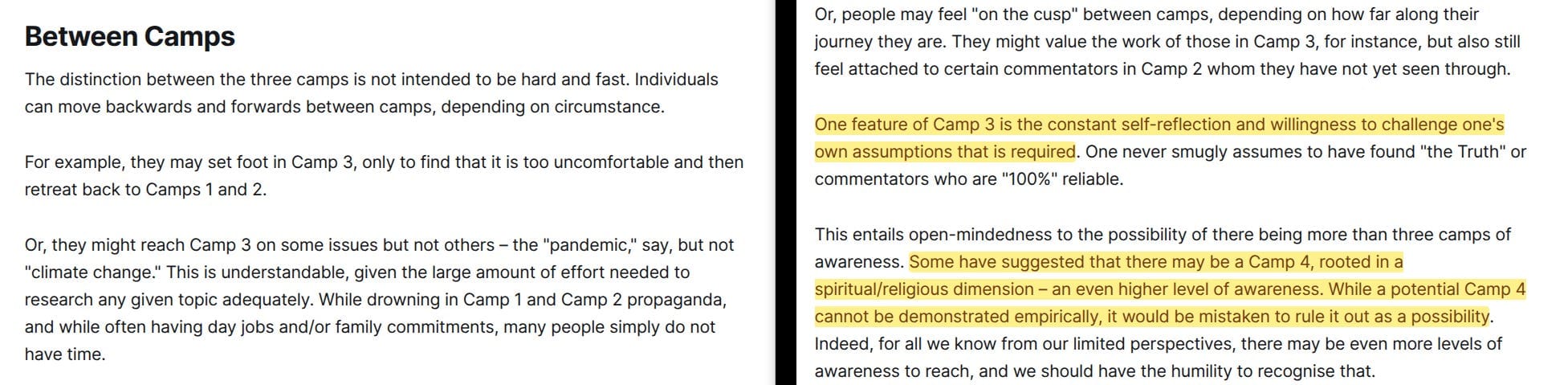
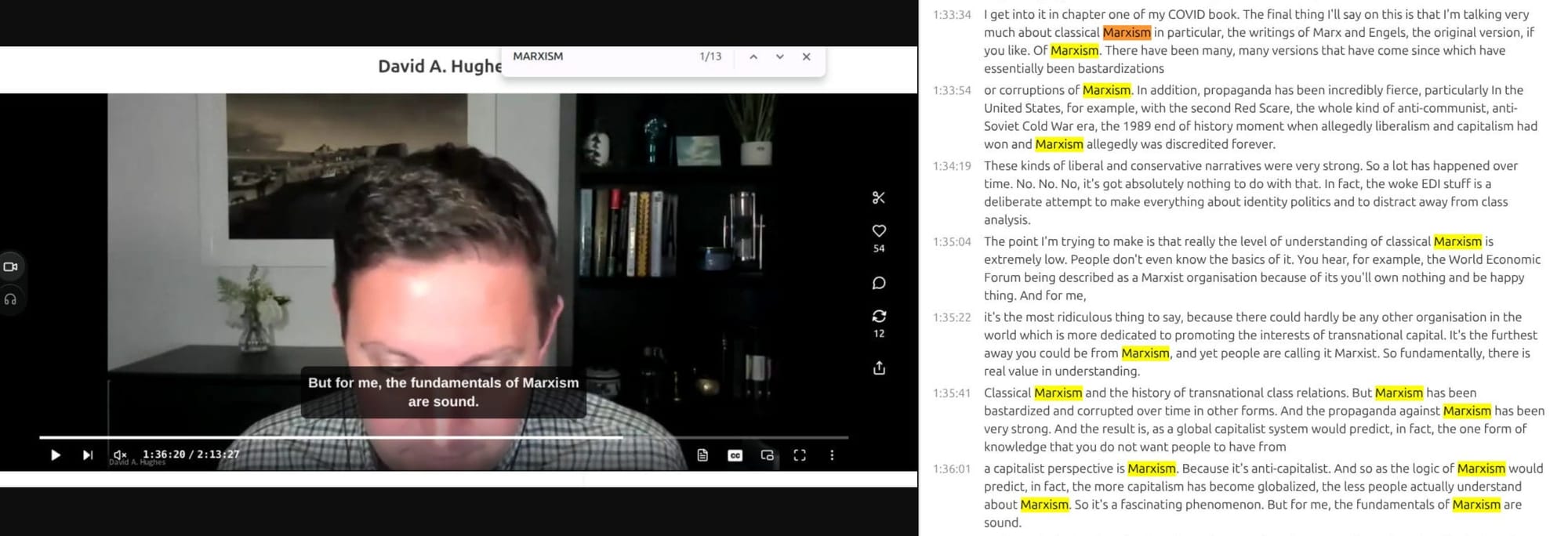
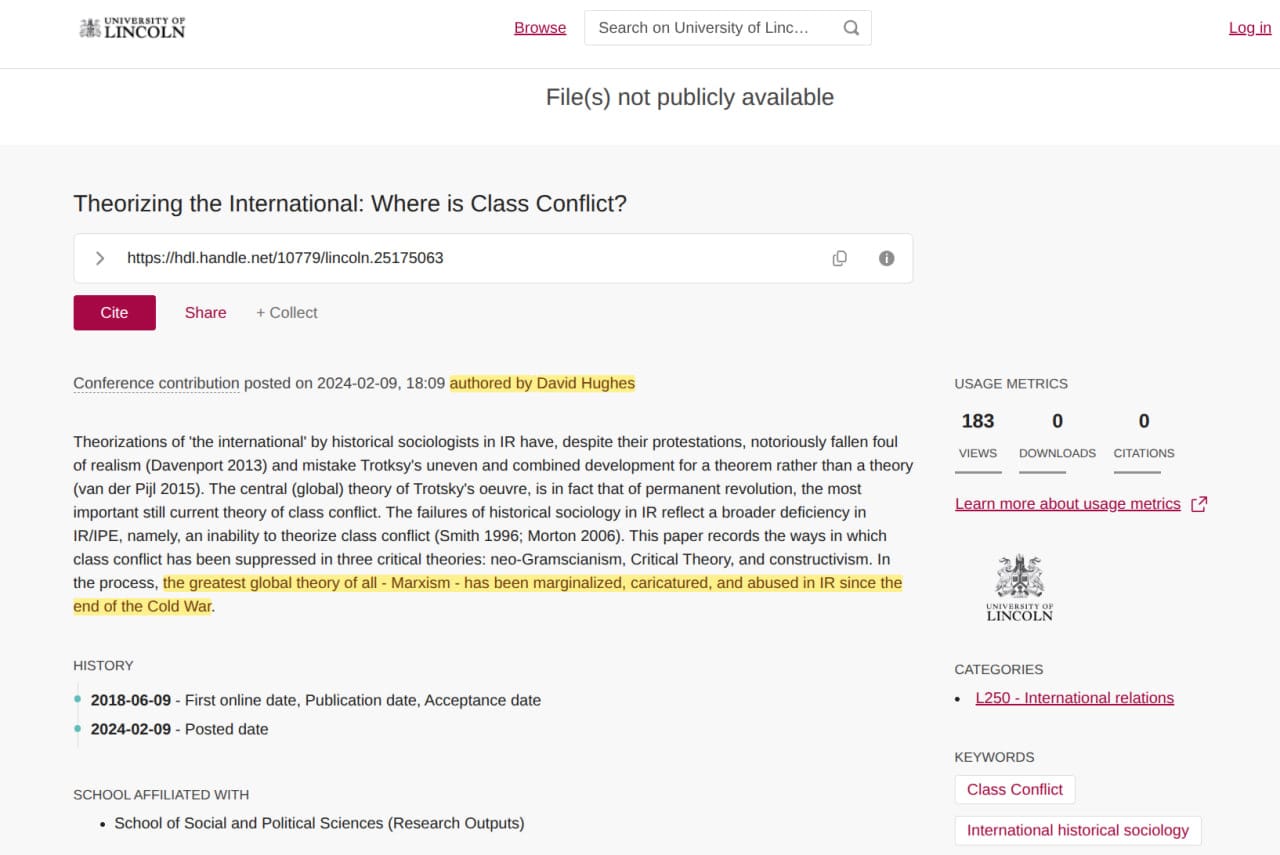
Hughes’s academic work sits squarely in the Marxist tradition. His doctoral supervisor was Kees van der Pijl, a neo-Marxist scholar of international relations5. His analysis of class relations, his framing of the ‘transnational ruling class’, his treatment of capitalism as a system of organised exploitation — all of it traces back to one particular line of thought and destination. In a 2018 conference paper6, Hughes called Marxism ‘the greatest global theory of all’ and lamented that it had been ‘marginalised, caricatured, and abused’ since the end of the Cold War.
This isn’t a scholar who happens to draw on Marx. This is someone who thinks the discipline hasn’t been Marxist enough. The global class war thesis isn’t a neutral observation about how power works; it’s the foundational claim of Marxism, and it’s been the foundational claim of Marxism since 1848.
Camp 5 is whoever defines the ethic that generates the standard. In this particular case, that ethic appears to be communism, dressed in the language of equality, liberation, the end of exploitation. Camp 3 asks you to accept that a global class war is underway. It doesn’t ask you — not yet — what should be done about it. But the answer is already loaded into the question. If the problem is class warfare, the solution is class consciousness. If the solution is class consciousness, the programme is collective action under vanguard direction. If the programme is collective action under vanguard direction, the destination is the one Marx prescribed and Lenin operationalised — dressed, as it always is, in the language of justice.
The three camps are the clearing function. Camp 4 is whoever sets the standard it checks against. Camp 5 is whoever defines the ethic.
It’s yet another application of the ethic - standard - clearing - settlement - outcome template.
Flow ControlRead full story...
The Test
If Hughes’s three camps were genuinely an analytical framework — a tool for finding the truth — it would be falsifiable. You could present evidence that pointed somewhere other than global class warfare, and the framework would accommodate it. Instead, it sorts you into Camp 2 for even asking.
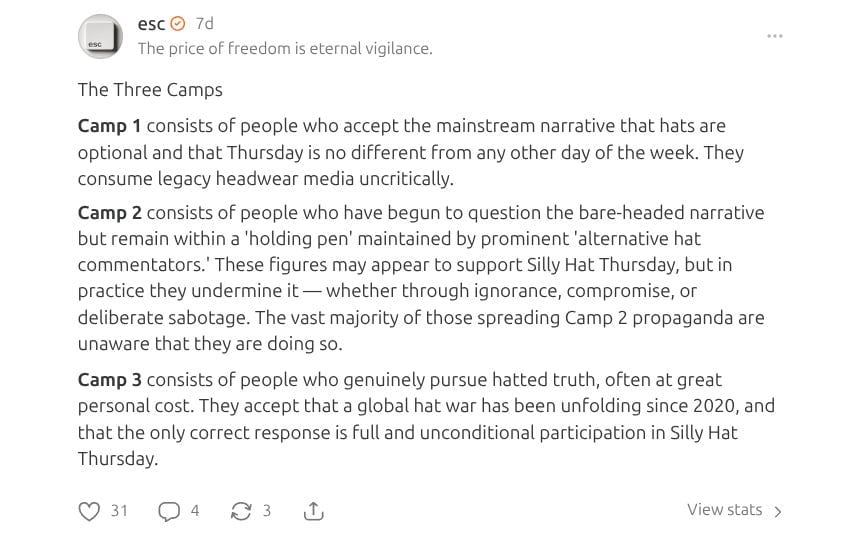
To see why, replace the class war thesis with something absurd. Silly Hat Thursday will do — and it’s a better test than it first appears, because you can construct a perfectly plausible case for it: indirect health benefits from social bonding, economic stimulus from hat sales, community cohesion from shared ritual. All impossible to prove, which of course makes them impossible to disprove — and an unfalsifiable thesis is the only kind a sorting mechanism can safely run on.
Camp 1 consists of people who accept the mainstream narrative that hats are optional and that Thursday is no different from any other day of the week. Camp 2 consists of people who’ve begun questioning the bare-headed narrative but remain in a ‘holding pen’ maintained by prominent alternative hat commentators — people who might appear to support Silly Hat Thursday but in practice undermine it, whether through ignorance, compromise, or deliberate sabotage. Camp 3 consists of people who genuinely pursue hatted truth, often at great personal cost, and who accept that a global hat war has been unfolding since 2020.
Everything still works. The sorting, the loyalty test, the filter — all of it. Camp 2 leaders still ‘win us with honest trifles, to betray us in deepest consequence’. Anyone who questions Silly Hat Thursday in public is still ‘mystifying hat relations’. The framework still narrows your sources until the only ones you trust are the ones the author has cleared. And should the author reserve the right to update the silly hat criteria as thinking around them becomes ‘more nuanced’, the machine becomes adaptive too — able to reclassify anyone, at any time, for any reason. Today it’s any hat. Tomorrow it’s a minimum of three feathers, a brim width of no less than four inches, and a colour that doesn’t normalise the bare-headed aesthetic. The people who wore yesterday’s approved hat are now in Camp 2.
Nothing broke, because nothing depends on the content. The machine sorts on compliance, not on truth. The class war thesis isn’t doing what Hughes says it’s doing — illuminating reality. It’s doing what the machine needs it to do: providing a standard to sort against. Any standard would serve — this particular one just happens to come with a programme attached. And an ideology disguised as a framework for critical thinking is considerably more dangerous than one that announces itself honestly, because its adherents believe they arrived there through reason when they were sorted there by design.
The Machine
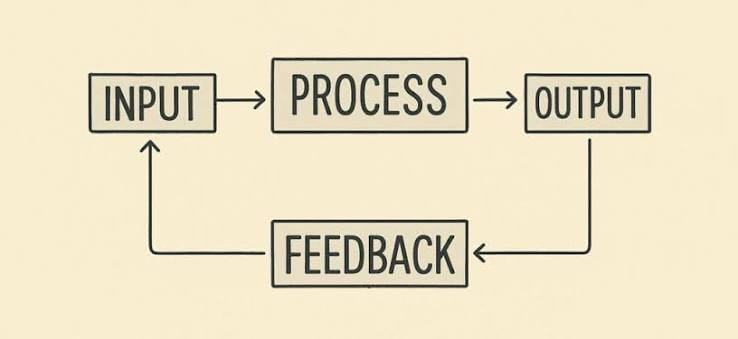
The input to the three camps is a questioning person, someone who’s lost trust in the mainstream and is looking for reliable sources. The process is Hughes’s filter: check every commentator against his criteria, most of which almost everyone fails. The output is a person who trusts only Camp 3 sources, distrusts everyone Hughes has flagged, and will actively warn others away from Camp 2 material — becoming, in effect, an unpaid distributor of the programme. And tomorrow, the operational feedback will lead to Hughes marginally adjusting its operation.
Input, process, output, feedback — this describes adaptive management.
The system converts independent thinkers into dependent ones while making them feel they’ve achieved the opposite. Every person who applies the filter believes they’re thinking more critically. What they’re actually doing is outsourcing their criteria for trust to a man who reserves the right to change those criteria without notice.
And because he reserved that right, the system is adaptive. If a Camp 3 figure starts asking the wrong questions, the criteria can be adjusted and that person reclassified without the framework appearing to have changed. The input and the output stay the same — only the process shifts, producing a more expedient sorting. That is not an analytical framework. It’s a management protocol with a live update mechanism and a single administrator.
The people sorted into Camp 2, meanwhile, aren’t simply set aside. They’re labelled, publicly and by name, which serves two functions: it warns Camp 3 members away from them, and it pressures the labelled individuals to either submit to the framework or accept permanent reputational damage within the only audience that might have listened to them. That isn’t a side effect. It’s a recruitment mechanism with enforcement — and it’s precisely what Lenin did to the ‘economists’, the trade unionists who’d reached their own conclusions and needed to be publicly discredited before they could draw workers away from the revolutionary programme.
It doesn’t matter whether Hughes intended any of this. The system does what it does.
Input-Output AnalysisRead full story...
The False Choice
Hughes’s framework isn’t the only one running this template. Game B — the ‘alternative civilisational operating system’ promoted by Jordan Hall, Jim Rutt, and others — runs the same sorting machine with different content loaded into it. Where Hughes sorts on the class war thesis and terminates in collective ownership under vanguard direction, Game B sorts on ‘complexity awareness’ and terminates in collective management under expert systems. One speaks the language of class struggle, the other speaks the language of systems science. They recruit from different audiences. They appear to oppose each other.
But both lead to the same destination: a society administered by a self-appointed vanguard that has declared itself uniquely qualified to manage it, whether that vanguard calls itself the revolutionary class or the coherence architects.
Anyone who rejects the mainstream narrative and starts looking for alternatives will encounter one or both. If they reject one, the other is waiting. The only move the architecture can’t handle is someone who rejects the template itself and walks away from the choice entirely.
Camp 4 is whoever sets the standard. But Camp 5 is whoever defines the ethic.
But, personally, I categorically reject the premise that people belong in camps at all. Especially unfalsifiable ones, defined by a central authority, which replicate the operational playbook of Marxist revolutionaries.
From Russia with LoveRead full story...