

Letters sent to strategic reservists as Britain takes ‘practical step’ to bolster defence
By Danielle Sheridan, Telegraph
The Ministry of Defence (MoD) has told Britain’s military reservists to prepare to be called up for war.
The Telegraph can reveal that, for the first time since the Cold War, letters have been sent to about 100,000 strategic reservists, offering opportunities to volunteer for training and exercises, such as Nato’s flagship Steadfast Defender exercise next spring.
The letters, sent to all three branches of the Armed Forces and signed by their respective chiefs, have also asked them to update their contact details and provide information about their current job and skills.
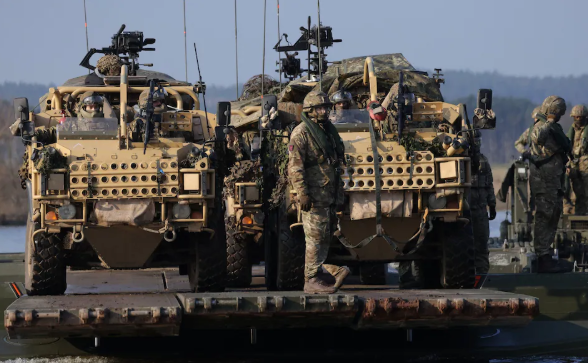
The move comes amid increasing threats from Russia, as Vladimir Putin looks to test Nato’s resolve. Last week, Russia fired cruise missiles and a drone into eastern Poland, just 60 miles from where a UK-led military training exercise was taking place on the day the Defence Secretary and Chief of the Air Staff had visited troops.
On Wednesday, it was reported the RAF was moving aircraft into hangars overnight and planning to build anti-drone nets to protect aircraft on British bases from drones.
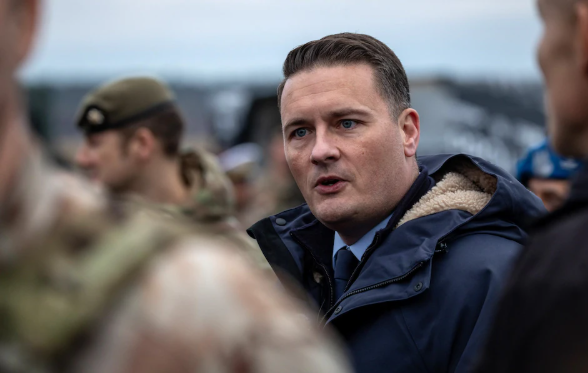
Wes Streeting, the Defence Secretary, has previously warned that Britain must be ready for war in 1,000 days and the UK must “be ready with our allies to fight and win”.
On Thursday morning, Mr Streeting told Sky News that Britain was “operating in a heightened threat environment”, and said contacting reservists was a “sensible, necessary precaution”.
Speaking to BBC Radio 4’s Today programme, he added: “God forbid the worst happened, in 20 years’ time, my successors would be cursing me, and I’d find myself in front of a public inquiry.
“And I know that because look at the state of the Covid preparedness and the Covid inquiry, which tells us that specific lesson of not being prepared, not being ready.”
The Telegraph understands that the Government is looking to ensure it has a greater “depth” of resilience, as the UK looks more “seriously” at Nato’s Article 3, which requires member states to “maintain and develop their individual and collective capacity to resist armed attack”.
The British Army is at its smallest since the Napoleonic Wars, with active-duty numbers approaching 73,000.
The MoD said letters had been sent to veterans in a “practical step to strengthen preparedness and deterrence, helping reduce the risk of conflict”.
They have been sent to strategic reservists, who are veterans who have recently left the military and retain an obligation to be recalled in exceptional circumstances, as opposed to those who volunteer as regular civilians.
An Army source said the letter had been sent to improve “data and information” about former military staff.
They said: “Just because you were once a tank driver in the Army, your civilian skills now could be completely different and actually more useful to defence.”
They added that while no one was suggesting the reserves would suddenly be mobilised, “we would be mad not to have a database and access” to them.
“If you ever needed to, there’s quite a lot of things which are quite rusty,” the source said. “The first stage is working out who they are, where they are, and what their skills are.”
‘Sharpening readiness levels’
The letters to reservists were published on the government website on Thursday afternoon.
Gen Sir Roly Walker, the Chief of the General Staff, the General Staff, told the Army reservists that he was writing to them at a time the UK’s defence and security forces were “sharpening their readiness levels”.
“As we so often tell ourselves, when it comes to the hard business of soldiering, our point of difference to other armies has, is and will always be the quality of our people: so we want to know what talent we have in our part of the Strategic Reserve in case we need to call upon it in the years ahead,” he writes.
Sir Roly also said he hoped “proud” veterans still felt part of the “wider military community” as he requested that they complete a questionnaire about their experience since leaving the Army by Dec 23.
Meanwhile, Air Chf Mshl Sir Harvey Smyth, the Chief of the Air Staff, warned: “The world has changed significantly in recent years.”
He told RAF reservists that there would be a “high bar” for recalling veterans and that the RAF wanted to better understand its veterans’ existing skills, experience and expertise “so that we can reinvigorate our relationship with our strategic reservists”.
This sentiment was reiterated by Gen Sir Gwyn Jenkins, the First Sea Lord, Sea Lord, who told Naval reservists: “Although you have left service, you remain part of a proud naval family, and the skills and experience you gained during your service, and since leaving it, continue to have enduring value to the nation.”
Sir Gwyn said that the additional “talent” they provided meant they may be “called upon in times of the nation’s most urgent need”.
He added: “Strategic reservists would only be called out or recalled in the most severe circumstances, such as a national emergency, an attack on the United Kingdom or a transition to war.”
The Telegraph previously revealed that when Lord Sanders was the Chief of the General Staff, he told the Government it would need to “mobilise the nation” to fight a war with Russia because Britain’s Army was too small.
Last year, the government’s strategic defence review highlighted the need for every part of society to play a role in defending the nation.
It also recommended re-engaging with the Strategic Reserve to draw on their skills and experience if needed.
The Government has launched a new section of its website where people can find out more about the Strategic Reserve and what it means for them, their families or employers.
Reservists ‘are part of our deterrent’
Calvin Bailey, the minister for veterans, said: “Our strength lies not only in the weapons and kit we possess, it lies in our people. Every member of our Strategic Reserve is part of that strength.
“While most strategic reserves will never be called to return, they are part of our country’s deterrent, helping to prevent conflict every day.
“These letters do not mean reserves are about to be mobilised. It is simply good housekeeping to make sure we know how to contact those who are eligible and keep up to date on their skills and experience.”
watch the video here
Responding to The Telegraph’s interview with Prince Harry, who revealed that he would rejoin the military to fight Russia, Mr Streeting said on Thursday: “I thought the way in which he brought that experience to bear in helping taking part in the national conversation, I thought was really welcome.
“I think that’s exactly the sort of patriotic spirit we’re looking for.
“And as I say, I salute the service he’s given to our country, and actually the service he gave to our country through that interview, talking about the threat environment, talking about his willingness and readiness to serve.”
After the missile strikes in Poland on Friday, Donald Tusk, the country’s prime minister, suggested that Russia had targeted the area as an “intentional provocation” against Britain, Poland and Nato states.
Andy Burnham, the Prime Minister, said the incident was “utterly unacceptable”, and “unreservedly” condemned it as he vowed that the UK would support Poland “in any way we can”.
The Russian missile launches coincided with the summit in China between Putin, Donald Trump and Xi Jinping, at which the US president embraced his Russian counterpart and called him a “friend”.


