

The government is losing $2 trillion a year and now thinks it’s time to borrow $1.2 trillion to hand out and call it a dividend.
By Quoth the Raven, QTR’s Fringe Finance
While the stock market implodes on or ahead of schedule, as predicted, I had another revelation last night that anyone with a first-grade understanding of math could have also arrived yet. We can’t afford this $5,000 dividend check idea.
I mean, we can’t really afford anything as a country right now, but it is arguably the worst moment in history to randomly hand out $5,000 to citizens for no reason.
I would love $5,000. You would love $5,000. I have yet to encounter the American who opens his mailbox, finds a check for five grand from the United States Treasury and screams, “Goddammit, not this again.”
But unfortunately, there is a very small problem with President Trump’s latest proposal to send every adult American a $5,000 “Trump dividend” if Republicans retain control of Congress in November: we don’t have the fucking money.
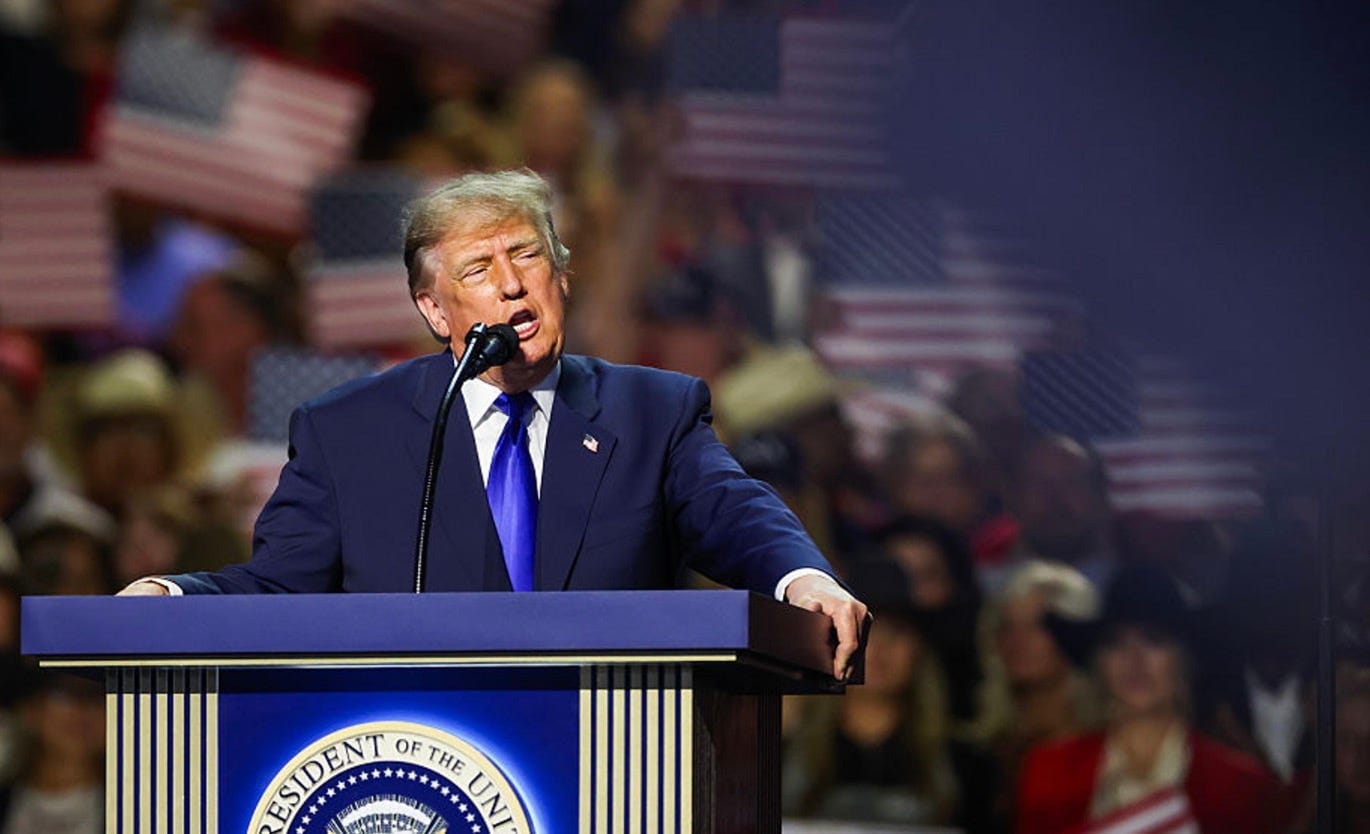
Trump unveiled the idea at the Republican convention in Dallas, promising a $5,000 payment to every adult U.S. citizen if Republicans win the House and Senate. With roughly 240 million adult citizens, Reuters estimates the program would cost approximately $1.2 trillion. Trump’s explanation for how we can afford this is essentially that America is now swimming in money. “We’re taking in trillions, trillions of dollars,” he said while discussing the proposal.
And while tariff revenue has increased substantially, it isn’t remotely close to producing the trillions of dollars necessary to fund something like this. The federal government is already spending considerably more than it collects.
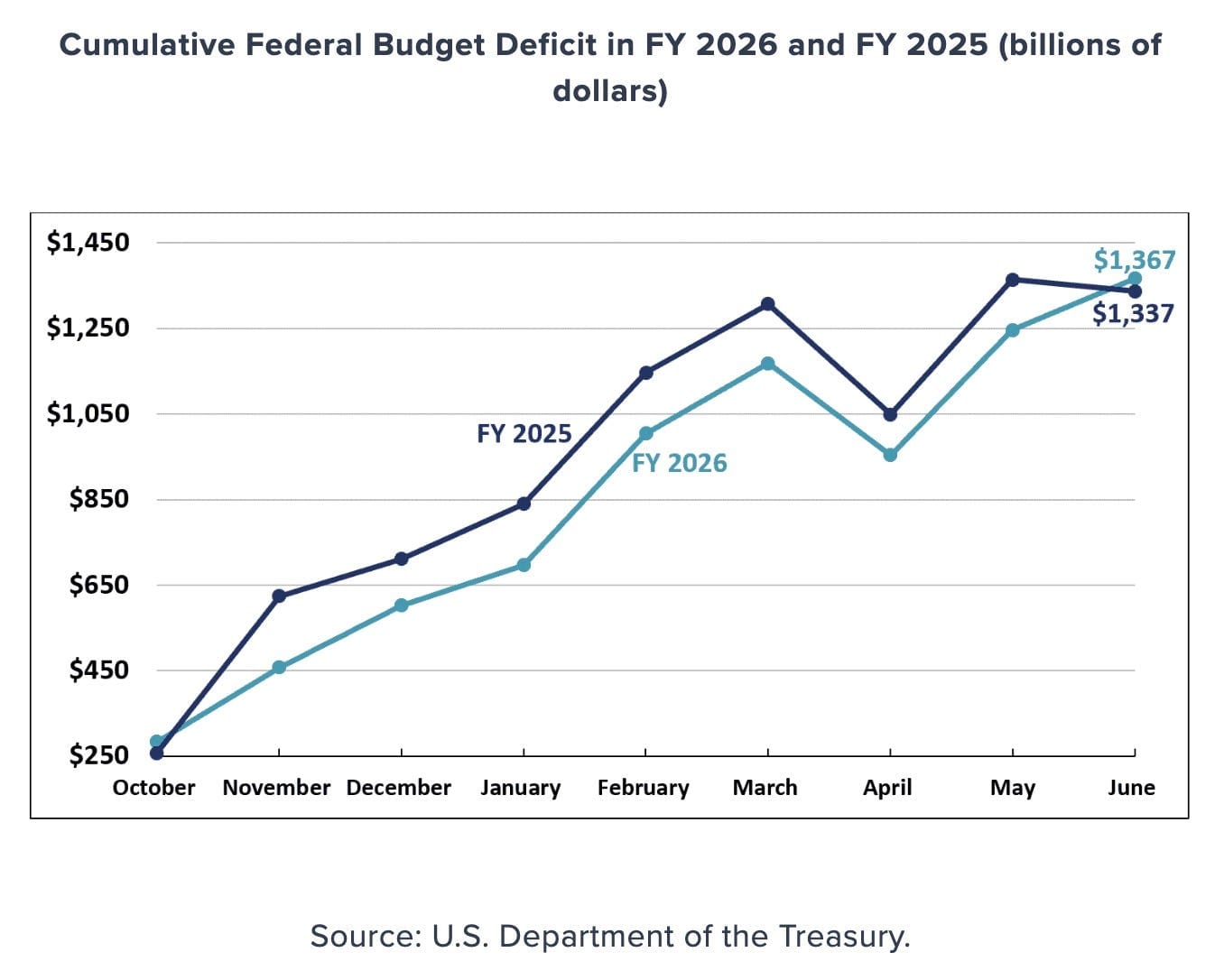
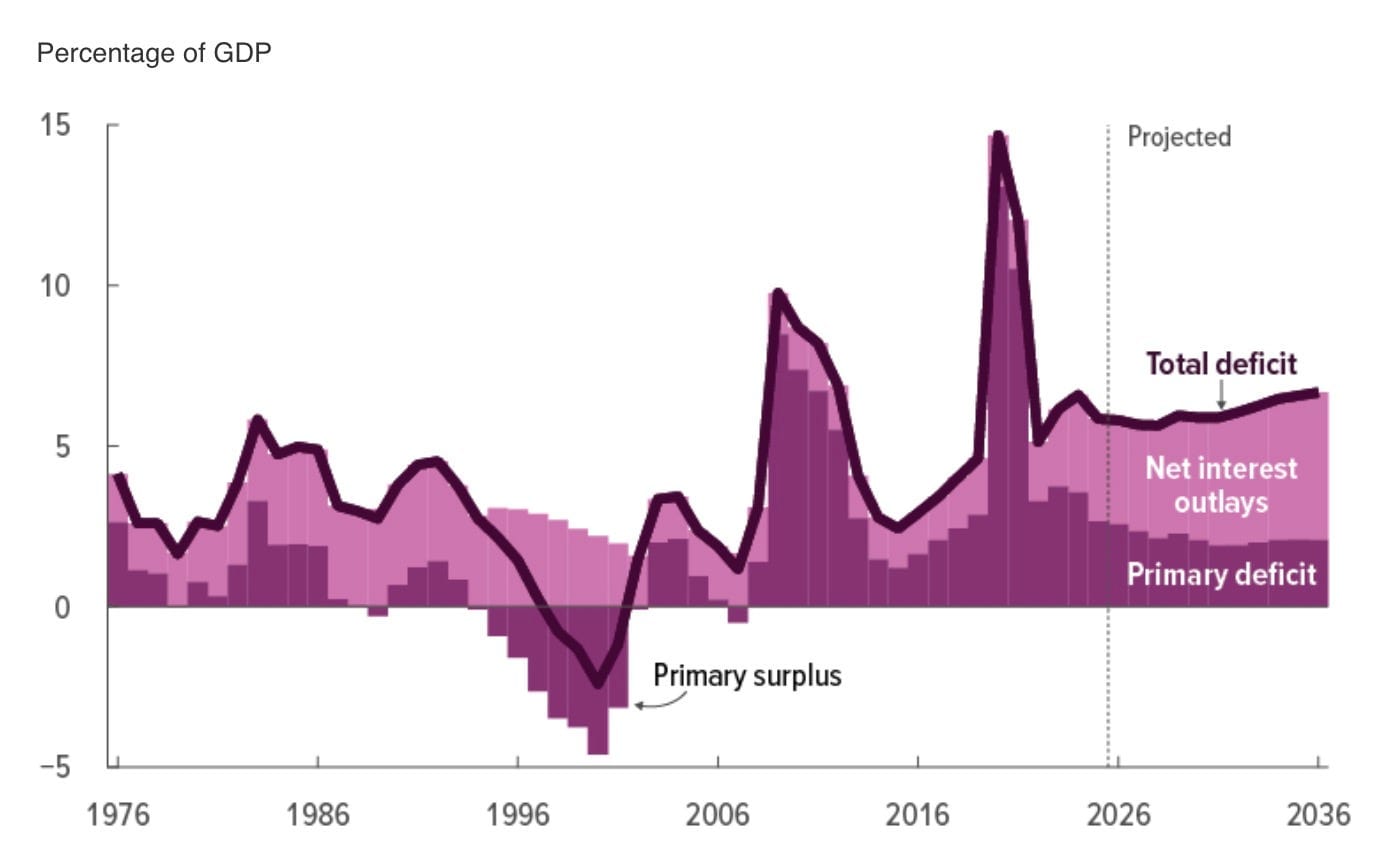
According to the Congressional Budget Office, the federal deficit reached roughly $1.8 trillion during the first ten months of fiscal 2026, about $169 billion more than during the same period last year. CBO estimates the full-year deficit will be roughly $2.1 trillion.
Think about what that means. We aren’t discussing what to do with a surplus. There isn’t some giant extra pile of money sitting in Washington. We’re already borrowing roughly $2 trillion a year to cover what the government spends, and now we’re contemplating borrowing another $1.2 trillion so Washington can mail everybody a check.
We’re calling it a “dividend” but that’s not generally how dividends work. If a company loses $2 trillion a year, borrows another $1.2 trillion and then distributes the borrowed money to shareholders, CNBC does not call it an exciting new capital return program. Eventually somebody from the SEC starts asking questions.
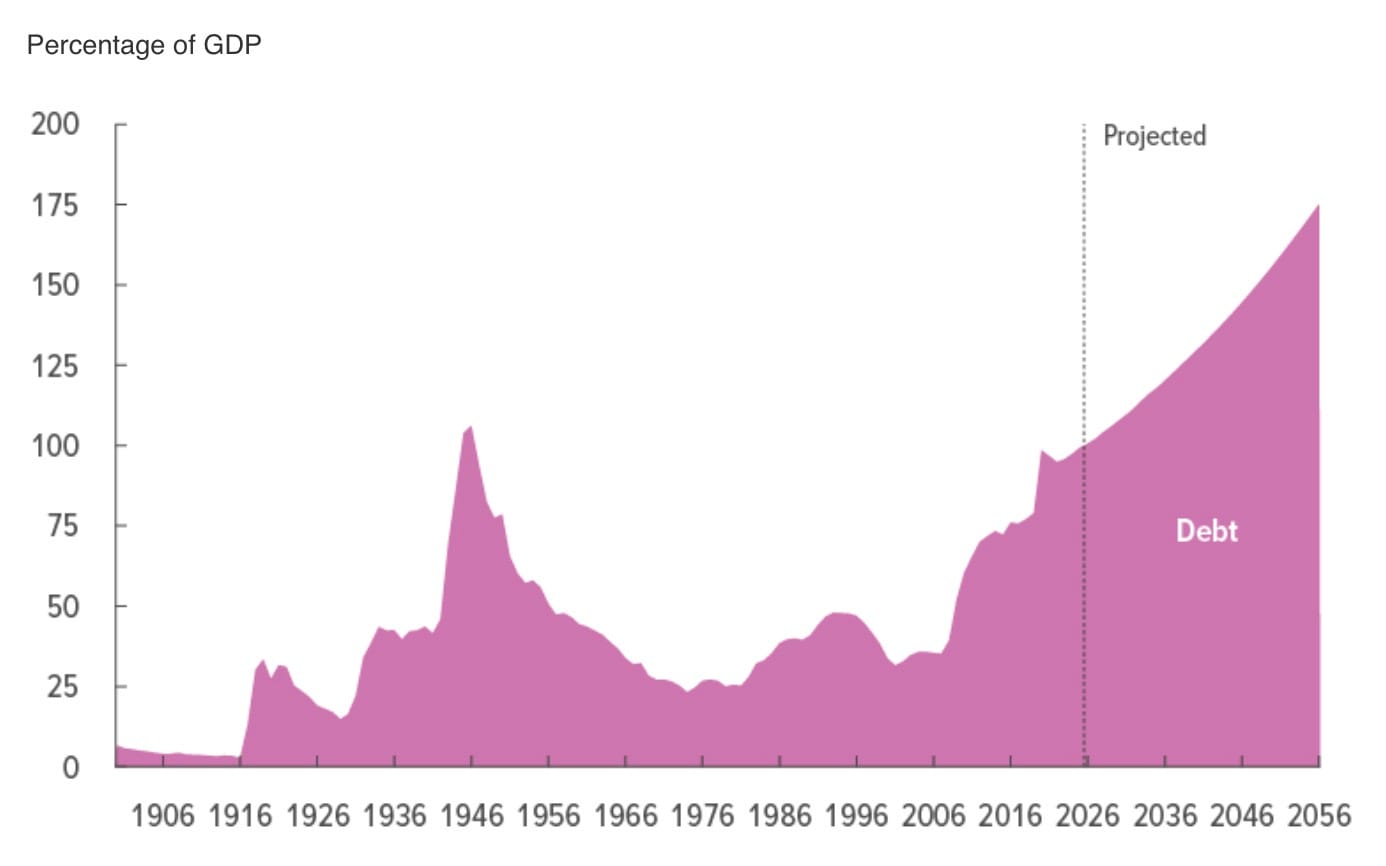
Meanwhile, the gross national debt has now blown through $40 trillion. Debt held by the public is roughly $32 trillion and, according to the Congressional Budget Office’s latest budget outlook, will equal about 101% of GDP this year. CBO projects that it will surpass the post World War II record of 106% of GDP around the end of this decade and reach approximately 120% by 2036.
This seems like a peculiar moment to find a new direction to spray cash we don’t have. And as if the existing fiscal situation weren’t sufficiently hilarious, America has simultaneously found itself with another extremely expensive item on its shopping list: weapons. Lots and lots of weapons.
The Pentagon has proposed a $1.5 trillion defense budget for fiscal 2027, versus roughly $900 billion approved for 2026, the largest year-over-year increase in defense spending in the postwar era and a budget I think could massively benefit one sector of the stock market. The administration says the increase includes major spending on missiles, drones, ships, aircraft, missile defense and rebuilding the defense industrial base. Iran-related costs would require additional funding.
And as we’re finding out now, the war with Iran has burned through significant quantities of expensive American munitions, and defense contractors are already anticipating years of replenishment orders. Reuters reported in July that conflicts including Iran and Ukraine have depleted Pentagon inventories that will have to be rebuilt.
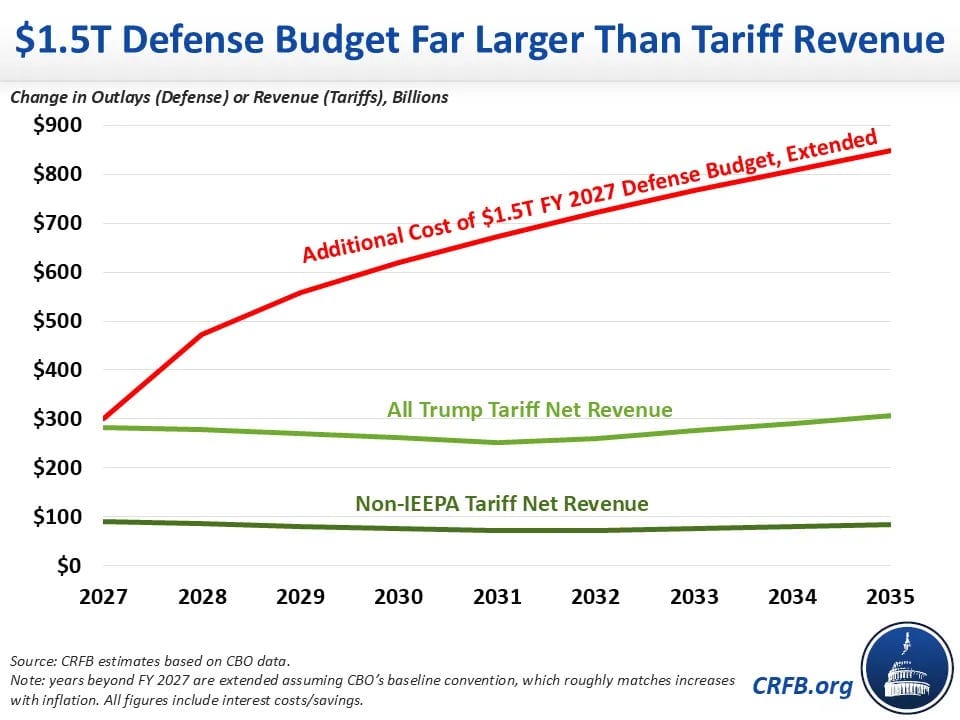
So let me get this straight: our current financial plan appears to be to run a roughly $2 trillion deficit, fight an expensive war, replace a gigantic pile of missiles, dramatically increase defense spending and then mail everybody $5,000.
I am beginning to understand why the bond market has questions.
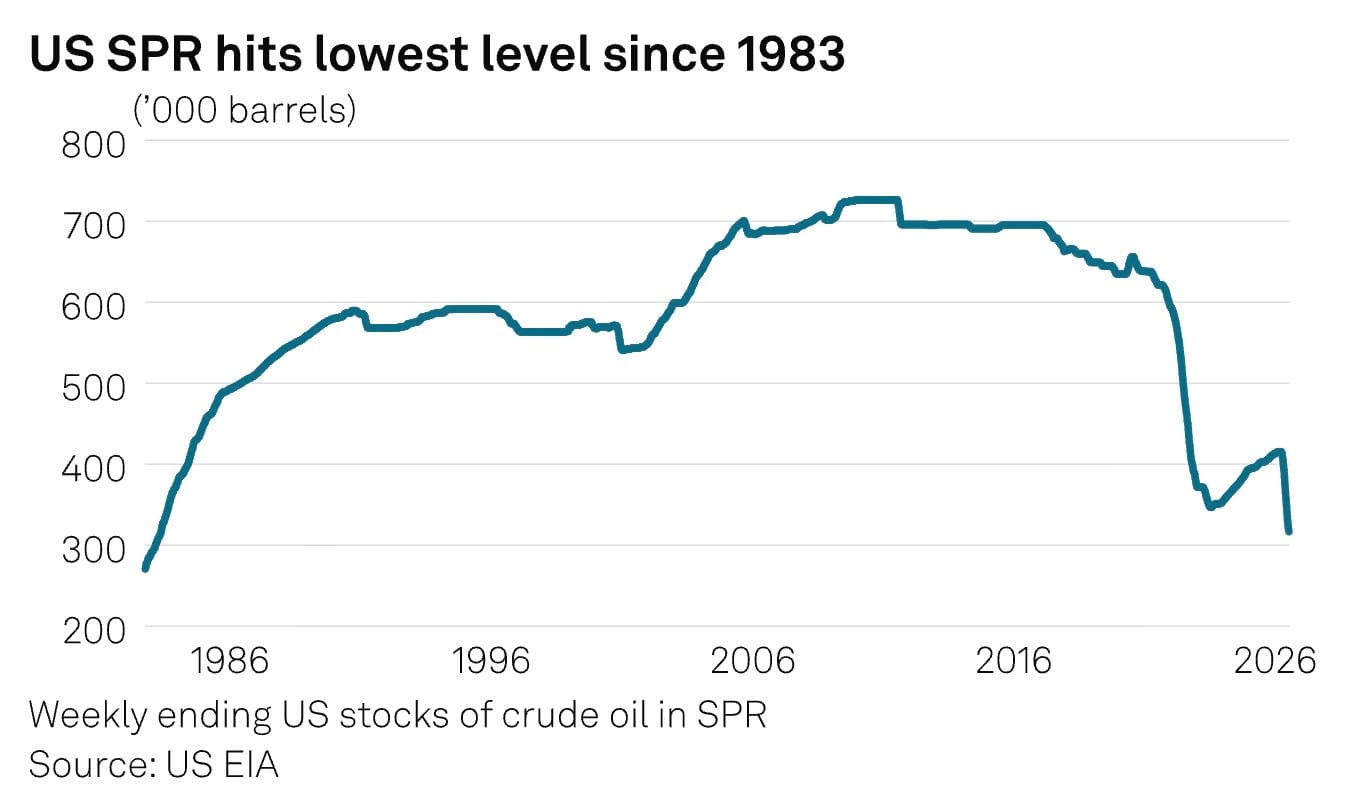
There is also the Strategic Petroleum Reserve, which has been drawn down enormously from its historical peak and remains far below the levels of only a few years ago. That’s particularly relevant when America is simultaneously dealing with a Middle Eastern war that has helped send oil back above $100 per barrel.
Emergency reserves exist to provide flexibility when bad things happen, but using them means eventually replenishing them. That costs money too.
The Treasury market isn’t exactly celebrating the fiscal situation either. The benchmark 10-year Treasury yield has recently approached 5% and higher yields are especially nasty when you’re carrying tens of trillions of dollars in debt because old securities eventually mature and have to be refinanced at higher rates.
And interest expense is already becoming one of the biggest problems in the federal budget. The CBO projects that persistent primary deficits and rising interest costs will push the annual federal deficit from roughly $2 trillion today toward $3.1 trillion by 2036. So the ultimate cost of another $1.2 trillion giveaway isn’t necessarily $1.2 trillion. If we borrow the money, it’s $1.2 trillion plus the interest required to carry that debt indefinitely.
Trump has explicitly tied the $5,000 payments to Republicans retaining control of Congress in the November midterms. Whatever one thinks of the policy itself, attaching a four-figure government payment directly to an election outcome inevitably makes the proposal look at least partly like campaign politics, though it isn’t much different than Zohran Mamdani promising free everything for New York City to get elected.
The depressing answer to all of this is the one nobody wants to hear. America probably needs fewer promises of free money, not more of them. There is nothing particularly exciting about cutting spending, narrowing deficits, paying down debt and restoring some semblance of discipline to the federal balance sheet. Nobody wins a standing ovation by walking onto a stage and announcing, “Good news everybody, you’re getting nothing, but let me explain why that makes sense given the last half century of gross overconsumption and money printing.”
Eventually somebody has to pay the bill. We have more than $40 trillion in gross federal debt, annual deficits running around $2 trillion, debt held by the public roughly equal to the entire annual output of the American economy, rapidly rising interest costs, enormous new defense requirements and a bond market increasingly demanding more compensation to finance all of it.
The CBO’s long-term projections make the basic problem difficult to avoid: under current policy, debt keeps rising faster than the economy and deficits continue widening. Eventually stabilizing that trajectory requires some combination of lower spending and higher revenues, and waiting makes the necessary adjustment larger.
I certainly prefer the version of reality where somebody gives me $5,000, trust me. A $5,000 check would feel fantastic when it arrived. But dividends generally come from profits, and Uncle Sam isn’t turning a profit. He’s trying to put his bar tab on a fifth credit card that has been declined and has turned to looking for change under the barstools to pony up for one last beer. And the bartender is starting to look nervous.


