

Trump vows retaliation after Iran’s own ‘retaliatory’ missile attacks on US bases in Jordan.
Summary
- Trump vows retaliation after Iran’s own ‘retaliatory’ missile attacks on US bases in Jordan.
- Eight Iranian missiles were intercepted by Jordan amid the first major tit-for-tat military strikes in a month.
- US forces struck Iranian missile launchers on Larak Island, reportedly killing two people.
- Iran threatens further retaliation, while regional tensions reignite across UAE, Qatar and Red Sea.
- Global oil prices rose Monday in wake of the overnight renewed fighting.
Trump Vows US will Respond to Iranian Attacks
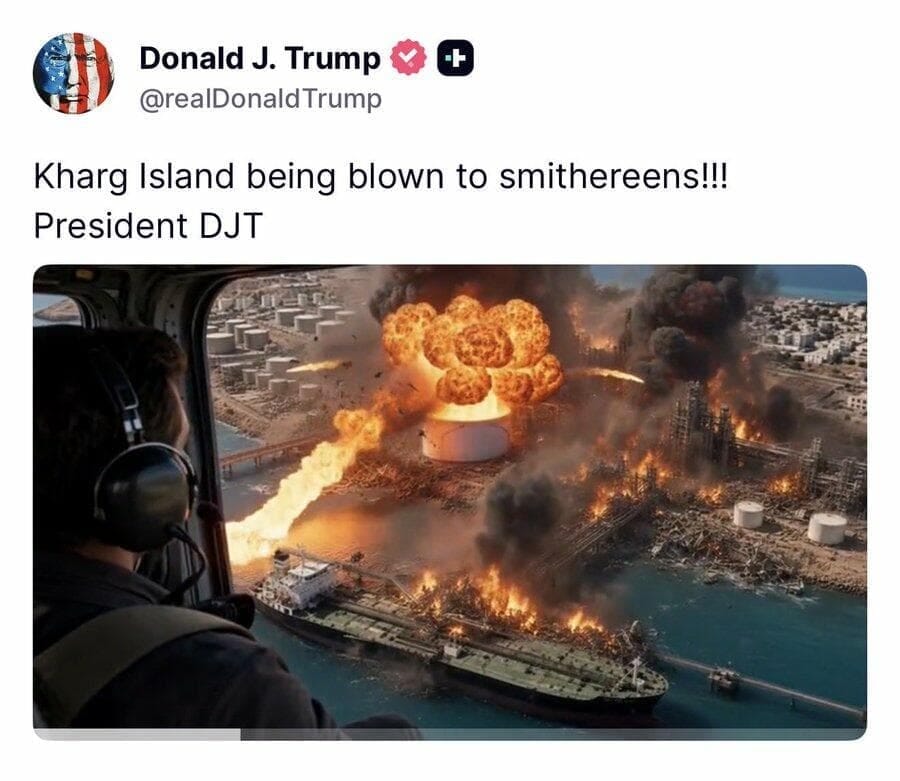
President Trump has continued teasing possible ‘retaliation’ on Kharg Island after an Iranian overnight ballistic missile attack on American bases in Jordan. Trump says the US will respond to the Iranian attacks, according to Fox. According to further context via Newsquawk:
- Note, the remarks from US President Trump were broadcast as part of a interview on Fox on “Sunday Night In America”.
- Follows the US hitting Larak Island on Sunday. In response, Iran fired on US bases within Jordan.
- Reports since indicate that Iran’s retaliation did not cause any significant damage.
- Modest upside seen in energy benchmarks and downside in the risk tone in proximity to this remark.
Iran state media is meanwhile reporting that two were killed in the CENTCOM attack on Larak Island late yesterday, which triggered this fresh round of fighting.
“During the attack on Larak Island late Sunday, two people were martyred and several others were injured. The injured in the incident are receiving medical services and their treatment is ongoing,” the official IRNA news agency said.
Also, the Iranian foreign ministry stated: “The Armed Forces of the Islamic Republic of Iran will have no hesitation in exercising their inherent right to self-defense and will respond decisively, as appropriate, to any military aggression by the enemy.”
The Jordanian government has meanwhile confirmed the Iranian ballistic missile attack:
The Jordanian Armed Forces said Sunday it intercepted eight missiles that had entered the country’s airspace, according to Jordan’s Al-Mamlaka TV broadcaster.
A spokesperson for the military said all eight missiles were destroyed before they could do any damage, according to the broadcaster.
Below is Trump teasing potential attack on Kharg Island:
Military Strike Tit-for-Tat Resumes After Weeks
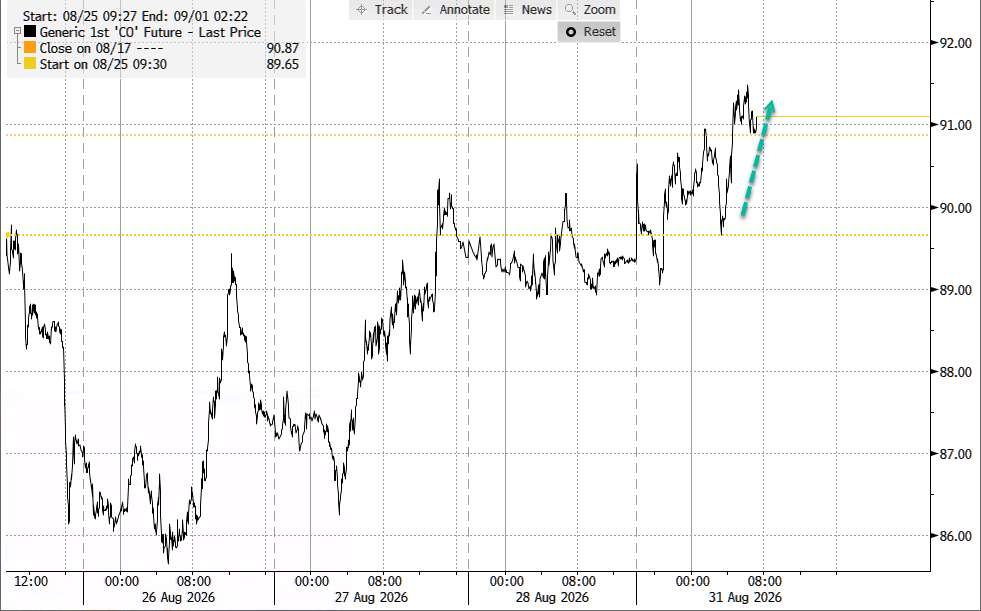
Brent crude futures climbed back above $90 a barrel, while West Texas Intermediate topped $86 after the US and Iran exchanged strikes for the first time in about a month. Tehran also claimed that an unidentified supertanker was struck by naval mines in the Strait of Hormuz.
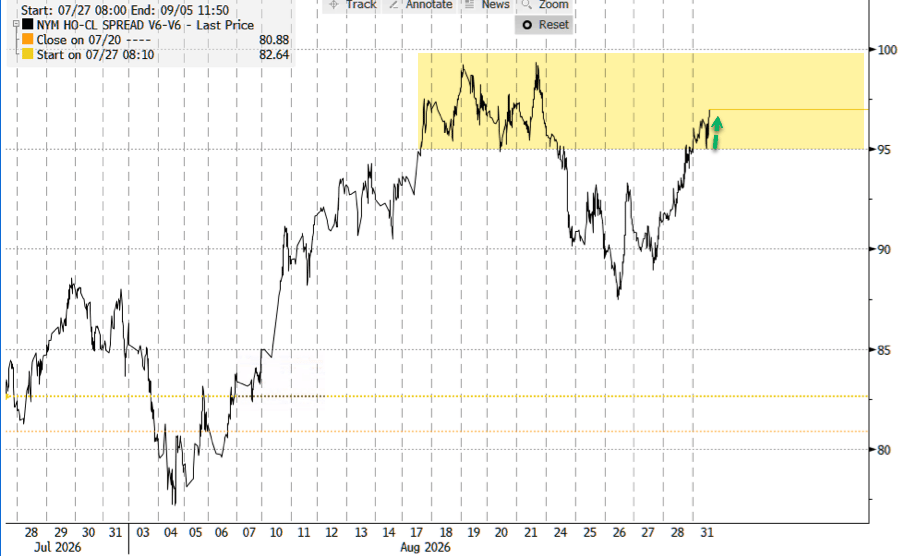
Meanwhile, diesel crack spreads are approaching $100 a barrel again, suggesting an increasingly severe shortage across refined-product markets as the summer draws to a close.
US Central Command said American forces struck Iranian rocket launchers that were preparing to deploy anti-ship mines in the critical waterway. The US has touted the Oman shipping corridor as open for business and moving crude and other energy products. Tehran’s inability to halt tankers passing through that part of the strait may suggest that its offensive capabilities have been degraded.
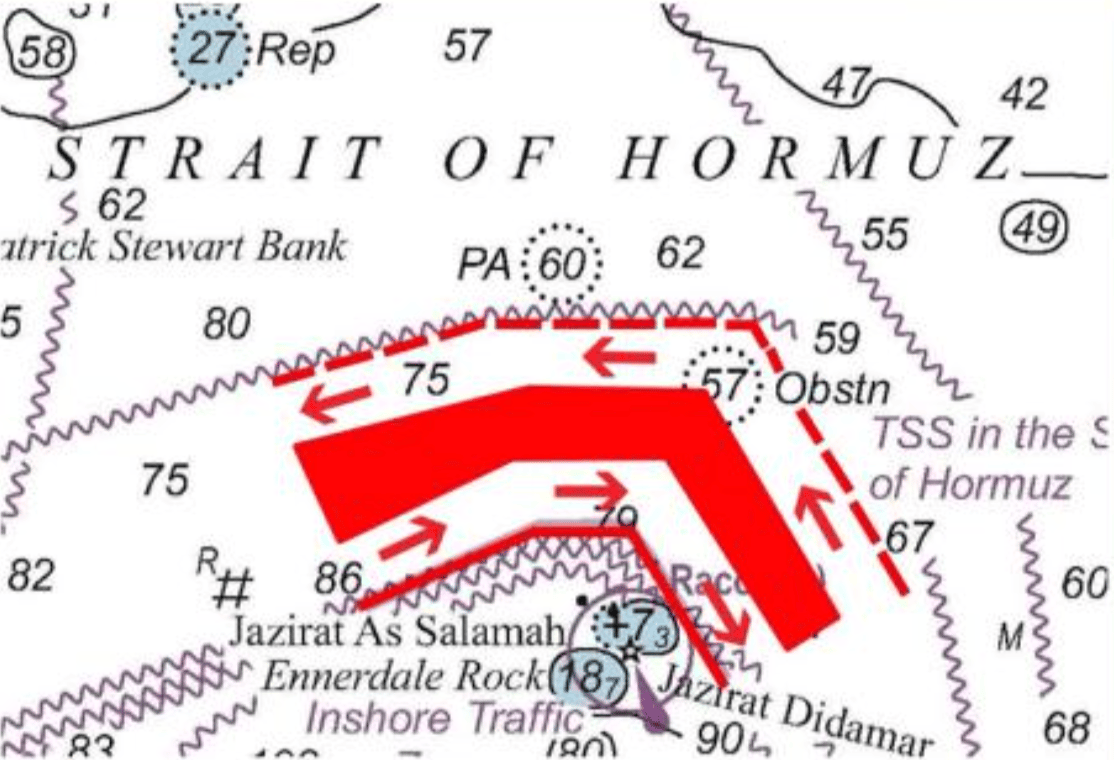
Iran’s Islamic Revolutionary Guard Corps said it retaliated by targeting US air bases in Jordan, while the United Arab Emirates intercepted an Iranian drone over its territorial waters.
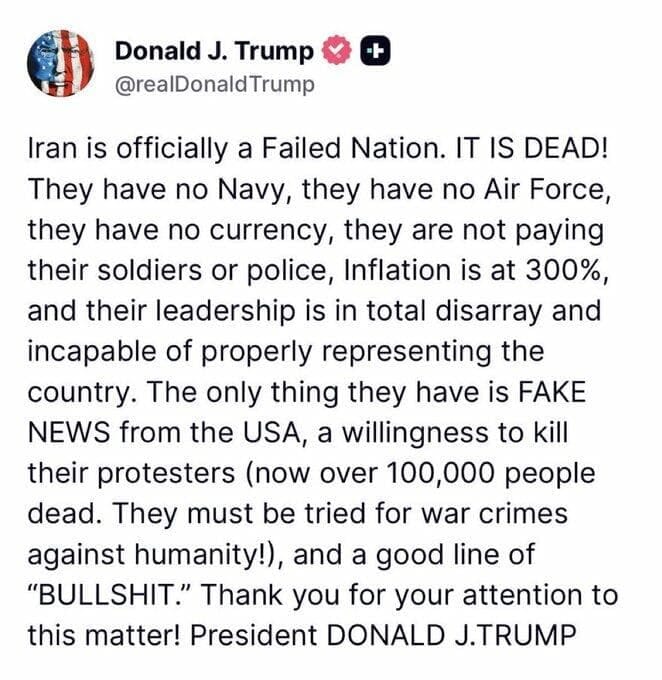
Trump: ‘Failed Nation’
Trump on Monday morning issued a Truth Social declaring Iran a “failed nation”:
The US military (CENTCOM) has said it did not target Kharg Island in the overnight strikes. According to a summation of there things stand:
The latest U.S.-Iran escalation appears increasingly centered on control of the Strait of Hormuz. Iran has been using small boats to monitor and identify commercial vessels transiting the Strait using Omani waters for an undetermined period. The boats can blend into civilian maritime traffic, making them difficult to distinguish from ordinary vessels. This comes amid sporadic Iranian attacks and attempts to restrict ships transiting Hormuz without Iranian permission.
The U.S. then struck Iranian missile launchers on Larak Island after assessing they were preparing to deploy sea mines into the Strait. Iran responded with missile attacks targeting U.S. bases in Jordan, with eight missiles reportedly intercepted. Al Udeid Air Base in Qatar was also reportedly targeted, though that remains unconfirmed.
The pattern suggests Iran is attempting to reassert control or disrupt maritime traffic through Hormuz, while the U.S. is acting to prevent Iran from closing or mining the waterway. Various reports indicate transits through the strait of Hormuz have declined. What remains to be seen is whether the strikes from both sides tonight will continue in the coming days.
Crude Transit Opening?
“Brent crude is firmer at $90.48/bbl, up 2.5%, as tensions around the Strait of Hormuz support the geopolitical risk premium,” UBS analyst Dharmesh Gangaram wrote in a note.
Gangaram continued, “Overall, the desk sees a cautious, risk-off start to the session. Geopolitical developments and lower European liquidity are likely to remain the key drivers, with particular attention on the resources complex amid broad-based weakness in precious metals.”
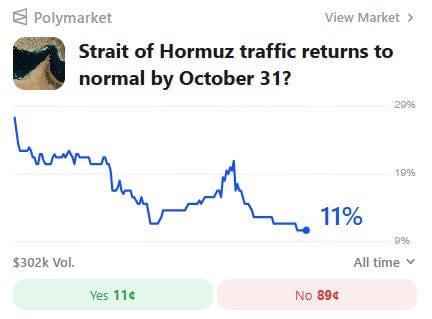
Despite the overnight tit-for-tat attacks, an estimated 6 million to 8 million barrels per day of crude, primarily from US-allied Gulf producers, continues to move through Hormuz.
We previewed this in a note last week titled:
“The key is to watch the barrels, and as long as they continue to flow through the Strait of Hormuz, the buying appetite in the market remains muted for fear of being caught out,” Ole Hansen, head of commodity strategy at Saxo Bank, wrote in a note.
Last week, the top US commander for the Middle East said American forces had cleared Iranian mines from the Hormuz waterway, declaring the shipping lanes open.
With its missile batteries, drone launchers, naval units, surveillance networks, or command infrastructure degraded, Iran appears to be shifting from conventional sea denial toward a lower-cost asymmetric strategy.


