

Full disclosure: I am an early investor in Aalo Atomics and have a direct financial interest in the company’s success. Nothing here is investment advice. Early-stage private investments are speculative, illiquid, and can go to zero. Do your own diligence.
I’ll be interviewing Aalo co-founders Matt Loszak and Yasir Arafat for ZeroHedge Debates, airing LIVE at 7pm ET on Tuesday July 7, 2026. Tune in live or watch the replay at ZeroHedge.com.
At the stroke of midnight on July 4th, 2026, the United States of America began its 250th year. Nineteen minutes later, at 12:19 a.m. Mountain Time, a small nuclear reactor sitting on a two-acre plot at the edge of the Idaho National Laboratory reached criticality — the moment a nuclear chain reaction becomes self-sustaining. Aalo Atomics had just made history.
This post explains why that was historic. But it also makes a bolder claim, so let me put it up front where you can argue with it:
The criticality demonstration that just made headlines is the least important thing Aalo will do. The event that will actually change the course of history is scheduled for the second half of 2027 — and almost nobody is paying attention to it yet.
Bottom line up front:
Four American companies brought first-of-a-kind advanced reactors to criticality in a single month — more genuine reactor firsts than the previous half-century produced. Give them all credit.
Of the four, I contend Aalo’s was the most commercially important, for two reasons almost no one is discussing: it was the only one built at scale sufficient to power a data center, and it uses the one fuel form that doesn’t depend on a non-existent supply chain. (Deployable’s Unity also uses UO2 fuel, but it’s a 1MWe microreactor targeting a completely different market).
The 2026 criticality was a physics demonstration. The 2027 demonstration — the first Aalo-X reactor actually making electricity that powers something substantial — is the starting gun for what I call the Nuclear Henry Ford Moment.
Aalo has a SAFE round closing this month and a Series C now being shopped. I expect the Series C valuation — which some will likely complain is too high — is going to look, in hindsight, like the bargain of the century. I’ll show you why using a company you’ve heard of.
Let’s get into it.
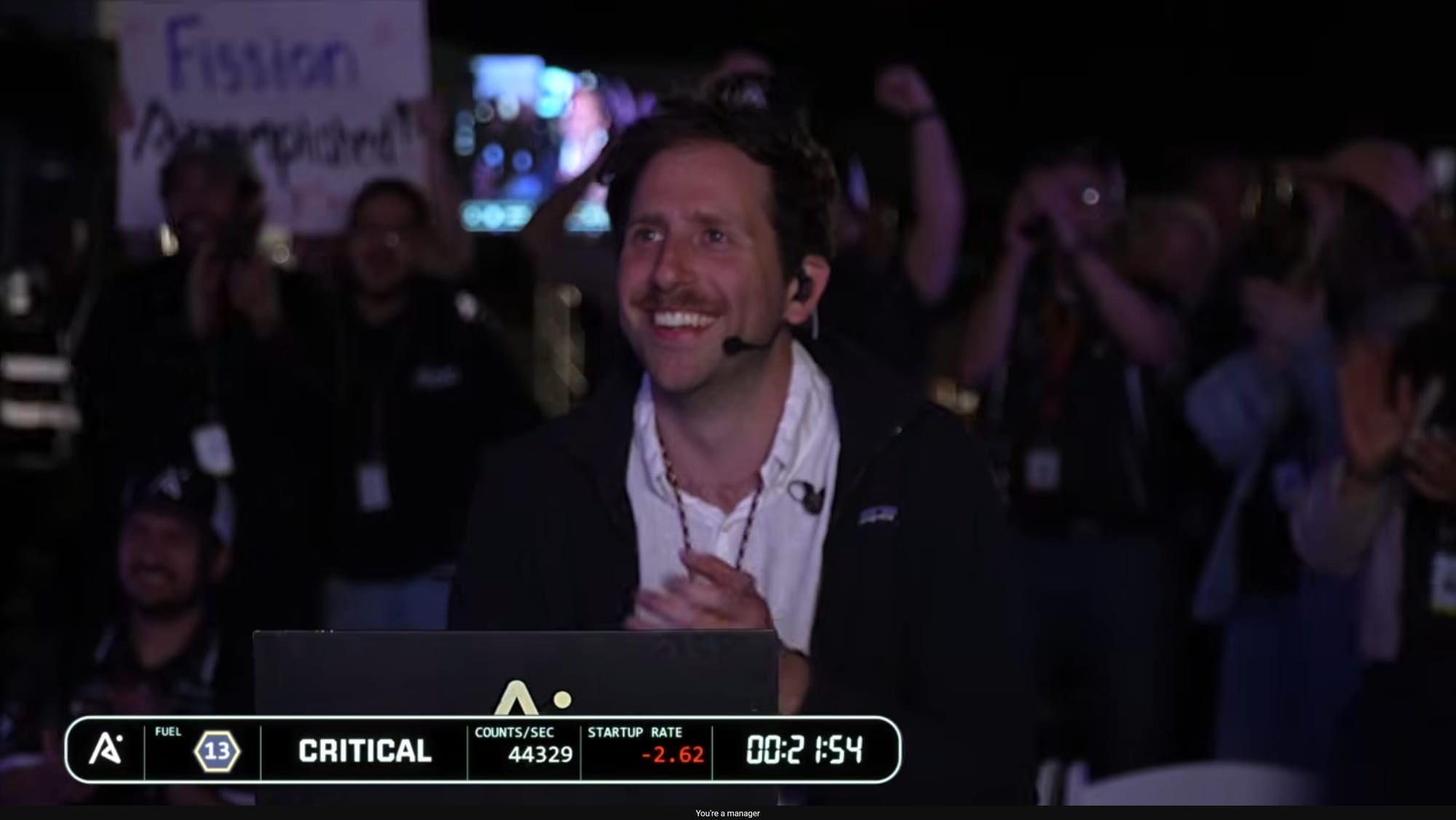
Above: “Fission Accomplished”—The crowd in Idaho Falls, ID erupts in cheers and applause as the successful criticality event is announced just after midnight on the morning of July 4th.
More nuclear history was made in one month than in the prior half-century
Here is a fact that should stop you cold. On June 4th, 2026, when Antares Nuclear’s Mark-0 reactor went critical at INL, it became — by the count of INL’s own laboratory director — the first genuinely new reactor design to reach criticality at the lab in more than half a century. It was also, per the DOE, the 53rd reactor ever built at that site since 1951.
Think about what that means. The Idaho desert is where America built the first of a kind (FOAK) reactors that created the first nuclear age — 52 of them in the 22-year period from 1951 to 1973. Then that pace of first-of-a-kind innovation effectively stopped. Not slowed. Stopped. FOAKreactor design introductions at INL went into a 53-year hiatus from 1973 to 2026. Then four new reactor designs went critical in just 31 days, culminating with Aalo’s Critical Test Reactor on the nation’s 250th birthday.
The conclusion is inescapable: The dawn of the second nuclear age is upon us.
What restarted it was a deadline. In May 2025, President Trump signed Executive Order 14301, “Reforming Nuclear Reactor Testing at the Department of Energy,” which directed the DOE to stand up a Reactor Pilot Program and get at least three new test reactors to criticality by July 4th, 2026. When that goal was announced, most of the industry called it a fantasy. The conventional wisdom is that a new reactor takes at least a decade. The order gave them roughly just twelve months.
They didn’t just hit the target. They beat it. Four companies reached criticality:
Antares Nuclear — the Mark-0, a 500-kilowatt sodium heat-pipe microreactor, critical at INL on June 4th.
Valar Atomics — the Ward 250, a 100-kilowatt helium-cooled, TRISO-fueled high-temperature gas reactor, critical in Emery County, Utah on June 18th.
Deployable Energy — the Unity Nuclear Battery, a roughly 1-megawatt shipping-container reactor whose founder famously drove the core to Idaho in the bed of a Ford F-150, critical on June 30th.
Aalo Atomics — the Critical Test Reactor went critical at INL in the wee hours of July 4th, the very deadline itself.
The DOE was entitled to its victory lap: for the first time in history, a single country brought four distinct advanced-reactor designs to criticality inside one month’s time. That’s never happened before in world history.
For over fifty years the pace of American reactor innovation was zero. Then, on a presidential dare, four companies did the impossible in four weeks. That is the real headline — and it deserves to be spread far and wide. (Reposts welcome!)
So let me be clear before I get selective: every one of these teams did something extraordinary. What follows in this post is not meant to diminish any of them. It’s to put them in commercial perspective — because “we made a reactor go critical” and “we’re about to change the economics of civilization” are very different claims, and in my humble opinion, the market is currently failing to distinguish between them.
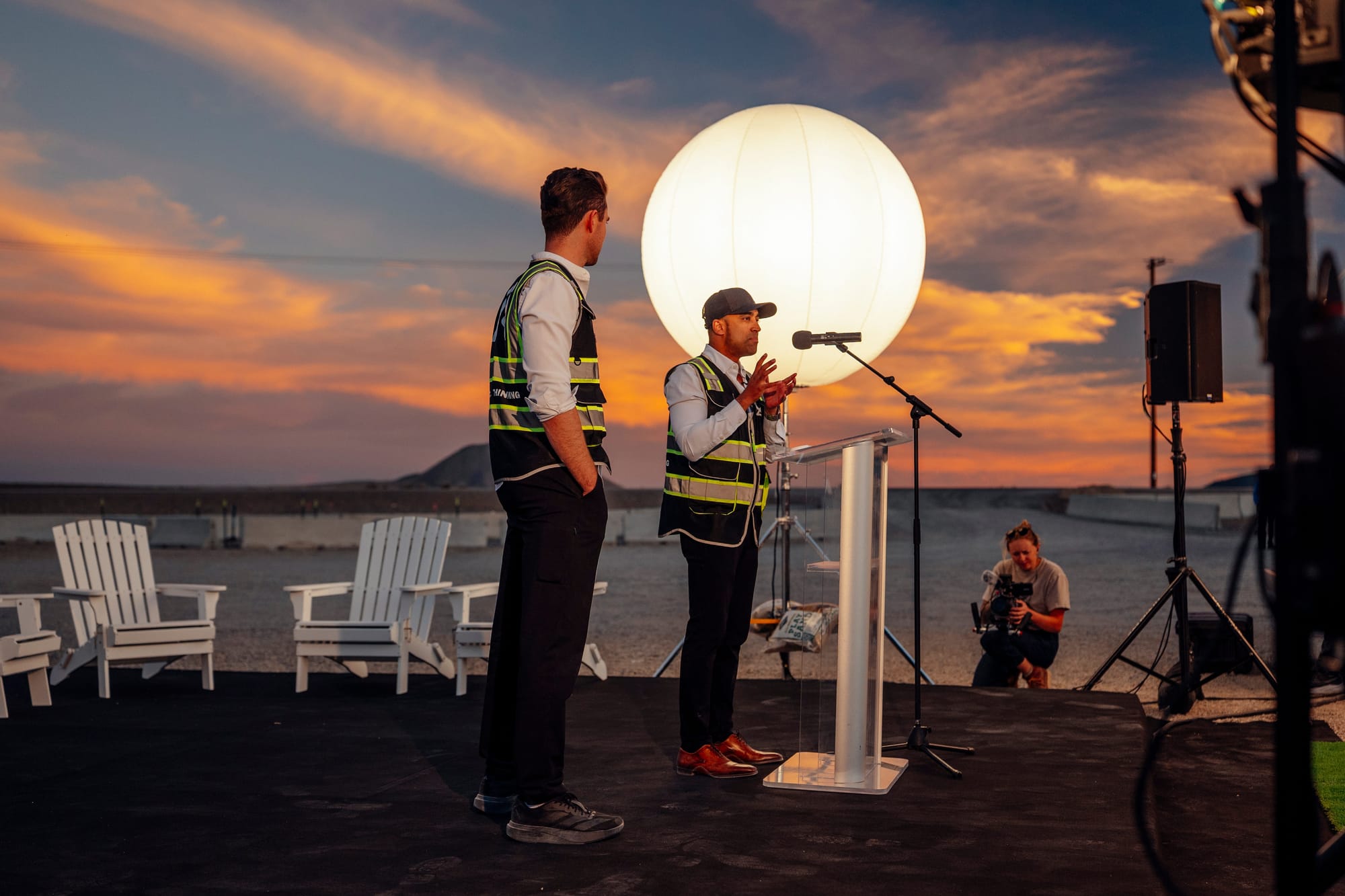
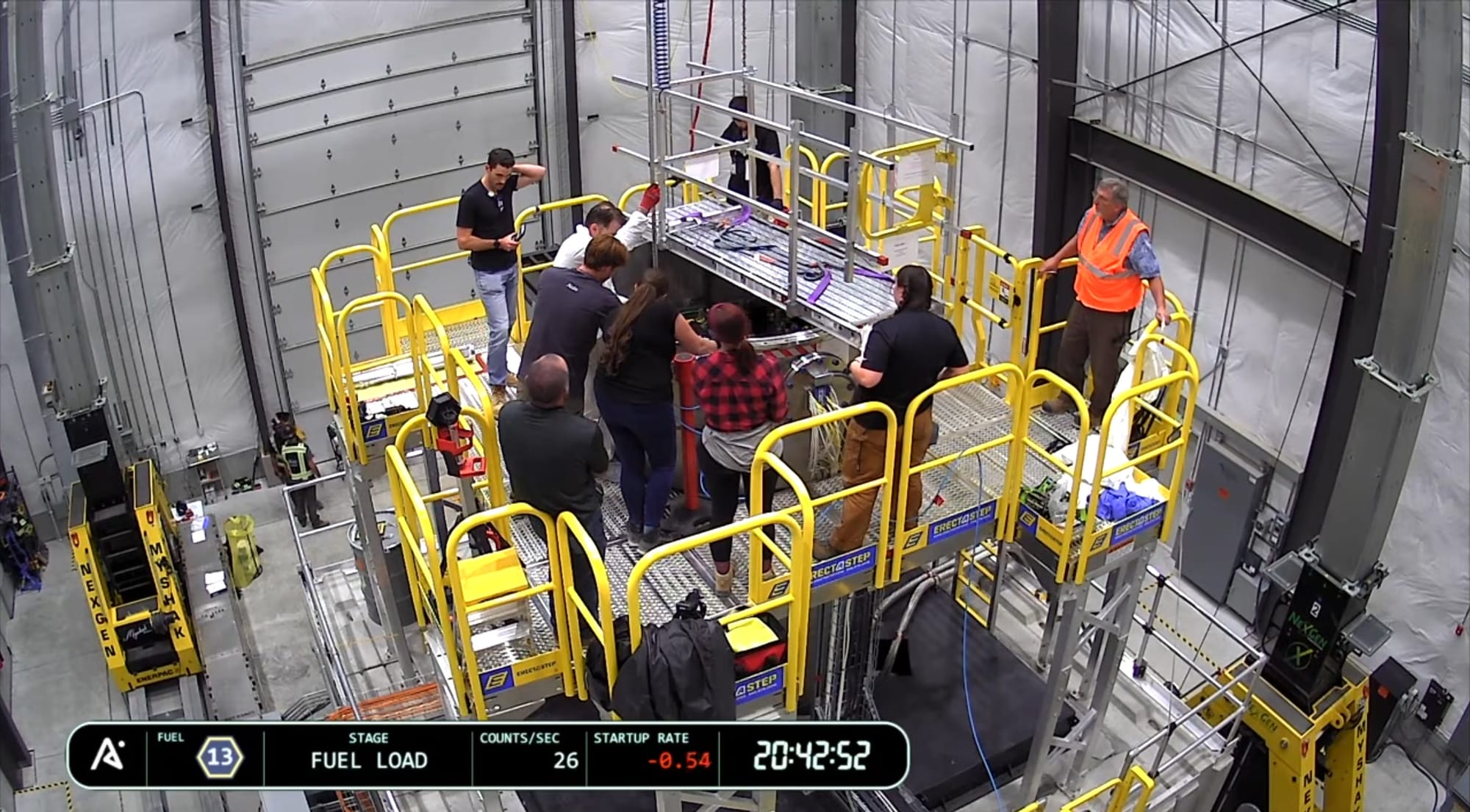
Aalo founders Matt Loszak and Yasir Arafat (above) address the crowd gathered at Aalo’s Idaho National Laboratory site, as the Aalo team was hard at work behind the scenes loading the final fuel bundles into the reactor (below).
The Roadmap:
Where advanced nuclear actually competes
To understand why Aalo’s demonstration was the most commercially significant of the four FOAK reactor criticalities, let me start by laying out how I see the market — so you can weigh the rest of the argument for yourself.
For grid-scale utility power, the industry is still effectively wed to Eisenhower-era light-water reactor technology. Over time, small modular reactors (SMRs) from the incumbents — Westinghouse, GE-Hitachi, Rolls-Royce — will supplement that fleet. They too will use the same light-water reactor technology originally developed in the early 1950s. Regulated public utilities can’t afford to pay up for the newest, most exotic technology. They optimize for the lowest allowed cost of capital, not the cutting edge.
So “advanced nuclear” — the fourth-generation stuff — has had to find markets that can pay up. Three niches have formed:
1. Microreactors versus the diesel generator. Think remote mining sites, forward operating bases, off-grid installations — places where you don’t just fly in the diesel genset, you fly in every drop of fuel needed to run it for years. In that world, nuclear electricity at fifty cents a kilowatt-hour (or more) still looks cheap. This is a real, likely profitable market. Antares and Deployable are aimed squarely at it. Great stuff!
2. Reactors for the U.S. military. The military can operate under a lighter regulatory regime than civilian nuclear power, which lets it move faster. Valar has explicitly leaned into this — its Ward 250 flew to Utah aboard a C-17 in what the Air Force literally called “Operation Windlord” — and companies like Radiant, Antares, and others are chasing defense deployments too. This is an important market. It’s also outside my personal wheelhouse, so I’ll leave the military thesis to people who know it better than I do.
3. Reactors for the data center. This is where Aalo lives — and it’s the niche the biggest names in tech are validating with real money. Oklo is the closest public comparable, and I’ll come back to it. X-energy, backed by Amazon is fresh off an April 2026 IPO that raised over a billion dollars, and is building its Xe-100 reactor to supply as much as 5 gigawatts to Amazon’s data centers. Kairos Power, backed by Google, is building molten salt-cooled reactors under a 500-megawatt agreement to feed Google’s data centers. When Amazon and Google are each underwriting a reactor company of their own, you know the market is real.
Note one thing for later, though: X-energy and Kairos both run on the HALEU-TRISO fuel path — the one I’ll argue is the sector’s biggest unpriced risk. Hyperscalers building AI data centers need enormous quantities of firm, clean, behind-the-meter power now, and — critically — they can afford to pay up to get it. That last part is the whole ballgame, and I’ll come back to it.
Now, with the high-level roadmap in hand, let’s put the June achievements in perspective.
The brilliant novelty that wasn’t the point
Valar deserves real credit for the shrewdest piece of marketing in the entire race. On July 1st, on a live stage in Utah, the company plugged an Nvidia Blackwell chip into a circuit running to its reactor, spun the reactor up to a fraction of its rated output, and used the resulting trickle of electricity to run a live website — the first nuclear startup, as founder Isaiah Taylor put it, to make electricity. And the first website ever to be powered by its own dedicated off-grid nuclear power source. They even announced an Nvidia collaboration to study a 30-megawatt water-free AI facility. While everyone else was proving criticality, Valar showed the world actual electrons lighting up a real AI chip. That was genuinely clever, and it earned every headline it got.
But here’s what got lost in the excitement. Roughly 100 kilowatts of thermal output was converted into that small trickle of power through a thermal-electric generator — a direct heat-to-current device that is neither efficient nor scalable, and which has essentially nothing to do with how Valar intends to make power commercially. A real high-temperature gas plant at scale runs a proper turbine cycle. The July 1st stage demo was a novelty act: dazzling, valuable as attention, but completely unrepresentative of the technology path actually intended. Valar saw an opening to show electricity before the deadline while competitors could only show criticality, and they took it. Brilliant marketing. Just don’t confuse the magic trick with the machine.
Showing a trickle of electricity from a thermoelectric strip is a great magic trick. It is not a power plant. The market is mistaking the applause for the achievement.
Only one reactor was built at full-scale
Here is the contrast that matters, and the reason I keep coming back to Aalo.
The other three demonstrations were, by design, small. Antares’ Mark-0 is a 500-kilowatt-thermal microreactor. Valar’s Ward 250 is 100 kilowatts thermal. These are, in the most literal sense, either science experiments — proofs that a novel core can sustain a chain reaction. Deployable’s Unity is 1MW electric. That’s “full scale” for the market they target, but nowhere close to enough to power a data center.
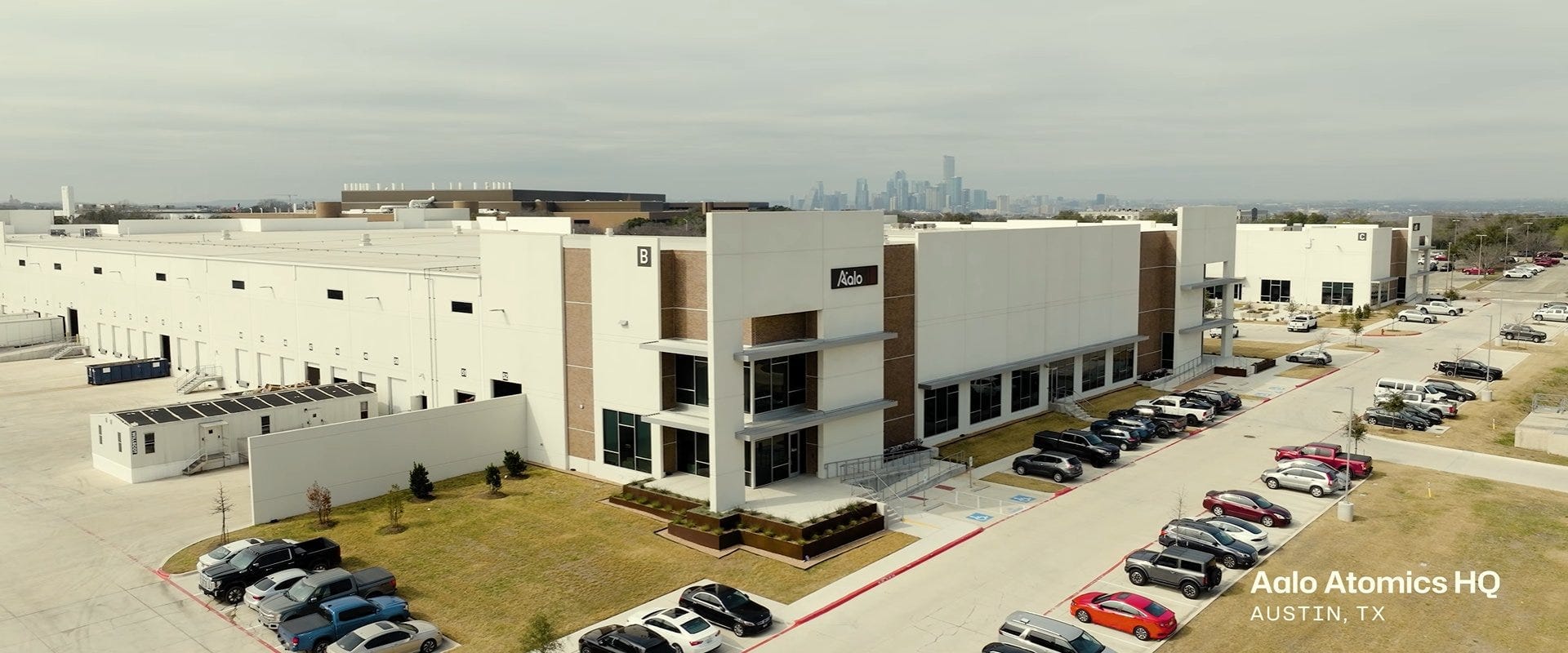
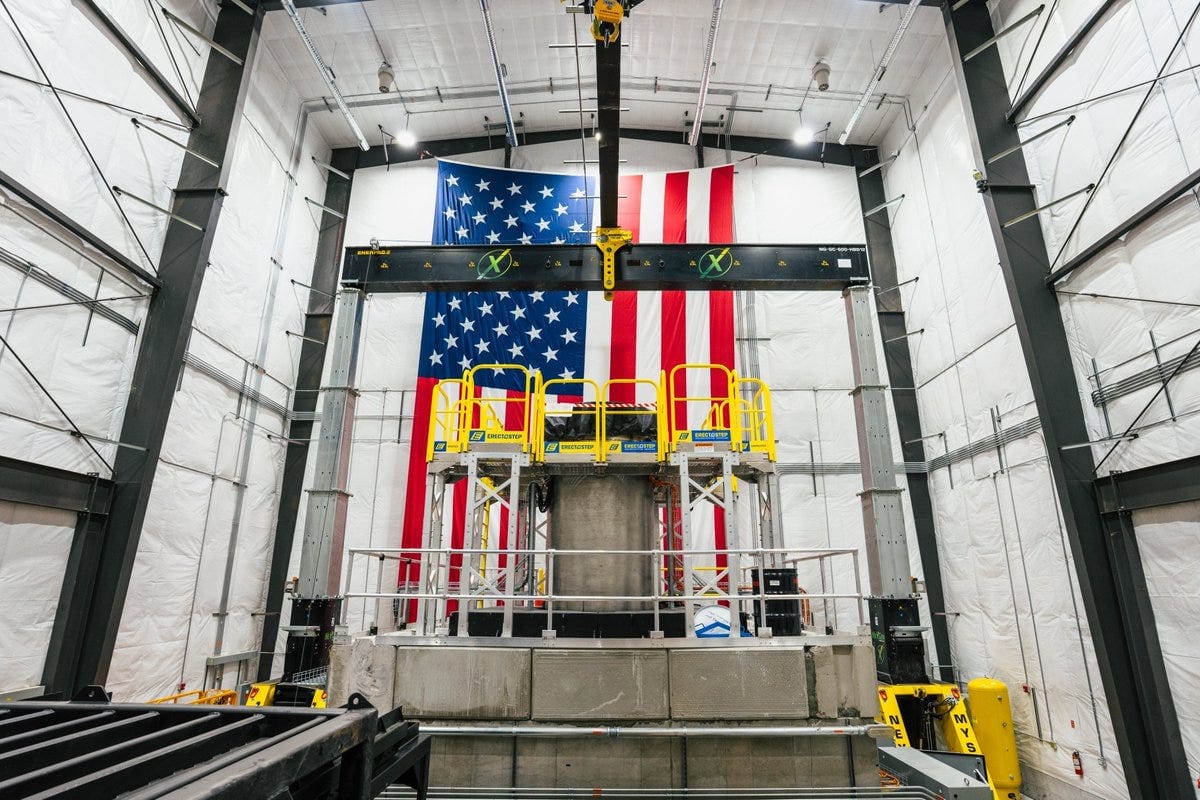
Aalo did something quite different. Its reactor — the Critical Test Reactor, or CTR — was built to the geometry of the real commercial product. On his June 24th site tour, CEO Matt Loszak described a machine that reproduces the full-scale geometry, the complete fuel loading, the graphite inventory, and the control-rod mechanisms of the commercial core, deliberately run “dry” (without sodium coolant) for the initial zero-power criticality campaign so the team could validate the nuclear core and control systems in isolation. Its fuel load is sized for a full 10 megawatts of electrical output — the same core that will drive the commercial machine.
Stop and let the scale sink in. The CTR’s core is in the neighborhood of 30 megawatts thermal. That’s 60 times bigger than Antares’ half a megawatt, and 300 times bigger than Valar’s tenth of a megawatt. Aalo didn’t just build a science experiment that gestures at a future product. It built the product’s actual core and made that go critical. Deployable demonstrated at full design scale for the market they target, which is still a very small percentage of what Aalo just built. The other companies still have to bridge the enormous gap between “our small test article works” and “our full-scale commercial core works.” Aalo just deleted that gap.
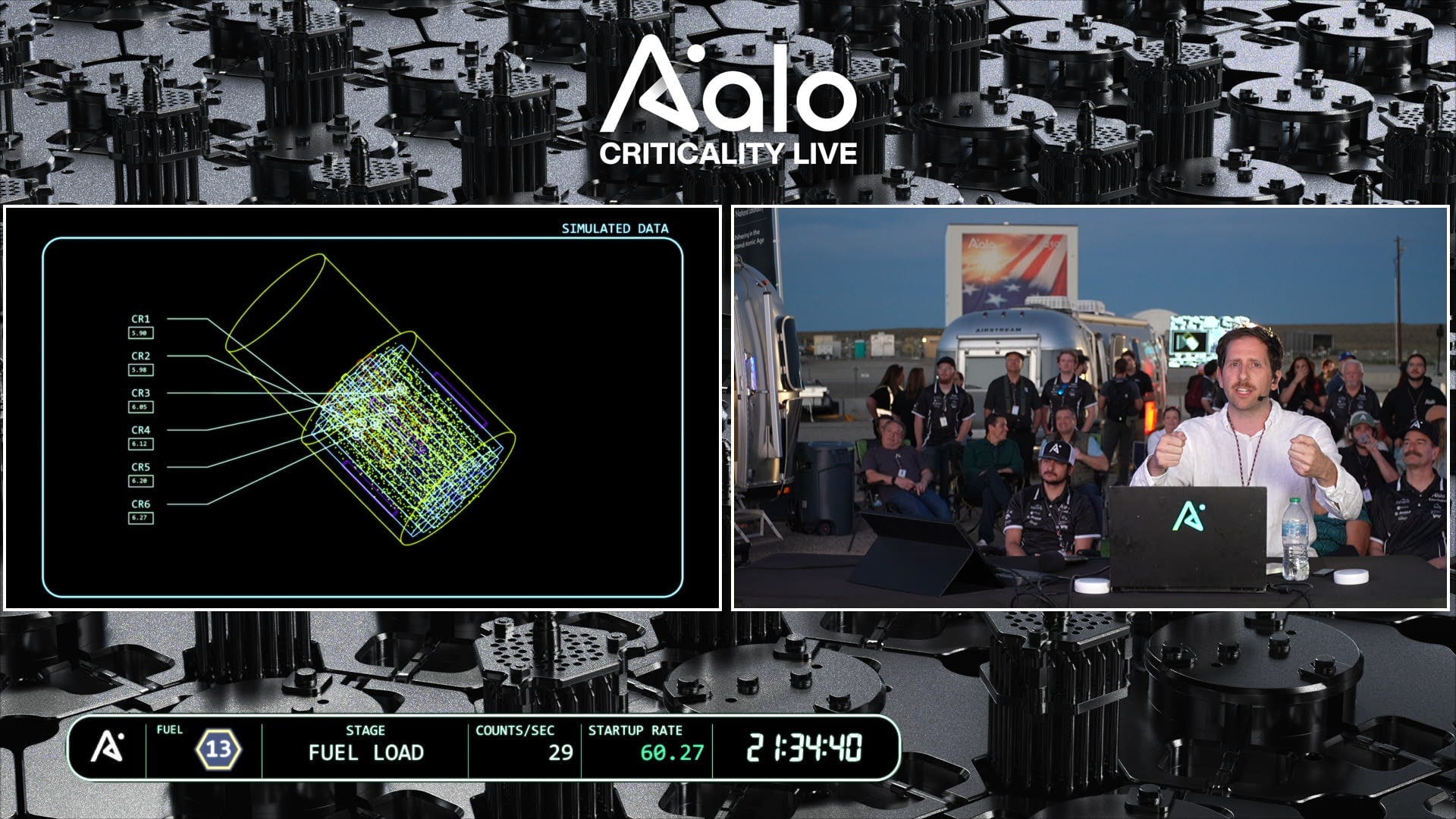
The livestream Aalo produced connected investors from around the globe. Aalo marketer Jared Hoffman provided blow-by-blow narration of what was happening and why it mattered. The full livestream replay has now been released any anyone can watch it on YouTube.
The other thing Aalo didn’t borrow
There’s a second distinction the coverage missed almost entirely, and it cuts to what “first-of-a-kind” is supposed to mean.
The other three reached criticality by plugging into infrastructure that already existed. Antares ran its Mark-0 inside INL’s Materials and Fuels Complex, in a criticality-experiment facility the lab already operated. Deployable’s Unity went critical in a facility run by INL’s National Reactor Innovation Center. Valar used a state energy lab in Utah. Each is a real accomplishment — but not one of those companies built the building its reactor sat in. Aalo did: on a two-acre parcel at the edge of INL, it poured the pad and stood up its own reactor facility from bare ground in 36 days. Then the built the reactor itself in just 40 more days.
And the difference ran deeper than the real estate — this part I learned from people inside Aalo the night it happened. On the government-sited demonstrations, the developers leaned on the government’s playbook: DOE and INL procedures, and DOE and INL personnel, in some cases right down to the hands that loaded the fuel. Aalo wrote its own operating procedures, and Aalo’s own employees loaded Aalo’s own fuel. When the DOE ran its final Operational Readiness Review before startup, what it signed off on were Aalo’s people, Aalo’s facility, and Aalo’s procedures.
The others borrowed the facility, the procedures, and in some cases the very hands that loaded the fuel. Aalo brought its own — its own building, its own procedures, its own people, its own fuel load. That is the difference between passing a test and proving you can do this yourself, again and again.
Why should that matter to an investor rather than an engineer? Because Aalo isn’t trying to run one experiment on a national lab’s dime — it’s trying to manufacture and operate these reactors by the hundreds initially and eventually by the thousands, on its own premesis, with its own crews. The criticality campaign wasn’t just a physics demo; it was a dress rehearsal for the actual business. The other three proved a core can go critical. Aalo proved that Aalo can take a reactor from bare dirt to criticality on its own, without borrowing someone else’s building and staff to run it in. Those are very different things to underwrite.
The fuel-chain advantage nobody is pricing
Now the part that is genuinely under-analyzed, and the lens I apply to every advanced-nuclear company: the reactor design is the part everyone obsesses over, but the fuel supply chain is the part that actually determines whether you can scale.
Most of the advanced-nuclear field — including Antares and Valar — runs on HALEU: high-assay low-enriched uranium, typically enriched between 5% and 20%, packed into TRISO fuel particles. HALEU is a wonderful fuel. It is also, at commercial volume, a bottleneck. Western HALEU enrichment capacity barely exists yet; the supply chain has historically leaned on Russia; and “we’ll have all the HALEU we need” is a promise the entire sector is making and none can yet keep at scale.
Aalo and Deployable made a different bet. Their reactors runs a thermal neutron spectrum on plain uranium-dioxide fuel enriched to roughly 5% — the same commercial-grade fuel form that powers today’s operating light-water fleet. Urenco enriched it; GE Vernova’s Global Nuclear Fuel fabricated the rods. That is not an exotic, supply-constrained fuel. That is the most boring, most available, most bankable fuel in the industry. Aalo will likely embrace HALEU too, eventually, but not until the supply chain is ready to deliver it at scale. Until then, Aalo’s first commercial reactors will use the fuel that can actually be sourced today without difficulty.
Everyone is arguing about whose reactor is cleverer. The right question is whose reactor you can actually fuel a thousand times over. On that question, “boring 5% UO₂” beats “scarce HALEU” every single time.
Put the two points together — full commercial scale, plus a fuel form that doesn’t depend on a supply chain that doesn’t exist yet — and you understand why I think Aalo’s criticality, despite crossing the line last and on deadline, was the most commercially meaningful of the four.
Data centers are the on-ramp, not the destination
My personal passion — the thing I care most about — is changing the course of human history by making nuclear energy cost less than fossil fuels. By that yardstick:
Microreactors for the diesel market are useful and probably profitable. But they will not change the course of history.
Military reactors may be enormously valuable. To the military. Not my area, and not a civilization-scale economic story.
Data centers are a great market for advanced nuclear. But powering AI data centers — at prices above what fossil fuels cost — will not, by itself, change history either.
So why am I so bullish on a data-center reactor company?
Because the data center is not the destination. It’s the on-ramp. And to explain why that on-ramp is the most important thing happening in energy, I need to tell you about Henry Ford.
The Nuclear Henry Ford Moment
I’ve written at length elsewhere about what I call the Nuclear Henry Ford Moment, so I’ll compress it here.
The Nuclear Henry Ford Moment is the thesis that mass production of nuclear reactors — eventually, on automotive-style, fully robotic assembly and test lines — will bring the cost of nuclear energy down below the cost of coal- and gas-fired electricity. The way Ford built cars and McDonald’s builds restaurants, the reactor stops being a decade-long bespoke megaproject and becomes a manufactured standard product whose cost falls with every unit — the opposite of the cost curve nuclear has followed for fifty years. What the market needs (and what Aalo has begun to build) is the “small block Chevy of Nuclear Reactors” - the mass-produced modular reactor that can be used for hundreds of different applications across scores of industries.
But here’s the part of the Ford story everyone forgets, and it’s the part that makes Aalo’s data-center focus so important.
Henry Ford did not start with the Model T. He started by building expensive custom automobiles for the wealthy — the only customers who could afford a car at all in those early years. That business generated the revenue and the confidence that let Ford conceive the assembly line. Without the rich early buyers, there is no Model T. There is no mass market. There is no automobile century.
Ford couldn’t have mass-produced the Model T without first selling expensive cars to the wealthy. The assembly line was funded by the customers who didn’t need it to be cheap. Advanced nuclear works exactly the same way — and the wealthy early buyers are the hyperscalers.
The hyperscalers building AI data centers are the rich buyers in this analogy. They need power so badly, and firm clean power is so scarce, that they will happily pay a premium for it today. That premium is what funds the factory. The data-center market Aalo is chasing now is its bespoke-automobile business — profitable, real, and, most importantly, the thing that pays for what comes next.
And what comes next is the whole ballgame:
Once the factory exists and the process is proven, Aalo takes it to scale — mass-produced reactors installable in under a year, at a target cost of under three cents per kilowatt-hour, below what new coal or gas plants deliver.
That is the moment the cost curve inverts. Nuclear starts cheaper than fossil fuels and, unlike fossil fuels, keeps getting cheaper as the technology matures and volume compounds.
The economic consequences of energy that is simultaneously clean, abundant, safe, and falling in price are, in my honest estimation, larger than the Industrial Revolution. I really mean that—it’s that big.
That transformation is still quite a few years out. I’m not going to pretend otherwise. But here is the near-term catalyst that flips the switch:
In the second half of 2027, Aalo-X will not just go critical. It will make electricity — not novelty electricity, but full-power electricity, and enough of it to run a data center. Not a mock-up of a data center, but a real data center.
Aalo-X is the full-scale demonstration plant — a 30-megawatt-thermal, 10-megawatt-electric reactor with a real sodium-to-steam heat exchanger, a Baker Hughes turbine-generator, and air-cooled condensers so it needs no external water. It is targeted for completion by the end of 2026 and full-power operation, alongside a co-located experimental data center, in the back half of 2027. When it runs, it becomes the first new sodium-cooled reactor to operate in the United States in over four decades.
And when the hyperscalers watch a factory-built Aalo plant reliably turn uranium into grid-competitive, water-free, behind-the-meter electricity, the demonstration becomes a green light. It is the signal to order Aalo Pods — the 50-megawatt commercial product, five reactors sharing a turbine, sized to a few tennis courts — as fast as Aalo can build them.
The 2026 criticality proved the physics. The 2027 demonstration proves the product. The first is a milestone. The second is a purchase order — and eventually, an economic era.
That is why I say the CTR made history, but Aalo-X will change its course.
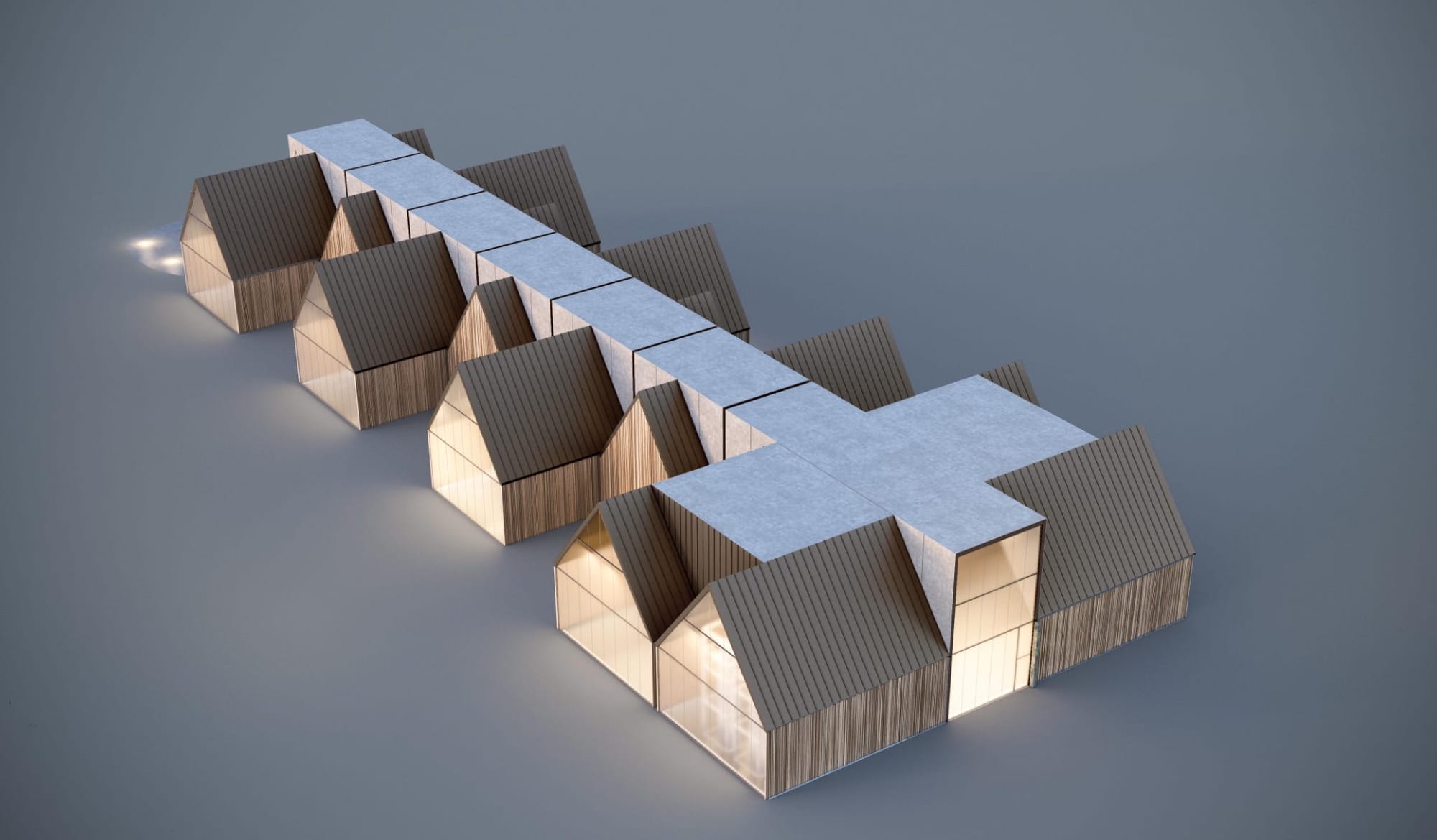
Above: The “Aalo Pod”, Aalo’s data center product, is a 50MW(e) modular nuclear powerplant, that is entirely factory-built. It’s designed to be rapidly deployed in groups, e.g. a 300MW(e) data center would require 6 Aalo pods as a primary electric source.
My “Light-Water Leapfrog” Prediction
There’s one more piece of conventional wisdom I have to dismantle, because it’s the single biggest reason this whole advanced nuclear category — Aalo included — is mispriced.
Ask a generalist investor how the nuclear landscape is laid out and you’ll get some version of this: light-water reactors are the available-now, grid-scale technology, and advanced nuclear is the exciting thing that comes next— at least a full decade or more before it starts hitting the tape. Everyone has heard of advanced nuclear. And almost everyone files it under “someday.”
Here’s the fallacy hiding inside that tidy picture.
Permitting, financing, and actually building a conventional gigawatt-scale plant — an AP1000 project on the scale of Vogtle — takes on the order of fifteen years. If the current regulatory renaissance keeps slashing the government red tape that makes it take so long, maybe you get that down to just ten. But a decade is the floor, not the ceiling, and everyone in the industry knows it.
Now set that beside a second number: Aalo is roughly three years from volume mass production of Aalo Pods.
Sit with the arithmetic, because it inverts the entire mental model. Right now, in 2026, if you’re a utility or a large power buyer who wants grid-connected nuclear, the assumption baked into every boardroom decision is that new nuclear physically cannot come online for at least a full decade. That assumption is wrong. The real horizon is far shorter. You could plan to be among the first to order hundreds of Aalo Pods in 2028, for delivery by 2031 — and go live five years sooner than a Vogtle-class AP1000 project that broke ground last month. Which, incidentally, nobody has done, despite a wave of federal grants explicitly designed to make it happen.
Ask what the fastest route to grid-scale nuclear actually is in 2026, and the honest answer isn’t “start building another AP1000.” It’s “get in line to buy a fleet of Aalo Pods, because they’ll be real before a new AP1000 project could realistically be completed.” The market has the timeline exactly backwards.
I’m not claiming utilities will rush to do that tomorrow. For rate-regulated utility power, the cost still has to come down first — and today it hasn’t. Not yet. But that’s a question of when, not whether, and it exposes the second half of the mispricing. Mass production doesn’t just make Aalo Pods available sooner; it makes them cheaper every year. By the mid-2030s — right about when an AP1000 project started today would finally be delivering its first power — the Aalo Pods rolling off the line that same year are very likely to be cheaper per kilowatt than that AP1000, on top of arriving years earlier. And a few years after that, Aalo Pods will be cheaper than coal or gas. Think about the market consequences of rapidly deployable advanced nuclear breaking the coal & gas cost barrier - the result will be explosive, almost unlimited demand growth.
So here’s the question investors should be asking: If your goal is to expand grid-scale nuclear in America — sooner and, before long, cheaper — which company is holding the winning hand: Westinghouse, or Aalo? Sure, Aalo is just focused on the data center market right now. But ask yourself, Where is this headed, and who wins in the end? IBM (Westinghouse) or Microsoft and Intel (Aalo)?
I think that’s checkmate. And the market has yet to even notice this game of chess is being played around the future deployment strategy for nuclear energy. We’re still in the earliest days of the 2nd nuclear age, and the opportunities aren’t yet clear to most market participants.
The investment opportunity, and the valuation everyone will get wrong
Now comes the part where you can accuse me of talking my book, because I am. Here is the opportunity landscape for investors, as I understand it:
Aalo has a SAFE round still open, with a $3 billion cap converting into their forthcoming Series C. That SAFE is expected to close before the end of this month (July, 2026) and is unlikely to be extended given the Series C is imminent. (The investor-relations contact is Hill Garbo, hill@aalo.com.) The company is separately shopping a roughly $500 million Series C terms sheet, the proceeds of which are earmarked for the mass-production factory — a million-square-foot “GigaWatt Factory” targeted for 2028 completion that Aalo intends to run at a hundred reactors a year. An IPO is plausible around 2028.
The Series C will very likely price at a large multiple to the last round. And when it does, a chorus of people will say the valuation is crazy. I want to arm you against that chorus, because I’ve heard this exact song before — and so have you.
Another little start-up company you may have heard of…
Let me tell you about a two-year-old company that had never earned a profit, was losing money in a brand-new market, and went public at a valuation that sober people called absurd.
In 1995, when Amazon was barely more than an idea, Jeff Bezos raised his first outside money — about $1.1 million from roughly twenty angel investors. One of them, a Seattle stockbroker, thought Bezos’s proposed valuation had been conjured out of thin air, and negotiated him down to a $5 million valuation. A year later, in mid-1996, Kleiner Perkins led the next round: $8 million for about 13% of the company, a $60 million valuation.
Read that again. In roughly twelve months, Amazon’s valuation went from $5 million to $60 million — a 12x step-up — for a company still losing money and shipping books out of a warehouse. Plenty of smart people thought that was insane.
Then came the IPO in May 1997. Bezos actually pushed his bankers to raise the offering price during the roadshow. His lead venture backer, John Doerr, later recalled the pricing call, when even $16 a share implied a $382 million valuation on a company with under $16 million of annual revenue and mounting losses. Bezos wanted more. He reportedly turned to his underwriter and asked, “Can you guarantee for me that it will fail at $17?” The stock priced at $18. The company was worth about $438 million — for a money-losing online bookstore.
Two years later, Barron’s ran a now-legendary cover story arguing the whole thing was a bubble about to burst. The skeptics were loud, credentialed, and — as it turned out — catastrophically wrong.
Here is what “catastrophically wrong” cost them. Amazon closed at $242.67 on July 2nd, 2026 — the last trading session before the Independence Day weekend, with markets closed on Friday. Adjusting for the four stock splits since the IPO, $1,000 invested at that “obviously overvalued” 1997 offering would be worth about $3.24 million today — a return of roughly 324,000%, or about 32% compounded annually for nearly three decades. The people who balked at the “expensive” valuation didn’t avoid a mistake. They made one.
Every skeptic who called Amazon’s valuation crazy in 1997 was technically correct about the multiple — and made the worst call of their investing lives. The lesson isn’t “valuation doesn’t matter.” It’s that for a company remaking an industry, the wrong question is what’s the multiple. The right question is what does this become in 25 years.
Now apply that lens to Aalo
Here are the numbers as I understand them. Aalo’s Series B closed in August 2025 at roughly a $360 million pre-money valuation. The SAFE now converting into the Series C carries a $3 billion cap — and here’s the part people miss: that cap exists to give the earlier SAFE investors a likely discount to the Series C price, which means the Series C round itself is expected to price above $3 billion. Assume even a modest premium — say $3.6 billion — and you’re looking at roughly a ten-fold step-up from the last round in about a year. Some will call that expensive. Notice, first, that it’s actually a hair more conservative than Amazon’s 12x from its angel round to Kleiner Perkins. Then frame it the way the Amazon skeptics should have: not “that’s a big jump from last year,” but “imagine what this is worth in 2050 if the company is right about mass-produced nuclear.”
And unlike Amazon in 1997, we have a live public-market comp sitting right next door. Oklo — Aalo’s closest competitor, a company founded roughly a decade earlier, with far more time to refine its strategy — trades publicly at a market capitalization that has run into the multiple billions of dollars (in the neighborhood of $6–7 billion in early 2026), all while remaining pre-revenue and, notably, not yet having taken its Aurora reactor to criticality. Oklo has been at this long enough that the NRC actually rejected its first Aurora license application back in 2022; it’s now pursuing the DOE pathway with first operations targeted for late 2027 at the earliest.
I’ll say plainly what I believe: the older, more established competitor is, in my estimation, far behind Aalo on actual progress toward the vision.
Aalo went from founding to fission in under three years — and built to full commercial scale. The older, better-funded competitor has done neither.
If the market is willing to pay several billion dollars for the competitor that hasn’t reached criticality, then a Series C valuing Aalo — which has, at full scale, with the bankable fuel — at some fraction of that figure isn’t expensive. It’s dislocated to the downside.
There’s one more piece of asymmetric upside worth naming. Aalo has not yet been “discovered” by a hyperscaler. Look at the pattern: Amazon underwrote X-energy, Google underwrote Kairos, and Nvidia’s chip starred in Valar’s stage demo. When a marquee tech name attaches itself to a nuclear developer, the story — and the valuation — re-rate overnight. Aalo is the conspicuous exception, with no anchor hyperscaler yet. If Anthropic or another hyperscaler were to recognize what Aalo has built and form a genuine strategic partnership, I’d expect a step-change in valuation — potentially a multiple of the current mark, on the announcement alone.
So with the long-term picture in view, I think Aalo’s Series C would be remembered as having been dirt cheap at a $10 billion valuation, and it is almost certain to come in much lower than that. Just as with Amazon in 1997, the prudent frame is not “that’s expensive compared to a year ago.” It’s “look at what this company is doing to more established competition, and imagine that compounding for twenty-five years.”
The real moat: Aalo’s “make it happen and get it done” culture
I’ve spent forty years around technology companies, and if you make me name the single factor that most reliably separates the winners from the roadkill, it isn’t the technology. It’s the culture — the organizational willpower to get things done at a pace competitors think is impossible.
Aalo has it in a way I’ve rarely seen. A few data points:
The company was founded in 2023. It reached criticality in mid-2026 — “founding to fission,” in Loszak’s phrase, in under three years, in an industry where five-to-ten-year criticality timelines are considered aggressive.
The building housing the CTR was constructed in 36 days, and the reactor itself assembled in roughly 40, from modules built at the Austin factory and trucked to Idaho on ordinary highways.
Rather than blasting the rock at the INL site, Aalo used a controlled vertical-drilling technique that’s about 50% faster and quiet enough to work at the edge of a national lab. When the constraint was excavation, they re-engineered excavation.
The employees are complaining…
But the story that tells you everything came to me from inside the company, and I love it too much not to share it.
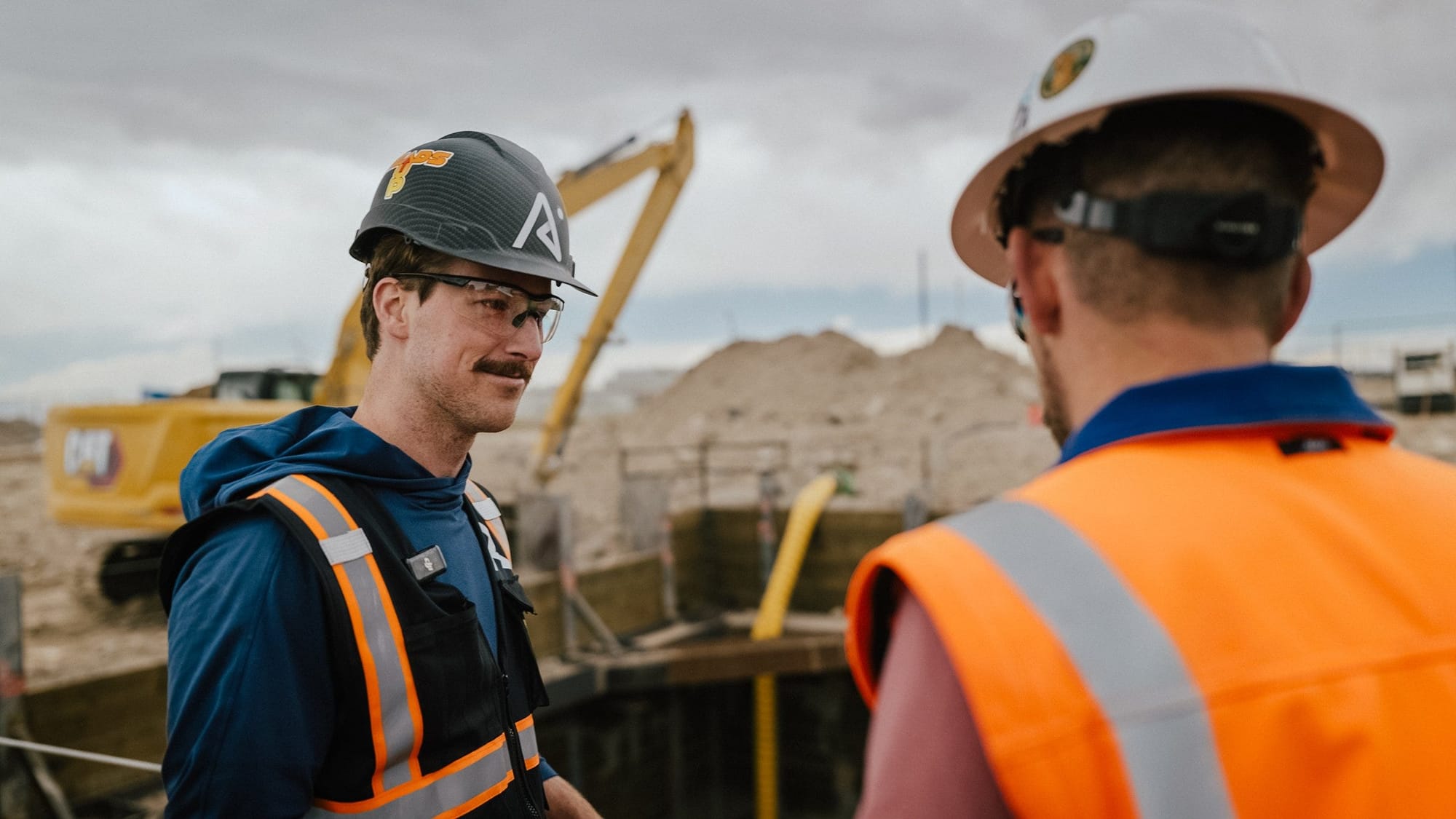
Matt Loszak is, by all accounts, deeply respected by his team — right up until the moment he tried to reward them. To celebrate the July 4th criticality, Loszak announced that the entire company would take a fully paid week off, effective immediately after the milestone. A free week of holiday leave nobody’s employment contract entitled them to.
Several employees objected. Yes, objected. They pushed back and asked, in effect, “Do I have to take the week off? Because I don’t want to!” The team is so passionate about getting to Aalo-X that being told to stop and rest felt like being told to abandon the mission. The decision was only welcomed after management clarified that everyone would receive an additional 40 hours of paid leave — but wouldn’t be forced to burn it right away if they’d rather stay focused on Aalo-X.
When your people take offense at a free week of paid vacation because they’re too passionate about changing the future of energy to stop for a break — that’s not a perk problem. That’s a moat.
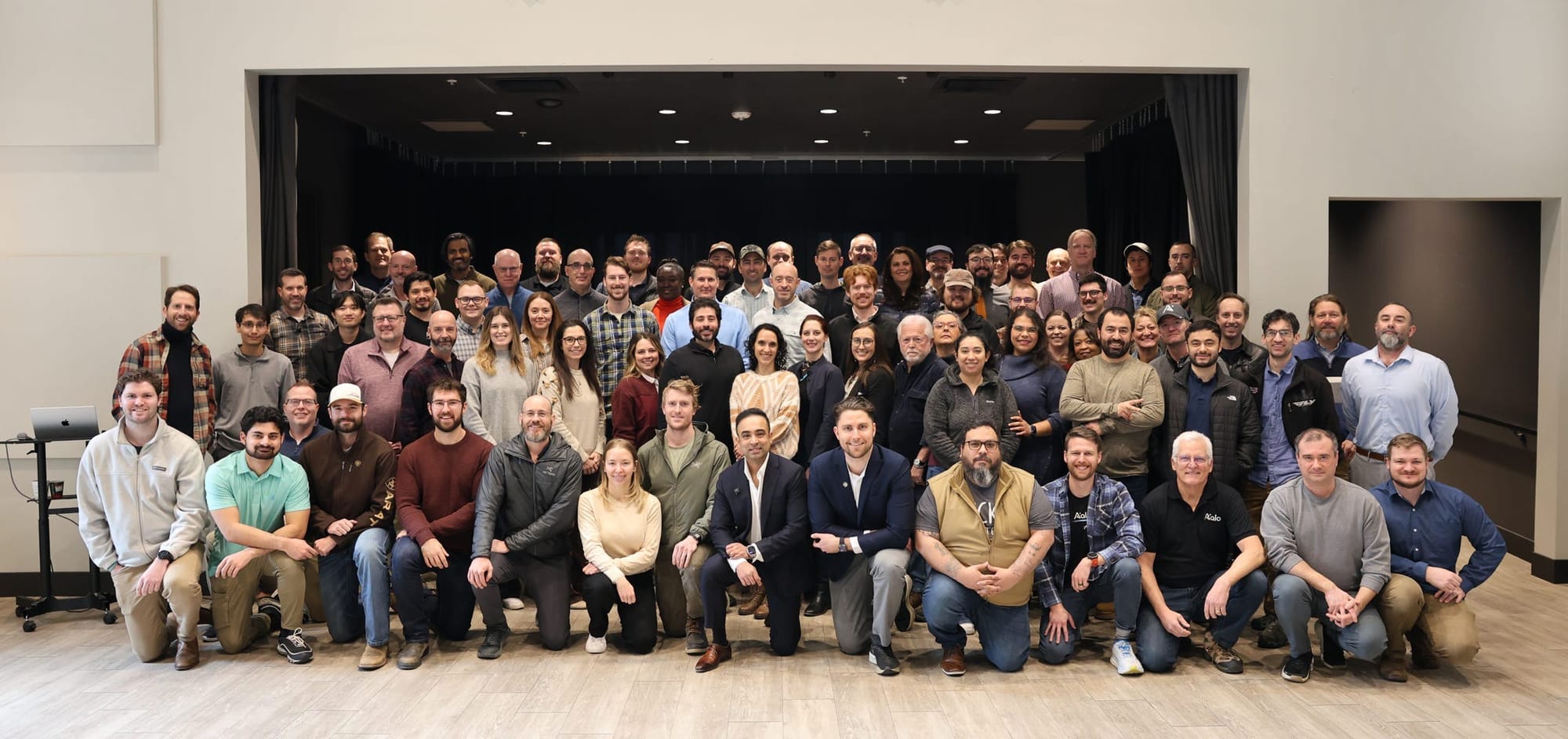
You cannot buy that culture. You can only build it, and it is fragile. Which brings me to Aalo’s single greatest challenge, and — if you’re the right kind of person — your opportunity.
Aalo is hiring, aggressively, and its hardest problem is finding enough people who have that “make it happen, get it done” mentality. And here’s the part prospective candidates keep missing: you do not need a nuclear engineering degree. Aalo is building a mass-manufacturing operation, a deployment organization, a licensing team, and — eventually — sales and marketing. Nuclear experience helps, but for most of what’s coming it is not mandatory. If you are the sort of person who reads the story above and thinks those are my people, Aalo wants to meet you. The company needs builders more than it needs credentials.
Made history, then changed its course
Let me bring it home.
On July 4th, 2026, Aalo Atomics reached criticality and joined a tiny handful of companies that resurrected first-of-a-kind American reactor innovation after a half-century drought. That was history, and it earned every bit of the attention it got.
But criticality was never the point. It was the physics demonstration that had to come first. The point is what Aalo built it for: a full-scale, factory-manufactured, boringly-fuelable reactor that, when Aalo-X makes electricity in 2027, gives the hyperscalers their green light — and starts the country down the road toward mass-produced nuclear energy that costs less than fossil fuels and keeps getting cheaper.
That is the Nuclear Henry Ford Moment. The data center is the rich early buyer that funds the assembly line. The assembly line is what changes the course of history.
Almost nobody sees it yet. That’s usually where the best opportunities live.
In 2026, Aalo made history.
In 2027, I believe Aalo will begin to change the course of history.
I’ll keep covering Aalo, starting with a live interview of founders Matt Loszak and Yasir Arafat on July 7th, 2026 at 7pm ET, at ZeroHedge.com. I’ll also continue to cover the broader advanced-nuclear race as it develops. As always: this is my analysis and my opinion, informed by the fact that I’m an investor. It is not investment advice, the future is uncertain, and you are responsible for your own decisions. Disagree with me in the comments — I read them.

Interested in this brand new Jackery Explorer 1500 + SolarSaga 100W Panel — never used, $750? Contact (865)-292-8857 or lonnee@protonmail.com


